Life Remodeled transforms vacant school into opportunity hub campus for East Detroit neighborhood
Life Remodeled has transformed a former vacant school building, with financing help from IFF, to its second opportunity hub. Anchor Detroit, a campus in East Detroit, provides residents with economic, educational, and environmental mobility opportunities.
This story is part of a four-part series about the community development financial institution IFF’s innovative and impactful resources positively shaping the Midwest communities in which they serve. This series is supported by IFF.
Schools are often formative places, even long after the backpacks leave the hallways and the chalkboards get wiped clean. Their impacts on young minds help shape future career paths and direct life’s various trajectories. Educational centers can even serve as community hubs, or in this case — opportunity hubs, providing resources to help people thrive in and out of classrooms. Life Remodeled, with the help of IFF, repurposed a vacant school building, transforming it into their second opportunity hub in Detroit.
Diallo Smith is the President and CEO of Life Remodeled, a Detroit-based nonprofit founded in 2010 to provide access to resources enabling Detroiters to thrive. Since 2014, Life Remodeled has renovated or repurposed five vacant school buildings, invested over $73 million of value into neighborhood revitalization projects, and beautified over 2500 city blocks.
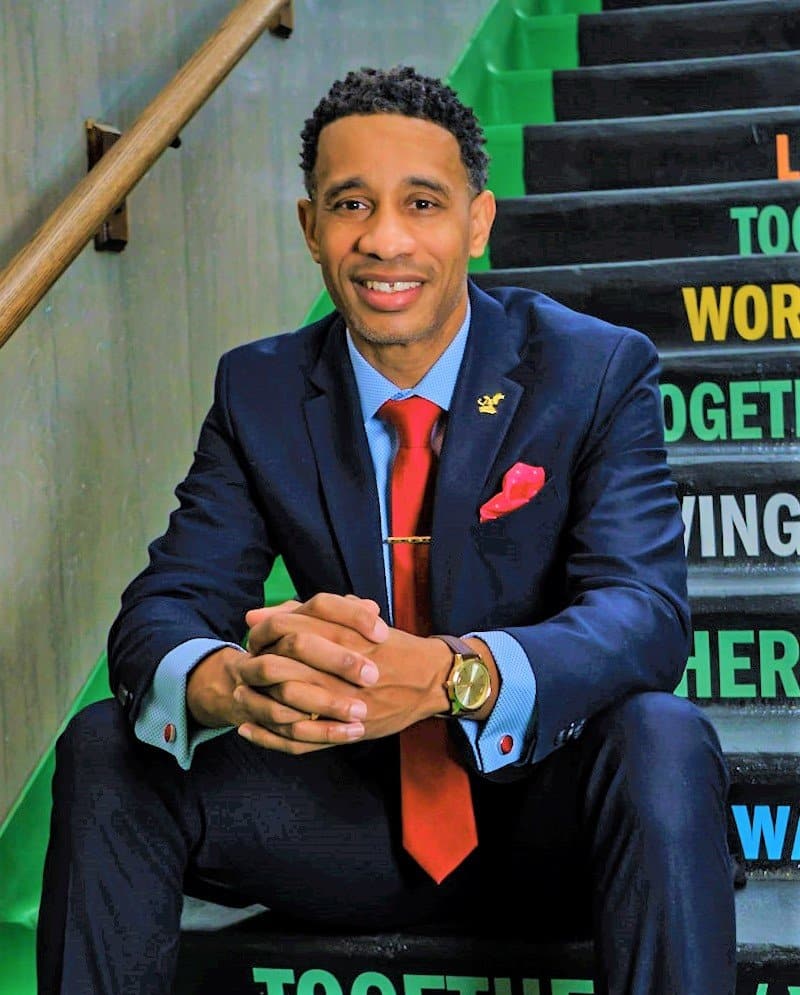
“What our organization does, in part, is remove some of those barriers that prevent access to opportunities, and to build bridges so that people and neighborhoods can grow to be the best they can be,” Smith says. “One of the most known ways we do that is by activating and repurposing large, vacant school buildings into what we call opportunity hubs. Opportunity hubs are one-stop shops where families can receive resources in workforce development, job training, youth afterschool educational programming, and health/wellness resources.”
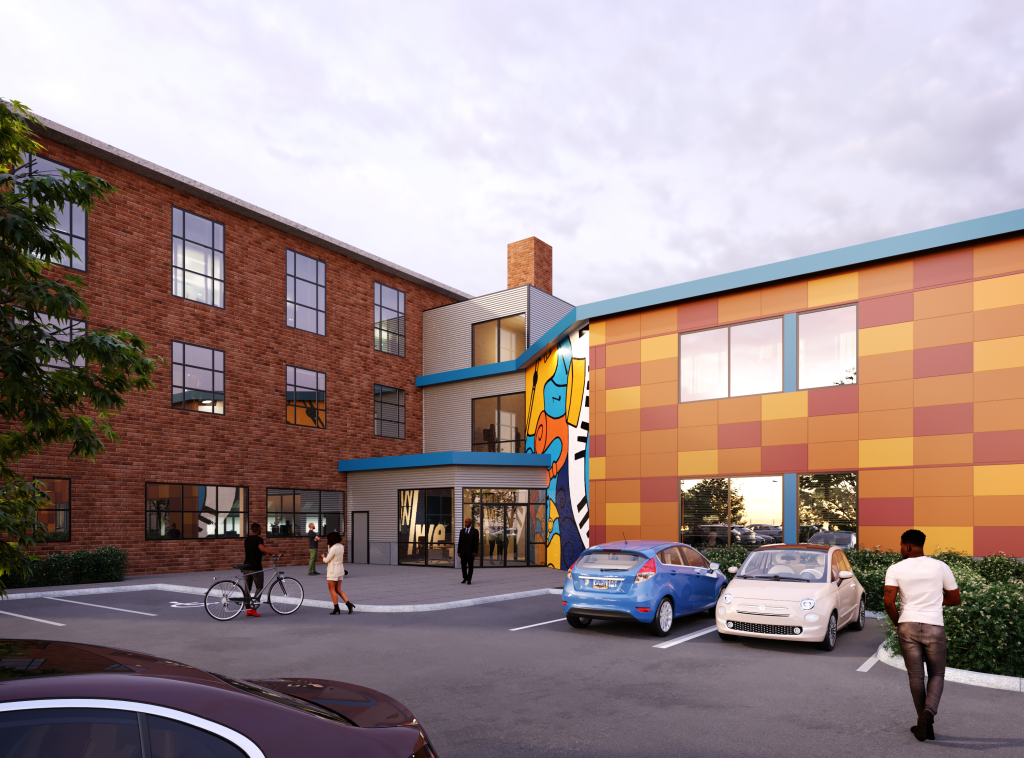
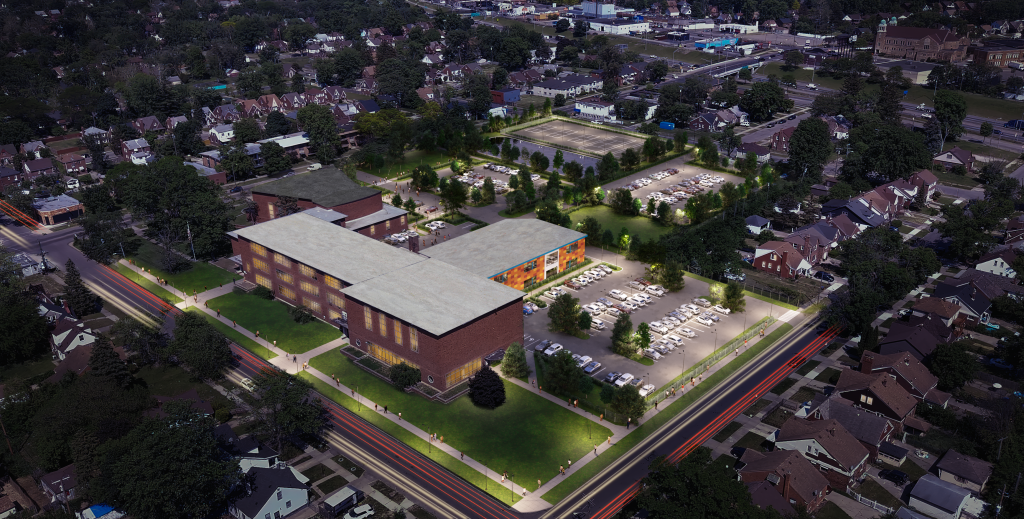
After three years of hard work behind-the-scenes, the second opportunity hub campus, Anchor Detroit, is preparing to officially open its doors. The hub will provide economic, educational, and environmental mobility for Eastside Detroiters. Located at 9740 McKinney St., near I-94 and Whittier Ave., the nearly 90,000-square-foot hub was two former schools: the Dominican High School from 1940 to 2005, followed by the Winans Performing Arts Academy building.
Under the economic umbrella, the opportunity hub has a high priority on attracting different organizations that help advance workforce development and job training.
“Last year, in 2025, at our flagship campus — Durfee Innovation Society on the west side, between five different agencies in the building, there were 852 job placements made for Detroiters. This equated to about $16.5 million in new or increased wage growth.”
The success of that flagship campus has also spread to the surrounding neighborhood too, with extra foot traffic spending dollars locally, and even the household values increasing within a two-mile radius of the campus, says Smith.
“The home values of the houses have increased by 37% from 2017 to 2025,” he says. “It just shows that when you’re deliberate about activating and repurposing a dormant building to be a community asset — it can bring various levels of economic acceleration.”
The Denby neighborhood experiences poverty struggles and access to opportunities, and is what some consider a forgotten part of East Detroit — seeing less investment than the Morningside and East English Village over the past five years.
“One of the things we do is try to find places and spaces that have been historically disinvested, and see whether there is a large enough vacant infrastructure in that area that can serve as an economic accelerator or catalyst,” Smith says. “Then we have extensive conversations with the community residents, business leaders, stakeholders, the faith leaders, students, and parents to find out what the core gaps that if filled, would help turn around their neighborhood. Based upon those conversations, then we outfit our opportunity hubs with organizations that fit that need.”
Smith is proud to bring the opportunity hubs to neighborhoods, rather than the popular focus areas like Downtown or Midtown Detroit.
“We believe this area is ripe for growth, the human infrastructure is here,” he says. “You have a lot of people in this neighborhood who are seeking to grow in the neighborhood that they live in, have sustainable jobs here without having to leave, and for their children to have a bright future within the school settings in the neighborhoods they live in.”
Anchor Detroit impact partners include Grand Valley State University, United Way, Detroit College Access Network, and others.
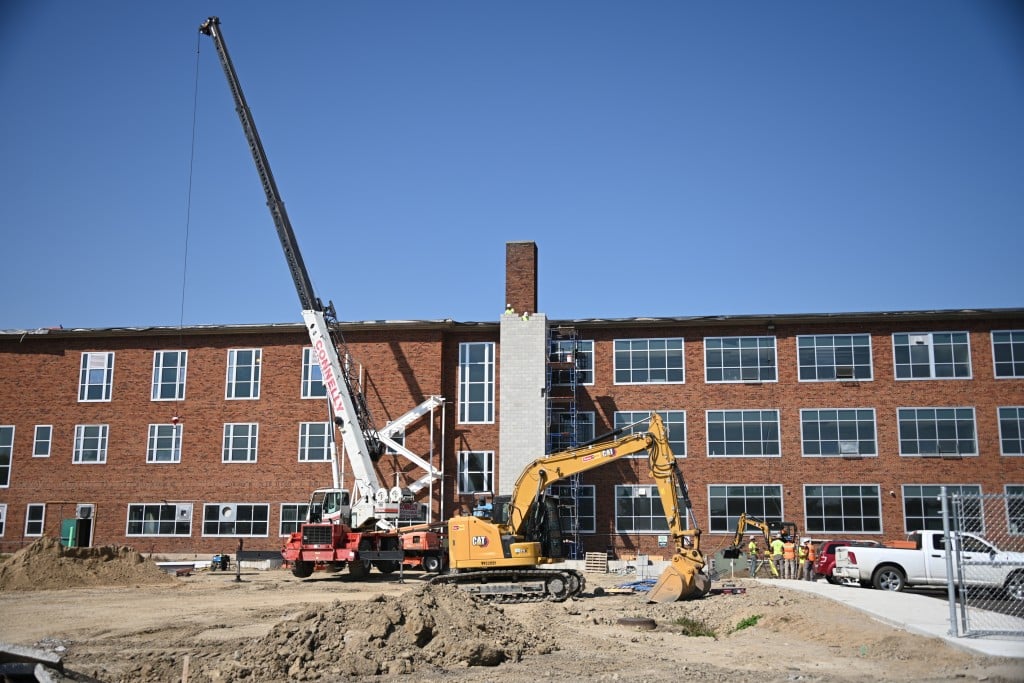
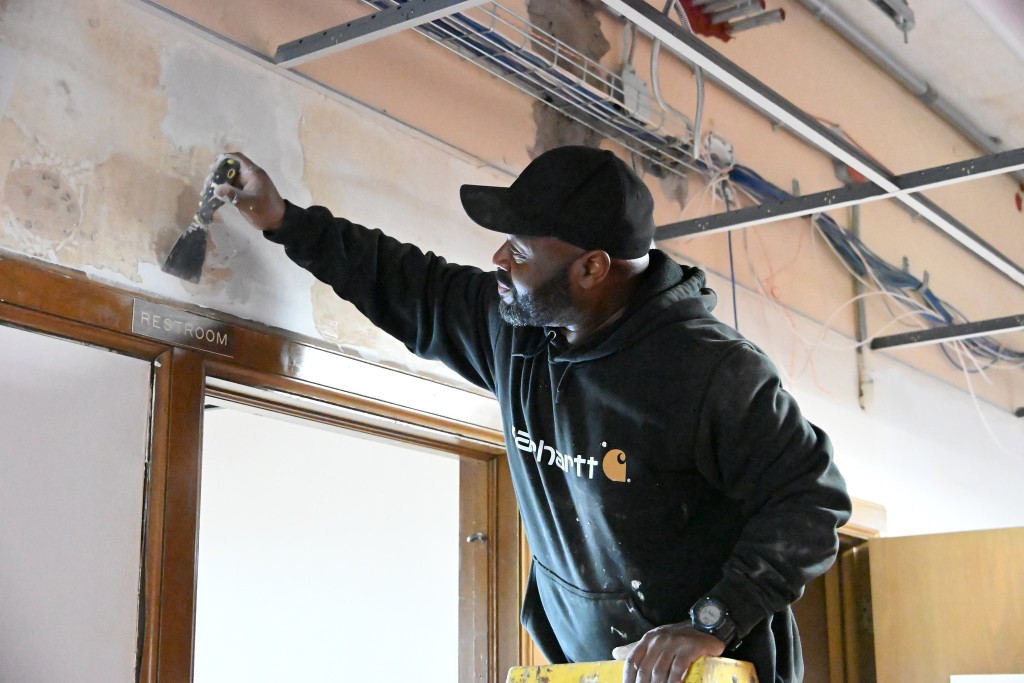
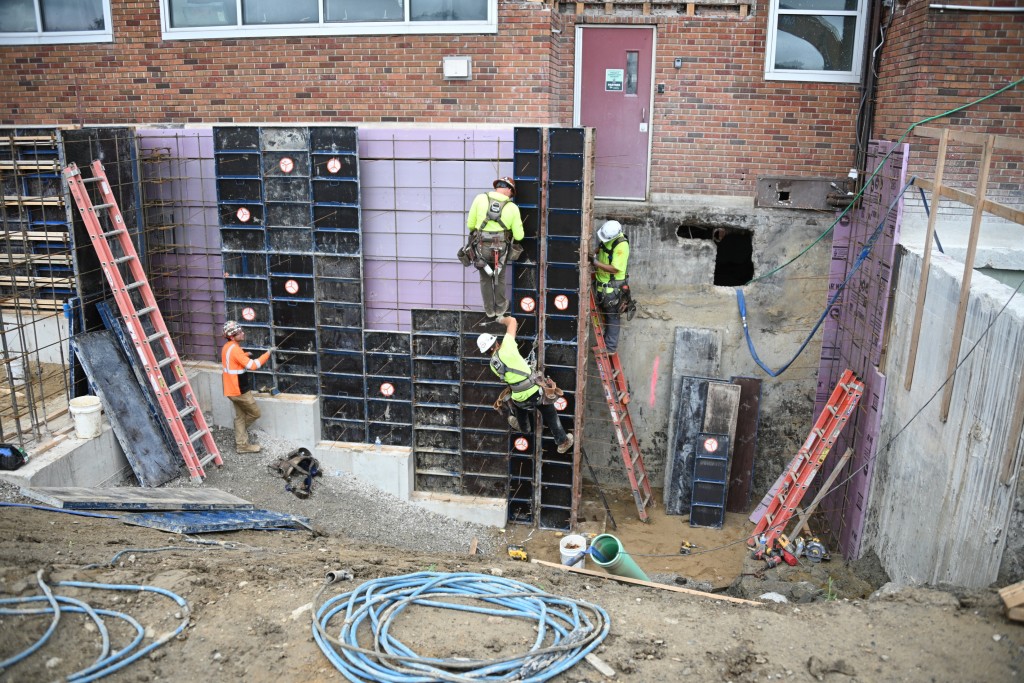
There was a lot of work required to transform the vacant building into an opportunity hub. The organization acquired the building in 2023, began construction in 2024, and looks forward to receiving their certificate of occupancy any day now. The $15 million makeover included a new HVAC system, new roof, interior plumbing replaced, and new parking spaces.
IFF, the Midwest’s largest community development financial institution (CDFI) works to uplift neighborhoods by providing community-centered lending, development and real estate consulting to urban and rural communities — providing affordable financing to nonprofits in the housing, education, health care, and arts and culture sectors. With their headquarters in Chicago, IFF also has Midwest regional offices in Cleveland, Columbus, Detroit, Grand Rapids, Indianapolis, Kansas City, Milwaukee, and St. Louis.
“IFF is an incredible community partner and asset, not only in the City of Detroit, but beyond as a CDFI,” Smith says. “IFF has helped with the funding, and has been a very strong partner in ensuring the mission and intent of what we are trying to accomplish through this particular campus — helping to make an indelible impact on the surrounding community, is brought to fruition.”
Managing director of lending for the eastern region at IFF, Scott Hackenberg, says the organization became familiar with Life Remodeled’s transformative Durfee Innovation Society project a few years ago.
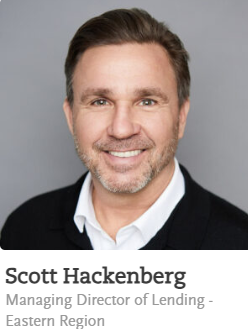
“They had the experience, leadership, philanthropic and grass-roots community support to take on another ambitious project,” Hackenberg says. “They were very intentional about closely working with the neighborhood’s residents on what was needed, and they co-created Anchor Detroit around those priorities.”
IFF provided a $5 million bridge loan to help finance the redevelopment, bringing together philanthropic grants, public funding, New Markets Tax Credits, and support from Mayor Mary Sheffield.
“Much of that support was committed, but the timing of those funds didn’t align with when construction dollars were needed, and our financing helped bridge that gap,” Hackenberg says. “We’ve stayed involved since closing, and the loan has been paid down significantly as funding has come in. This project is a good example of what we do as a CDFI, providing flexible financing to help nonprofits move impactful community projects forward.”
A fundraising back-to-school soiree is planned for Nov. 7 inviting the community to explore all the brand-new campus has to offer. Smith hopes these two campuses can provide a template, showcasing how other urban cities and states across the nation can replicate the successful opportunity hubs in their respective regions.
“It’s a beautiful building, and one of the reasons why we really focus on some of these historic buildings is because in our opinion, the buildings that have the most social capital are the ones that already exist,” Smith says. “The history, the tradition, what this building has meant to this neighborhood over many years, and the alumni that have walked up and down these halls — it creates for a very dynamic atmosphere. Maybe this building won’t be a school again, but it will be something the community can be proud of, and that they can access to accelerate their futures.”
Related Articles
CRA proposed rollbacks could mean roadblocks for community development
Recently proposed rollbacks to the CRA would weaken bank obligations to invest, lend, and provide services to low and moderate-income communities. These rollbacks would be roadblocks to positive, impactful community development.

From Social Worker to Salon Owner, Ky’ronda Tate Brings Luxury and Community to Detroit’s Avenue of Fashion
After years of supporting women through life’s challenges, Ky’ondra Tate is creating a space where Detroiters can feel valued, celebrated and cared for, one manicure at a time.
Minock Park Place provides new affordable senior housing for Grandmont Rosedale neighborhood’s older residents
In the heart of Detroit’s Grandmont Rosedale neighborhood, a 42-unit, mixed-use development has given senior citizens brand-new affordable housing. Minock Park Place was seven years in the making, and marks the first affordable senior housing community in the neighborhood, located at 19505 Grand River Ave. — a vital commercial and cultural artery.