Returning Home With a Purpose: Western Alumni Are Breaking Barriers for Detroit Families
From overcoming barriers to giving back, two DPSCD alumni are helping Detroit families navigate life’s challenges through neighborhood health hubs that provide resources, guidance, and hope for a brighter future.
There’s a guiding principle in education and mentorship called “each one, teach one.” It calls on anyone who gains a skill or knowledge to reach back and share it. At neighborhood health hubs around Detroit, Detroit Public Schools Community District alumni like Teresa Villa Angel, and Estephany Angulo Naba walk the halls of their alma mater, Western International High School, connecting Detroit families and students to life-changing resources — and a chance at a better life.
Nearly 1 in 5 (18.5%) U.S. children ages 0-17 lived in families with income below the poverty level in 2022. Last year, the Michigan League for Public Policy (MLPP) reported 362,000 children lived below the poverty level in Michigan alone. The link between economic uncertainty and material hardship to behavioral issues, learning disabilities and low graduation rates are key factors behind the district’s efforts to provide additional support for DPSCD students. With neighborhood health hubs, the district aims to help Detroit families break the cycle of poverty.
Launched in 2023, health hubs — located in high schools across Detroit — to connect local neighborhoods to essential services for basic needs, including family engagement along with health and school-related services. Offerings are free to DPSCD families, and most services are available without an appointment. Families and students receive one-on-one guidance from health hub navigators or certified community health workers.
Health hubs currently operate at Central/Durfee, Denby, East English Village Preparatory Academy at Finney, Henry Ford, Marygrove, Martin Luther King Jr., Mumford, Osborn, Southeastern and Western High Schools, with more locations expected to open as early as the 2027-28 school year. The centers share one goal: eliminating barriers that keep students from attending school. Angulo Naba and Villa Angel say they identify deeply with their students’ struggles.
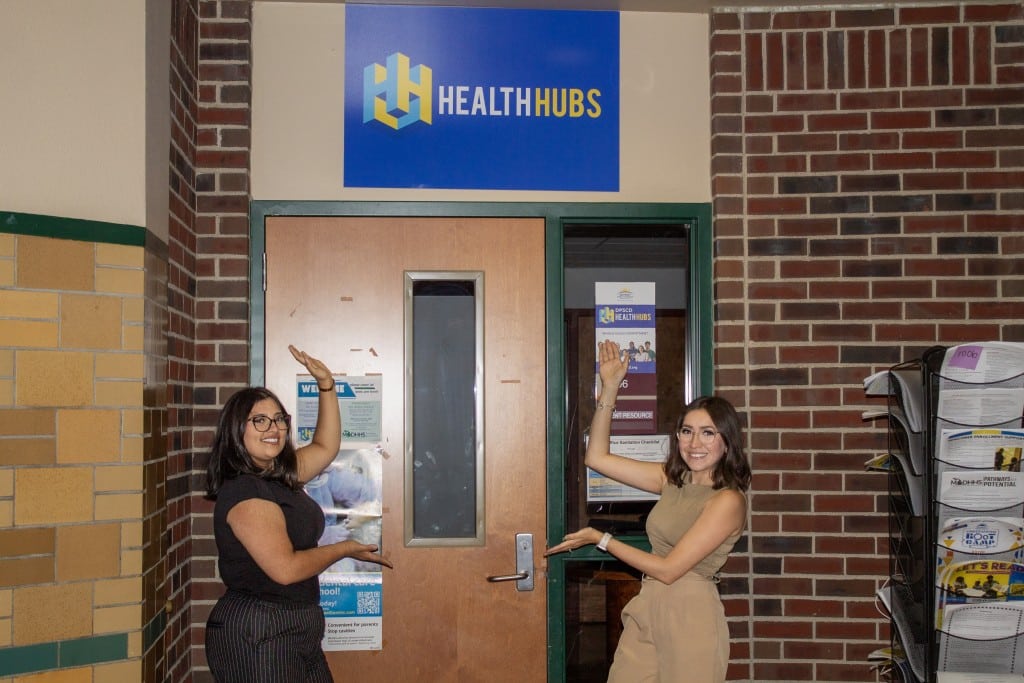
“I come from an immigrant family, so just being able to serve the community where I grew up in is very meaningful to me. Health help navigators didn’t exist when we were in high school. [It’s] something that’s nice to have, because we needed it when we were in school,” said Angulo Naba.
While the resources exist, the personalized guidance and support health hub navigators provide can make all the difference between a student excelling in school or dropping out. Villa Angel recalls what impact having someone to guide and push her could have had on her education. Uncertain and unmotivated about her future, she dropped out of college. Certifying as a community health worker gave her purpose and fulfilled her desire to help better her Southwest Detroit community.
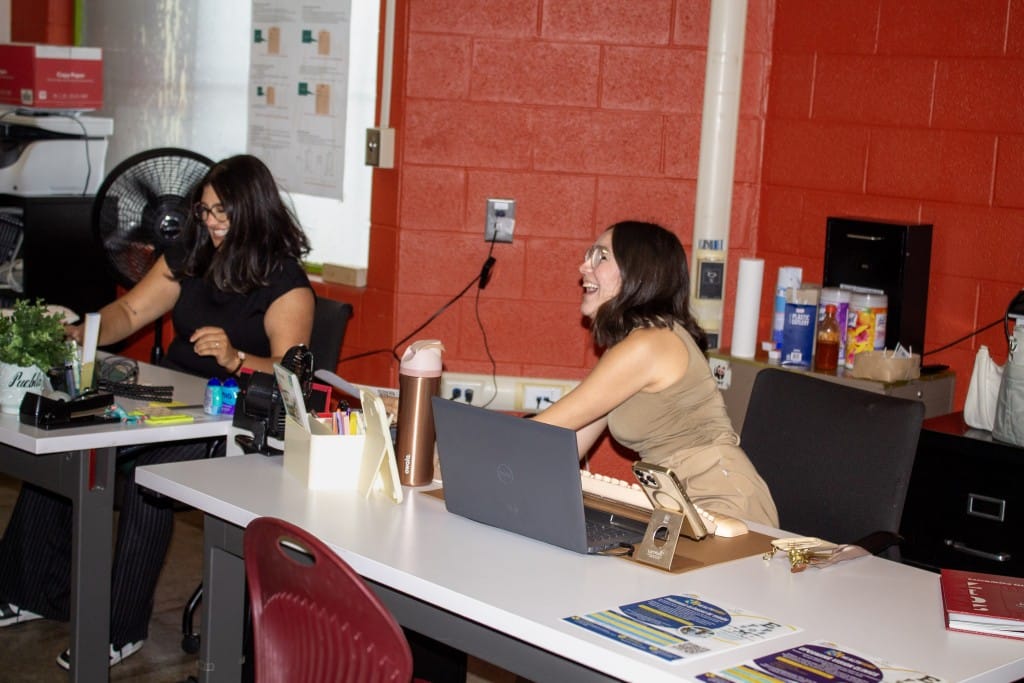
“If somebody would have been in the same position as I am right now, it would have [made] a great of a difference in my life when I was a student here at Western,” said Villa Angel.
Beyond language barriers, lack of trust and immigration issues pose unique challenges other communities outside of Southwest Detroit seldom encounter. Lack of trust remains the largest obstacle the native Southwest Detroiters face.
“It’s harder to be a teenager. They tend to keep to themselves. We were once upon a time teenagers ourselves. We know how they can be, but when it comes to everything’s going on like immigration,” said Angulo Naba. “Our students are coming to school with really heavy hearts [and] occupied minds. They come to school [thinking], ‘Will my parents be home when I come home?’ This was something that we struggled with as students here at Western ourselves.”
Some families arrive without food, clothing or shelter, representing just a small fraction of the need across their service area.
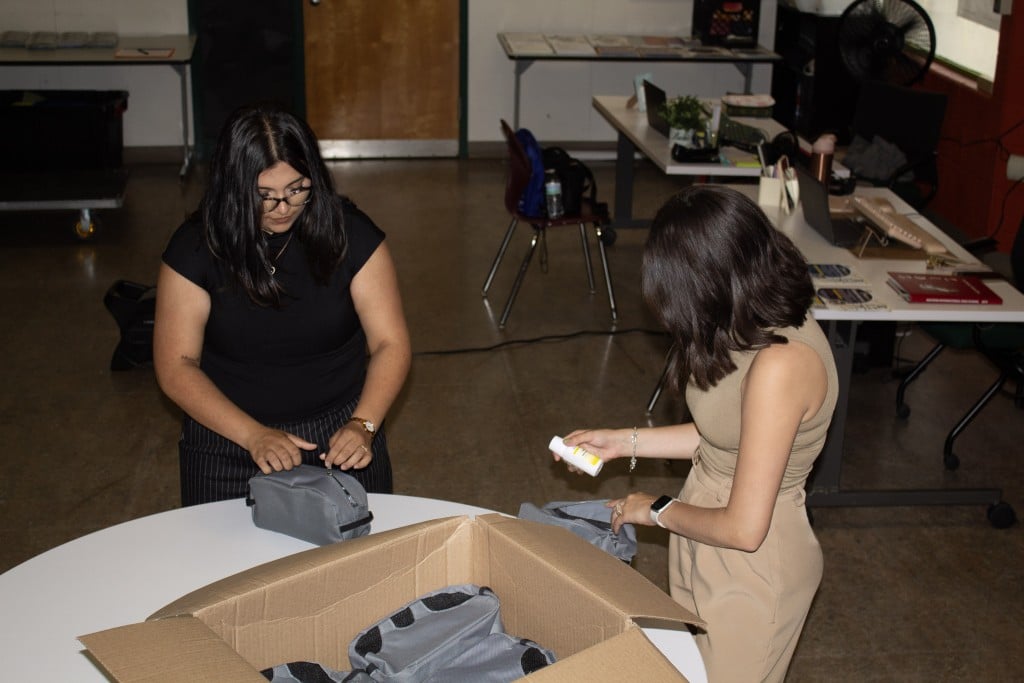
“Some of [the students] have a very rough upbringing, so [it’s about] creating that relationship with them and allowing them to feel safe and comfortable with us,” said Villa Angel. “They can come to us if they ever were to need anything, whether it’s resources, or someone they can confide in. And not just the students, but also their parents.”
Beyond Western, the two health hub navigators also serve ten elementary and middle schools, including Mayberry Elementary, Earhart Elementary-Middle School and Clippert Academy Middle School.
“I was there once upon a time, I needed a bed myself throughout most of my life. There were so many times we moved homes, and we needed clothes and food,” said Villa Angel. “To be able to get a family the small things they needed was very rewarding. Being able to help them, it kind of fulfilled me.”
Related Articles

How are Michigan’s families doing?
Rising costs, child care shortages and barriers to health care are straining Michigan families. What could help?
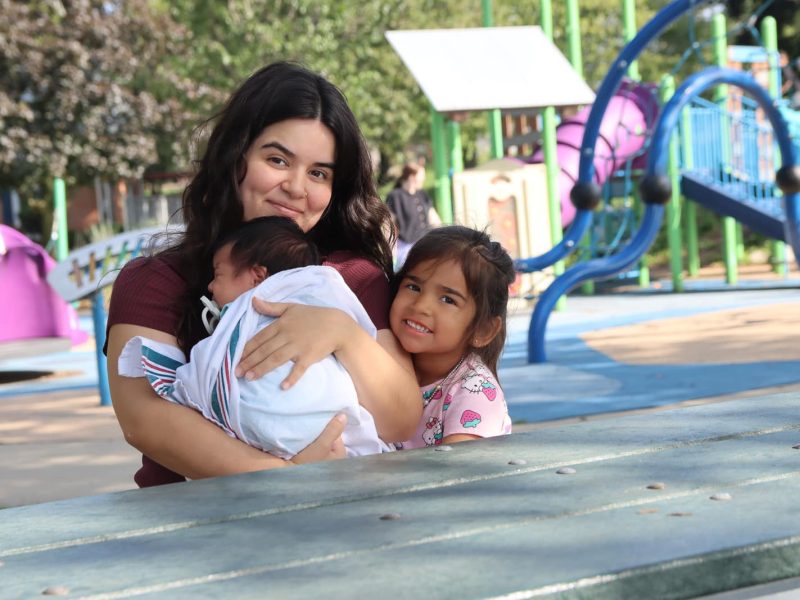
Rx Kids expansion to 60 Michigan communities is balancing family budgets and birthing healthier babies
The Michigan program is the largest unconditional cash transfer program for expectant parents in the country.

Detroit Responds to Hazardous Air Quality with Free Masks, Respite Centers
Smoke from Canadian Wildfires has pushed Detroit’s air quality into the hazardous range. The city has opened recreation centers for relief and distributing masks across Detroit.