Modular building, 3D construction paves way for innovative solutions to the housing crisis
As Michigan’s affordable housing shortage continues, developers are exploring modular construction and 3D printing as innovative ways to reduce building time and address labor shortages.
Block by Block is a solutions journalism series that is supported by CEDAM, Michigan CDFI, and Invest Detroit, and is focused on community development leaders and initiatives in Michigan.
Housing is expensive, but vital to communities. Across Michigan, there are challenges and hurdles for all developers throughout the present-day affordable housing development landscape. In an effort to overcome some of these barriers, the Community Economic Development Authority of Michigan (CEDAM), a 501(c)(3) nonprofit focuses on developers, provides training, hosts events, offers resources and referrals to programs and people to help make affordable housing projects come to fruition.
Emily Reyst is the director of external affairs at CEDAM, the nonprofit which recently hosted a webinar about modular housing and 3D printing as emerging construction options. As part of CEDAM’s Strategies & Solutions series, this webinar was geared towards municipal leaders and developers, and focused on what to consider and prepare for when moving from traditional stick-built construction to modular or 3D-printed homes.

According to data shared from CEDAM, “The Association of Builders and Contractors reported that construction prices surged in April, up 6.2% to start off the year. That’s in addition to the cost increases that have not settled since the pandemic.”
Factor in the increased material costs and shortage of skilled trade labor, many are looking at alternative options and the potential cost and time savings associated with modular and 3D-printed construction methods.
The panel of experts included Amin Irving, founder and majority owner of the Ginosko ecosystem (Ginosko Development Company, Ginosko Modular, Ginosko Construction), CJ Felton at Community Housing Network, and Zachary Mannheimer, founder and chairman of Alquist 3D.
Reyst says housing development is as expensive as ever.
“There are proven challenges, successes, and opportunities when it comes to these building models and seeing large cost savings, and these folks are at the forefront of figuring it out,” she says.
“These alternative construction methods are not a silver bullet solution to lowering development costs. There are both proven challenges and successes when it comes to these options, as well as clear opportunities for building up these ecosystems to address some of the challenges. We are excited about the members in our network who are figuring out what’s working and what’s not, and sharing their insights with folks across Michigan who are exploring these options.”
Modular builds
C.J. Felton is the director of real estate acquisitions at the Community Housing Network (CHN). Founded in 2001, the Southeast Michigan nonprofit is dedicated to helping Metro Detroiters build thriving communities from overcoming homelessness and housing instability. In the past 25 years, the organization has helped more than 400,000 people across Oakland, Macomb, and Wayne counties.

Across the state, CHN has added more than 900 units of affordable housing to the landscape and continues to seek out more opportunities to create high-quality residential rental homes. One way they’re doing this is through modular housing, says Felton.
“The primary advantage for modular building is time savings,” he says. “The promise is that you can build whatever you’re wanting to build in a climate-controlled factory. It takes about eight weeks per housing unit, and once they are trucked and set on site, should only take about eight weeks to finish. You’re talking about four months as opposed to at least a year with a stick-built home, so time is money.”
After sites are identified, families work with modular companies who have approved plans, and no architects are needed. They can pick their model, place the order with the factory, which gets loaded onto a flatbed trailer. Once the foundation work is done on the site, a crane drops the modular house onto the foundation.
“It’s almost like setting LEGO blocks, that’s really simplifying it — but the whole process is fascinating,” says Felton.
CHN has built two modular home projects themselves — two single-family homes in Pontiac for home ownership and Kelly Court, two quadplex rental houses (8 units total) in Eastpointe.
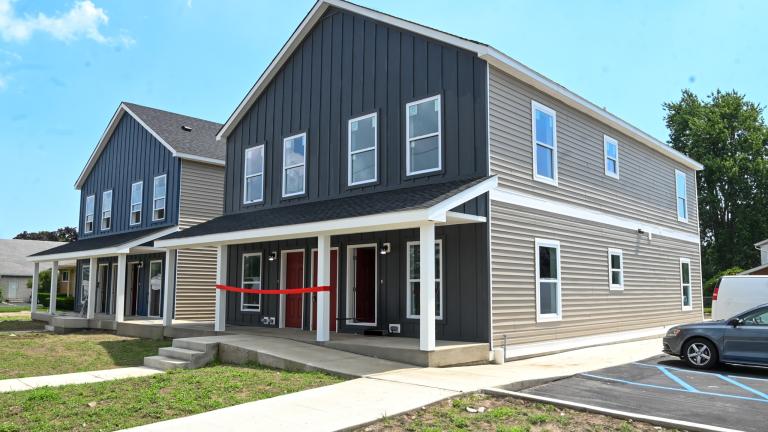
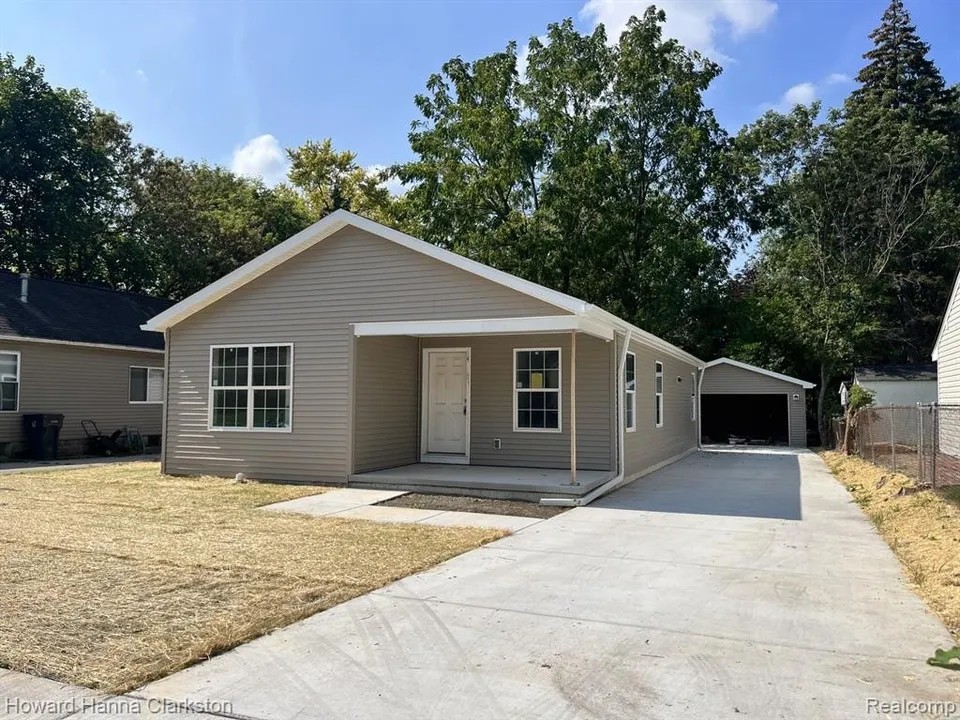
“We used Oakland County Home Funds for our work, and they were really interested in being an early adopter of modular,” he says. “We did that small home really as a pilot to figure out how it would work. In Eastpointe, we had two decently sized multi-family developments there and a great partnership with the city. Macomb County Home Funds was interested in participating in the project, the city was very supportive, and it was a good fit between everybody.”
When comparing costs, Felton says there’s a myth when it comes to modular builds.
“The modular suppliers will tell you they have a less expensive project, it really does not end up being significantly less expensive, but the time factor can be significant,” he says. “If you have a construction loan for your project and interest rates are 7-8%, if you can shorten that window from 12 months to four months, that’s a big savings.”
The potential savings aren’t always felt on renters of the homes, either, when it comes to tenants. The biggest drawback when it comes to modular builds is that it’s still fairly considered a niche industry, says Felton.
“There’s not enough factories to take over a large amount of the need,” he says. “The factories require a 50% deposit at the time you place your order. That’s a significant amount of money that needs to be sent to the factory. Typically, when those things are complete and go on the road, you have to pay the balance. You have to know how to finance that as somebody who’s taking that project on.”
Given the large amount of money needed upfront, it’s not always feasible for emerging developers to take on modular builds. In addition to modular builds, CHN has built ten housing communities with 295 units for low-income families using the Low Income Housing Tax Credit reservations, and 600 units of affordable housing CHN has created or preserved including private market rental apartments, rental homes and condos, licensed and unlicensed group homes, and single-family homes.
Capacity and capability is still being developed, says Felton.
“Modular builds are definitely a part of the solution — I think the question is how big it is going to become,” he says. “This is happening all over the country.”
3D Printing
Another technological resource folks are keeping eyes on within the home building industry is the use of 3D printing. In Greeley, Colorado, at Alquist, the goal is to rewrite the code on construction, which has largely looked the same for centuries. By utilizing robotics and 3D printing, the company is transforming the building process with innovation, sustainable materials and advancing the industry.
In 2021, Alquist 3D made history when it completed the first owner-occupied 3D printed home in the world, alongside Habitat for Humanity Peninsula and Greater Williamsburg. Instead of weeks, months or years, this home was constructed in 28 hours. There are even more plans for Alquist 3D-printed prototypes for affordable housing projects in the next three years.
Alquist developed the country’s first curriculum dedicated to 3D printing construction — in partnership with Aims Community College in Colorado. As a way to bridge the gap between a critical labor shortage and a need for housing, this program trains students with hands-on experience in robotics, sustainable materials and digital design.
The 3D concrete printing classes cover the history of this method, benefits vs. traditional construction methods, how to use it with modern machinery, robotics, material science, design limitations, feasibility assessments and more.
Some of the limitations of 3D printing include finicky concrete mix, having to test and re-test equipment based on varying climates — chalking it up to materials and processes that are not a one-size-fit-all.
Although Felton considers 3D printing a fascinating, very up-and-coming technology, he anticipates it’s likely to be included in many more future conversations surrounding solutions for the housing crisis. It’s something you might see popping out of printers, onto construction sites, and into city development plans more and more every day.
Related Articles
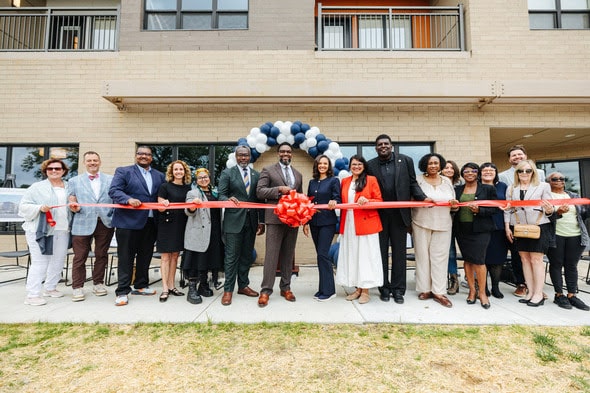
Minock Park Place provides new affordable senior housing for Grandmont Rosedale neighborhood’s older residents
In the heart of Detroit’s Grandmont Rosedale neighborhood, a 42-unit, mixed-use development has given senior citizens brand-new affordable housing. Minock Park Place was seven years in the making, and marks the first affordable senior housing community in the neighborhood, located at 19505 Grand River Ave. — a vital commercial and cultural artery.
Partner Partner Content From Blueprint to Breakthrough: Tackling Affordable Housing in Detroit
Cass Corridor Neighborhood Development Corporation and Cove Investments and JPMorganChase help neighborhoods—and residents—thrive.

Small Business Social Hours foster success through face-to-face connection
Why face-to-face networking opportunities are even more important for small businesses and entrepreneurs.