One Detroit Credit Union brings two new CDFI branches to serve the underserved, unbanked communities
In an effort to serve the underserved, One Detroit Credit Union is expanding its reach with two new branches, both in shuttered former financial institutions. In doubling-down on their commitment to provide more than banking to Metro Detroiters — these branches offer the community products, services and resources for financial health and wealth building.
Block by Block is a solutions journalism series that is supported by CEDAM, Michigan CDFI, and Invest Detroit, and is focused on community development leaders and initiatives in Michigan.
You’ve probably heard of the term food desert, but have you heard of a bank desert? The notion is the same — and the serious impacts are similar. Lack of bank service access can result in less opportunities for financial health and wealth-building for communities.
For an urban community, a banking desert is defined as a census tract without a bank branch within a two-mile radius. For suburban communities, it’s a five-mile radius, and for rural communities, it’s a 10-mile radius.
Typically, banking deserts are the result of large banks shutting down their brick and mortar locations in an effort to save money or shift to digital services. Lower profitability in low-income, marginalized neighborhoods often have smaller transactions. This isn’t as enticing to large corporations looking to open up or expand operations. Although many residents, including the elderly, prefer in-person banking and can’t rely on digital banking, their options remain limited in bank desert areas.
What was once one of the busiest JP Morgan Chase branches in Southeast Michigan — at 8 Mile Rd. and Dequindre St. sat vacant for eight years. Local residents’ needs for a financial institution, however, did not go away. As a commitment to its slogan to provide ‘more than banking,’ One Detroit Credit Union is preparing to open up two new branches — one on the North side of Detroit and one in River Rouge.

According to the National Community Reinvestment Coalition (NCRC), two-thirds of banking institutions have disappeared since the early eighties — with small banks declining the most rapidly. The closure rates doubled during the pandemic, with mega-bank mergers and acquisitions at the root of most closures. The folks impacted the hardest are the low-to-moderate income and minority neighborhoods — one-third of the branches closed from 2017 to 2021 were in these marginalized communities.
When bank branches close, small business lending decreases, and underbanked residents might need to seek out other predatory financial lenders like payday lenders, resulting in a cycle of debt. Residents who rely on public transportation might not be able to travel far away to do their banking at another location, completely cutting them off from financial services, leaving entire communities more vulnerable.
The NCRC report shows that from 2017-2021, Detroit was ranked #10 out of 50 metro areas with the most branch closures — losing 11.9% of their branches. From March 2020-Oct. 2021, Detroit experienced a 127% increase in closure rate.
As more institutions focus on digital banking, utilizing AI and algorithms to automate functions, some folks still prefer the old fashioned way, making relationships with their tellers, and feel more comfortable trusting their privacy and personal information in a traditional setting.
One Detroit Credit Union, a member of the Detroit CDFI Coalition, realizes the need of communities across Metro Detroit, and is providing a solution with two of its newest branches.
Portia Powell is the president and CEO of One Detroit Credit Union. She says their mission is to impact and change lives by providing fair and reasonable financial accommodations to all.
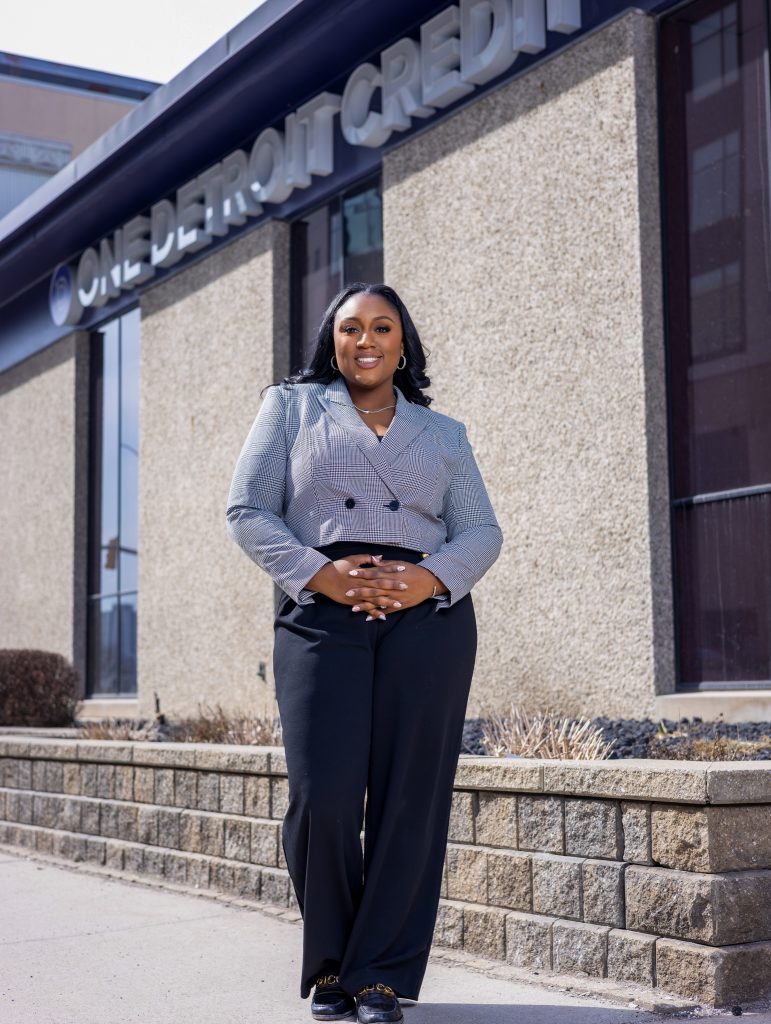
Courtesy photo of President and CEO of One Detroit Credit Union, Portia Powell.
“We have served the city of Detroit for over 90 years, and have been committed to making sure there was equity in financial access and availability amongst all Detroiters,” Powell says.
One Detroit Credit Union is familiar with serving residents amongst banking deserts, as one of the first community development financial institutions (CDFIs) in the state of Michigan. They are the only financial institutions in the following cities: Highland Park, Inkster, and another location in the works.
Their newest branch location, approximately 1,000 square-feet, will be located above City Hall. This will be the only credit union in River Rouge, and is set to open in August. The area has been without a financial institution since before the pandemic.
“Our commitment has always been to make sure we are providing more than banking and financial resources to everyone,” Powell says. “We lend deeper, we take more risk because we are owned by our members so we try to make sure our loans and products benefit the people we serve. Because we are located in Detroit, the majority of our members are minorities. We make sure our products and services are also mutually beneficial to those that have historically been left out of mainstream banking.”
While mainstream banking might view certain communities as not profitable, CDFIs look at it from a different perspective.
“Being a CDFI, a lot of our work is mission work where we’re not just looking at it from a profitability standpoint — we’re looking at it from an impact standpoint,” Powell says.
Their Highland Park branch, where all other financial institutions abandoned — is one of the busiest offices, according to Powell.
As many large financial institutions have closed or announced consolidations and mergers, including Comerica and Fifth Third’s closures of 75 branches and subsequent 700+ layoffs in the state. Although digital banking is offered and often promoted, that requires a certain sense of digital savvy and financial literacy to do so.
“This shows there’s a need and that those people need and deserve to have access to fair and equitable products and services just like any other community,” she says.
“The community needs to know what that impact means,” Powell says. “Comerica Bank has a very big presence in Michigan and has so for a very long time. A lot of the wealth in our state is sitting in Comerica Bank where they’re not servicing the state of Michigan people anymore. We really have to make sure that we’re putting our money in financial institutions that are actually giving back to our community.”
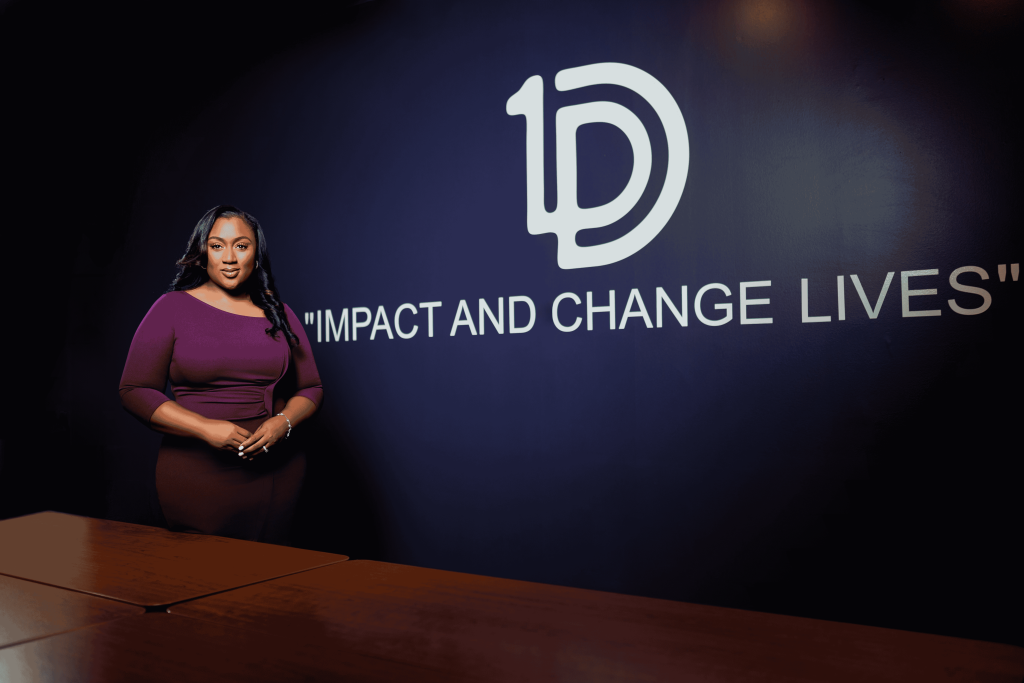
Being a CDFI makes One Detroit more adaptable to servicing the people that are most in need, says Powell. Giving back to those communities and providing ‘more than banking’ is what it’s all about.
“When you see financial institutions closing, we’re still committed to opening them and being present and actively involved in our communities,” Powell says. “Everything is not measured from a profitability standpoint, but it’s measured in people.”
As One Detroit is in the process of expanding to the 8 Mile and Dequindre area, Powell says they are excited to be an inclusive financial center — the only one in the area. When the busy former JP Morgan Chase branch left the building, it also left a strain on residents who now had a lack of financial resources available to them.
Once a bank closes in an area where many rely on public transportation and can’t commute to other nearby areas for banking services, they’ll often turn to nontraditional means of managing money. Things like Cashapp, Venmo, paying check-cashing fees and using payday loan creditors can cause stress on both residents and their communities.
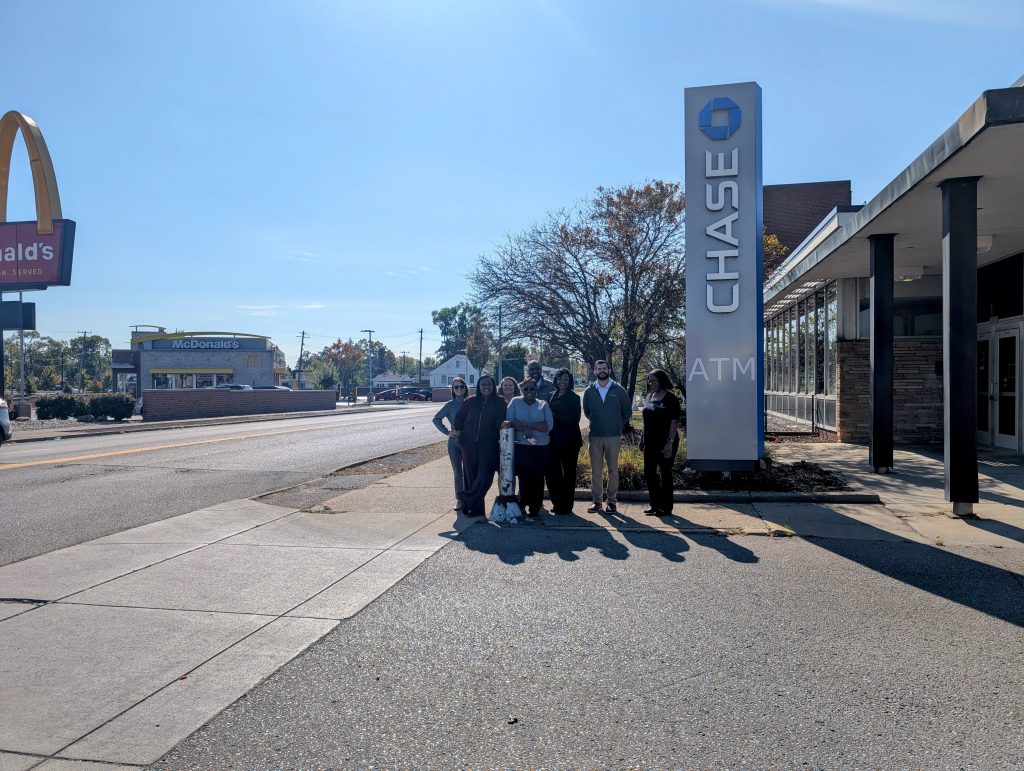
“That former JP Morgan Chase branch at 8 Mile had been a staple for years, connecting multiple cities and counties in Detroit,” Powell says. “It connects Wayne County to Oakland County, connects Detroit to the suburbs and is a dividing line. We hope to create some unity and unison in that community. With One Detroit as our name, we encompass the entire region, serving all surrounding counties. We really look at Detroit as a region, not as a city and express our commitment to servicing everyone.”
Located near highway I-75, not far from Hazel Park, Ferndale and Warren, multiple communities will benefit from One Detroit’s full services and specialized products.
“We’ve learned that when we benefit those who are hit the hardest and most vulnerable, it positively impacts the entire community and that’s why our ‘more than banking’ approach makes us do a deep dive into the people,” Powell says.
“When you look at neighborhoods like Inkster where we’re the only financial institution, prior to us moving there, we had the city that was literally bussing their senior citizens to neighborhood communities so they could do their banking,” she adds. “Us deciding to open up there was another sentiment of that commitment to be a solution.”
The acquisition requires full construction and the estimated opening date of the new branch is the first quarter of 2027. Powell hopes the addition helps people see the value in other neighborhoods outside of Downtown or Midtown Detroit.
“This 8 Mile branch sits in multiple neighborhoods, it adjoins them,” Powell says. “There’s tons of opportunities, and we know that when our neighborhoods thrive, our city really starts to thrive.”
Related Articles

Small Business Social Hours foster success through face-to-face connection
Why face-to-face networking opportunities are even more important for small businesses and entrepreneurs.
On-Demand Coaching helps Michigan municipalities and their small businesses build a winning team
Program helps municipalities connect small businesses and entrepreneurs with existing capital and technical assistance.
Coalition proposes that no family pay more than 7% of their income for child care
Universal Childcare without Conditions centers affordability for families and sustainability for providers.