Community developers’ pride for area fuels investment, catalyst for change, growth in Detroit neighborhoods
Community developers know, care for, and invest in their neighborhoods. Together with community development institutions (CDFIs), small development projects can have a huge impact on their neighborhoods, serving as a catalyst for future growth.
Block by Block is a solutions journalism series that is supported by CEDAM, Michigan CDFI, and Invest Detroit, and is focused on community development leaders and initiatives in Michigan.
Sometimes new developments can raise eyebrows. Residents wonder who the folks behind the big signs are, why they chose their neighborhood, and how it will impact their daily lives and homes — for good or bad. Oftentimes, developers don’t have a real stake in or connection to the towns and cities they build up, or the neighborhoods they tear down.
Community developers, on the other hand, often come from the same neighborhoods they’re investing in. They have a passion for positive change — many, within their own backyards. Folks who have grown up on the same street they’re now bringing present-day investment and hopefully inspiring a catalyst for future growth. With the help of community development financial institutions (CDFIs), these community developers might be small, but their impacts are mighty.
One such CDFI is the Community Economic Development Authority of Michigan, or CEDAM. The 501(c)(3)’s housing team focuses on emerging developers, providing training, resources, and referrals to programs and people that can help make their affordable housing projects feasible.

When it comes to addressing the housing needs and revitalization, Emily Reyst, director of external affairs at the Community Economic Development Association of Michigan (CEDAM)., considers community developers an important part of the solution.
“Community developers aim to revitalize without displacement,” she says. “They are the folks who are repurposing vacant land — and as a result, increasing property tax revenue to the municipality which in turn can support better city services — rehabilitating dilapidated buildings, and bringing a diversity of housing types into communities so more people have opportunities to live there. This community driven, often small-scale approach, results in stronger neighborhoods where residents’ needs and desires are met.”
When outside investors come from other cities and states, there’s typically a negative connotation from local residents who are raising eyebrows. On the other hand, local community developers care deeply about their neighborhoods, access to affordable, safe housing, high-quality education, grocery stores with healthy food, etc.
“Community developers are really important to the fabric of a neighborhood and an entire community because they’re doing it not to make money, but to make change,” she says. “They’re having to navigate a really difficult ecosystem, a lot of regulation, a lot of upfront capital, and a lot of risk in order to build something that is a true community asset — whether it’s a housing project, a mixed-use development, or a local cooperative grocery store.”
CEDAM aims to empower and connect community leaders with resources, and help address the access to capital barrier many emerging developers face — borrowing without a full portfolio of projects is risky to many traditional banks.
“Emerging and nonprofit housing developers are navigating a complex industry with complicated incentives that are needed to make a deal pencil,” Reyst says. “Margins are thin and it is incredibly expensive to start. CDFIs, philanthropy, and traditional financial institutions, in partnership with organizations like CEDAM that provide technical assistance and training programs — are building an ecosystem where developers are building neighborhoods that are thriving and accessible to all.”
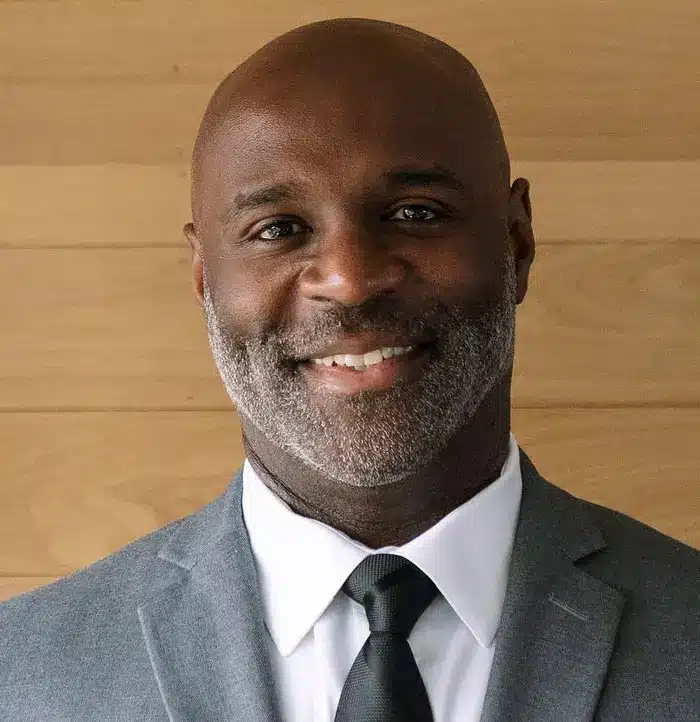
Marcus Rankins is the senior vice president and chief operating officer of Opportunity Resource Fund, Michigan’s only CDFI loan fund offering single-family mortgage loans.
Opportunity Resource Fund (OppFund) provides loans to create equitable economic and sustainable opportunities throughout Michigan, one person, one job, one home at a time. They aim to tackle Michigan’s systemic economic challenges including the severe housing shortage, rising house cost burdens, small business access to capital, household financial instability, and neighborhood decline.
“Folks that are traditionally earning income that is 80% or less of the area median income are primarily our target market,” Rankins says. “We also provide financing for small businesses that are traditionally left out of the mainstream banking system.”
Since 1985, the nonprofit has served 83 counties, provided 554 single-family mortgage loans, 3,315 affordable housing units, 240 small business loans, 431 affordable housing developer loans, deployed $130 million in capital, and leveraged $280 million in capital.
“OppFund is the only one of — if not the only, CDFI loan-fund specific that can lend anywhere in the state of Michigan,” Rankins says. “We’re headquartered in Lansing, with office space in Detroit and Grand Rapids, but our products are available throughout the state of Michigan. We’ve closed transactions in just about every corner of the state as a statewide lender.”
Rankins says small emerging developers, residents from neighborhoods, who have a passion for their homes — can make a huge difference.
“The high-profile transactions and developments tend to get most of the publicity when we see these 20-40 unit complexes being built,” he says. “That’s great, but there’s also a segment of that group that is equally deserving of acknowledgement considering they are the boots on the ground. They are, a lot of the time, coming from that community. It’s that ‘rising tide lifts all boats’ mentality. It might be one or two parcels at a time — but it’s very additive to transforming the full landscape.”
One of those boots-on-the-ground developers is Candus Rucker, broker and owner at Rucker Property Management Group. For Rucker and other emerging developers, valuable insight and meaningful connections are found at the CEDAM real estate bootcamps, with CDFIs like OppFund often presenting.

“We pride ourselves on being a part of the journey of emerging developers,” Rankins says. “In our minds, it’s not a knock or a detractor for the developer if they are looking to continue to educate themselves, sharpen their skillset, and take advantage of the additional training that is available. We applaud that. It was really intriguing to us to see Candus being receptive to the CEDAM bootcamp training. It’s demonstrating a willingness to really make the transaction work and a commitment to getting the project done.”
Rucker started her real estate brokerage and real estate development company a little over 10 years ago. After working on helping clients with buying, selling, and leasing property, she transitioned to small, multi-family real estate and property management. Now, she’s pivoted her focus more to development — rehabs, fix-and-flips, and has increased her capacity to include building new developments.
After living in Dallas for nine years, Rucker returned home to Detroit in 2022.
“When I came back, I was really compelled to do real estate — but do it differently,” she says. “I saw there was a huge need, particularly in the Nardin Park neighborhood. I grew up in that area and my family and I still have a vested interest in the area because we still own my grandmother’s family home. There’s an extreme need to offer affordable, quality housing stock in that area. I just felt like it’s my responsibility being someone that has a background in real estate, property management, and rehab skills — that I could take my skills and translate that into the community I grow up in.”
Rucker says it’s challenging drafting up hopes and dreams for a neighborhood that had extreme disinvestment for decades. Banks are not as willing to give money and resources to take a chance on a community like that, she says. These up-and-coming developers can be seen as trailblazers in a sense.
“I ended up going to MSHDA, and received a $200,000 MI Neighborhood grant,” she says. “Once I got that funding, I re-engaged with banks and CDFIs including Opportunity Resource Fund. That’s really what opened up the door for them to take a chance on me, and to be able to receive additional funding needed to complete the projects and go into those underserved communities to do the work.”
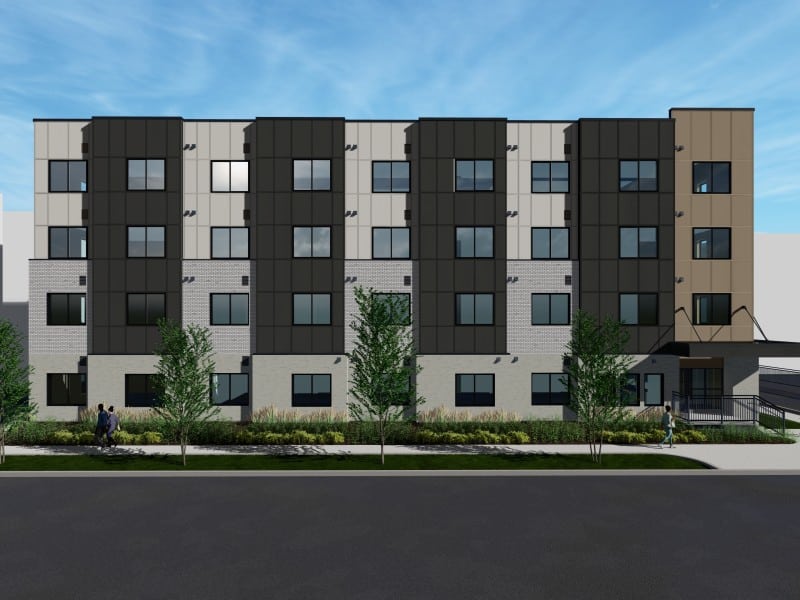
Participating in the CEDAM bootcamp brought more clarity to Rucker’s projects. She completed the $500,000 phase one of the West Chicago project, a four-unit, gut-rehab development. With the help of $250,000 from OppFund, the project was able to be leased out at 60% AMI in under 18 days. The $12 million Phase two is in progress now, featuring a new 27-unit affordable housing apartment building adjacent to the first phase. She’s also doing another small, two-family development on Tuxedo.
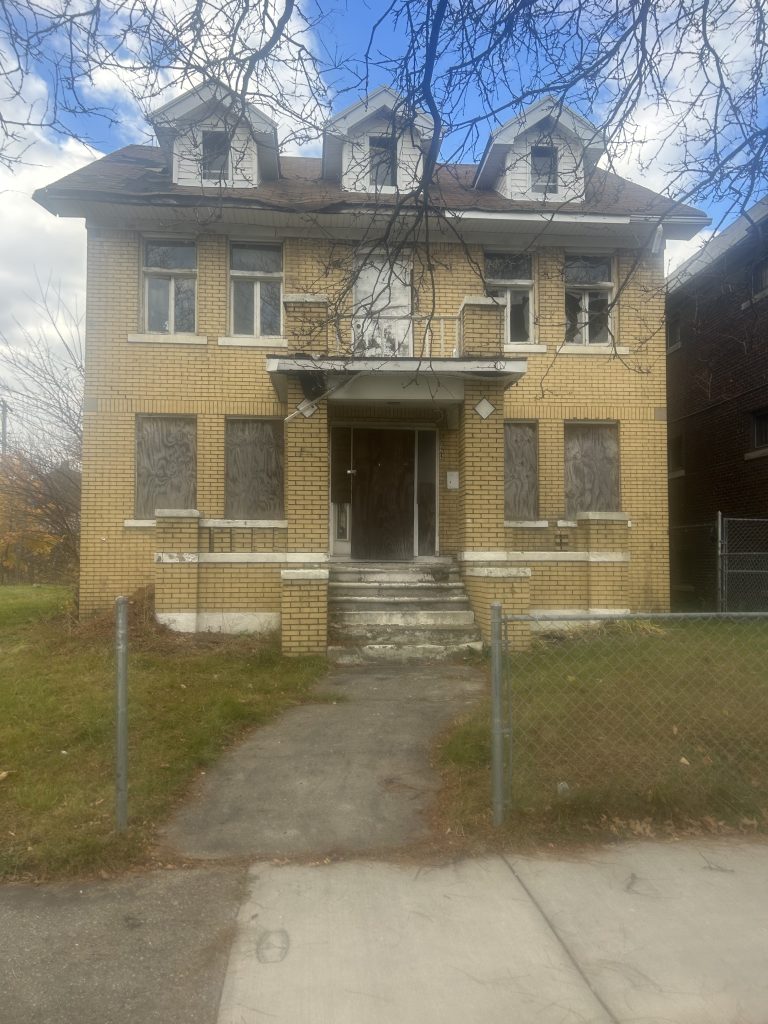
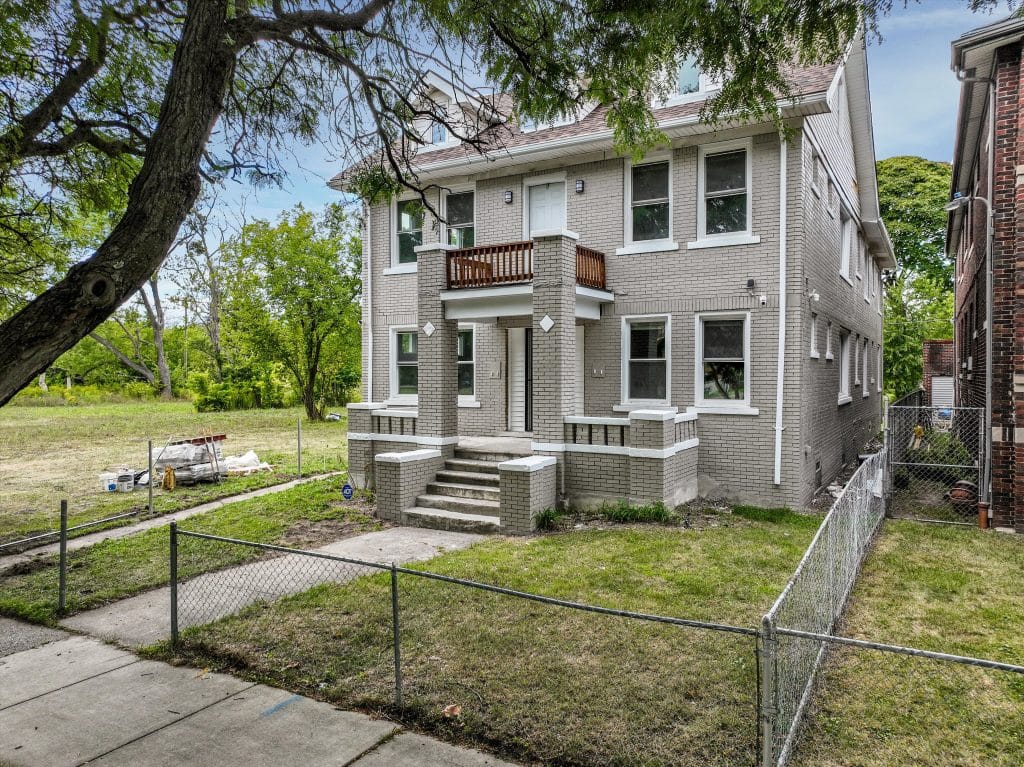
“I’m very intentional about staying in the same neighborhood because that’s the area where I see the most need and have personal ties and interests that the Nardin Park area is successful and it flourishes,” she says.
It’s those personal ties that really convinced buy-in from grant programs and other financial funding, says Rucker.
“A lot of folks have not heard of Nardin Park, so in between me telling my story about why this area is important to me, I had to make that introduction to them,” she says. “I had to walk them through by telling them my story on what Nardin Park looks like and what it means to me — through my lens. That was really helpful in getting my lender partners physically out to the community, walking them through my neighborhood, telling them about how I see the future of the area.”
Growing up, Rucker says the area was full of multi-family units including duplexes and apartments full of working-class families. During the 2008 recession, she recalls the area got pretty wiped out, resulting in dilapidated buildings being torn down. Today, there’s a lot of vacant land.
“It’s an extreme difference from when I was growing up to how it looks now because of the great exodus of people during that recession,” she says. “It never quite got its footing back. My goal is to create density in the area, and to create a more robust business corridor.”
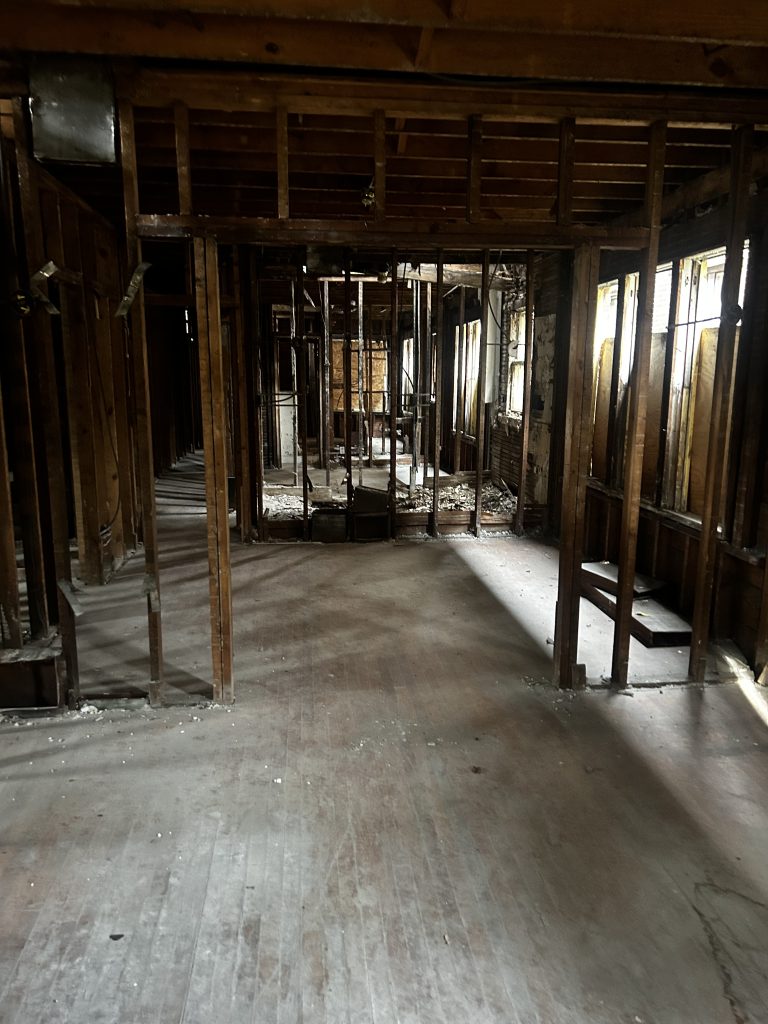
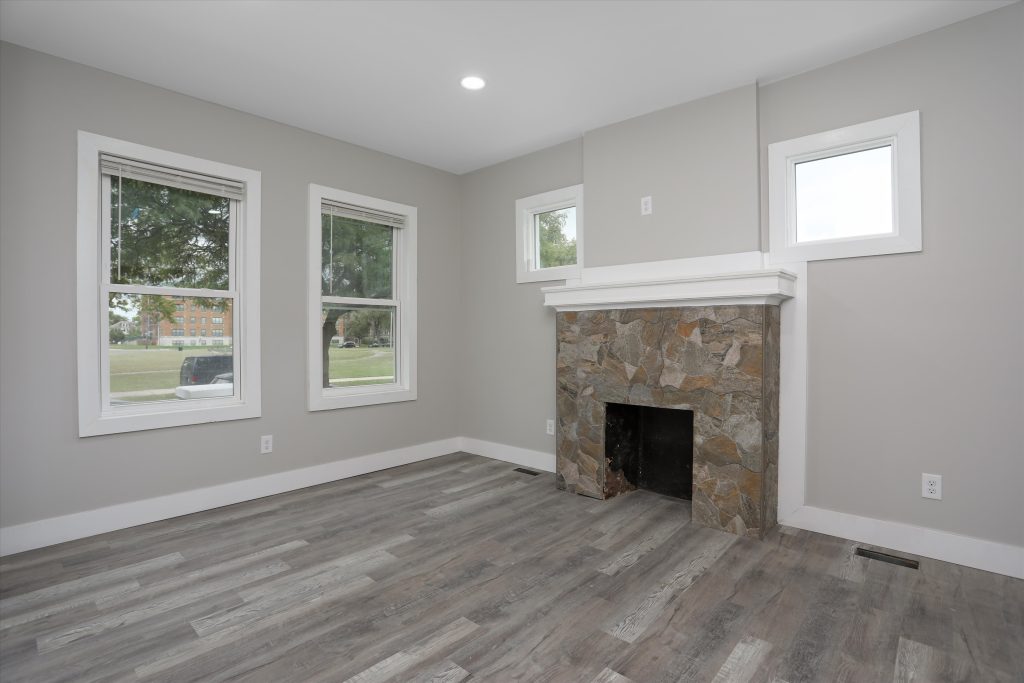
Rucker’s advice for residents who are afraid to take the leap into development is to go after their dreams for their own neighborhoods. She implores folks to invite others into their passionate story, even if still in the conception phase.
“If you have a dream or a goal and vision for your community and neighborhood, understand that hearing ‘no’ is part of the journey. It doesn’t mean it’s not going to happen,” she says. “Also, I would encourage them to build relationships. It’s very important people know you, like you, and can trust you as a person and individual. Being part of different cohorts and organizations will allow you to network. You never know which one of these folks will be instrumental in helping you get to that next step.”
Related Articles
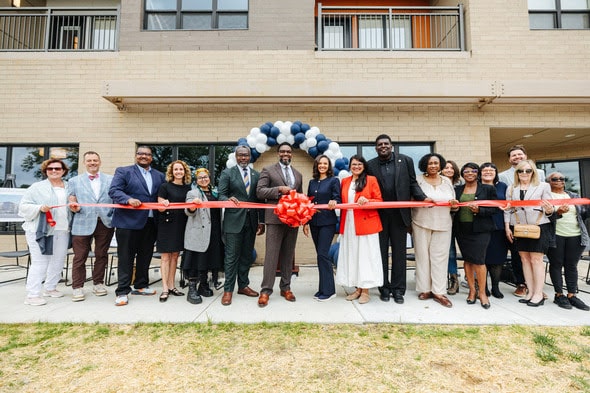
Minock Park Place provides new affordable senior housing for Grandmont Rosedale neighborhood’s older residents
In the heart of Detroit’s Grandmont Rosedale neighborhood, a 42-unit, mixed-use development has given senior citizens brand-new affordable housing. Minock Park Place was seven years in the making, and marks the first affordable senior housing community in the neighborhood, located at 19505 Grand River Ave. — a vital commercial and cultural artery.
Partner Partner Content From Blueprint to Breakthrough: Tackling Affordable Housing in Detroit
Cass Corridor Neighborhood Development Corporation and Cove Investments and JPMorganChase help neighborhoods—and residents—thrive.
Small Business Social Hours foster success through face-to-face connection
Why face-to-face networking opportunities are even more important for small businesses and entrepreneurs.