Building for the Next Generation: How Heritage Vision Made Succession Planning Work in Detroit
Detroit’s Heritage Vision started as a neighborhood optical center. It has now expanded into vision benefits administration, and now is a national entity serving major corporate clients.
In 1975, George Barnes Jr. made a decision that would define a generation. He walked away from a hospital job where advancement was limited and opened his own eyecare practice on Detroit’s east side. Heritage Optical Center became the first Black-owned full-service dispensary in Michigan—a business that didn’t just serve the community, it changed what was possible in the region.
Fifty years later, Heritage Vision Plans has evolved into something far bigger. What started as a neighborhood optical center expanded into vision benefits administration, eventually creating a national entity serving major corporate clients. The business grew because George understood innovation and how to build relationships that lasted.
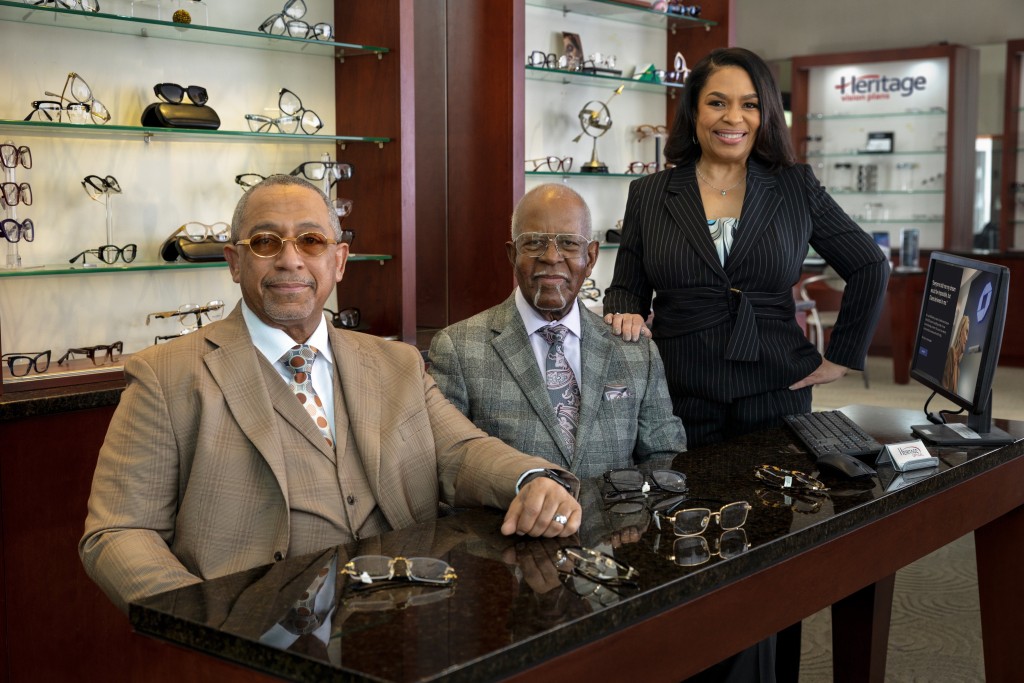
Now George’s children Lenny and Tracey are stepping into greater leadership roles while honoring what their father built. Their story shows what succession planning looks like when it’s built on legacy and evolution—when a family commits to passing forward not just a business, but a vision that began in 1975 with a decision to build wealth and opportunity in their own community.
From One Vision to Many
When George opened Heritage in 1975, he was doing more than launching a business. He was building generational wealth in a community where those doors were rarely open. By the early 1990s, having established retail success, George recognized a larger strategic opportunity in vision benefits administration. His relationships with the City of Detroit, local unions, and the Detroit school board became the backbone of Heritage Vision Plans, transforming a local achievement into a regional legacy.
“I knew Detroit was my place to be. Heritage was the first African-American-owned company in Michigan doing what we were doing,” George said. “I developed a relationship with Mayor Coleman Young, and once he understood what we could do, he helped me become a provider for the city. We saw an opportunity with the state of Michigan providing glasses to employees, and we got a license to be one of three independent companies.”
That forward-thinking transformed the business from a single-sector operation into a diversified enterprise. Heritage Vision Plans emerged as a separate national entity with a network of nearly 32,000 providers. George’s ability to recognize when to evolve, combined with his talent for building relationships that lasted through economic shifts, became the company’s competitive advantage.
His children were shaped by this environment from an early age. “On the weekends, my mom would cook dinner, pack it up, and we’d bring everything down to the office to eat. Then [George] would go to work, and Tracey and I would help clean the store, polish furniture and clean all the frame displays,” said Lenny. Lenny learned to make glasses at 13. Tracey grew up close to day-to-day operations. Though Lenny spent time building experience outside the family business before returning, both ultimately stepped into leadership roles with a deep understanding of Heritage at its core.
Building for the Next Chapter
In 2012, the formal succession began. Tracey stepped into Chief Operating Officer (COO), drawing on operational depth she’d developed through years inside the business. Lenny, known as a natural people person, became Vice President (VP) of Sales and Business Development. Together they formed a complementary partnership—her operational excellence balancing his sales acumen.
George remained deeply involved in the retail side, the part closest to his heart. That continued presence provided stability during the transition, giving Lenny and Tracey space to lead while keeping the company’s original mission intact. A formal succession plan was put in place, and the transition unfolded with intention and clarity.
Heritage’s approach stands in contrast to a broader challenge facing many small businesses across Detroit. According to recent research, 58% of Detroit small business owners expect to retire within the next decade, yet only 48% have begun planning for who will take over—a transition that will shape the future of local jobs and communities.
Heritage Vision Plans closed that gap. They planned. They communicated. They developed the next generation through exposure and real responsibility. In a city where 70% of business owners say preserving employees’ jobs is a top priority, that kind of planning carries real weight.
Chase has been part of Heritage’s story since 1975. That relationship has endured through corporate credit cards, financial tools, and ongoing support in achieving long-term growth. For a business navigating succession, having a financial partner who understands the company’s evolution makes all the difference.
“Heritage Vision Plans shows what’s possible when a founder builds for both community impact and long-term continuity. As Lenny and Tracey step further into leadership, we’re proud to support the family with tools and guidance that help the business keep growing while staying true to George’s original mission,” says Brian Gwizdz, Assistant Vice President, Business Relationship Manager, Chase Business Banking.
The Foundation That Lasts
George opened Heritage Optical Center in 1975 because he saw an opportunity where others saw a barrier. Fifty years later, that same vision guides how Lenny and Tracey lead. They inherited a business, yes—but more importantly, they inherited a founder’s understanding of what it means to see around corners and build something that lasts. What George created was a platform for generational wealth-building and opportunity. That’s what makes 2012’s succession feel less like a handoff and more like the next chapter of a single story.
Heritage’s success came from specificity: inherited shares that clarified ownership, a clear COO/VP split that matched each sibling’s strengths, George’s continued presence to anchor continuity, and financial partners like Chase who understood the long-term strategy.
Chase for Business can help guide that work. Visit chase.com/NationalTreasures or speak with a Chase Business advisor to learn more about succession planning resources and how to build the clarity a business needs to thrive across generations.
This article is for Informational/Educational Purposes Only: The opinions expressed in this article may differ from the official policy or position of (or endorsement by) JPMorgan Chase & Co. or its affiliates. Opinions and strategies described may not be appropriate for everyone, and are not intended as specific advice/recommendations for any individual or business. The material is not intended to provide legal, tax, or financial advice or to indicate the availability or suitability of any JPMorgan Chase Bank, N.A. product or service. You should carefully consider your needs and objectives before making any decisions, and consult the appropriate professional(s). Outlooks and past performance are not guarantees of future results. JPMorgan Chase & Co. and its affiliates are not responsible for, and do not provide or endorse third party products, services or other content.
JPMorgan Chase Bank, N.A. Member FDIC.
©2026 JPMorgan Chase & Co.
Related Articles

Small Business Social Hours foster success through face-to-face connection
Why face-to-face networking opportunities are even more important for small businesses and entrepreneurs.

Michigan Finance Coach Chris Sain Is Changing How People Think About Money
For Chris Sain, true wealth means giving back. Learn how the Michigan investor is helping others build financial freedom and stronger communities.

Partner Partner Content Don’t Let Fraud and Scams Ground Your Summer Vacation
Planning a summer getaway? Before you book, learn how to spot common travel scams and protect your money so your vacation stays stress-free.