HISTORY LESSON: From Auto Plants to AI: Is Michigan Repeating the Mistakes of the Past?
Michigan’s record-breaking $16 billion AI data center investment raises a bigger question: are we creating the next engine of economic growth – or repeating a century-old cycle of giving corporations public concessions for limited long-term community benefits?
Earlier this month, Governor Gretchen Whitmer stood at a groundbreaking ceremony in Saline, flanked by OpenAI’s Sam Altman and Oracle’s Clay Magouyrk, celebrating a $16 billion data center, which she called, “the largest business investment in Michigan history.” Yet this event signals a fundamental transformation in Michigan’s economic development strategy, as the state now trades significant public concessions for projects that offer minimal long-term benefit to local communities.
The image of the governor standing side by side with some of the world’s most powerful techno-capitalists triggers a familiar historical image for Southeastern Michigan.

For decades, the government handed control of our state’s economy to automakers who degraded the environment, tied this region’s fortunes to a single industry, and ran roughshod over local democracy whenever it suited them. In contrast to the auto industry’s creation of jobs that spurred the building of communities and the growth of the middle class, a report from the Citizens Research Council of Michigan notes that the economic benefits of data center investments are modest and mostly limited to the construction phase, with little long-term economic impact. Historically, Southeastern Michigan’s towns traded local control for auto jobs. By luring automakers like Ford with cheap land and weak oversight, communities saw explosive growth, but also became deeply dependent on a single company for employment and tax revenue.
By 1909, Ford announced plans to move his operation from Piquette Avenue in Detroit’s Milwaukee Junction neighborhood to the village of Highland Park, which at the turn of the century had only 427 residents, cheap land, and a government with little power to resist the move. Ford’s company became the village’s largest taxpayer, eventually covering more than half of the village’s tax revenue. By the end of 1910, Highland Park’s population had grown to 4,120. By 1920, as Ford’s footprint grew, it would skyrocket to 46,499, a staggering 1,028.6% increase in just a decade. This is the trade working: total control for total growth. When the village debated street paving, Ford’s workers voted en masse for his preferred material. When it needed new waterworks, Ford delivered the votes, then asked for a dedicated main to his factory. The village agreed, then committed to doubling capacity when his secretary said the plant would eventually need 30 million gallons a day.
By the mid-1920s, the plant employed 70,000 workers. Down the road, Dodge Main employed 40,000 more. 20,000 worked at Fisher Body 21, and tens of thousands more worked at suppliers and body shops whose names have been lost to history. Ford’s “Five Dollar Day,” by then a decade old, had triggered a “perfect stampede” for jobs, and people flocked to Detroit. Those wages in Ford’s factory built a school system, a hospital, and the McGregor Public Library, whose bronze entry doors include a figure bowing reverently toward an automobile. It reads: “the sacred invention which had brought so much wealth and prosperity to Highland Park.”
Even after giving Ford everything they wanted, Highland Park couldn’t keep it. The library was dedicated in 1926, and within a year, the last Model T rolled off the line, and Ford left for an even more modern factory in Dearborn. The decline never reversed. By 1939, federal appraisers had marked every residential block “declining” or “hazardous.” The waterworks built for Ford’s 30 million gallons a day became a liability that the city held alone. Highland Park has lost population in every census since 1930 and today has a population of just over 8,000: its lowest level since before the Woodward plant opened.
Highland Park isn’t the only community holding a bag the industry left behind. Across Southeastern Michigan, communities that were once industrial hubs are plagued by economic and environmental issues. Southwest Detroit’s 48217 zip code, ringed by more than 40 industrial facilities tracing to the auto era, is now the most polluted in Michigan, with asthma hospitalization rates triple the state average. A Bridge Michigan investigation found more than 100 contaminated sites where taxpayers, not the companies, footed at least $259 million in cleanup costs. The jobs are left. The poison stayed.
So, was it worth it? For decades, residents of Highland Park, Hamtramck, and Detroit may have said yes. Ford took from communities, yet they also brought in the workers who built this region. In Saline, industrial power is coming, but the benefits aren’t.
The old bargain – jobs in exchange for power – is gone. In the early 20th century, a car company needed thousands of workers. Now, data centers invert this relationship. The law that brought the Saline project allows a company to receive significant tax incentives through 2050 for just 30 jobs, a fraction of what industry once provided. The auto industry, despite its flaws, was built on employing people. This new industry seeks the same public concessions without providing the public benefit that once justified them.
GM’s former president, Charles E. Woodson infamously, [loosely] claimed the company’s interests were America’s interests – a statement rooted in the economic impact GM and the auto industry had. Today, the company receiving massive support to build in Saline promises only a handful of jobs. A business that needs 30 people cannot claim the broad public good but will insist on being treated as if it deserves it.
Related Articles

HISTORY LESSON: Detroit’s March Madness: The Moments That Never Get Old
As Michigan competes in the winner-takes-all NCAA Championship, let’s reflect on other key March Madness moments in Detroit history.
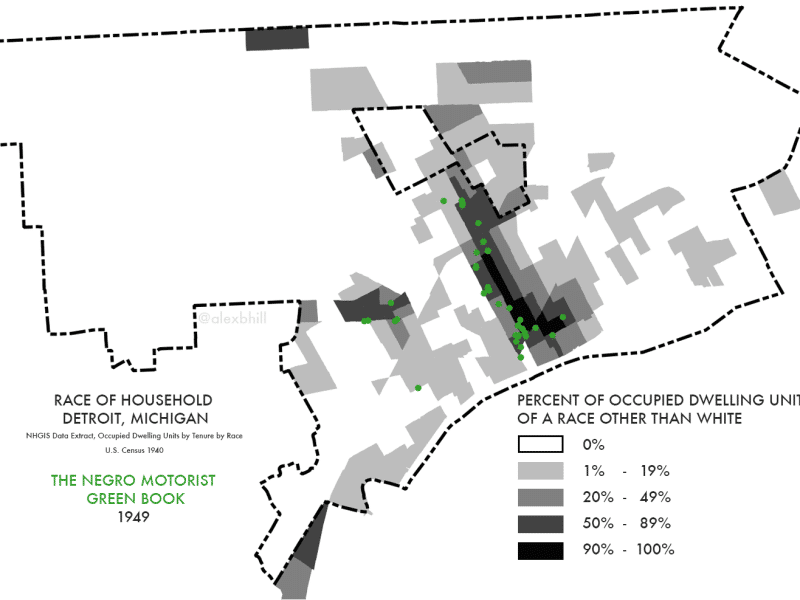
Mapping Detroit: Green Book Locations
Green Books mirrored the state of discrimination, racism, and African American rights in the nation each year. Detroit’s listings started in 1938.
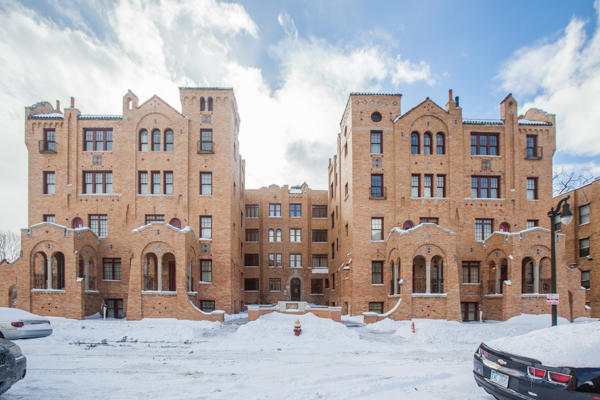
HISTORY LESSON: The significance of the Palmer Park Historic District
Palmer Park’s 57 apartment buildings represent one of Detroit’s clearest examples of intentional, high-quality multifamily planning.