Detroit small businesses navigate the pressure to stay visible on social media
As social media increasingly shapes how customers discover businesses, Detroit entrepreneurs are working to bridge the gap between running their companies and building an online presence.
Between clients, camera angles and captions, Carenna Fields has learned to work two jobs at once.
As the owner of Fierce Styles, a Detroit-based beauty and hairstyling business, her days are spent transforming hair; but in between appointments, she’s filming videos, snapping before-and-after photos and posting content in real time. It’s the kind of behind-the-scenes work that has quietly become essential for small business owners trying to grow in a digital-forward world.
With just over 80 followers on her business Instagram account, Fields is building her business online in a way that reflects how many small entrepreneurs are growing: without large audiences.
“Social media has played a huge role in the growth of my business,” said Fields. “It’s allowed me to showcase my work, connect with new clients and build trust before they even sit in my chair.”
Her content — from transformations to client experiences — has helped her build a brand rooted in confidence and self-expression. But maintaining that presence takes consistency, something she says can be difficult while actively running her business.
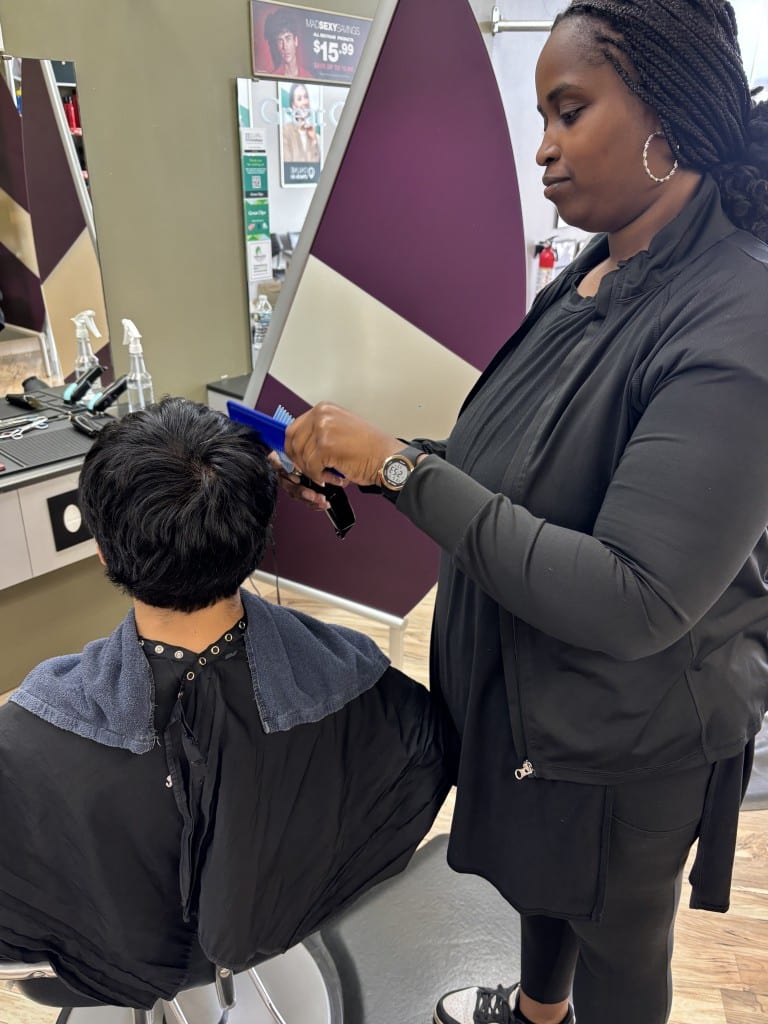
business, cutting a client’s hair. Courtesy of Careena Fields.
“One of the biggest challenges is consistency,” said Fields. “Balancing content creation while actively working can feel overwhelming.”
Even when she shows up, results aren’t guaranteed.
“Sometimes great content doesn’t always reach the audience you expect,” said Fields.
Her experience reflects a broader reality for small business owners across Detroit, where social media has become both an opportunity and a barrier.
For entrepreneurs like Trice Clark, owner of Detroit-based creative learning lab Kraftologie, social media plays a critical role in driving business — even if managing it can be difficult.
“All of my attendees from my workshops come from social media,” said Clark, who explained that capturing the content that fuels that growth isn’t always easy. “The most challenging part has honestly been the offline portion. I make stuff every day, but I don’t always set up my phone to record.”
Often, by the time the work is done, the moment has passed.
“I’m usually working with tools, gloves and masks, so by the end of it I’m like, ‘man, I should have recorded that,’” Clark said.
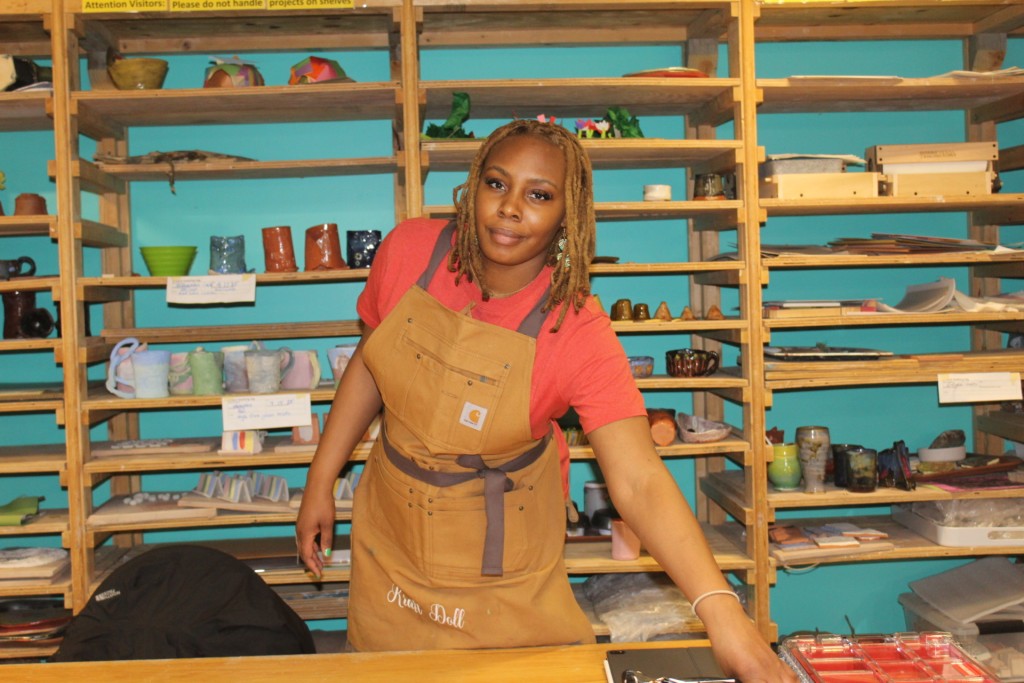
Both Fields and Clark’s experiences reflect a broader trend among small business owners. Research shows that while social media can be an effective tool for growth, many entrepreneurs lack the time, resources and digital skills needed to use it strategically. As a result, staying visible online can become an added challenge rather than a guaranteed opportunity.
Across the city, that tension is becoming more common. Social media may be free to use, but effectively using it requires time, strategy and a level of digital fluency that not every business owner has access to.
Johnny Turnage, co-founder of Black Tech Saturdays, has seen this with many of his constituents.
“We have almost a tale of two cities when it comes to social media and digital skills,” said Turnage. “Some businesses are soaring … while others, their presence is almost nonexistent.”
The divide, he says, often comes down to a lack of access to skills and knowledge.
“Not every small business owner understands the analytics behind [social media] — how to target their audience or convert attention into sales,” said Turnage.
That gap can limit growth in ways that aren’t always obvious. During major events like the 2024 NFL Draft, which brought hundreds of thousands of visitors to Detroit, Turnage said many small businesses missed a key opportunity.
“When you have nearly a million people descending upon the city, small businesses are not represented enough on social media to take advantage of that opportunity,” said Turnage.
For many entrepreneurs, the challenge isn’t a lack of effort — it’s capacity. Running a business is already a full-time job. Adding content creation, marketing and platform strategy can feel like another.
“There’s a real skills gap,” Turnage said. “It’s not just about being on social media — it’s about knowing how to use it effectively.”
Through Black Tech Saturdays, Turnage is addressing the gap through workshops, mentorship and cohort-based programs that teach entrepreneurs how to use digital tools, tell their story and reach customers more effectively.
“We have to strengthen how we teach these skills and make it easier to collaborate if it’s not your strong suit,” Turnage said.
For business owners like Clark, the challenge isn’t just creating content — it’s making sure it reaches the people it’s meant for.
“People don’t see it,” she said. “I find myself having to DM people my posts, and they’ll say, ‘I didn’t even see this.’”
So, Clark is just doing what many Detroit entrepreneurs are doing: figuring it out in real time, one post at a time.
Related Articles

From Social Worker to Salon Owner, Ky’ronda Tate Brings Luxury and Community to Detroit’s Avenue of Fashion
After years of supporting women through life’s challenges, Ky’ondra Tate is creating a space where Detroiters can feel valued, celebrated and cared for, one manicure at a time.

Small Business Social Hours foster success through face-to-face connection
Why face-to-face networking opportunities are even more important for small businesses and entrepreneurs.

Michigan Finance Coach Chris Sain Is Changing How People Think About Money
For Chris Sain, true wealth means giving back. Learn how the Michigan investor is helping others build financial freedom and stronger communities.