Detroit’s Frederick Douglass Academy Puts Students on the Map With Award-Winning GIS Program
From drone technology to college credits, Frederick Douglass Academy is preparing Detroit students for the future through an award-winning STEM program gaining national and international attention.
At the heart of Detroit’s North End neighborhood, the Frederick Douglass Academy for Young Men (FDA) explores groundbreaking STEM education while instilling leadership skills in its students. The all-male college preparatory high school hosts an award-winning Geographic Information System (GIS) program that lifts Detroit youth to new heights of academic success through geospatial technology and industry-focused internships.
The North End has long been a hotbed of musical heritage, African American cultural legacy and resident-led urban revitalization with manufacturing roots. Before history knew their names, Aretha Franklin and Motown legends Smokey Robinson and Diana Ross called the North End home. Today, the birthplace of techno music has evolved into a hub of murals, urban agricultural technology and digital connectivity. GIS Pathways at FDA introduces ninth through 12th graders to fundamentals, surveying and geospatial work. Through a partnership with Eastern Michigan University and NAFTEC, students earn nine college credits, drone licensing and industry credentials such as the Geospatial Technologies and Application Certificate (GTAC).
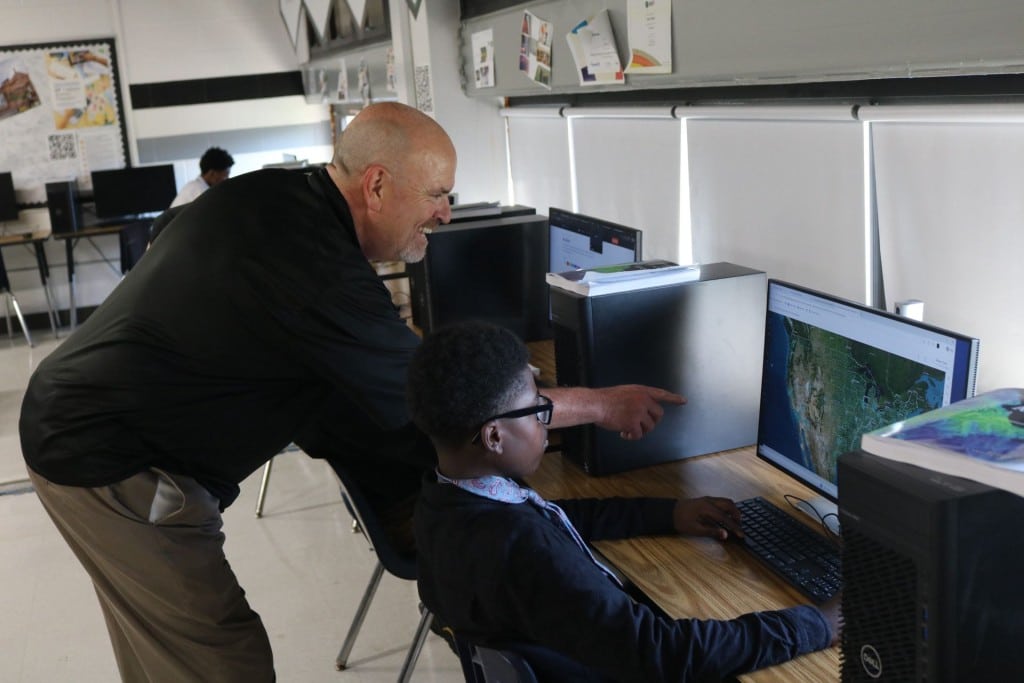
The dual enrollment initiative has hosted seven GIS and drone summer camps for 125 students. Participants have earned 2,835 credit hours, logged 12,500 internship hours and collected $500,000 in scholarships. Graduates advance to high-demand careers in environmental management, science, engineering, design, intelligence, homeland security, facility and asset management. FDA principal Dr.Willie White attributes the program’s success to individualized support and relationship-building among advisors, faculty and students, along with on-site services such as mental health therapy and resources for conflict resolution or problems at home. The academy follows a hierarchy of needs, ensuring every student’s basic needs are met, including breakfast, lunch and dinner served daily on school grounds.
“They have to feel love, and have the necessary resources. Some of them are hungry. In our budget we allocate for breakfast, lunch, and supper so when they leave, they have something to take home,” said White. “I don’t know everyone’s condition at home, but just in case they’re able to take something home to eat, and they take extra in case they have a sibling.”
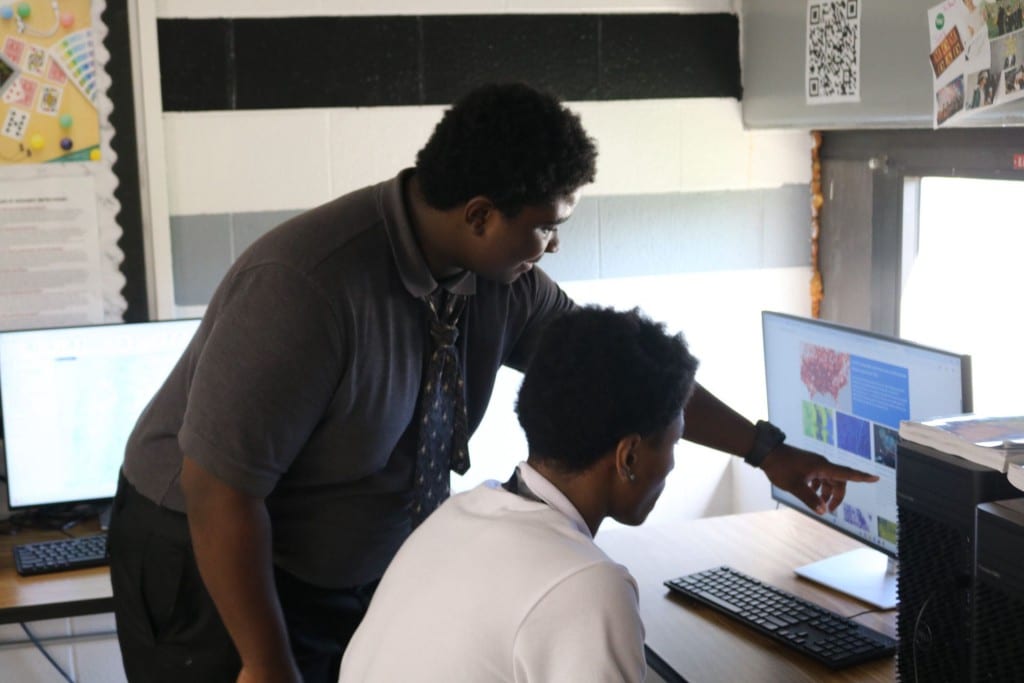
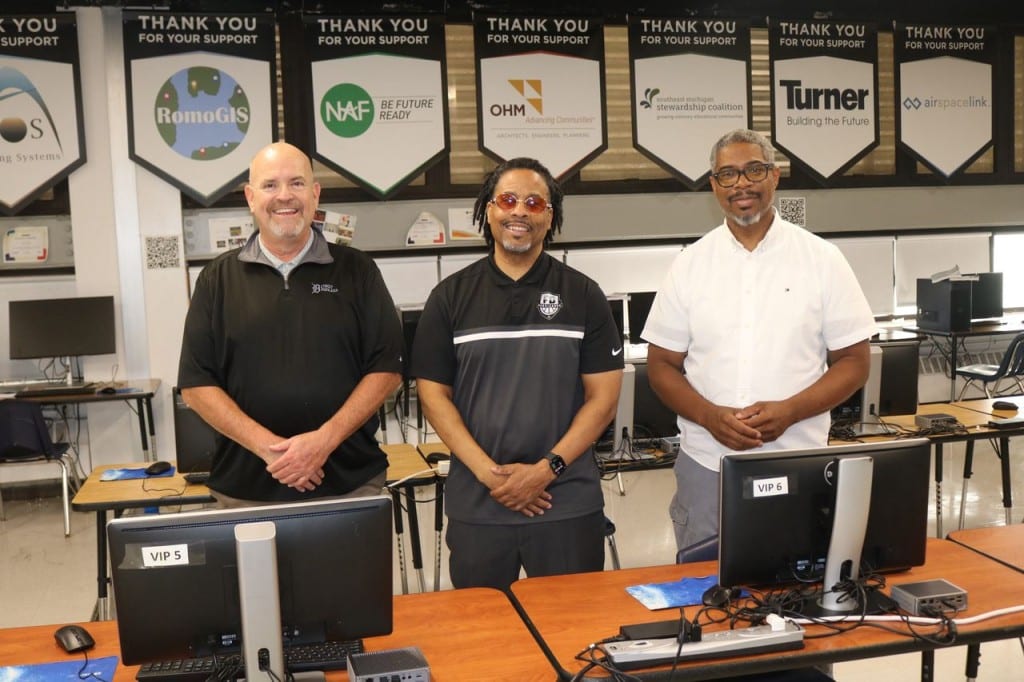
FDA’s leadership in GIS and innovative use of mapping and analytics software recently caught the attention of Esri, a global leader in GIS technology that serves governments, universities, Fortune 500 companies and organizations in more than 100 countries. Esri presented FDA with its Special Achievement in GIS (SAG) Award, highlighting the school’s innovative approach to STEM education, GIS and drone technology, college coursework and community impact projects. FDA is the first and only high school in the world to receive the honor. The magnitude of the achievement didn’t immediately register with Chad Segrist, FDA lead instructor and GIS Pathways program advisor.
“Mike Cousins from OHM and Frank Romo from RomoGIS, our co-chairs on the advisory board sent me a note saying, ‘We just won the Special Achievement in GIS award from Esri. You’re the first high school to ever win it!’” said Segrist. “There’s over 100,000 applicants yearly, and out of the 197 award winners we were the only high school and the first high school that has achieved that goal globally ever.”
The impact reaches beyond FDA’s halls. Other schools are clamoring to bring GIS programs to districts around the country.
“We have districts, Republican senators and representatives asking us to take this out of Detroit public schools and bring it to their district. We [also have] the UK and the Department of Education,” said White. “At the SAG Awards, Great Britain asked us if they could come and visit us, or could we visit them. The work that we’ve done at FDA is what others aspire to be.”
Far removed from any alternative school stigma, GIS Pathways has become a blueprint for high-demand career preparation nationwide. Similar programs merging high school education with geospatial technology have formed in St. Louis and Erie, Pennsylvania. Still, there were times when other states doubted the viability of a GIS program in a K-12 framework. Real-world applications created by FDA students, such as an alumni tracker and a bus transportation map, speak to the program’s effectiveness and provide social proof. White hopes international recognition as an esteemed application school will translate to more applicants and more certified students in the near future.
“We have high expectations of our students. They [may not] like you, but if you’re excellent, they’ll have a place for you in their organization, or you have a place for them in your organization.” said White. “Ultimately, I teach them to be leaders – especially as African American males. I tell them all the time: no one’s coming to save them.”
Author

Related Articles

Detroit Midwifery School training midwives from the community of birthing people they serve
Certified professional midwives offer additional options for birth that address racial disparities in maternal-infant mortality.

Detroit Public Schools, Michigan State University Partner to Address Special Education Teacher Shortage
As the need for specialized autism education grows, Michigan State University and Detroit Public Schools Community District are teaming up to strengthen the special education workforce.

On the Rise Academy Is Building Detroit’s Next Generation of Diverse Educators
Detroit is building its next generation of educators. On the Rise Academy is creating a more diverse teacher pipeline through hands-on training, certification and career opportunities rooted in the community.