| Follow Us:
color me rad 5k run on the RiverWalk - photo by marvin shaouni
color me rad 5k run on the RiverWalk - photo by marvin shaouni | Show Photo

Startup News

444 Articles | Page: | Show All

Detroit Derby Girls flourishes with entrepreneurial action

Detroit Derby Girls isn't just a roller derby league that is becoming both bigger and more popular. It's also a business that is providing entrepreneurial opportunities for young women across Metro Detroit.

"Not only do we skate but we are all our own employees," says Rene "Renegade" Cizio, a player on the Grand Prix Madonnas. "Every skater is required to be on a committee to be part of the league."

Those committees are what make the league's bouts at the Masonic Temple happen. The participants put in the work to prepare the space, sell concessions, do promotion and balance the books. In return, each player gets a share of ownership in the league. Right now that's five teams that have between 14-20 players each.

"It's a pretty big endeavor to rent the space, train the skaters, hold the event, sell the merchandise, do crowd control," says Cizio, who is a member of the Detroit Derby Girls marketing committee and a digital communications coordinator for a law firm for her day job. "It takes a big staff to make that happen."

Cizio adds that an average of 1,200 people attend each derby bout, and each bout this year has been a sell out. Detroit Derby Girls is a for-profit business which netted $25,000 last year. Profits are reinvested back into building the league.

Women who aspire to become part of the league go through a 30-day probationary period before earning an ownership share. Players have an option of becoming alumni members if they can't skate, such as for a pregnancy, where they can maintain their ownership status by attending public events or continuing their committee work.

"We put a lot of time and energy into it besides our committee assignments," Cizio says. "We also have to attend public events, like parades and the auto show. Each skater is required to attend one public event per quarter."

Source: Rene "Renegade" Cizio, marketing committee member for the Detroit Derby Girls
Writer: Jon Zemke

Read more about Metro Detroit's growing entrepreneurial ecosystem at SEMichiganStartup.com.

AskSupportNow develops proactive IT maintenance software

AskSupportNow isn't the first business launched by Brian Royster. The Wayne State University student ran a refurbished computer store, an enterprise he enjoyed running but didn't get rich off of.

"I told myself the next time I start a business it would be a little bit more scalable," Royster says. "That's when I came up with (AskSupportNow's) help-desk concept."

AskSupportNow
is developing a software platform that provides IT services to small- and medium-sized businesses. The Blackstone LaunchPad-based startup's technology is unique because it focuses on pinpointing and solving IT problems before they happen. It accomplishes this through tracking things like hard-drive temperature or the condition of the system's RAM.

"It reports all that information to let us know what's happening," Royster says. "It's a proactive solution."

AskSupportNow and its three-person team are in the later stages of developing this software. It recently received $5,000 in seed capital to finish software development and facilitate its launch in September.

Source: Brian Royster, CEO of AskSupportNow
Writer: Jon Zemke

Read more about Metro Detroit's growing entrepreneurial ecosystem at SEMichiganStartup.com.

Compuware employee reinvents video game controller with REvolve

Peter Von Buskirk searches for video game controller options that often frustrated the software developer, so he made his own.

The REvolve is a cross-platform controller that works for video games on PC, Mac, Android, OUYA, PS3 and Xbox360 systems. It combines a trackball function with a traditional gamepad to provide easier player movement. That was about a decade ago. Although Von Buskirk and his team knew they had a winning combination they couldn't find the right support to break through into the mainstream market.

"We came close to a retail sales deal a couple of times but it never panned out," Von Buskirk says.

The Compuware mobile app developer is giving it another go, this time taking it directly to the people with a Kickstarter campaign. REvolve is working to raise $60,000 to manufacture a short run of the controller. So far it has raised about $25,000 and has 11 days left.

"It's basically a finished product," Von Buskirk says. "There is an established trend where consumers connect directly with the developer even if the demand is small."

For information on REvolve and its Kickstarter campaign, click here.

Source: Peter Von Buskirk, creator of REvolve
Writer: Jon Zemke

Read more about Metro Detroit's growing entrepreneurial ecosystem at SEMichiganStartup.com.

WSU grad co-founds IBD social platform Girls With Guts

Girls With Guts is an online platform that provides support for women suffering from Inflammatory Bowel Disease.

The Midtown-based startup launched last year after its three co-founders met online trying to find support to deal with the disease. The website, a product of the Blackstone LaunchPad at Wayne State University, focuses on giving social support and material resources to women fighting Inflammatory Bowel Disease. It has about 7,000 visitors per month.

"We started out online but we are slowly branching into real life," says Jackie Zimmerman, president of Girls With Guts and a recent Wayne State graduate with a Masters of Library & Information Sciences.

Girls With Guts recently received $5,000 in seed capital from the Warrior Fund that will help it enlarge its online offerings and move into some real world services. The company hopes to establish weekend retreats this fall for people suffering from the disease.

"It facilitates sharing stories of success and confidence for people with Inflammatory Bowel Disease," Zimmerman says.

Source: Jackie Zimmerman, president of Girls With Guts
Writer: Jon Zemke

Read more about Metro Detroit's growing entrepreneurial ecosystem at SEMichiganStartup.com.

PishPosh turns Boston-Edison manse into podcasting start-up's home

Michael Evans is not only the type of entrepreneur Detroit wants to stake a claim here, he's the type of person who won't leave the Motor City.

He was a top employee at a New York City-based start-up that was recently acquired, splitting time between the Big Apple and Detroit. He is now here full-time building his own startup, PishPosh, in a Boston-Edison mansion he has turned into the latest version of new economy office space.

"It's a tremendous amount of space," Evans says. "We feel safe and people love to come here. Why move to Midtown or downtown when I can stay up here and have a great space?"

Evans ran community projects for Forrst, an Internet start-up that bills itself as "a community where (software) developers and designers improve their craft through design feedback." Evans became employee No. 1 in late 2010 and oversaw project and community management for the company. Forrst was acquired by COLOURlovers a year ago and Evans left the company in late February, ending a little more than two years of living in Detroit and flying to New York to work.

"I refused to move. It was too much traveling," Evans says, explaining why he chooses to stay in the Motor City.

During his time at Forrst, Evans was also working on his own startup in his spare time. PishPosh is a podcasting startup that focuses on making its own content (think podcasts and videos) and content for others. Its team of four people have worked with the likes of Moosejaw and Model D. It is now getting ready to launch its own software platform that will enable everyday people to make their own podcasts. It's currently in its private Beta and plans to launch it within a few weeks.

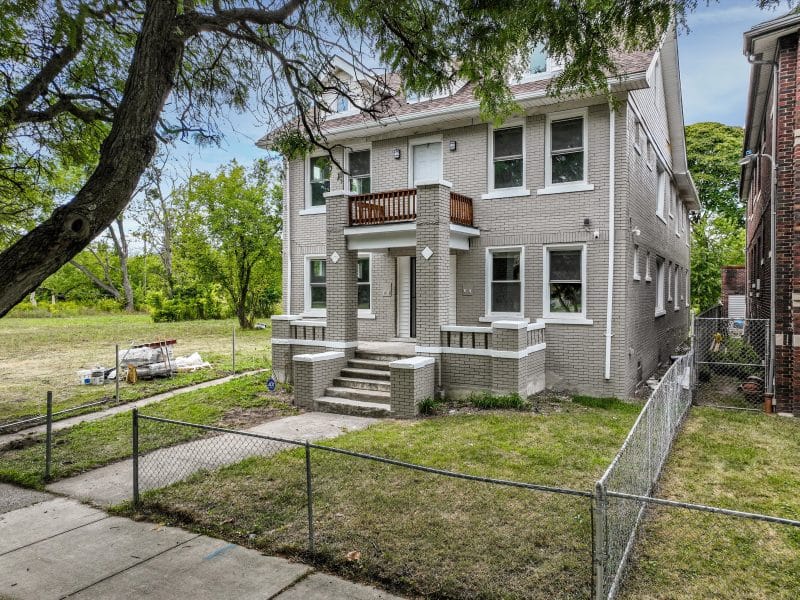
That launch will happen from the mansion in Boston-Edison that Evans currently calls home. His parents recently decided to move downtown into a high-rise apartment so they didn't have to deal with as much upkeep. Evans stayed in his childhood home, where he currently lives on the second floor. He is turned the third floor into the home base for PishPosh.

"We have multi-media setups, multi-lighting and isolation booths," Evans says. "We have the whole deal."

Source: Michael Evans, founder of PishPosh
Writer: Jon Zemke

Read more about Metro Detroit's growing entrepreneurial ecosystem at SEMichiganStartup.com.

Detroit Bikes ramps up production in west side factory

Detroit Bikes is now offering its first bicycles for sale online this month, but the company's founder would prefer his customers bought them somewhere else.

The firm is allowing its first customers to buy the bike (at $550 a pop) as part of a pre-sale. Once production is ramped up the company is going to push to have its sales done through local bike shops.

"The preference for us is for customers to be able to ride them that day," says Zak Pashak, president of Detroit Bikes. "We want them to be assembled when they buy them."

Pashak is a Calgary native who moved to Detroit from Vancouver a few years ago, buying a home in Boston-Edison and looking to launch Detroit Bikes. The company aims to create a classic American bicycle manufactured in Detroit. It has one model right now, the "A-Type", that takes pride in its streamlined design.

The bicycle has tires that are thinner and smoother than a mountain bike and thicker than a road bike. It has only three speeds and larger wheels. The frame is made of chromoly steel. The underlying theme is to create a bicycle made for riding in urban America.

"This bike will make city cycling as easy as possible," Pashak says. He adds that bikes "have sort of morphed into these gnarly beasts. We wanted to bring it back to that simple purpose. It doesn't have all those sorts of bells and whistles that doesn't help."

Detroit Bikes has already 60 prototypes that it is letting a select group of locals test out. They were built at the company's 50,000-square-foot facility on Elmira Street near Schaefer Highway on the city's far west side. Pashak and his team of 15 people are building out the factory for full production this summer. The company has hired eight people over the last year and Pashak expect to add even more soon.

"We need to get to the point where we can build 100 a day," Pashak says. "It takes quite a lot to get a factory at that level of production."

Unlike other startups in Detroit, Pashak is not making the strength of the Detroit brand a major part of his business plan. He moved here with the idea that entry costs were low enough in a place with a skilled manufacturing workforce that will help produce a product that will go up in demand.

"I believe in the city," Pashak says. "The city can produce a superior product. It's not just branding. It's the truth."

Source: Zak Pashak, president of Detroit Bikes
Writer: Jon Zemke

Read more about Metro Detroit's growing entrepreneurial ecosystem at SEMichiganStartup.com.

LevelEleven scores extra $500K in seed capital

Tack on another half-million dollars to LevelEleven's bottom line. The downtown Detroit-based startup has now raised $1.5 million in its first seed capital round, garnering new investments from the likes of private-equity investor Rick Inatome, Chicago-based Hyde Park Venture Partners, and Invest Detroit's First Step Fund.

LevelEleven spun out of Pleasant Ridge-based ePrize last fall with its Contest Builder mobile app. The app allows a sales manager to create a contest and real-time leaderboard in minutes to reward making more calls, booking client meetings, finding new sales opportunities or closing more business. LevelEleven, which calls the M@dison Building home, landed $1 million in venture capital funding right away. That funding round was led by Detroit Venture Partners.

The 6-month old business now employs nine people. It will use its latest infusion of capital to help build up its team with new hires of engineers, sales and marketing professionals. It currently has two job openings for positions in sales and software design.

"This investment allows us to grow in an orderly fashion," says Bob Marsh, CEO of LevelEleven. "We're not going to need to go on a hiring binge."

Source: Bob Marsh, CEO of LevelEleven
Writer: Jon Zemke

Read more about Metro Detroit's growing entrepreneurial ecosystem at SEMichiganStartup.com.

Bizdom grads launch Internet cake start-up Brys + Edgewood

Ever wonder what happens to Kickstarter projects after the money is raised? Some become businesses. One is growing in downtown Detroit, Brys + Edgewood.

Twin brothers Stefan and Andre Ahee and their childhood friend Jessica Malouf (they all graduated from Grosse Pointe North High School in 2007) launched Brys + Edgewood as a Kickstarter project that sells fondant cake kits online in 2011. The trio graduated from Bizdom and are now pursuing the project as a full-fledged business.

Brys + Edgewood became a reality last summer and now calls the M@dison Building home, where its three co-founders and an intern work. The company has focused mainly on Internet sales but has also worked on developing some corporate sales.

"They (sales) have been picking up since we started," Malouf says.

She adds that Brys + Edgewood is also looking at establishing a retail presence this year. "We will probably be distributed nationally by 2014," Malouf says.

Source: Jessica Malouf, co-founder of Brys + Edgewood
Writer: Jon Zemke

Read more about Metro Detroit's growing entrepreneurial ecosystem at SEMichiganStartup.com.

$15K grant turns ideas into prototypes at Life Beyond Barriers

Getting ideas from inside someone's head to prototype is often much harder than it appears. A new grant for the Life Beyond Barriers looks to ease that burden.

Life Beyond Barriers
is an initiative between Wayne State University and downtown Detroit-based tech firm Urban Science. The idea behind it is to combine medicine, science, engineering and entrepreneurship to enhance the quality of life for the injured and disabled.

It now will receive an annual donation of up to $15,000 to fund prototype design and development at Wayne State University's biomedical engineering undergraduate design laboratory. That small amount of money is expected to enable the production of about 15 prototypes per year.

"Many times the need is real but the group that has the need doesn't have the money to invest in development of the technology," says Michele Grimm, undergraduate program chair for bio-medical engineering at Wayne State University.

Some of that prototyping is already underway. One of the projects will help create a weight-lifting set for people in wheelchairs. That concept is also in the early stages of being developed into a business at the Blackstone LaunchPad program at Wayne State.

"It will be easier for a person in a wheelchair to do resistance training," says Michele Grimm, undergraduate program chair for bio-medical engineering at Wayne State University.

Source: Michele Grimm, undergraduate program chair for bio-medical engineering at Wayne State University
Writer: Jon Zemke

Read more about Metro Detroit's growing entrepreneurial ecosystem at SEMichiganStartup.com.

Peck Produce redefines urban pioneer with Boston-Edison farm

Noah Link and his small team of agricultural entrepreneurs at Peck Produce are pushing the envelope when it comes to redefining the term urban pioneer.

Peck Produce bought about four acres of vacant land from the Michigan Land Bank two years ago. The nearly one square block at 1600 Lawrence St. in the Boston-Edison area of Detroit once housed Peck Elementary School, which was torn down several years ago. Link and his partner, Alex Bryan, named the business Peck Produce in honor of the former school.

"We were lucky to get this at a good price and get started that spring," says Link, co-owner & manager of Peck Produce.

Before co-founding Peck Produce, Link spent a few years working on an organic farm near Chelsea and at Growing Hope, an urban-agriculture-advocacy-and-education nonprofit based in Ypsilanti. Bryan worked at farms in Colorado and New Hampshire before relocating to Detroit. Peck Produce now employs a team of three people with plans to hire another 3-4 this spring.

That growing team grows a variety of vegetables on the land and recently received approval to start an aquaponics system on the farm. Aquaponics lets people raise fish in a water-tank system that are then sold commercially. Peck Produce will use a closed-loop system that is generally viewed as more environmentally friendly because it reuses its resources. Plus, it will help Peck Produce increase the economic viability of its operation.

"It's just a great way to maximize what we can grow," Link says. "It offers year-round production."

Source: Noah Link, owner & manager of Peck Produce
Writer: Jon Zemke

Read more about Metro Detroit's growing entrepreneurial ecosystem at SEMichiganStartup.com.

Savorfull expands staff as it preps for public launch

Savorfull, the healthy-eating start-up, recently wrapped up the Beta test of its software platform and is ramping up for its public launch later this year.

The New Center-based company is creating a platform where people can access information about making the best healthy choices for their diet. For instance, it will provide people sensitive to peanut allergies with information on recipes and a place to interact and trade ideas with other people. The same services are offered to people who are sensitive to gluten intolerance and other food-based problems.

Stacy Goldberg, a Bizdom graduate, launched Savorfull out of the M@dison Building last year before. She and her team of five employees and a handful of interns (found through Intern In Michigan) ran a Beta test on it in the latter half of 2012.

"We learned a lot about our customers," says Goldberg, founder & CEO of Savorfull. "We learned about how to serve them and our revenue model. We also learned about building the backend of our platform."

Savorfull is currently working with Quicken Loans to provide glutten-free and peanut-free eating options at events. That work is helping introduce more potential clients to Savorfull's platform. Goldberg is looking to line up a large strategic partner for the public launch of her business in the next six months.

"We have had some really great success in the business-to-business side," Goldberg says.

Source: Stacy Goldberg, founder & CEO of Savorfull
Writer: Jon Zemke

Read more about Metro Detroit's growing entrepreneurial ecosystem at SEMichiganStartup.com.

M@dison Building's hiredMYway launches CollegeTopTalent.com

Downtown Detroit-based hiredMYway recently launched CollegeTopTalent.com, a new online portal the staffing startup hopes will connect more mature companies with young workers.

The online platform works to fill internship and entry-level positions. New workers can create an online profile complete with a resume, personal pitch and a 60-minute video. The idea is to create a clear path for big companies to find the best candidates to fill entry-level positions.

"This is a market we saw a big need on both sides for both big companies and college students," says Matt Mosher, founder & CEO of hiredMYway.

The 2-year-old start-up connects employers with potential hires through a dating-service-style model to help match people with jobs on the Internet by matching needs of employers with the appropriate skills of job seekers. Mosher says 4,000-plus employers use hiredMYway.

"We have 50,000 job seekers coming through on an annual basis," Mosher says.

The Detroit Venture Partners-backed firm currently calls the M@dison Building home and has offices for its 18-employee-and-five-intern staff in Royal Oak and Chicago. It has hired four people for sales and marketing positions over the last year.

Source: Matt Mosher, founder & CEO of hiredMYway
Writer: Jon Zemke

Read more about Metro Detroit's growing entrepreneurial ecosystem at SEMichiganStartup.com.

Russell Woods CPA takes slow-food approach to home-based biz

Greg Frazier doesn't see himself equally as an entrepreneur and a craftsman. It's why he is taking a slow-food approach to his accounting business, Greg Frazier, CPA.

The 22-year-old business is based out of Frazier's home in Detroit's Russell Woods neighborhood on the city's northwest side. His company, of which he is the only employee, helps small businesses incorporate more software into their accounting practices.

"Think of me as an intellectual craftsman," Frazier says. "I ply my craft to help my clients."

Frazier got his start as a independent contractor working software for big companies. The Cincinnati native came to Detroit in 1979 to do work for GM. He saw the projects as interesting but not challenging, so he got a Masters in Accounting from Walsh College and launched Greg Frazier, CPA in the early 1980s.

Since then it has been a one-man operation focused on staying at the cutting edge of technology and customer satisfaction. Frazier wants to keep it that way. He has no intention of hiring or trying to aggressively grow his business.

"That is very overplayed," Frazier says.

Frazier's business could easily be done from anywhere in the U.S., but he chooses to stay in Detroit because of the quality of life to which he has grown accustomed. For instance, he enjoys riding his bike from his Russell Woods home to the Detroit Riverwalk and around Belle Isle. He also helped his daughter and her new husband buy a home near his in Russell Woods to facilitate their move from New York City to Detroit.

"We are Detroiters 100 percent," Frazier says.

Source: Greg Frazier, owner of Greg Frazier, CPA
Writer: Jon Zemke

Read more about Metro Detroit's growing entrepreneurial ecosystem at SEMichiganStartup.com.

Platinum Innovation Group creates 50 jobs in downtown Detroit

Platinum Innovation Group bills itself as a "disruptive-design" firm, which sounds about right for a company that is growing rapidly down the road less traveled.

The 15-year-old company had its staff spread virtually across North America with its employees telecommuting to its offices in St. Clair Shores. That changed about a year ago when it consolidated its staff in the downtown Detroit's Globe Building near Greektown. Since then, it has hired 30 people and expanded its workforce to about 100 people, 50 of which work in downtown Detroit.

"We have been a boot-strapped company from the start," says Joe Joachim, CEO of Platinum Innovation Group. "We have never had any venture capital or outside investors. We had to focus on our customer from day one."

Some its work includes servicing the e-commerce needs of companies. For instance, it has worked in online floral delivery. It is also helps make things like funerals more accessible and cost-effective. The company is currently working on a number of event-planning avenues to keep up its growth rate.

Platinum Innovation Group also has offices in India and Brazil. However, most of its growth is based in Detroit. Joachim says his company chose to relocate downtown because he liked the community's momentum at forging a new identity and building a new business environment. Plus, the rebounding downtown is also helping his company recruit talent that wants to be in a major metropolitan area. The firm currently has 40 job openings it plans to fill as soon as it can find the right candidates for its team.

"People that are ridiculously passionate about building products that connect emotionally with people," Joachim says. "That's what we're looking for."

Source: Joe Joachim, CEO of Platinum Innovation Group
Writer: Jon Zemke

Read more about Metro Detroit's growing entrepreneurial ecosystem at SEMichiganStartup.com.

Digerati works to add 8 to staff, mostly software developers

Digerati is looking for a few good coders. Which isn't unusual for a software firm. Developers are in high demand and don't work cheaply. What makes Digerati unique is it is looking for a lot of them.

The 20-employee firm has hired three people over the last year, and has openings for eight new positions, most of which are professionals in software and IT. "If you're creative and entrepreneurial, we want to get to know you," says Mark Ostach, COO of Digerati.

The 11-year-old company has created backend software for a number of different organizations but two of its higher-profile projects are the MORE Program and Intern in Michigan Initiative. The Intern in Michigan Initiative has helped more than 2,000 companies doing business in the Great Lakes State land interns. Digerati is currently launching Intern in Ohio this year.

The MORE Program launched the InsYght software program two years ago with the idea of creating a software portal that helps connect businesses with the resources needed to grow in a fast and efficient manner. It has facilitated 25,000 users in Michigan and is looking to create a national presence.

"Our effort is to continue to inventory a lot of federal resources available to the entrepreneur," Ostach says. "We think that will be valuable to not only our entrepreneurs but entrepreneurs across the country."

Source: Mark Ostach, COO of Digerati and Mike Gentile, director of communications for Digerati
Writer: Jon Zemke

Read more about Metro Detroit's growing entrepreneurial ecosystem at SEMichiganStartup.com.
444 Articles | Page: | Show All
Share this page
0
Email
Print
Signup for Email Alerts