Freep editorial: Detroit could stop the bleeding with vision
A Freep writer says the city doesn’t need a big population to be a world-class city; it needs the right population to be a world-class city.Excerpt: I remember all the hype a decade ago about staying above 1 million.
That nice round number really didn’t mean scratch, even in terms of
federal aid, except as a symbolic benchmark. Bigger is not necessarily
better. But there’s no question that many of the people bailing are
working- and middle-class families, who help hold up the city’s tax
base and glue together its neighborhoods.Even Detroit’s
historically strong and stable neighborhoods, like East English Village
and Boston Edison, are feeling the creep of blight and abandonment.
Once that happens, property values and median incomes start to fall. It
becomes a downward spiral. To preserve its tax base, the city must find
ways to keep these strong neighborhoods stable.Longterm, though,
Detroit needs to start planning now for a smaller city. Let’s start
looking at vacant land as an opportunity, a resource we can convert to
parks or urban garden, or assemble for green economic development.
“Detroit should become the greenest city in the nation,” Deborah
Younger, executive director of LISC, told me. Let’s keep the swag but
get a new identity — and a suit that fits.Read the entire article here.
A Freep writer says the city doesn’t need a big population to be a
world-class city; it needs the right population to be a world-class
city.
Excerpt:
I remember all the hype a decade ago about staying above 1 million.
That nice round number really didn’t mean scratch, even in terms of
federal aid, except as a symbolic benchmark. Bigger is not necessarily
better. But there’s no question that many of the people bailing are
working- and middle-class families, who help hold up the city’s tax
base and glue together its neighborhoods.
Even Detroit’s
historically strong and stable neighborhoods, like East English Village
and Boston Edison, are feeling the creep of blight and abandonment.
Once that happens, property values and median incomes start to fall. It
becomes a downward spiral. To preserve its tax base, the city must find
ways to keep these strong neighborhoods stable.
Longterm, though,
Detroit needs to start planning now for a smaller city. Let’s start
looking at vacant land as an opportunity, a resource we can convert to
parks or urban garden, or assemble for green economic development.
“Detroit should become the greenest city in the nation,” Deborah
Younger, executive director of LISC, told me. Let’s keep the swag but
get a new identity — and a suit that fits.
Read the entire article here.
Related Articles
Former inmate turned entrepreneur is moving Detroit, literally and musically
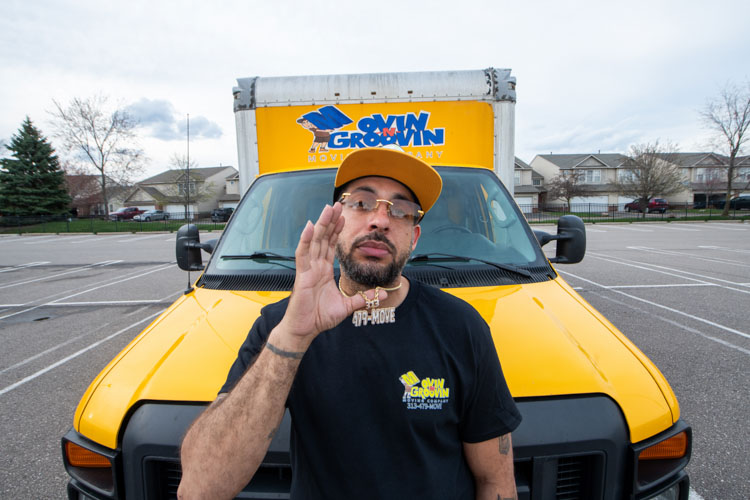
Detroit entrepreneur Michael Parrish rebuilt his life after serving nine years in prison by transforming a single box truck into a growing moving company, while also releasing a hip-hop album inspired by his life story.
With a legendary juror, ‘Trabajadores’ show connects art, labor, Latino identity
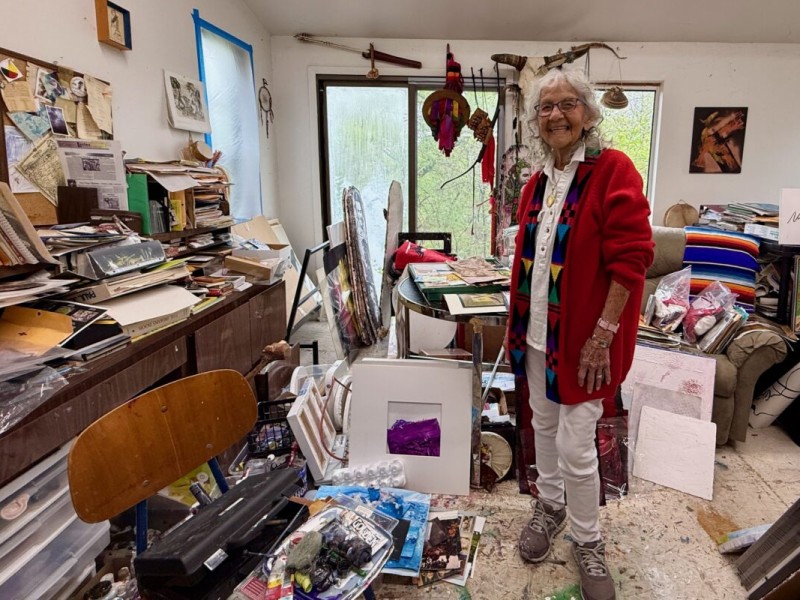
From construction sites to canvas, a Detroit exhibition brings Latino workers into the spotlight.

The Tuba in the Laundry Room
In a southwest Detroit basement, a brass and wind band rooted in Mexican tradition has gathered to rehearse for more than 25 years.