Midtown Moving Guide
What is it when pedestrians define a neighborhood? One walks a dog.
Another walks to the bakery. Yet another walks to work, to dinner, to a
movie. You can do that in Motown? Well, yes, in Midtown.
Students, restaurant-goers and cultural patrons have been walking to
and from their cars in Midtown for a long time. Now, people are walking
to and from their homes.
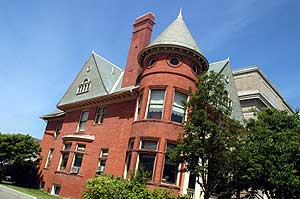 Midtown has always been cool, in the sense that art, students, music
and bars make a scene cool. Through the years, it has matured, gained a
stable population, increased its assets and has thrived as a diverse
community. It’s two square miles of sheer vitality.
When you’re there, you know you’re in the midst of it. Distinct from
downtown, it is a village of about 17,000 (with a daytime population of
over 60,000) that thrives on diversity of all kinds. The population is
representative of all ages and cultures, largely due to the expanded Wayne State University
residential students and its medical school, but also because
distinctive people want to be here. Students comprise about 20 percent
of the population. There is also a substantial number of middle-aged
people and seniors living in the area.
“People moving here are not looking for neighborhoods where people look the same,” says Sue Mosey, president of the University Cultural Center Association (UCCA), which helped to define the area within the Ford, Chrysler, Lodge and Fisher freeways as Midtown.
People are also moving there for its prime location. The Midtown
moniker includes the Cass Corridor area, Brush Park, the Detroit
Medical Center, the cultural center and Wayne State University.
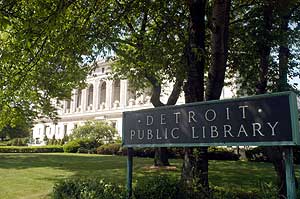 Nancy Skowronski, director of the Detroit Public Library, had lived
in Farmington Hills where her husband, Dennis Skowronski works. She was
looking for a shorter commute to her job, as well as a unique place to
live. She and her husband found a condo in Ven Manor, five blocks from
the library.
“One of the benefits of living in Midtown is that you’re two minutes
from any of the expressways,” she says, adding, “I do a lot of Lansing
commuting.”
But it’s not all about freeway access. It’s also about pedestrian access. Skowronski walks to work, walks to Honest?John’s
for breakfast, walks to the restaurants on Woodward, and wishes she
could walk to a local market. And when she’s not walking, she is
cycling around the medical center.
Skowronski believes this is “seminal moment” for Midtown. “When we
first moved (three years ago), one of our thoughts was, ‘How long will
it take for this place to take off?’ There was some development going
on, but nothing like what’s going on now. Every day you drive home and
one of these abandoned buildings has (a sign) ‘Coming soon, lofts.’
That’s fascinating to watch.”
She says the extent of development is such that Midtown is poised
for great things; although, she says, “I don’t want it to become Royal
Oak … I don’t want it to become an overly developed, brand-new area. I
think it needs to retain some of its urban character.”
Claire Nelson talks about walking to the Detroit Film Theatre
at the Detroit Institute of Arts, several blocks away from her home in
Canfield Lofts, as if it were on the corner of her block. She and
husband Francis Grunow, executive director of Preservation Wayne,
share one automobile. “We don’t like to use it,” she says. “We like to
keep it here as much as possible. … I like to walk a couple blocks, not
a mile, to have a cup of coffee.”
Of all the neighborhoods in the city, Midtown appealed to Claire and
Francis as a place to live because of its diverse living arrangements –
apartments, lofts, condominiums, single family homes. “We both have
great affection for the historic districts throughout the city,
especially where the residential historic buildings are largely
intact,” she says. “We love Boston-Edison, Indian Village, but Francis
and I, coming from New York, really wanted a neighborhood where we
could walk outside our home and within a few blocks, grab a cup of
coffee or go to a museum or go out to eat. Midtown especially appealed
to us for that reason.”
Something old, something new
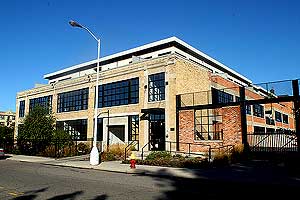 From new loft developments to restored historic homes, there are
many types of places to live and a variety of price points in Midtown.
The area is teeming with architectural diversity. Historic homes can
be found on Ferry Street and in Brush Park, Cass Park and the small but
charming West Canfield Historic District.
There are also newer, modern options. Bob Slattery’s Stuber-Stone helped launch the loft movement in Detroit urban design. He is also co-developer of the Canfield Lofts
and other apartment/condo conversions. Other local residential
developers, Colin Hubbell and Julio Bateau, have built or renovated
homes on Ferry Street, all keeping with the area’s historic feel.
On the upscale end, there are places like the Park Shelton,
which recently transformed its apartments into condominiums that range
from $240,000 to $300,000. The Ellington loft condominiums opposite
Orchestra Hall offer similar living, with a modern design.
Model D has many listings for places to move, including lofts,
condos and apartments. For years, UCCA has promoted a City Living guide
for people looking for rental housing. Its web site also lists housing
for sale. Visit www.detroitmidtown.com.
Rents range from as little as $300 for a studio to $1,200 for a
three-bedroom loft or apartment. You can purchase a studio apartment or
loft for around $100,000, or a luxury condo unit in a mansion in Brush
Park for more than $300,000.
 Mosey feels strongly that an urban community thrives on diversity of
all kinds, including income diversity. There are many options for
low-income and senior housing on the east and west sides of Woodward.
Cultural diversity has been the enduring legacy of Midtown, says
Jeffrey Montgomery, executive director of the Triangle Foundation, an
advocacy organization for gay and lesbian rights. He has lived in the
area more than 25 years. “In this neighborhood there are gay-owned
businesses and there are businesses that aren’t gay at all, but any
given night you might think you are in a gay bar. That’s the thing
that’s great about it. … This is definitely a progressive neighborhood.”
Kathy Beard, program coordinator for Academic Program Review at
Wayne State, says that the university’s international student
population adds diversity. “I can get on any elevator at Wayne State
University, if there are five people, three are speaking a different
language. Every country, just about, is represented.” Beard says she
experiences a kind of “culture shock,” when she returns to her suburban
home at night.
The area also has a considerable diversity in religious institutions, too, from Ecumenical Theological Seminary, which is multi-denominational, to a Muslim mosque on Cass and Forrest, located next to the Cass Café. The Cathedral Church of St. Paul anchors the center of Midtown. There are also seven other churches and another mosque.
Livable and walkable
Some believe that you can’t define Midtown without marveling at its
evolution over 30 years. Simply put are the observations of an auto
mechanic who has been serving cars throughout the transition. “Our area
has changed,” says Bob Hall, co-owner of Campus Collision. At one time
in the neighborhood, he says, “people would pull up in their car, go
straight to whatever they were doing, as close as possible to the door,
then go straight back to their car and leave.” Now, he says, it’s not
unusual to see a young woman jogging alone. “That would just never
happen.”
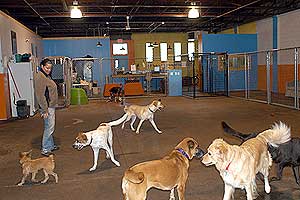 You also wouldn’t have seen people walking dogs. Many of the customers who leave their dogs with Canine to Five,
a dog day care service in Midtown, live in the area. “When you have a
dog, you have to spend time outside,” says Liz Blondy, owner of Canine
to Five. “They made a choice to live in Midtown. You can’t bring your
dog to day care every day, so my customers in Midtown take their dogs
for walks. I’ve seen my customers walking their dogs down the street.
That shows that they’re pretty comfortable with the livability (of the
area).”
Midtown is serviced by Detroit and Wayne State University police,
enhancing its security. “Wayne State has the safest campus in
Michigan,” says Beard of Wayne State.
Each year, thousands of Wayne State students discover Midtown, but
so do their parents through an orientation program. “I brought a family
from Rochester down. … They were amazed at how safe it was. Once they
see the campus and that it’s in an urban environment, they want to
venture to other places.” That’s when Beard recommends local
restaurants and other attractions.
 Midtown is so broad that everything may not always be reachable on
foot, but everything you’d want is at least close to home. Want to eat
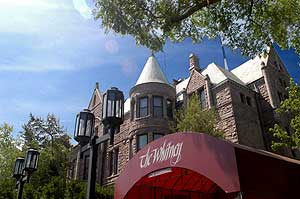
out? There are the longstanding bistros on Woodward – Union Street and Majestic Café – and the classic community restaurant with a creative menu, Traffic Jam. You want ethnic? Try Mario’s for Italian. Middle Eastern? Byblos. Indian? American Masala. International? The International Institute’s Melting Pot. Elegance? The Whitney,
of course. With at least 30 restaurants to choose from, including a few
fast food options, you will find your dining needs met easily.
There are also watering holes, of course. How about a micrcobrewery? The Motor City Brewing Works
offers an intimate setting for sampling excellent local beers. There
are also plenty of places to get a six-pack, if that’s your pleasure.
A community needs more than restaurants, bookstores and galleries, of course. Start with grocery shopping: University Foods
on Warren and the Lodge freeway has distinguished itself with a sushi
bar and extensive international foods. And across Chrysler Freeway is
the granddaddy of vegetable, meat and fish markets – Eastern Market –
less than a mile away. Need a hardware store? Car repair? Florist?
Again, you’ll find them within short drive from anywhere in Midtown.
What about medical care? Some of the finest hospitals in Michigan are
also within a few minutes of home, including two outstanding emergency
facilities at Detroit Receiving and Children’s hospitals.
 The concept of “livability” is subjective, says Colin Hubbell, a
local residential developer, whose office is located in the Canfield
Lofts building. “If you wan to live within a mile of a Circuit City and
a Super K, move to Canton. However, if one’s personal definition of
livability includes a very urban, pedestrian experience … then, I
suppose Midtown is pretty livable.”
Residents are looking forward to a 1.5 mile Greenway loop that will
offer pedestrians, roller bladders, and cyclists protected, landscaped
space within the core of Midtown. There could be more green space, of
course, and a market within walking distance. And there’s still room
for more entertainment clubs and galleries. But all things considered,
you get a sense that Midtown is now experiencing its “birth of the
cool.”
Directions to Midtown
From the East:
Take I-94 West and continue to
Exit 215C toward M-1/Woodward Ave/Brush St. Stay straight to go onto
Edsel Ford Fwy East and turn left onto Woodward Ave. Arrive in Midtown.
From the North:
Take I-75 South to Exit 53A
toward Warren Ave. Stay straight to go onto Chrysler Dr, and then turn
right onto Warren Ave. East. Arrive in Midtown and stay straight to
either Woodward or Cass Ave.
From the West:
Take I-96 East and take Exit 190A
to merge onto I-94 East toward Port Huron. Take the M-1/Woodward Ave
Exit 215C toward John R St. and stay straight to go onto Edsel Ford Fwy
East. Turn right onto John R St., and then turn right again onto
Hendrie ST to Woodward. Arrive in Midtown.
From the South:
Take I-94 East toward Detroit.
Take the M-1/Woodward Ave Exit 215C toward John R St. and stay straight
to go onto Edsel Ford Fwy East. Turn right onto John R St., and then
turn right again onto Hendrie ST to Woodward. Arrive in Midtown.
Take I-75 North toward Detroit and continue to Exit 50 toward Grand
River Ave. Stay straight to go onto Fisher Fwy West and turn left onto
Woodward. Arrive in Midtown.
Photos:
The Max Fisher Music Center
UCCA at the David Mackenzie House
Detroit Public Library
Canfield Lofts
Park Shelton
Canine To Five
The Whitney
All Photographs Copyright Dave Krieger
Related Articles

Juneteenth: Freedom’s promise is still denied to thousands of blacks unable to make bail
Just as with so many other criminal justice policies, pretrial detention disproportionately affects African-American men and women, destabilizing black families in the process.

Michigan Adventurer to Bike 1,000 Miles Across State to Spotlight Hidden Form of Domestic Abuse
A Michigan adventurer is biking over 1,000 miles across both peninsulas this summer to raise awareness about economic abuse: a hidden form of domestic violence that affects countless survivors across Michigan.

Detroit schools are making real gains in reading and math: 4 strategies that are working
The city’s schools are making progress faster than peer districts, but that progress could be fragile.