The Tuba in the Laundry Room
In a southwest Detroit basement, a brass and wind band rooted in Mexican tradition has gathered to rehearse for more than 25 years.
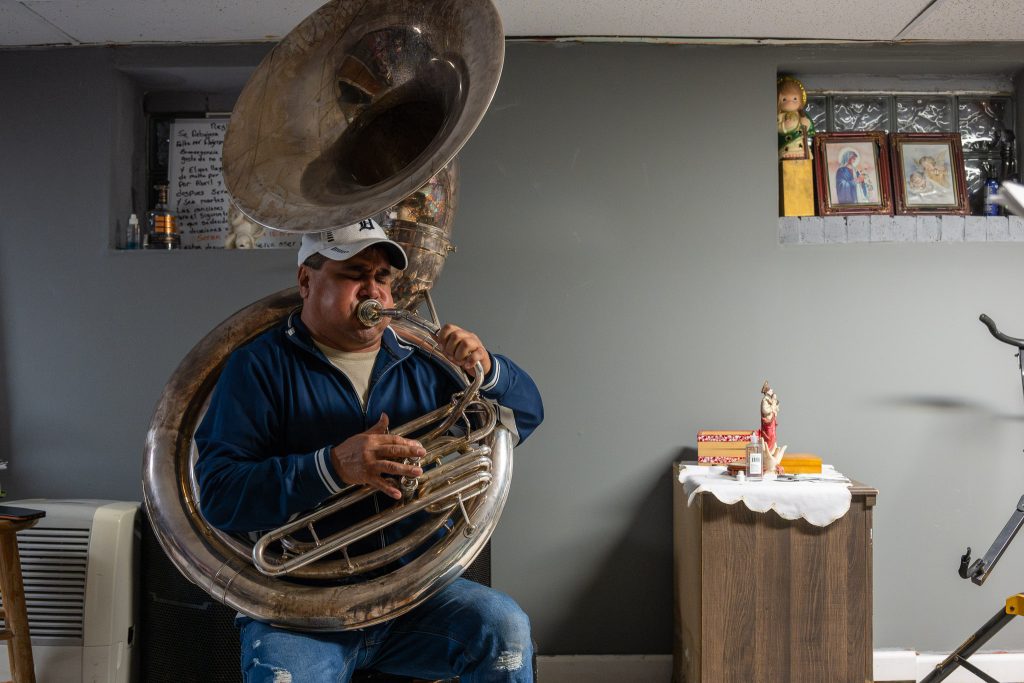
Juan Victoria López, 51, adjusts the valves of his sousaphone with his right hand. The bell rises close to the ceiling, leaving only a few inches of space above it. The brass instrument has worn matte along the buttons, where his hands return most often. He blows into the mouthpiece and the sousaphone answers, low and metallic.
Brrr, brrr.
Beyond the main room, an open section leads into a laundry area with a washer, dryer and cleaning supplies stacked nearby.
On their first rehearsal of the season, not everyone is here. The band, Los Rebeldes, begins anyway.
Los Rebeldes, led by Juan López, have practiced weekly in this southwest Detroit basement since the late 1990s. The brass and wind group, which includes his son Bryan López on vocals, plays sinaloense-style banda music. Juan López arrived from Guanajuato, México, and found no banda de viento in the city. He built one from scratch.
A High-Decibel Sanctuary
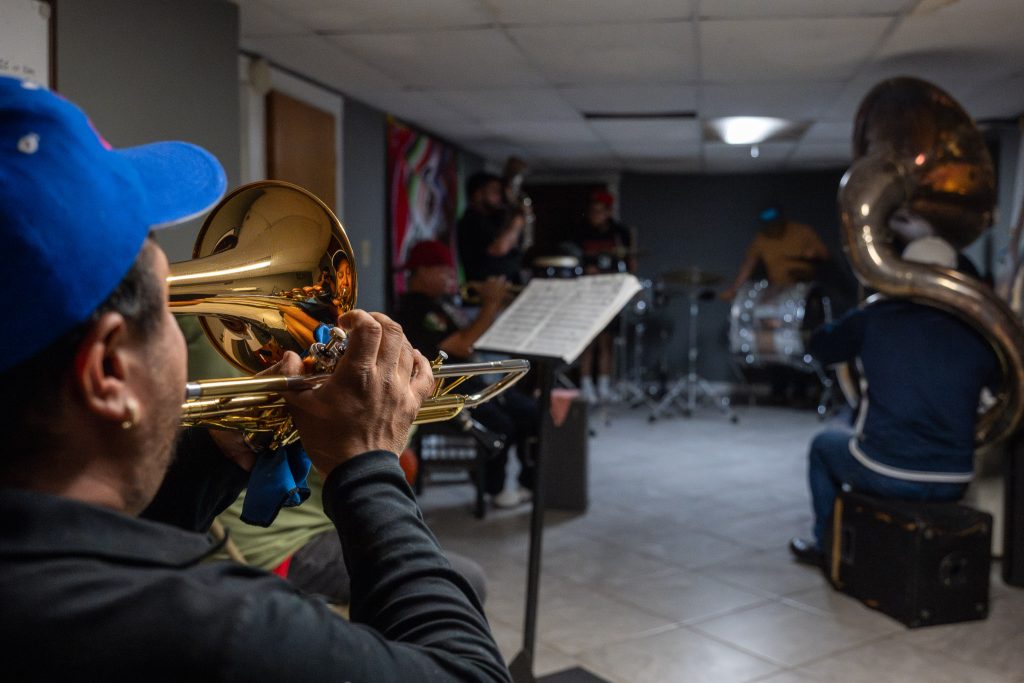
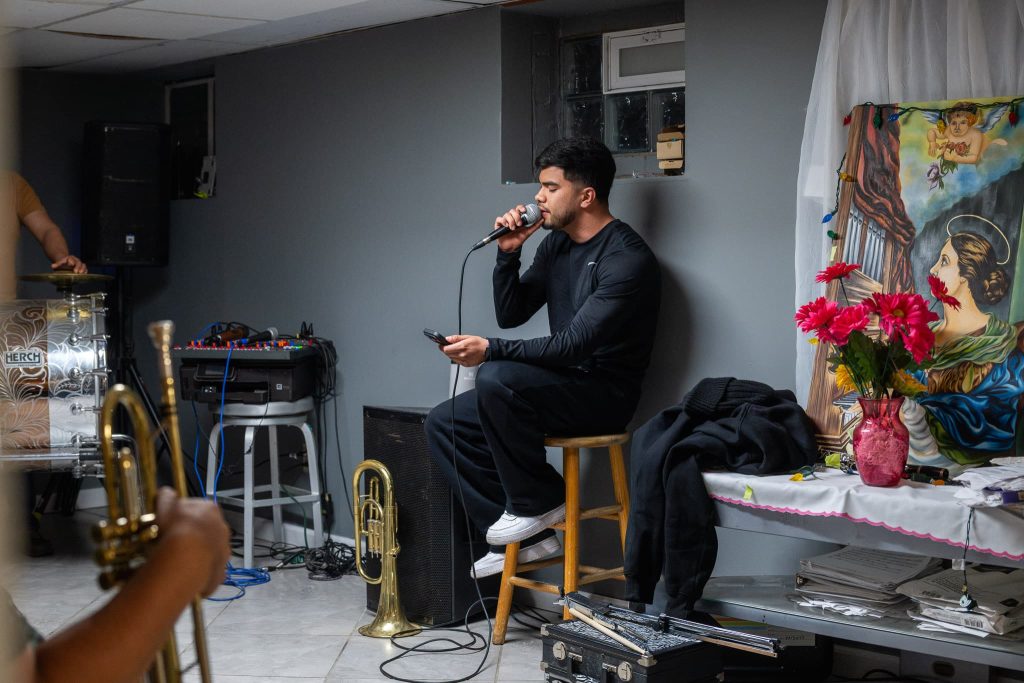
Fluorescent panels set into the drop ceiling cast a dim, uneven light. Shadows gather in the corners, where the congas, tambora and tarolas crowd together with their players. Bryan López, 24, Juan’s son and one of the band’s singers, sits tall on a wooden stool. Beside him, a devotional image of Santa Cecilia, patron saint of musicians, rests on a small rack covered with a white cloth. A pink vase filled with artificial flowers sits in front of it.
Juan López, wearing a white Detroit Tigers baseball cap and jeans, shifts his weight and sits atop a black, worn speaker cabinet. The song “Ilusión 98” fills the room. A steady tap from Juan’s boot keeps time against the tile floor. The band has gone through several names over the years: Banda Lucero, then Banda El Cubilete and finally Los Rebeldes.
During a pause in rehearsal, someone notices a musician is missing. Bryan López points toward the street.
“Lo acabo de ver,” he says. I just saw him.
“Me dijo que ahí venía.” He said he was on his way.
Footsteps move across the floor above. Juan López lifts a bottle of water and drinks.
“Ojalá no lo hayan parado,” someone says. Hopefully they didn’t stop him.
No one answers.
A short burst of trumpet cuts through the silence.
After work, the music
About an hour into rehearsal, Juan López rests the sousaphone on the floor and presses his fingers into his cheeks. He learned to play the trumpet at 14, in his hometown San Nicolás de los Agustinos, Guanajuato, where a teacher from the pueblo’s band told him he was made for the instrument. When he arrived in Detroit in the late 1990s, what he could not find was a banda de viento.
So he started one.
The band grew through relatives, neighbors and word of mouth. Finding a tubero was harder, so Juan López taught himself the tuba.
“La tuba es la base de la banda,” he says. The tuba is the foundation of the band. “Sin tuba una banda no puede ser.” Without a tuba, a band cannot exist.
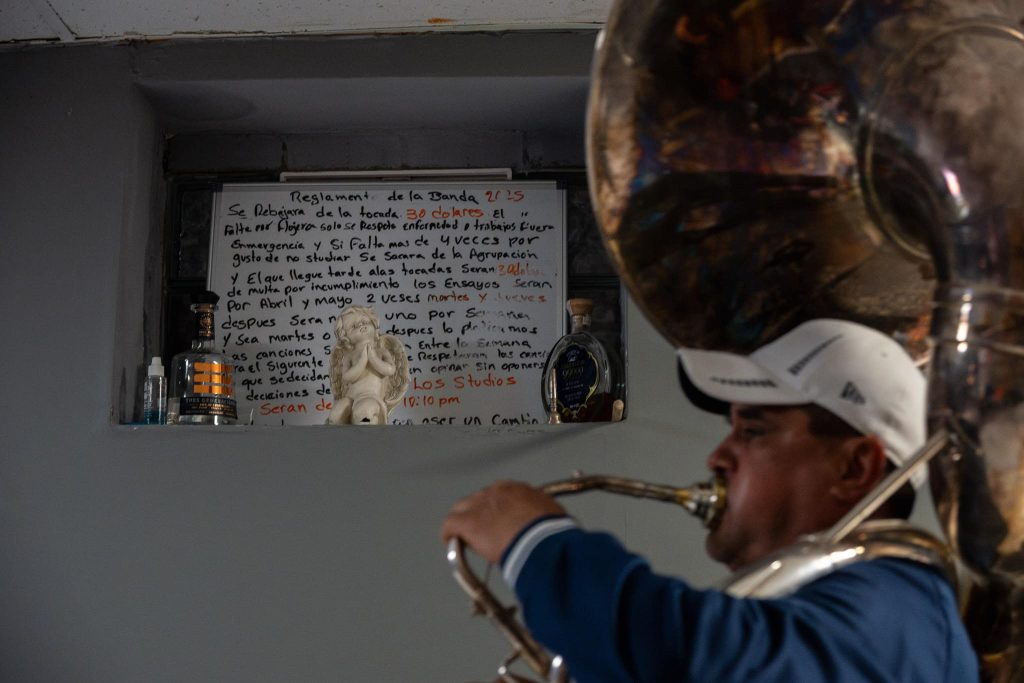
In the recess of a basement window, a whiteboard sits on the wall ledge between an angel statue and empty bottles of tequila. Miss a performance without a valid excuse, and $30 is taken from your pay. Four absences “por gusto de no estudiar,” for not bothering to show up, means removal from the group.
The basement, Juan López says, has always been the same. In the early years, more than 25 people would pack in. “Llegaban los amigos al cotorreo,” he says. “Se llevaban su cerveza, su doce, y ahí escuchando que estudiáramos. El concierto gratis.” Friends would come after work, bring their beer, a 12-pack, and stay to listen. A free concert.
Juan lifts the instrument and slips into it in one practiced motion.
“¿Cuál sigue?” someone asks. Which song is next?
He names the next song: “Tus Mentiras,” a romantic ballad by Los Bukis, in a banda adaptation.
Me nace del corazón
The sousaphone begins. The trumpet follows, then the percussion and clarinet come in. Bryan López closes his eyes and leans toward the microphone.
“¿No sé por qué no fuiste sincera? Dejaste que yo más te quisiera”
I don’t know why you weren’t honest with me. You let me love you more and more.
Bryan López grew up listening to his grandfather sing but had not always been the band’s singer.
He first joined the band when he was 15 years old. At first, filling in on different instruments felt like a game.
When a tambora player left, Juan López put him on tambora. When a tarolero left, he moved him to the smaller drums. Then he became one of the band’s singers, and started taking it seriously.
“A mí me encanta ser mexicano, y estoy muy agradecido de lo ando haciendo ahorita,” he says. I love being Mexican, and I am grateful for what I am doing now.
He was born in the United States.
“Si yo tuviera la chance,” he says, “yo quisiera ser cantante 100%” If I had the chance, I would want to be a singer full-time.
By day, Bryan López drives a truck for his father’s company.
Juan López runs a landscaping company whose peak season mirrors the band’s, June through September. After a day of physical work, he says, the music takes the tension out.
Juan López thought this would be a slow season, or “a cómo está la situación,” he says. Given how things are right now. The band has dates booked through the season, including a baile on May 30 at El Santuario in southwest Detroit.
“Mientras Dios me dé, preste vida y salud, yo pienso que seguiré en esto, porque pues esto, como dice la canción, me nace del corazón.” As long as God gives me life and health, I will keep going. The music comes from my heart.
The missing musician does not arrive.
No one says more about it.
Point of Entry is a series exploring the lived realities and vital contributions of immigrant communities across Southeast Michigan. This is a collaboration with New Michigan Media, supported by the Community Foundation for Southeast Michigan. See more stories from this series here.
What is a banda de viento?
A banda de viento is a brass, woodwind and percussion ensemble. Banda Sinaloense is one Mexican expression of that tradition. It developed in the state of Sinaloa in the 19th century, when European brass instruments arrived on the Pacific coast through trade and migration. Local musicians adopted the instruments, taught themselves and made the sound their own. The music became the soundtrack to the milestones of Mexican community life: quinceañeras, weddings, Sunday afternooan celebrations. Bands like Banda El Recodo and Banda MS helped bring it to national and international audiences.
About “Ilusión 98”
“Ilusión 98” is a banda arrangement that gained popularity in Mexico in 2025. The original, “Es Ilusión,” was recorded as a ballad by Venezuelan artist Néstor Zavarce and reached number one on the Venezuelan charts in May 1962 (Billboard Music Week, May 12, 1962, p. 22).
About “Tus Mentiras”
“Tus Mentiras” was first recorded by Los Bukis, the Mexican group led by Marco Antonio Solís, on their 1988 album Si Me Recuerdas. A ballad about love and betrayal, the song became one of the group’s most popular recordings. In 2025, Moy Bobadilla released a banda arrangement of the track, giving the classic hit new life with a new generation of listeners.
Related Articles

Inside Dennis Reed II’s Mission to Make Detroit a Film Powerhouse
Detroit isn’t waiting for Hollywood’s approval. Filmmaker Dennis Reed II is helping redefine independent cinema, producing dozens of films and showcasing why the Motor City remains a blueprint for creativity and storytelling.
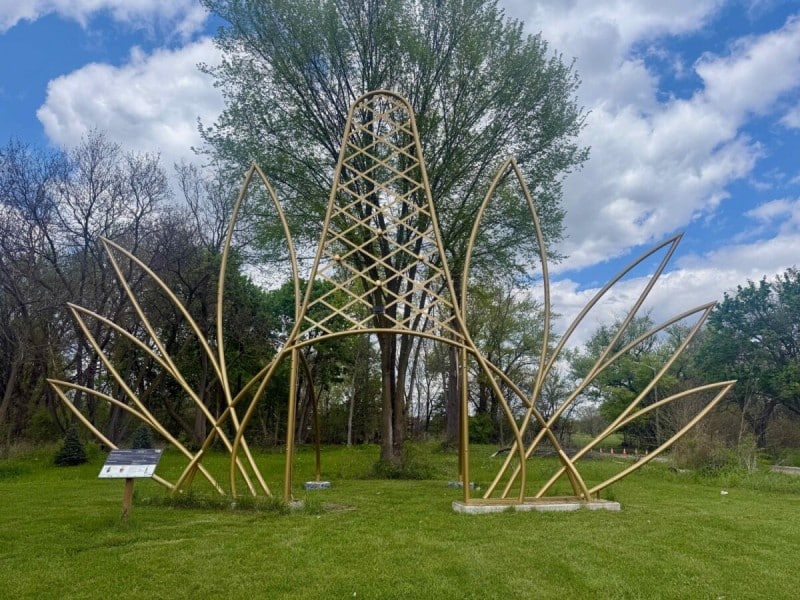
How Detroit’s East Canfield Art Park merges public art, health data
Sculpture at East Canfield Art Park on Detroit’s east side embeds air quality monitors in public art, providing real-time environmental data for a community living near industrial facilities.

Motown’s Black women songwriters and producers were the invisible architects behind the pop music juggernaut
Few people probably know the female songwriters featured in this article, yet Motown relied heavily upon their contributions to cement its place in music history.