Composting project empowers Detroiters to reduce food waste, protect the environment
Food waste makes up one-quarter of landfill waste and contributes to more methane emissions than other landfill materials. The Detroit Community Composting Collective Project is out to curb food waste by training backyard composters.
A banana peel, a brown leaf, and a little bit of time can make the world a safer place.
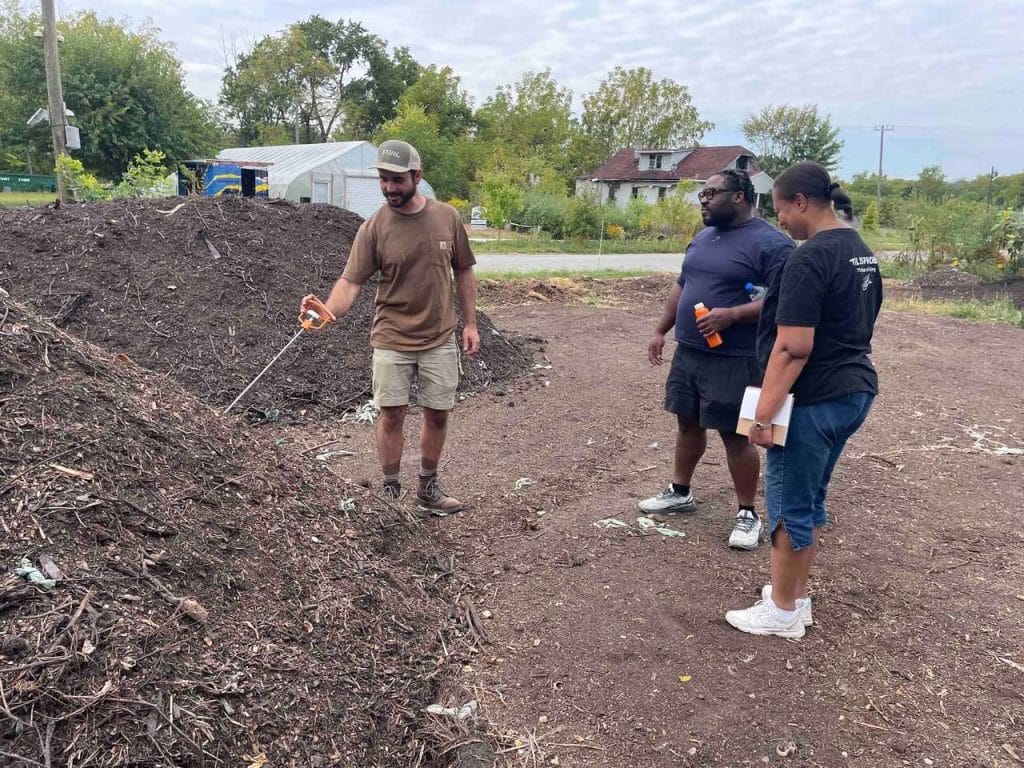
That’s the premise behind the Detroit Community Composting Collective Project, or DCCCP, an effort that brought composting to more than 100 local homes last summer. Coordinated by a coalition of Detroit-based food, waste and environmental justice organizations, the project provided supplies and education to help residents turn their food scraps into environmental gold.
The DCCCP, which completed its pilot phase in the fall of 2025, recruited everyday Detroiters to attend trainings about the dos, don’ts, and benefits of composting. The project lowered barriers by providing composting equipment, readying residents to protect the planet right from their kitchens.
Organizers are now analyzing project data with the intent of releasing a full report in the spring. Amy Kuras, research and policy program manager at Detroit Food Policy Council, says that the DCCCP diverted significant pounds of waste just via its backyard composters.
Instead of taking up landfill space, leaching into the water table, and polluting the air through exorbitant methane production during decomposition, food scraps can create healthier soil, enrich gardens, and create a more bountiful garden, Kuras says.
“It’s really the circular economy idea,” she says. “Nothing ever really goes to waste.”
Recruiting Detroiters as composters
The project took root when jon kent, co-founder of Sanctuary Farms, received an unexpected offer of financial assistance. Out-of-state organization Industrial Labs ― now Full Circle Future ― wanted to support the farm’s efforts to simplify paths to composting.
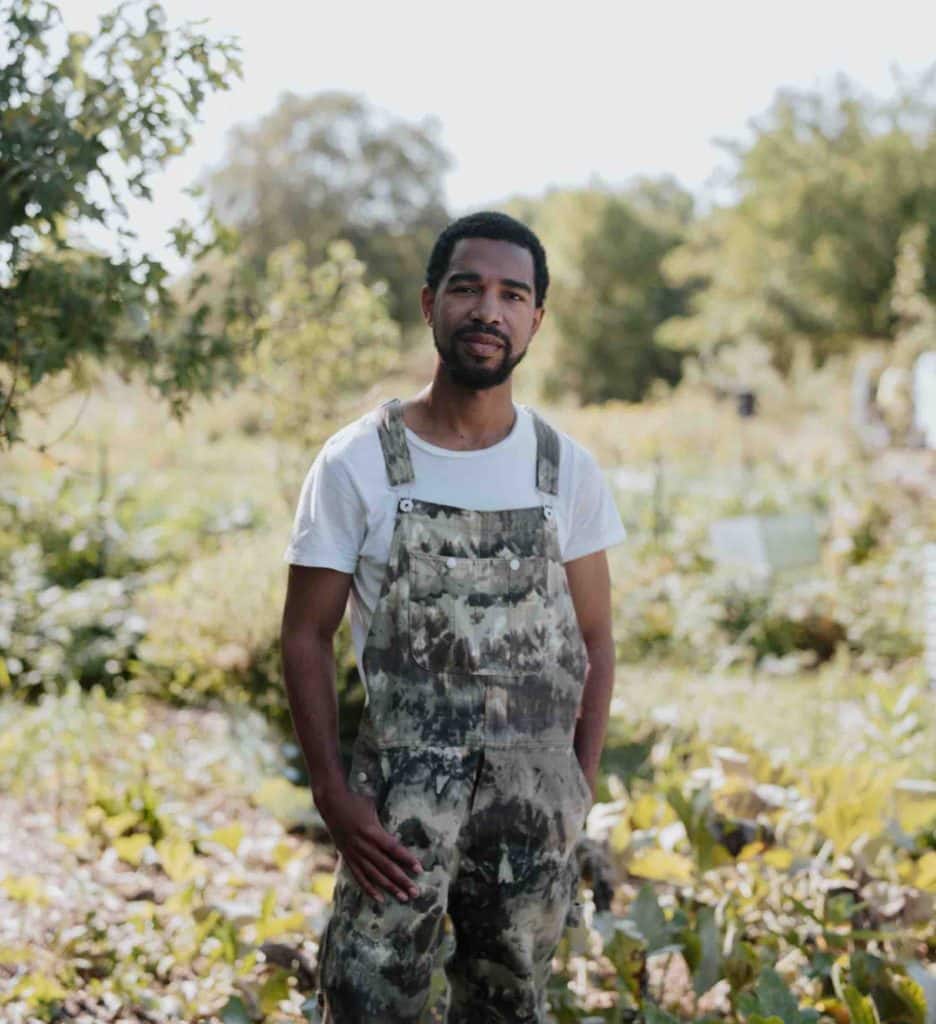
With the impetus of financial backing, kent, who writes his name without capitalization, pulled together leaders passionate about the community value of individual composting, including Sanctuary Farms, Detroit Black Community Food Sovereignty Network, Detroit Black Farmer Land Fund, Detroit Food Policy Council, and Oakland Avenue Urban Farm.
And then “we got to work,” kent says. The coalition created a pilot project intended to equip 200 Detroit residents to compost. They decided to train 100 people as backyard composters and teach another 100 “community-scale composters” to properly collect food scraps and drop them off at urban farms. The project collaborated with seven urban farmers, who were on the receiving end of the compost, enabling them to scale up operations to be able to accept food waste from residents.
When they opened the project to the public, organizers were flooded with more signups than they could accommodate. Of those admitted to the program, more than half stuck with it to the end, attending classes and submitting scrap collection data as they learned the ins and outs of home composting.
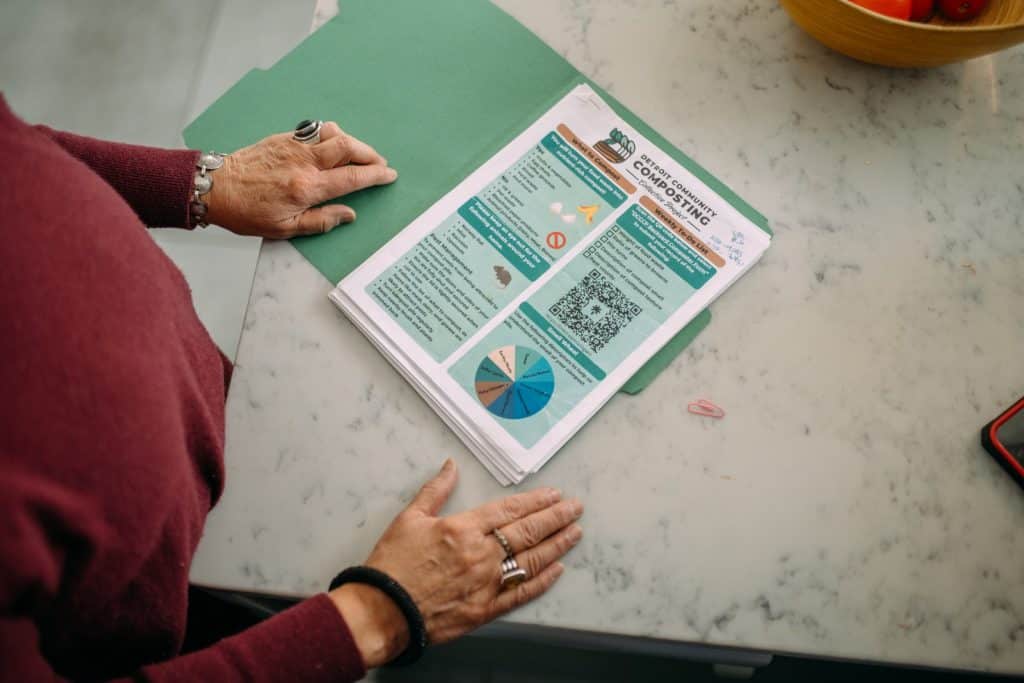
Education was a key component of the project. Kuras kept a compost pile in the past but “I wasn’t doing it right, in retrospect,” Kuras says. She signed up as a DCCCP participant herself, ready to learn the right way “to make your pile a compost pile and not a pile of trash with food in it.”
To ensure microorganisms can break down down food scraps efficiently, compost piles need the right balance of “browns” ― such as dry leaves, dead plant clippings, branches, and sawdust ― and “greens” like grass clippings, food scraps, coffee grounds, tea bags, and fresh leaves.
At trainings, participants were eager to share ideas and pool resources, such as alerting other composters to places they could find dried leaves to count as their “browns.”
Composting is “sort of like having a pet,” requiring time and attention, Kuras says. But it’s rewarding, and the nuisances some people associate with compost piles ― bad smells or unwanted pests ― don’t happen once you know what you’re doing, she insists.
‘In my own kitchen’
Another participant, anthropologist Dr. Paule Cruz Takash, needed a composting solution as a board member of a nonprofit responsible for a community refrigerator and freezer in Detroit’s Black Bottom Neighborhood. The organization found another partner for their composting needs, but once introduced to DCCCP, she eagerly signed up as an individual backyard composter.
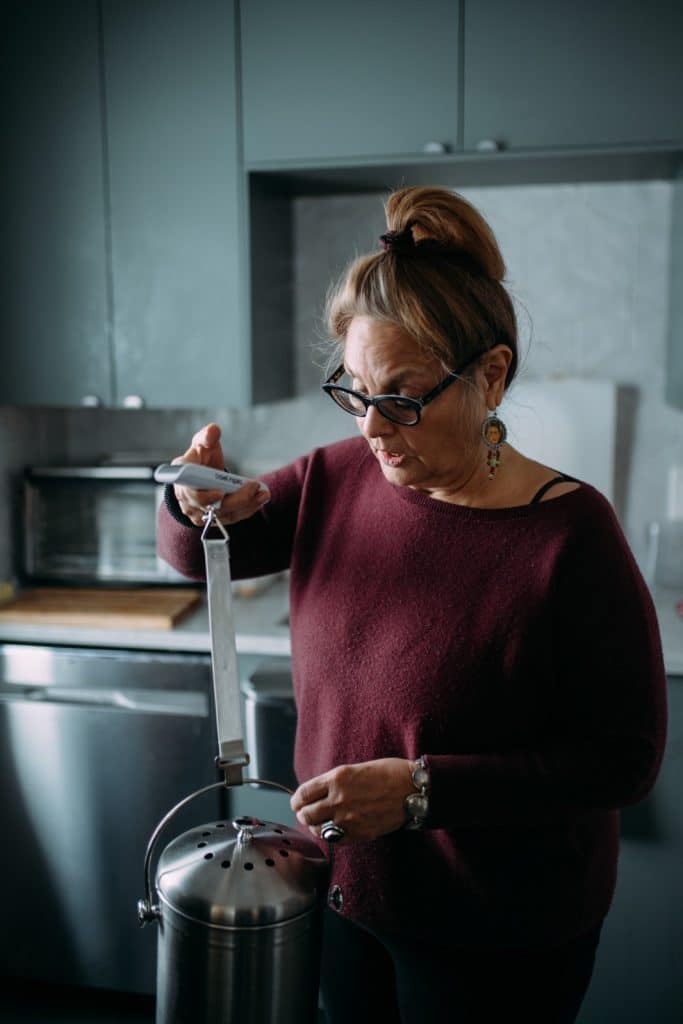
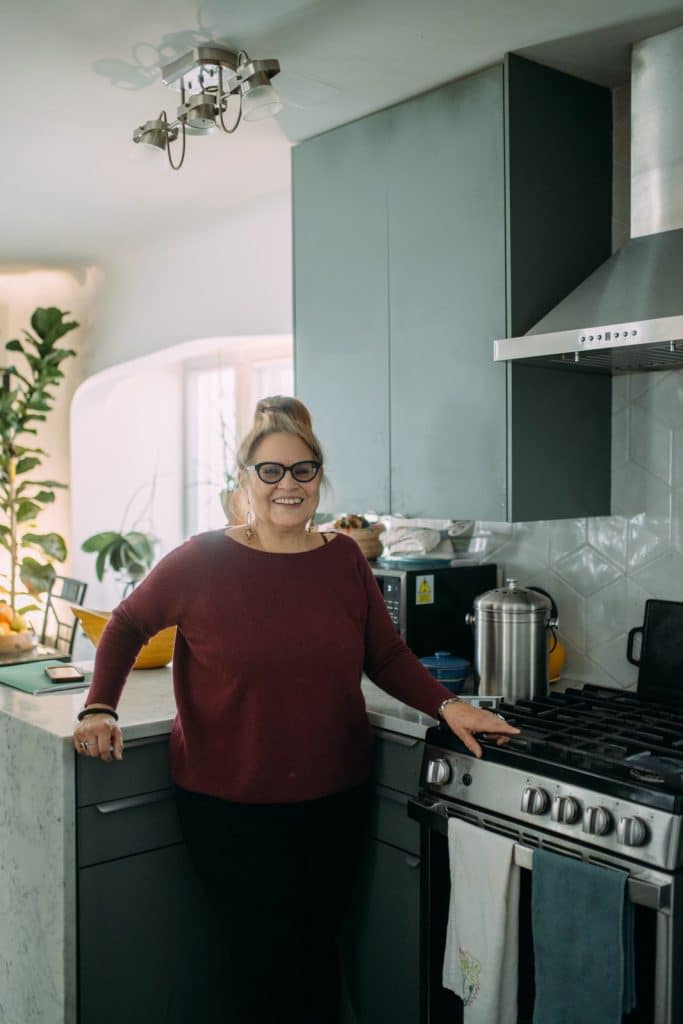
She’d been composting in her kitchen for some time, but the program offered her the education to do it better as she planted her first backyard garden over the summer.
Like all other participants, she was given a stainless steel kitchen pail with a carbon filter to suppress any bad odors. The program also provided an outdoor composter and a scale for weighing scraps.
At the summer workshops, Takash heard how Detroiters have worked together to address environmental issues, including the closing and 2023 demolition of the Detroit waste incinerator. Historically, Detroiters have seen a problem “and not just sat back but taken it on,” Takash observes. “And that’s what it takes.”
Food waste makes up a quarter of landfill solid waste, more than any other landfilled product, and is responsible for more than half of landfills’ methane emissions, according to the U.S. Environmental Protection Agency.
That problem begins at home. America’s homes account for one-third of food waste, contributing more than restaurants, grocery stores, manufacturers, or other sectors, according to ReFED, a national food waste reduction nonprofit.
DCCCP participants learned to see the problem and, in searching for a solution, discovered that, “I can actually do this in my own kitchen,” Takash says.
She encouraged project leadership to take their program to neighborhood associations and block clubs, where working together to achieve a goal is already a habit. Such groups would jump on the idea of backyard composting for a common goal, she said.
Moving forward with enthusiastic support
The DCCCP is not alone in its efforts. Organizations like the nonprofit FoodPLUS Detroit have spearheaded several effective backyard and urban farm composting projects in the past decade. In August, the City of Detroit’s Office of Sustainability launched a project accepting food scrap drop-offs for composting.
Separate efforts aren’t creating competition; they’re expanding the number of people who can make composting a part of their routine, Kuras says. The success of multiple programs should signal city leaders that composting on the individual level not only helps the environment but has enthusiastic support.
She hopes the city will continue to pursue policy that brings Detroit on a par with other “green” cities that already have robust composting programs in place. City policy can be tweaked to remove barriers to composting and to support farms and neighborhoods that want to up their composting efforts.
She’d like to see the state offer a rebate on the purchase of a composting bin, which can be cost prohibitive for some people. She and others are working on a bill to advance that policy at the state level.
Small efforts, big results
The pilot didn’t incorporate enough participants from any one neighborhood to serve as a connection between residents. Building neighborhoods more intentionally through joint composting efforts is something kent hopes to see happen in another project if funding allows.

A composting mindset is a great way to ensure that we are “doing right by the environment,” kent says. It can even carry over to how communities treat marginalized people, because, “How we treat the least of these finds its way into the culture.”
And it all starts with a banana peel. Big problems like climate change and environmental justice require big solutions. But they also call for everyone pitching in, doing their part and believing it makes a difference. Projects like DCCCP let residents be part of the solution, kent says.
“It’s easy for one to feel, ‘What can I do?’” kent says. “But every little bit matters.”
Resilient Neighborhoods is a reporting and engagement series examining how Detroit residents and community development organizations work together to strengthen local neighborhoods. It’s made possible with funding from The Kresge Foundation.
Related Articles
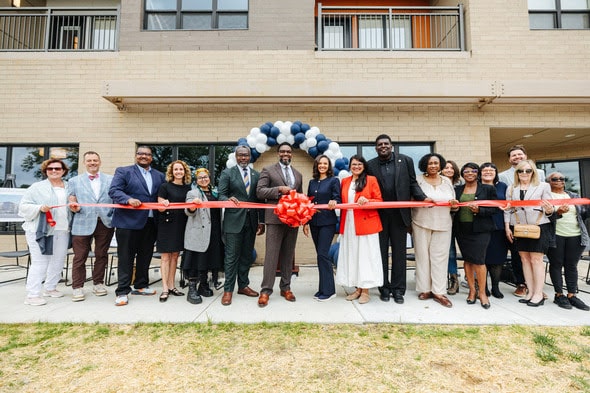
Minock Park Place provides new affordable senior housing for Grandmont Rosedale neighborhood’s older residents
In the heart of Detroit’s Grandmont Rosedale neighborhood, a 42-unit, mixed-use development has given senior citizens brand-new affordable housing. Minock Park Place was seven years in the making, and marks the first affordable senior housing community in the neighborhood, located at 19505 Grand River Ave. — a vital commercial and cultural artery.
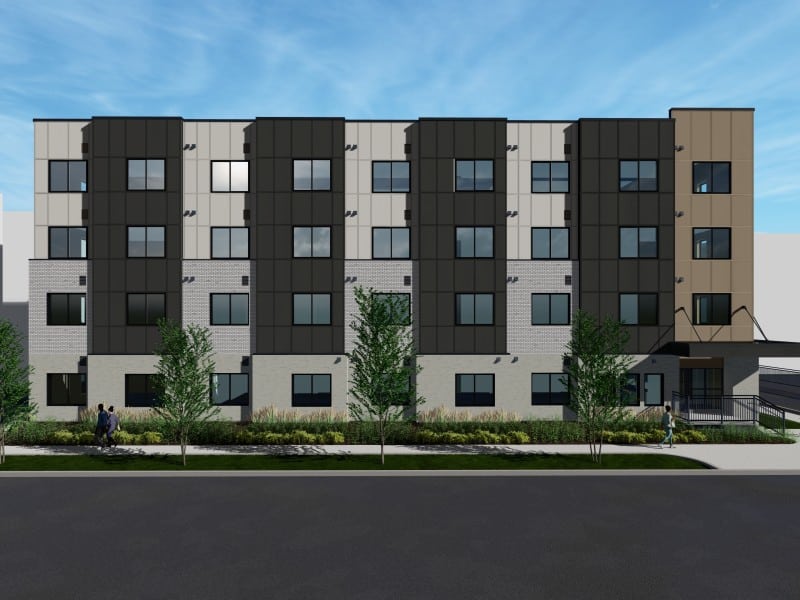
Partner Partner Content From Blueprint to Breakthrough: Tackling Affordable Housing in Detroit
Cass Corridor Neighborhood Development Corporation and Cove Investments and JPMorganChase help neighborhoods—and residents—thrive.
Small Business Social Hours foster success through face-to-face connection
Why face-to-face networking opportunities are even more important for small businesses and entrepreneurs.