A Step Toward Transit
A bit of transit news sparks hope in the hearts of those looking for a ride.
A long time ago in city far, far away, streetcars roamed the avenues of a great metropolis, shuttling people between work and home, games and bars, stores and theaters. Looking at this in context, a long time ago is 52 years and to many 1950s Detroit seems like a far away place compared to the present version.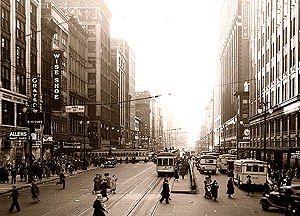 Many have lamented the loss of the DSR (Department of Street Railways) trolleys as a key thread that helped unravel the Motor City’s urban fabric. Of course there were other significant factors, such as crime, white flight and freeways. However, losing the streetcars made suburbanization practically a necessity and a cosmopolitan pedestrian lifestyle nearly impossible.
But plans are in the works to resurrect the trolleys that served Detroit so well for so many decades. A small group of private investors, according to Crain’s, is planning to invest more than $100 million to create a streetcar loop between Hart Plaza and Grand Boulevard. That could end up complimenting the ongoing DTOGS study (next meeting set for later this month) that is looking at adding extensive light rail lines to the Woodward, Gratiot or Michigan corridors.
“It’s certainly very exciting news and a great step in the right direction,” says Megan Owens, executive director of Transportation Riders United, a non-profit focused on improving mass transit in Metro Detroit. “Who would have thought two or three years ago we would have two different proposals along Woodward. That shows how far we have come.”
There is still a ways to go yet. Under the DTOGS timeline, we’re still at least five to seven years away from riding on light rail. Owens estimates we could be as close as three years away (although probably a little more) with the private funding option because it could theoretically sidestep the federal funding process.
Such a significant investment (from private coffers no less) could also help leverage more federal funds. More importantly it can serve as the first major step toward creating the badly needed regional mass transit system Southeast Michigan needs. It can also provide the transportation options Metro Detroiters desire while supplying the transportation permanence developers crave.
“It’s an expensive project with an enormous potential payback,” Owens says. “It makes sense these businesses are interested in doing this.”
Reestablishing the trolley line on Woodward is not only a good idea, feasible but also essential to our success as a region.
Investment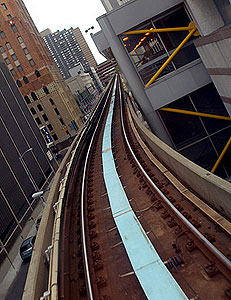 Building a light rail line (whether it’s trolleys or a subway or a monorail) will bring billions of dollars in investment along it. Let me repeat that. Build it and a billions-with-a-“B” in dollars will come.
It happens everywhere else in the world and it will happen here, too. Name your major American city and chances are there is a rail-based mass transit system there that has attracted billions of dollars in investment.
They range from famous cities that are practically car less like Chicago to out-of-the-way cities where cars are traditionally king like Salt Lake City. There are the incredibly dense metropolises such as New York
City and the horizontal cities like Houston. There are even the new economy Meccas like San Francisco and the Rust Belt stalwarts like St. Louis.
All of these major cities are reaping even bigger rewards for Investing In Transit.
Why Woodward
Since Detroit is designed like a wheel where major thoroughfares serve as spokes, why start building light rail on Woodward? It’s easy to make an argument for other major avenues, such as Michigan or Grand River or Gratiot, but none of them are Michigan’s Main Street.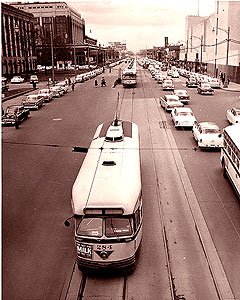 That designation belongs to Woodward. It has the largest concentration of population, cultural centers, major venues, bigger events and institutions. No wonder Detroit Renaissance choose the section of Woodward singled out for streetcars as the prime breeding ground for its Creative Corridor project.
Nowhere else is primed as well to facilitate a dense, pedestrian-oriented environment where Wayne State students can catch a train to a concert at the Majestic, loft-dwelling yuppies can hop a train to work downtown or sports fans can ride a trolley to watch Detroit’s teams. Hell, more people ride the buses that bounce up and down Woodward than some light rail lines in other cities. The demand is there
This explains why it makes the most sense to get Woodward on tracks.
Density
And yes, Detroit is ready to pull off light rail. Forget what the naysayers bleat about lack of density or how people won’t give up their cars. That’s hogwash. Anyone who says otherwise is wrong because it just isn’t so.
Detroit may not have the population density of New York City or San Francisco, but it has more than Salt Lake City and Phoenix. The later are suburban-style towns either building or have built light rail lines.
Density and transit aren’t always at odds.
Options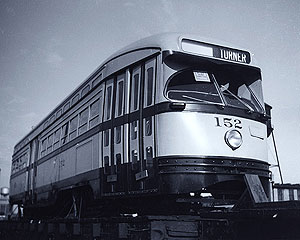 However, there isn’t much of a transportation battle in Metro Detroit because travelers don’t have many options. Yes, there are buses and a smattering of bicycle paths, but most of us depend on our cars.
There are those of us who want like to walk or ride our bikes to work everyday and some of us even have the ability. But those of us lucky to have cars are chained to them so we can buy groceries, go to a movie or just visit friends and family.
Providing options like streetcars connects communities and puts so much more of Metro Detroit within walking distance.
Demand
But will people ride it? It’s a question that vexes many Metro Detroiters, but the answer is pretty obvious to people who live in big cities outside of Michigan.
All of the new rail-based mass transit projects in the U.S. have exceeded ridership expectations. As a matter of fact many more times than not they precede more voter-approved, rail-based expansions, such as more light rail, bus rapid transit or commuter rail lines.
Jon Zemke is a Detroit-based freelance writer and the editor of
metromode’s Development News and Innovation & Job News sections.
His last story for Model D is Bucks Start Here: Russell Industrial.
Amtrak Train Interior and People Mover Track Photographs Copyright Dave Krieger
Related Articles
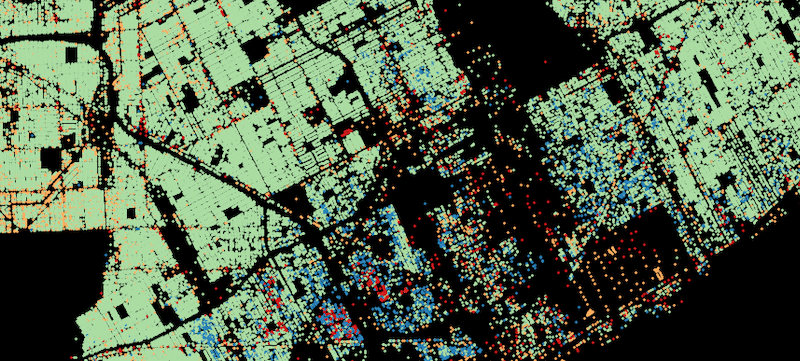
Mapping Detroit: The story of Detroit’s growth and change
This classicc dot density map shows a significant portion of more recent construction efforts has been concentrated in areas that were previously less developed or had higher vacancy rates.
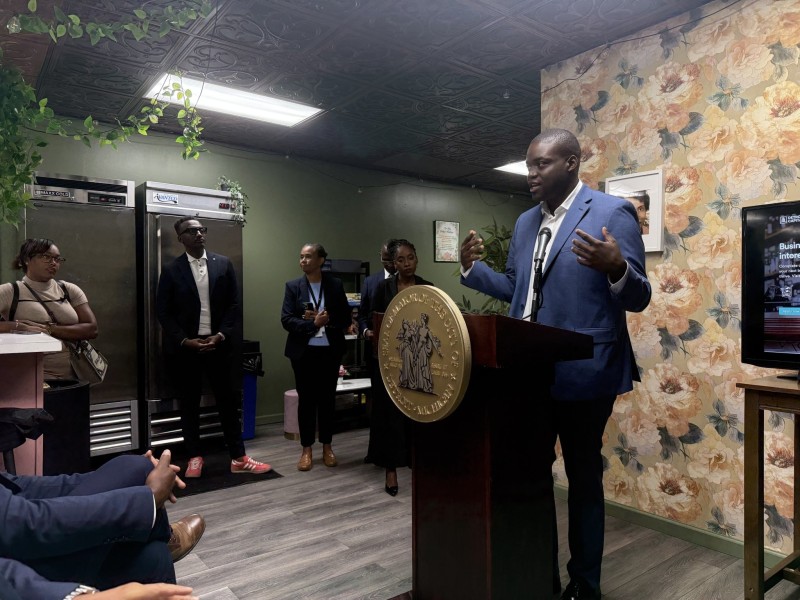
Detroit Capital Hub connects entrepreneurs, small businesses with Detroit CFDI lenders
A new private-partnership between the Detroit Economic Growth Corporation (DEGC) and the City of Detroit — Detroit Capital Hub — serves as a matching program introducing small businesses to the lender best able to serve them.
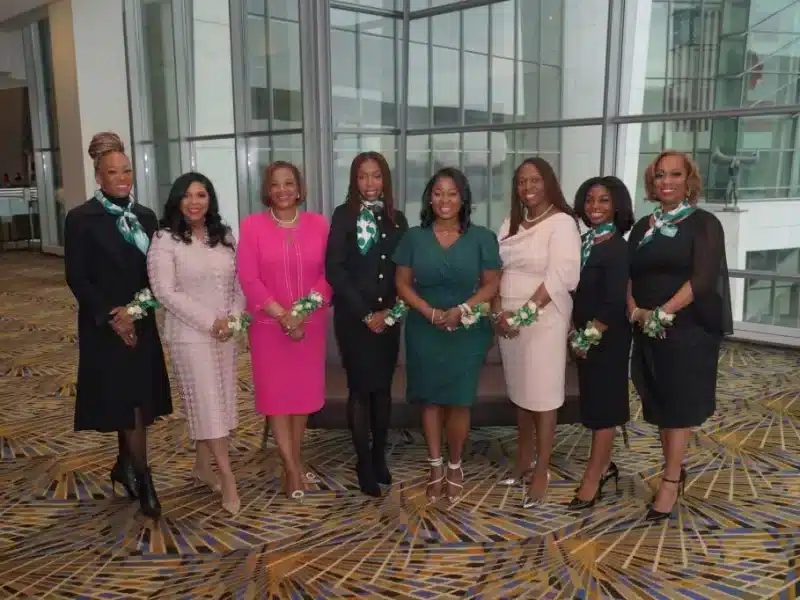
Detroit heard King’s dream first. These Black women are carrying it forward.
Alpha Kappa Alpha’s Lambda Pi Omega chapter folds Martin Luther King Jr.’s civil rights history into a day of service that stretches far beyond the federal holiday.