‘Hood Ornaments
Downtown’s all dressed up, with
fancy new living spaces, sleek restaurants ready for glitterati and night clubs primed for party people. Crain’s Detroit
Business columnist Bob Allen says to recognize a true revival in
Detroit, however, you need to dig deeper, look closer into the heart of the
city and get out into its neighborhoods. There’s more going on here than you might think.
Last week, with downtown Detroit in a frenzy of primping for the
world’s latest passing of judgment, I decided to look beyond the heart
of the city and bypass the arteries of freeway that, for many of us,
are as close as we get to a city we think we know because we used to
live there or had a bad experience with it or heard how bad it was from
someone else or the news. These are places beyond the restaurants, bars
and clubs, the cultural touchstones we are showing to the world.
These places are the neighborhoods. Neighborhoods such as the block of
West Willis on which Avalon International Breads sits, alive with
caffeinated voices and somewhat redolent of yeast and sugar. It’s a
place where, most days, I’d prefer to sit for a couple of hours.
Instead, I spent those first couple of hours in the passenger’s seat as
Colin Hubbell, manager of The Hubbell Group, drove a carload of us on
what soon felt like the developer’s version of an archeological dig
through Midtown, Brush Park and Eastern Market, ending with a dart up
and back through the east side along Lafayette.
Spend a few minutes listening to Hubbell, and you start to wonder
whether the hardest part about a Detroit revival is recognizing it. I
mean, you can tell when a suburb is booming. More and bigger houses.
But in Midtown, you need to learn how to look at a building. Plywood
over a window doesn’t necessarily mean “We give up.” It can mean, “We
aren’t done yet.” Exposed brick isn’t necessarily all that’s left. It’s
where it’s beginning.
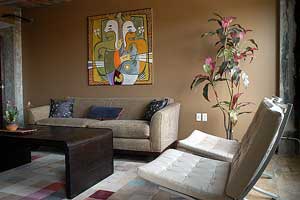
Yes, lofts are everywhere. We did an entire package of stories
about it last year in Crain’s Detroit Business. If, in fact, a Detroit
renaissance is fully realized, an entrepreneur might wish to start a
business specializing in changing light bulbs and fixtures on high
ceilings.
“Everything is eventually going to become something” in Midtown, Hubbell says.
He singles out the impact of Wayne State University and the efforts of
its president, Irvin Reid, to embrace the community around the school.
Through its work in Midtown, Wayne “can be a part of the solution to so
many of Detroit’s and the state’s ills,” Hubbell says.
As is the case with many parts of the city but Midtown in particular,
renewal comes in one piece, two pieces. A pocket of new housing. A
quilt of construction.
The typical buyer is not easily defined. Hubbell says they can rang
from a 23-year-old starting out to a 67-year-old retired
schoolteacher. Both are seeking a certain lifestyle that they think
they can find only in a city.
Just as Hubbell can look at a building and tell you where it is
heading, so he can look at one and tell you what it already has
accomplished. One of those, United Sound Systems, is a recording studio
of such renown that the more I have read about it since my tour, the
more sheepish I feel that this building was such a revelation to me.
Hubbell weaves through sections where nothing appears to be happening
until you see some of the signs: Tech Town, Asterand and Next Energy,
where alternative energy is germinating. Where it could lead seems
somewhat more important as we get to the corner of Cass and Burroughs,
where, to the right, is the former Cadillac world headquarters — a
section of the city that Hubbell calls “the spine of GM” during the
early 20th century.
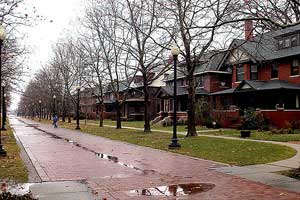
As we head up the street into the New Center Area, the conversation
detours briefly to shopping and the supposed lack of stores, especially
grocery stores. Hubbell and our two companions in the back seat — Clare
Pfeiffer Ramsey, managing editor of Model D e-mail newsletter and Web
site, and Dave Krieger, whose photos adorn Model D’s site — chime in
with suggestions: University Foods, Farmer Jack, the niches served in
Eastern Market.
At some point during the drive through the New Center Area, as I look
down several blocks of tidy houses and porches, someone notes the
absence of for-sale signs. It will not be the last neighborhood I see
without them.
We pass the Park-Shelton, where a parking deck is coming together, and
head into what Hubbell calls “the Ferry Street phenomenon.” The
neighborhood around the College for Creative Studies is beginning to
emerge, with Peck Park snuggled next to a parking deck. A mosaic has
begun to spread along one wall of the deck.
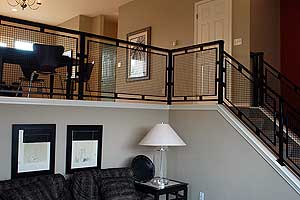
We get out of the car for about 10 minutes to look at a couple of the
units Hubbell is building in this area. One is especially intriguing:
900 square feet for $135,000. An alternative to renting for someone new
to the workforce, perhaps.
To tell you the truth, taking it all in and writing it all down is sort
of a lost cause, after a while. The best I can do is grab an impression
here and there. For example, if progress has graffiti, the word is
“Tyvek.” It is everywhere.
It seems as if Hubbell has something to say about every building we
drive past. The Carlton in Brush Park: “three-fourths sold.”
Occasionally, we come to a building such as the Inn at 97 Winder. It
speaks for itself.
With all the land being cleared and prepared for construction, Brush
Park these days looks like a stretch of prairie, dotted with a
surviving Victorian home here and there.
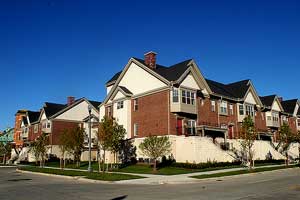 Progress is piecemeal. Rehab next to a group home next to a former
crackhouse. It’s not always pretty. It probably never is going to be.
As we depart Brush Park, we encounter the demolition of the old Motown
Records headquarters on Woodward. For much of his travelogue, Hubbell
has lamented the loss of so many historic and architecturally
significant buildings. Not this one. He calls it “a glaring symbol of
the inability to get something done.”
We left and right our way into Eastern Market, whose neighbors include
my office. We come here often, particularly for lunch at Russell
Street. Since my wife showed me the back roads of the market that lead
to the entrance ramp of I-75, I’ve been thinking that I generally know
the market. Two minutes with my companions, and I am back to rube. I
hear stories of a burgeoning nightlife and galleries hidden in the back
streets of the market. We stop at Cost Plus Wine, where I am introduced
to Tim McCarthy. And suddenly, I’m feeling guilty about getting out of
there one time with an entire case of wine for less than $100.
Outside Cost Plus, Dave Krieger talks about how residents make the city
work for them. One person learns about a store and connects with
another and so on. Networking for urban life.
As we pass my office in Brewery Park, Colin and Dave talk about the old
Atlas Furniture Building along Gratiot. It looks empty. They say it
isn’t. And in one of the truly embarrassing moments of this tour — and
there were many, unfortunately — I learn that this dump of a storefront
is where techno music icon Derrick May works. I know just enough about
techno music in general and Derrick May in particular to know that I am
on the cutting edge of the 20th century.
We head east on Lafayette past the condominiums and apartments of
Elmwood Park. At the start of our tour, Colin Hubbell talked about
showing me the good, the bad and the ugly of Detroit neighborhoods.
“Let’s do some ugly,” he says, turning left.
I’m familiar with a lot of this ugly. Every morning, my drive to work
dissects the East Side along Charlevoix. I see many abandoned buildings
and empty lots and the urban riprap that makes large stretches of the
east side look as if a lake dried up there.
But here’s the thing about the East Side — and it illustrates the
challenge to reading a neighborhood. You can cruise a couple of blocks
of empty, unmowed lots, dumping grounds, a home or two that’s maybe a
strong wind away from being kindling and think, “That’s all she wrote.”
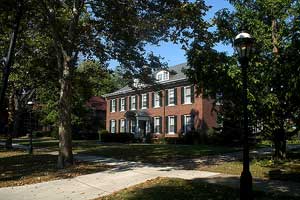
Then you turn a corner onto a block with a loft building, a cluster of
new homes, a restaurant like the Harlequin Café at Agnes and Parker.
And the next thing you know, you’re caught up in a travelogue and a
celebrity-home tour cutting through the shaded lanes of Indian Village
and East Village. Carmen Harlan lives here. Jack White there. Meg is in
that yellow home there. Professionals and rock ‘n’ rollers. And you
remember Van Dyke Place?
And on a vacant lot, someone has planted pieces of iron fence that
advertise a coming attraction: three bedrooms, four units. Nearby, an
old school has become lofts.
On the way back downtown, Colin Hubbell talks about the Super Bowl and
why it is important. It gets the whole party started. The energy. The
sense of urgency.
Downtown, he says, is getting back to where “it’s not embarrassing to take a developer downtown.”
Most important, the game is bringing thousands of volunteers downtown,
people from outside the city who otherwise would not be down here. They
meet the people of Detroit, build relationships. And when they return
to the suburbs with those new relationships, maybe they also bring a
different relationship with the city itself.
Dave Krieger and I part ways with Clare and Colin about noon and head
west. … I think. When freeways are your reference points, driving in
the city itself can be a bit disorienting.
Dave, I have learned, is another in a seemingly endless supply of
people whose embrace of Detroit is such that he seems to read the
history of the city in the layers of the soil. It stands to reason that
a photographer would have a photographic memory.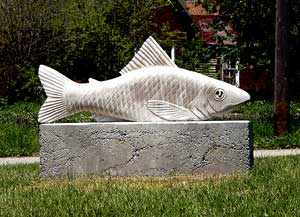
Before lunch, we drive the gallery area along Grand River, including
the 4731 Gallery. We make our way toward Corktown past Habitat for
Humanity houses. And suddenly, where did these come from? “Pocket
parks,” they are called. Small squares of grass with a piece of art.
Your neighbor is a lawn ornament.
Corktown on its own is a column, even if you don’t write about St.
Patrick’s Day. Find Leverette Street and drive it. Tiger Stadium was
supposed to kill Corktown. Find out why it didn’t, then repeat that in
100 other sections of the city.
Next it’s over to Southwest Detroit, behind the Michigan Central Depot,
and past St. Anne’s Gate townhouses and the Honey Bee market. I’ve been
to Mexicantown for a lunch or two. But Dave talks about the community
beyond the palates of the tourists. Vernor Avenue at night, he says,
can resemble Royal Oak.
Southwest Detroit is the gateway to the city, the one place where people — new Americans — are giving Detroit a chance.
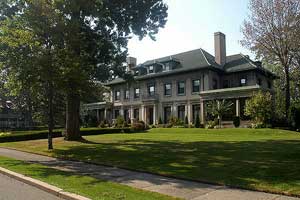
Next thing I know, Dave is driving up and down the streets of
Boston-Edison, which is fraying in spots. Then he’s pointing out the
Kresge mansion. It’s astonishing how, when you think all you’ll see is
blight, you come across these stately homes that look as if maybe Dr.
Frankenstein created his monster inside.
Boston Avenue between Third and Woodward is one of the best streets in
Detroit, Dave says. And as I have said, Dave is not at a loss for
information.
After lunch at La Dolce Vita on Woodward Avenue, we wind our way along
the spine of Palmer Park and into Palmer Woods, Sherwood Forrest and
Balmoral.
Palmer Woods has always cracked me up because of the white stones
that line both sides of the winding streets. It looks like a big
luminaria display out of “The Flintstones.”
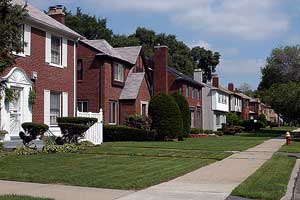
Dave also shows me his old newspaper route. And on the trip along West
Outer Drive to Rosedale Park and Grandmont, I hear about the
strategically placed Dairy Queens of his youth. And on our way to the
University District, he points out the spot where the Detroit Lions won
their first National Football League championship in 1935. Please tell
me Grant’s tomb isn’t up the street from Benedictine.
Then we head back along Grand River, past strip malls like you see in
the suburbs. And then, after six hours, we are done. I have 24 pages of
notes, and between my ears I hear one big test pattern. Where to begin?
Maybe it’s better to just get to the ending, which is what all this
means. Obviously, the city has problems. The threat of receivership.
The perception that services stink and the many examples that support
that. Crime. And race. God, yes, race.
Many people ask whether Detroit will come back. After having seen so
much of the city, I find myself asking, “If it is coming back, what
will it look like? How will we know? Is, in fact, it happening now,
only we’re not looking or don’t know how to look or what to look at?”
That question has arisen on those mornings when my run takes me along
Alter Road, the border between Grosse Pointe Park and Detroit and
arguably the most stark juxtaposition between city and suburb anywhere
in the world. I think about it whenever I drive along Mack Avenue and
see all the dead storefronts. But then one day, a gas station is
thriving at the corner of Alter. And then the next week, someone has
opened a pizzeria in a building that’s looked like a bunker for the
past couple of years.
Clearly, if Detroit has a motto, it could be “A city not done yet.”
This week, most of us are hoping that thousands of people from other
places choose to see the good in Detroit. But what about us?
Have you given up on Detroit? I can tell you that on many blocks, on
porches where you can see the worst of the city, Detroit has not given
up.
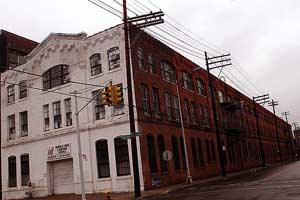
The old, empty building has become something of a symbol of the city.
And so at the end of six hours of touring, my mind returns to an old
building that to most people would look like just another tired pile of
bricks that the 21st century left behind. Except that this building is
on Piquette Avenue. And inside they made Model T’s like crazy and made
them so that average people could afford them and create the major
economic and social forces of the country. The birthplace of the last
century, I would argue.
I, too, think about the thousands of people who are visiting the Motor
City this week and what they will see and what they will think of the
old buildings. If only the world knew what went on inside this city and
its neighbors and what goes on today. Yes, if only they knew.
If only we knew.
55 Canfield Loft Project in Midtown
Carlton Loft Interior in Brush Park
A typical street in New Center
Art Center Townhouse Interior in Midtown
Crosswinds Development in Brush Park
Indian Village
Fish Sculpture by Tom Rudd in a North Corktown pocket park
Boston Edison Mansion
A typical street in University Commons
The original Ford Model T Plant on Piquette in New Center
All Photographs Copyright Dave Krieger
Related Articles
Statewide effort tackles postpartum depression and perinatal mood disorders
One of every five* new mothers experiences perinatal mood disorders, but only a small number receive the help they need. The Michigan Health and Hospital Association is working to change that.
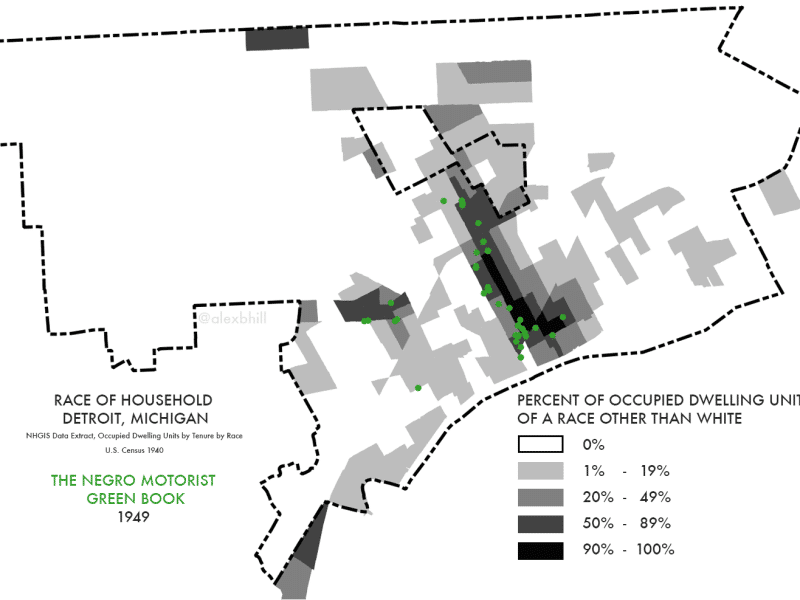
Mapping Detroit: Green Book Locations
Green Books mirrored the state of discrimination, racism, and African American rights in the nation each year. Detroit’s listings started in 1938.