Reimagining the Civic Commons: The long legacy of segregation and disinvestment
How our built environment materializes racism for decades to come.
This piece was originally published on Reimagining Civic Commons.
2020 has been a year of stark revelation of the long-standing racial inequities in our society, through the traumatic events of the COVID-19 pandemic and continued instances of police brutality which have done disproportionate harm to Black communities and other equity-seeking groups. In order to address these inequities, we must understand how they came to be and how they remain in place today. Many of the factors that have made the Black community more vulnerable — persistent segregation, environmental risk and lack of access to wealth building opportunities — have all been shaped over decades by the laws and policies we created.
These policies have shaped the physical environment in which we continue to live, and thus, their harms have persisted even as these policies may have come off the books, because they are literally built into the world we inhabit. And until we can rectify the spatial wrongs that resulted from those policies, we will fail to achieve meaningful change in advancing equity.
Richard Rothstein’s critical book The Color of Law outlines how policies of segregation were central to many of the federal programs of the 20th century, particularly the Federal Housing Administration and Home Owner’s Loan Corporation (HOLC) systems of mortgage underwriting, commonly known as “redlining.” These policies drew literal red lines on maps used to assess “risks” to mortgage investment around neighborhoods with predominantly Black, working class and integrated residents. Redlining precluded these residents from accessing mortgages and capital that were essential to community investment in the years after the Great Depression, and frankly, the wealth building that took place over much of the post WWII period.
While these practices have ended, and the Supreme Court decision Brown vs. Board of Education finally ended the practice of “separate but equal,” cities across America still retain the physical scars of that legacy. The Brown vs. Board decision did not require that Black veterans previously denied mortgages by the Veterans Administration be provided sudden access to capital; the all-white suburbs built before 1954 persist, built on 30-year mortgages that set families, schools and opportunities on an upward trajectory, locked in place through 1984. There is a “stickiness” to where we live based not only on that long-term financing, but also on family and social ties, schools, traditions. Americans did not physically integrate once it became law on the books to do so.
While the needle has moved increasingly toward racial integration in some places that physically developed after the 1950s, there has not been enough work to desegregate and remedy the racially organized disinvestment into American cities, many of which were developed before that time. Cities that have experienced population growth more recently, many centered in Sun Belt states, show a less pronounced segregation. However, integration in cities developed under the legacy of redlining have not budged despite the changes to policies in courtrooms and laws.
Furthermore, in the U.S. we are more segregated by income than ever before. From 1970 to 2014, the percent of people living in predominantly poor or predominantly affluent neighborhoods more than doubled (from 15% to 37%). It’s clear there is a need for investment in physical change.
Cities need a physical remedy to the problem of segregation, and the systemic racism built into our physical environment. Not due to the fault of residents, but rather the long-standing lack of access to mortgages, commercial loans, and often city services, we have created the conditions in our urban neighborhoods that have long been characterized as blight¹: the vacant commercial storefronts anchored by the dollar store; the weeds coming up through the cracks in the pavement, possibly the only plants to be found amongst empty tree grates; the weathered look of the crumbling porch steps; the playground with an old set of missing swings, or perhaps no equipment at all, as it was removed due to safety concerns, and it is really just a patch of unkempt grass, or worse, just a stretch of barren asphalt encircled by a fence.
We urgently need practitioners who work in the built environment across all disciplines — planning, design, engineering, transportation, housing, real estate and others — to take action in changing the physical places in which we live, knowing that changes made today will reverberate for generations. Our professions helped to build the suburban subdivisions, the highways, and the urban renewal projects that reinforced and spread damaging policies; our professions divided our communities and limited access to opportunity. It is not enough to legislate; it is not enough to change our views and disavow these bad policies as relics from the past; we must change the way we physically inhabit space to end the disproportionate impacts of crises like COVID-19 — or the coming impacts of climate change.
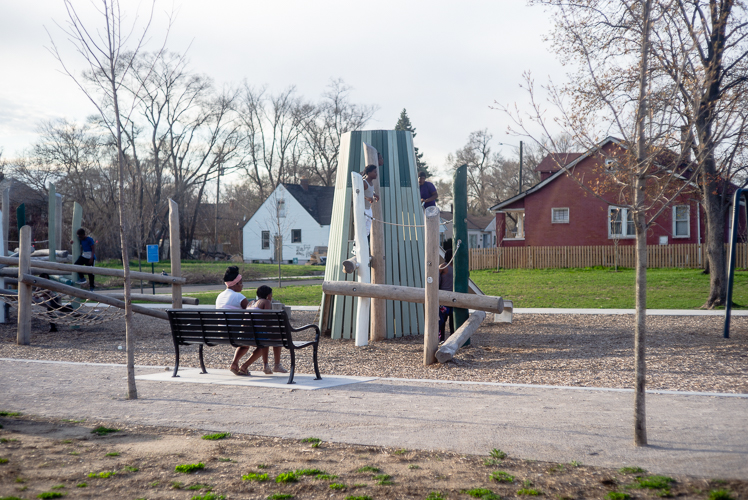
We must reinvest in our neighborhoods, fixing sidewalks, adding benches, shade, and bus shelters, restoring a dignified public realm for those waiting for the bus, walking to the store or to school; developing parks that spark the imagination and curiosity of our young people, that welcome them to play, to hope, to dream; connecting residents to real economic opportunities, whether in their neighborhoods or via reasonable transit; investing in our shared public spaces to rebuild value and equity for long time Black homeowners, with careful consideration for developing quality affordable housing, particularly for renters, before it becomes prohibitively expensive to do so. It means creating more, not fewer, walkable, safe, connected places where people can meet, gather and enjoy the benefits of vibrant urban life; these cannot be luxury goods, but essential features of every community, no matter the race, income or background of the residents living there.
I work in Detroit, which saw its peak population and resulting physical development play out before 1950 under segregation. The city presents a salient example: Detroit neighborhoods that continue to see the highest rates of vacant and publicly-owned property match the boundaries drawn in redlined HOLC maps with sickening precision. From broad areas of disinvestment on the east side to working class neighborhoods like Brightmoor on the west side, the city continues to live with the impacts of policy decisions on our physical environment in the form of vacant properties. These vacant properties continue to erode Black wealth and property ownership and undercut the tax base for vital city services that could provide increasing opportunity through education, transit and public spaces.
While these areas of disinvestment have grown since 1934, likely in large part due to the subprime mortgage crisis of the Great Recession (another policy crisis of its own), it is remarkable that no area that was redlined has ever come back². No area has improved 86 years after the initial policy of redlining was imposed, nor 66 years after segregation was outlawed, nor 52 years after the Civil Rights Act attempted to legislate that such housing discrimination was illegal. This is true not only for Detroit, but cities across the U.S.
We have yet to see meaningful change, as we have yet to meaningfully invest in righting the harms to the built environment. The harms persist today and make themselves evident in the persistence of the gap in opportunity between Americans of different races. The persistence of inequity in our communities shows us that it is not enough to only do things better when we build new cities and new communities; we must do things better in the places where people already live to meet our ideal of a more perfect union.
¹ And these same conditions were also used during the post-WWII policies of Urban Renewal to demolish these same neighborhoods and displace the many residents and business owners within these same communities.
² No areas that were redlined have seen reinvestment to restore their built fabric; one of the areas, formerly known as “Black Bottom” and now Lafayette Park was one of Detroit’s Urban Renewal projects which completely displaced the predominantly Black community that resided there, centered on the Hastings Street commercial corridor, which is now the I-375 freeway.
Alexa Bush is Urban Design Director at the City of Detroit, Department of Planning & Development.
Reimagining the Civic Commons is a collaboration of The JPB Foundation, the John S. and James L. Knight Foundation, The Kresge Foundation, William Penn Foundation, and local partners.
Related Articles
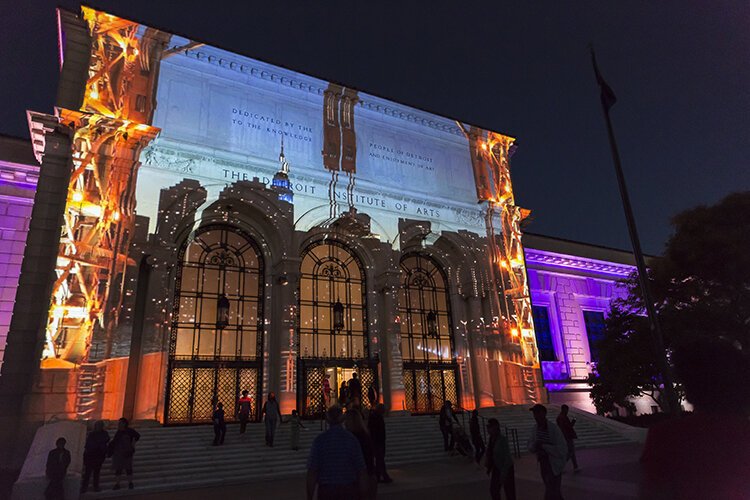
Dlectricity to return this fall to light up Cultural Center and Beacon Park
Inspired by international art and light festivals, the outdoor festival will serve as an opportunity to test digital and mobile strategies and showcase the Cultural Center's new Wi-Fi system.

Local photographer Brian Day captures Detroit for Apple project
Detroit photographer Brian Day is among 30-plus Black photographers nationwide commissioned by Apple to capture and share their hometowns with the world through their unique lens, all shot on iPhone 12 Pro.
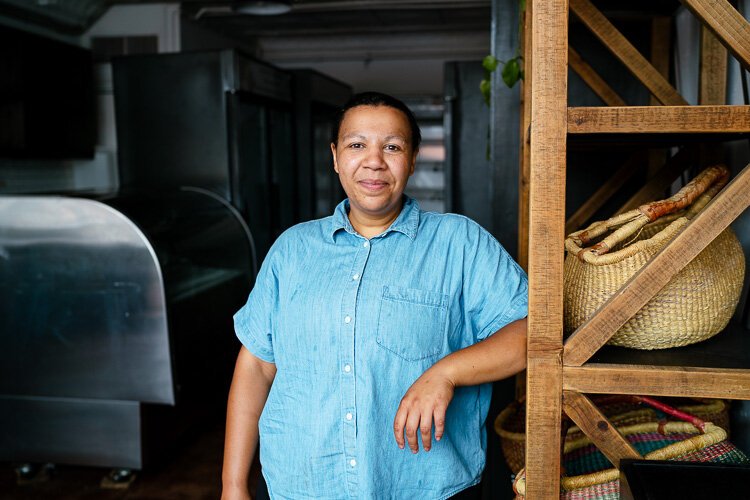
Detroit chef Kiki Louya to compete for title of ‘Top Chef’
Kiki Louya, a native Detroiter who co-founded Folk and The Farmer's Hand in Corktown and is the economic development manager at Grandmont Rosedale Development Corporation, will represent Detroit in the upcoming season of Bravo TV's popular cooking competition "Top Chef," the chef, writer, food activist and restaurant consultant announced on her social media pages.