Pangborn’s Village
When designer, Detroit booster and businessman Dominic Pangborn’s dream, the shops and restaurants of the Asian Village,
is realized on the Detroit riverfront next year, it will be a chance to
unite the region’s scattered Asian community and give Detroit some new
cultural flavor.
An old parking lot facing the Detroit River is becoming the realization of Dominic Pangborn’s vision.
When Pangborn’s dream, the shops and restaurants of the Asian Village,
is realized on the Detroit riverfront next year, it will be a chance to
unite the region’s scattered Asian community and give Detroit some new
cultural flavor.
Back in the 1950s and 1960s, there was a Chinatown in Detroit, but
highway projects and segregation dispersed the neighborhood. Metro
Detroit’s Asian community is spotted throughout the suburbs, with only
random Thai or sushi restaurants in the city of Detroit.
Pangborn, a noted graphic designer and city booster, moved to
the United States from Korea when he was 10 and has lived in the
Detroit area since the 1970s. He says the new 18,000-square-foot Asian
Village will be a destination, a place for metro Detroiters of all
ethnicities to explore different cultures.
“We’re not doing this (just) for Asians; it’s for non-Asians to
experience Asian taste and Asian markets. … It’s for everybody,” he
says
The facility, located east of the Renaissance Center,
will have an upscale restaurant, specialty grocer and take-out
eateries, ranging from Korean barbecue to a Hawaiian coffee shop. This
endeavor, the brainchild of Pangborn and the nonprofit Council of Asian
Pacific Americans, will help revitalize the riverfront, and also create
a space for cultural performances and ethnic offerings. It’s planned to
be open by May 2006. A catering company already is up and running.
Model D talked to Detroit businessman, design guru and perennial city
booster Pangborn about the Asian Village. Pangborn founded his graphic
design firm, Pangborn Design, in 1979 in Detroit. He has said he chose
the Motor City over L.A. or New York because he could make his mark
here. And that he did. His company has worked with major clients like
General Motors and Kmart. In the early 1990s, he started a line of
signature neckties that boast vibrant colors and unique designs.
Pangborn has expanded to designing scarves and dinnerware. His fashion
and furnishings can be found in stores locally, including his own shops
in the Renaissance Center and Metro Airport. Pangborn has an office
near downtown Detroit and sits on too many charitable boards to list.
Almost a year ago he thought of the Asian Village concept and also thought: Let’s do it in Detroit.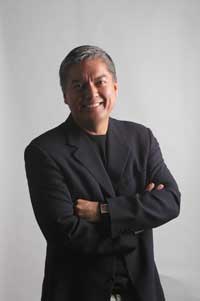
Q: How did the idea for an Asian Village manifest?
A: We were trying to figure ways to develop more businesses to come to
Michigan, and one of the areas that has the fastest growth is Asians
bringing businesses to Michigan. More than 450 Asian businesses are in
Michigan right now; it’s pretty dominated by the Japanese. But now the
newcomers are the Koreans and Chinese. The (Detroit) Regional Chamber
and governor are going to Asia to attract businesses to come here.
There’s nothing here to suggest there’s any recognition or welcome of
Asians to Michigan. So the concept came about … if we’re going to bring
in these companies we want them to feel at home here. This is a
beginning. This is a retention objective; we want the Asians to come
here who go to schools. We want to keep them here in Michigan. What can
we do to make the environment better? There is nothing Asian in Detroit.
Q: Why has it taken so long for an Asian cultural district in the city?
A: It’s pretty hard to get people to come on board. Everyone wants to
come on board when 80 percent is done. (They then say,) ‘Oh gee, I
would’ve invested.’ Usually it doesn’t happen when it’s in a concept
stage. The Asian community has been embracing the idea of doing this.
You’ve got the Chinese community, the Hmong, Koreans — everyone’s
divided. It finally came to me that you’ve got to do it.
Q: How is the metro Detroit Asian population dispersed?
A: In Metro Detroit there are 250,000 Asians. The biggest groups are
Indians, Filipinos and Chinese followed by Koreans and Japanese and
Vietnamese. In terms of in Detroit, it’s not any significant numbers.
The majority are out in the suburbs – Novi, Canton, Troy.
Q: Why Detroit?
A: Because I’m here. Everybody knows I’m committed to Detroit. When
Mayor (Dennis) Archer was mayor he literally would define me: Dominic
is Detroit. My seed is pretty well planted in Detroit. I still believe
there’s a lot of things we need to do.
Q: What are the cultural benefits of Asian Village?
A: Creating that diversity. Part of the thing we want to do is bring an
Asian market on weekends in summertime. We want to create in May, Asian
Heritage Month, an Asian festival on the river. We want to create very,
very strong eventful situations. We’re hoping every year to kick it off
on the riverfront with a festival. We’re talking to the Asian community
in Windsor to create a joint dragon boat race. We want to embrace the
Asian community in Windsor as well. It’s not about competing or
anything but to help promote everybody.
Q: What are the hopes for what Asian Village will do for the region?
A: It would open the doors. There’s a Greektown and Mexicantown. There
used to be a Chinatown. Once we started to talk about creating an Asian
Village, a number of people started talking about an Italian Village.
It’s going to spur. Someone has to take that first step. One of the
things I always propose is for the riverfront to be a national
walkway. We don’t call it Detroit River anymore — it’s an international
waterway. … That whole riverfront
should be arts, the culture, Italian, Chinese — all the different
ethnicities. People should want to walk to whole six miles.
all photographs copyright Dave Krieger
Related Articles
Returning citizens face extra hurdles in Detroit’s already challenging housing market
Formerly incarcerated people face numerous challenges in finding housing, often leading them to become homeless or recidivate.
CDFIs investments in childcare allows daycares like Detroit’s Lil Love Bugs to further invest in children’s futures
Childcare is not a family issue, but a workforce issue. Members of the MI CDFI Coalition showcase how investing in quality, affordable childcare and early childhood education positively impacts the entire community.

Partner Partner Content Don’t Let Fraud and Scams Ground Your Summer Vacation
Planning a summer getaway? Before you book, learn how to spot common travel scams and protect your money so your vacation stays stress-free.