HISTORY LESSON: Public financing for pro sports venues then and now
Detroit’s first step into public sports infrastructure construction came in 1960 with the opening of Cobo Arena, the stadium component of the larger riverfront redevelopment that led to the convention hall and Hart Plaza.
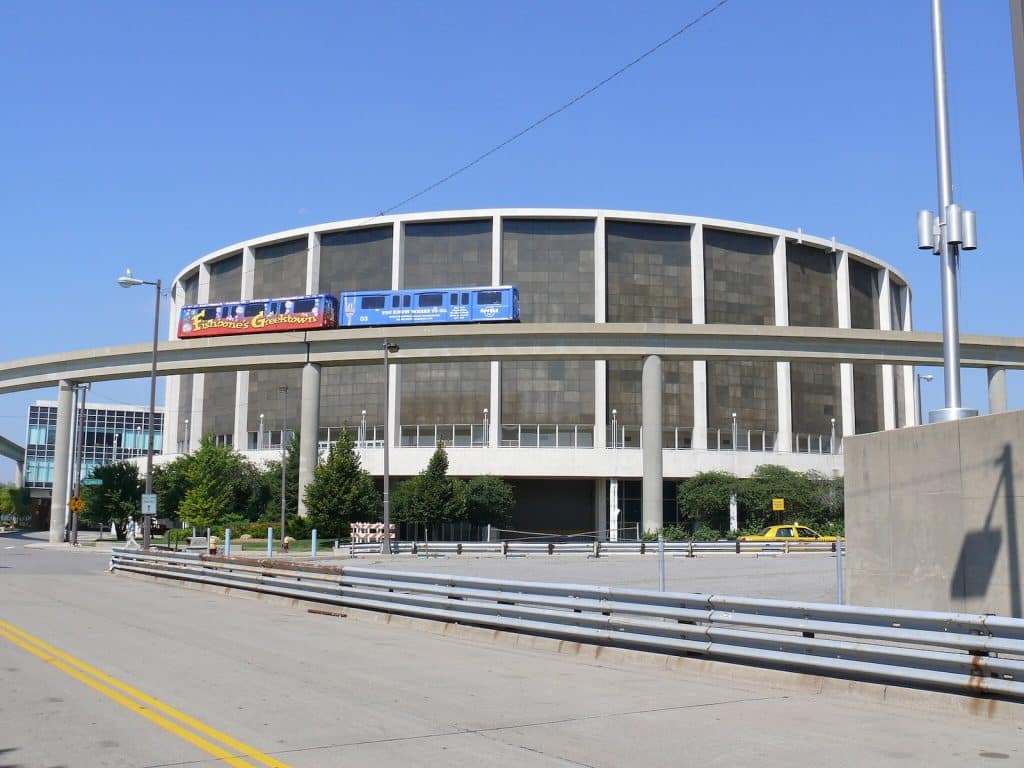
Photo: Ken Lund from Reno, Nevada, via Wikimedia Commons
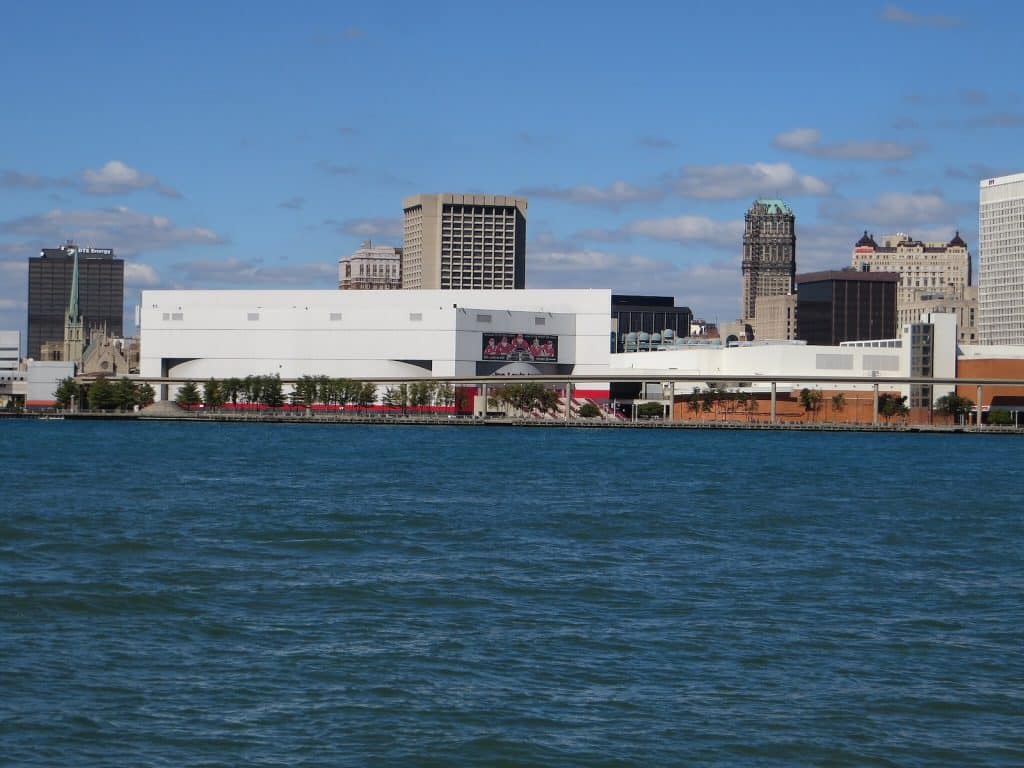
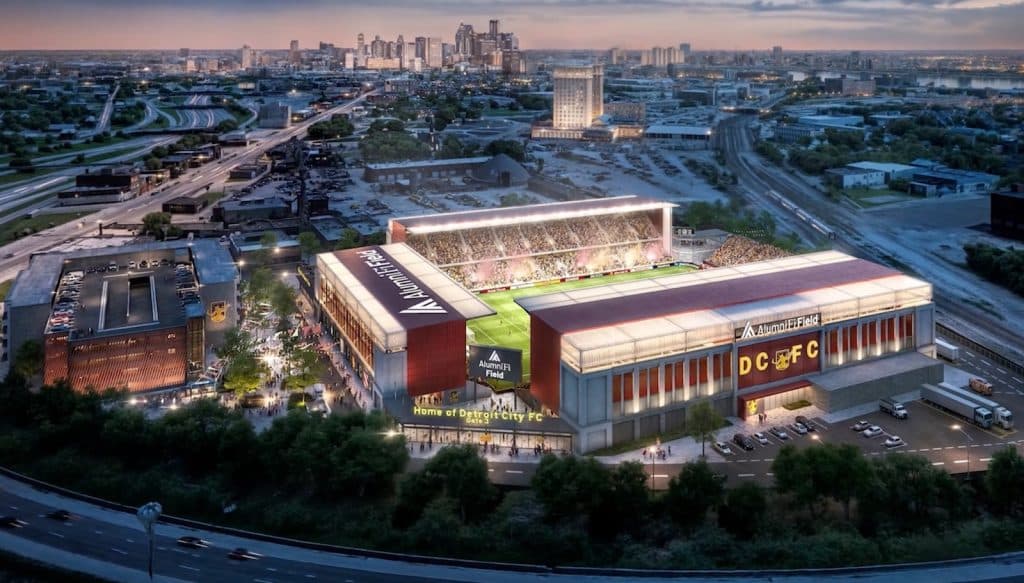
On Dec. 12, 1979, Joe Louis Arena — a sporting venue that the City of Detroit paid for and owned outright — opened as a piece of civic infrastructure on the riverfront. Almost 46 years later, City Council approved tax incentives and a community benefits agreement for a new soccer stadium for Detroit City FC. Once completed, it will be a privately-controlled venue built with public funding, without public ownership. The two stadiums serve as bookends on either side of nearly a half-century of publicly financed stadiums for Detroit’s major professional sports franchises.
Before the Joe rose on the Detroit Riverfront, the modern era of public stadium construction had been taking shape nationally. In 1953, Milwaukee County Stadium became the first modern, publicly financed Major League Baseball park. The stadium wasn’t built to support a team — it was built to attract one. It worked. Soon, the Boston Braves would relocate to Milwaukee, and a new municipal sports development strategy for wooing professional sports teams was born. No longer were stadiums just your team’s home; they were bargaining chips. Building one could get you a team. Refusing to build one might mean your team would leave.
Detroit’s first step into public sports infrastructure construction came in 1960 with the opening of Cobo Arena, the stadium component of the larger riverfront redevelopment that led to the convention hall and Hart Plaza. Cobo was home to the Pistons, but it was publicly owned and municipally controlled. It was not built in response to a relocation threat nor as a bargaining chip to retain the franchise. It was conceived as a convention and event space, a piece of civic infrastructure that would also host the city’s basketball team.
Joe Louis Arena, by contrast, represented something new. It was not simply a public arena that would accommodate a professional sports team; it was a publicly funded arena, built specifically to convince a professional sports team to stay.
In the mid-1970s, the Detroit Red Wings were looking for a new home. Olympia Stadium, the “Old Red Barn”, their home for the previous 50 years, was beginning to show its age. As the building began to falter, so did the Red Wings. The team that had won seven Stanley Cups since Olympia’s opening had fallen from grace. Poor play, a changing neighborhood, and a lack of investment in stadium improvements had team owner Bruce Norris searching for greener pastures.
Thus, a battle kicked off between Norris and Mayor Coleman A. Young over the future home of the Red Wings, with rhetoric that sounds like a long-forgotten foreign language compared to the arguments common in today’s stadium financing debates. Norris, at least publicly, wasn’t asking for more public funding. In fact, he was arguing against it. “An arena is a luxury,” Norris said. “I personally don’t believe that people who do not use the facility…should be required to pay for it.”
Norris didn’t want to deal with the strings and risks that came with public ownership. Public money, at least in Detroit, didn’t necessarily function as a risk-free subsidy for private wealth. Accepting City financing meant scrutiny, political oversight, and limits on where arena revenue could flow. For an owner accustomed to autonomy, the City’s offer to lease the arena to the team did not promise a cozy partnership; it threatened constrictions.
The City of Pontiac offered everything Detroit couldn’t or wouldn’t. At the same time, the Detroit Lions were moving to the suburbs, Oakland County was offering the Red Wings an out to follow their lead. The proposal promised full control over a 6,000-space parking lot, advertising and concession revenue, and millions in projected annual profit – before taxes. Oakland County had one final ace up its sleeve; it would also offer a long-time break on property taxes. One contemporary analysis of the proposal called it a “gold mine” for the Red Wings. If the City of Detroit was going to keep the Wings, they would have to pony up.
Detroit ultimately countered the Pontiac threat with a move that blended law, leverage, and the team’s bottom line. In 1978, Mayor Coleman Young’s administration pursued legal action to block the sale of tax-exempt bonds for the suburban arena, disrupting the financing that made the Pontiac deal possible. At the same time, the City restructured its own offer: the Detroit Red Wings would play at the new riverfront arena but also operate it, gaining control of scheduling and substantial new revenue streams. In exchange, the team agreed to remain downtown, while Detroit secured substantial annual rent, parking revenue, and a ticket surcharge that officials projected would more than cover the City’s bond payments. What had started as a philosophical fight over public control of professional sports facilities ended as a hard-nosed negotiation over who would capture the arena’s income and how much of that value the city could afford to concede to keep its team.
From that point forward, every stadium in Detroit would have some sort of public funding, practically without any public control. Comerica Park was built in 2000 using public bonds and county financing, but operating under private control. Two years later, Ford Field followed the same hybrid model. In both cases, public money built the buildings, but private interests dictated the revenue, scheduling, and long-term financial strategy.
By the time Little Caesars Arena opened in 2017, backed by hundreds of millions in public subsidy, it marked the full arrival of a new modern stadium economy in Detroit: large-scale public investment paired with limited public authority, embedded within a broader privately controlled real-estate district.
The newly approved DCFC stadium now becomes the latest chapter in that story. Its price tag is smaller, and unlike its major league counterparts is funding development privately. It has a robust community benefits agreement, and DCFC itself has deep philanthropic roots in the city. The cultural footprint of the stadium may prove more significant than the physical one. But structurally, its financing reflects the same arrangement Detroit and most American cities have now operated under for decades: public incentives without public ownership.
Related Articles

A vision for mushrooms as part of Detroiters’ everyday wellness routine
A Detroit mushroom farm and cafe owner bet on his city, and the response is sprouting business growth and expansion.
Detroit has community buy-in for Solar Neighborhoods Initiative
With 139 square miles of land – some blighted or unused and ripe for repurposing – Detroit is well-positioned to develop solar farms to help power city buildings.

Composting project empowers Detroiters to reduce food waste, protect the environment
Food waste makes up one-quarter of landfill waste and contributes to more methane emissions than other landfill materials. The Detroit Community Composting Collective Project is out to curb food waste by training backyard composters.