SASHA Center’s Cultural Training explores how to care for Black women experiencers of sexual assault and domestic abuse
The SASHA Center will host a Cultural Training on Oct. 25 to teach advocates and community members how to better support Black women experiencers of abuse.
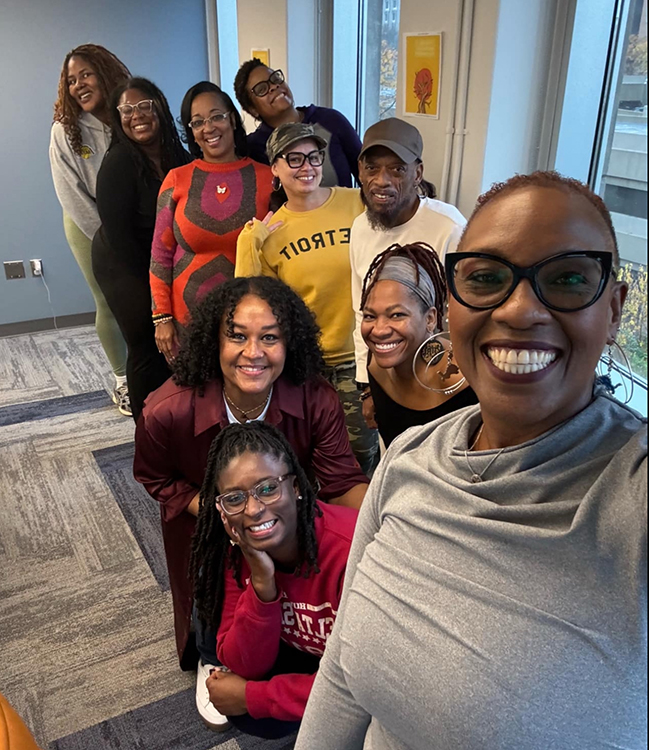
“We are not an investigation, we are not the police, we are a community grass roots organization that believes in providing safe spaces and soft spaces for people to land who have experienced sexual assault and domestic abuse,” says Kalimah Johnson, the founder and executive director of the SASHA Center.
Nearly two decades ago, Johnson founded The SASHA Center, a non-profit organization that provides resources and educates the public about sexual assault and domestic violence. It provides culturally specific peer support groups to self-identified experiencers of rape and abuse, and it seeks to increase justice and visibility for survivors in Southeast Michigan. On Saturday, Oct. 25, the SASHA Center is presenting a Cultural Training workshop designed for domestic violence and sexual abuse advocates, professionals, and community members.
“It’s specifically to teach others how the SASHA Center works in the community with Black women who’ve been sexually assaulted and have experienced abuse. It’s about how Black communities are impacted by this from a culturally specific and trauma-informed lens,” Johnson says.
In 2024, there were 34,407 domestic violence incidents per the Michigan State Police crime index. This past summer, Detroit has been reeling from multiple domestic violence-related deaths, highlighted by Latricia Green Brown, 40, who was fatally assaulted at Henry Ford Hospital (where she worked) on Aug. 22. Her ex-husband, Mario Dewayne Green, 53, was arrested on Aug. 23 and charged with first-degree premeditated murder.
Brown’s murder was just one of several to show that continued efforts are needed to raise awareness and combat domestic violence in the Black community. According to the Black Women’s Health Project, 40% of Black women will experience domestic violence across their lifetimes, compared to 30.2% of white women. Black women are also three times more likely to die as a result of intimate partner abuse than white women.
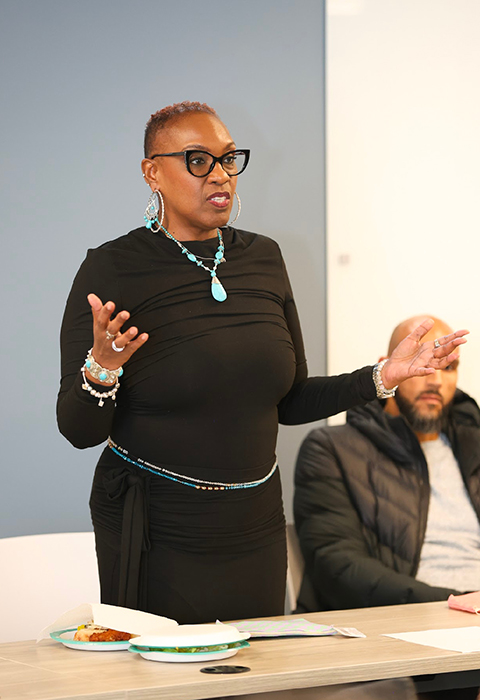
Johnson cites that different things ignite domestic violence situations.
“It’s just about the family dynamics, stress, the economic status of people,” she says. “I think you might experience surges in domestic abuse in the summer. There’s also infidelity to take into consideration, and the stress of going back to school being a factor.”
The SASHA Center addresses sexual assault equally, along with domestic violence. Johnson says they both interact more times than not, and it’s all a part of protecting and healing Black women. Per a 2023 Statista report, Michigan had the third-highest forcible rape rate in the United States in 2023, with 58.9 rapes per 100,000 inhabitants. Black women have long been privy to higher rates of sexual abuse. The Institute for Women’s Policy Research reported that more than 20 percent of Black women are raped during their lifetimes — a higher share than among women overall.
Johnson admits she doesn’t lean too heavily on statistics because many sexual assaults go unreported due to the sexual assault experiencer being scared of judgment and not being believed. The majority of the time, the offenders are known to the victims and even related to them. A 2024 Michigan State Police crime index cited that only 14.5% sexual assault offenders are unknown to the victims. With the holiday season less than 2 months away, this is when the SASHA Center hears the most admissions of sexual abuse
“We get more disclosures about sexual abuse during the holiday season more than any other part of the year,” Johnson says. “Part of that is in Black families, you got somebody in the room that has experienced sexual abuse and a family member is telling them they still gotta sit down and break bread with the person that caused them sexual harm 20 years ago.”
Johnson plans to curate the Cultural Training to make it comfortable for experiencers to discuss this kind of trauma. She wants to provide participants with practical tools to support Black experiencers with compassion, cultural awareness, and strength-based approaches. She wants everyone to leave equipped with new insights and strategies to enhance their work and deepen their impact with Black women. She acknowledges that mainstream domestic violence programs try to create safe spaces for Black women, but a lot of them simply don’t have the staff, the background, or the training to connect with Black women and make them feel like they’re being seen and heard.
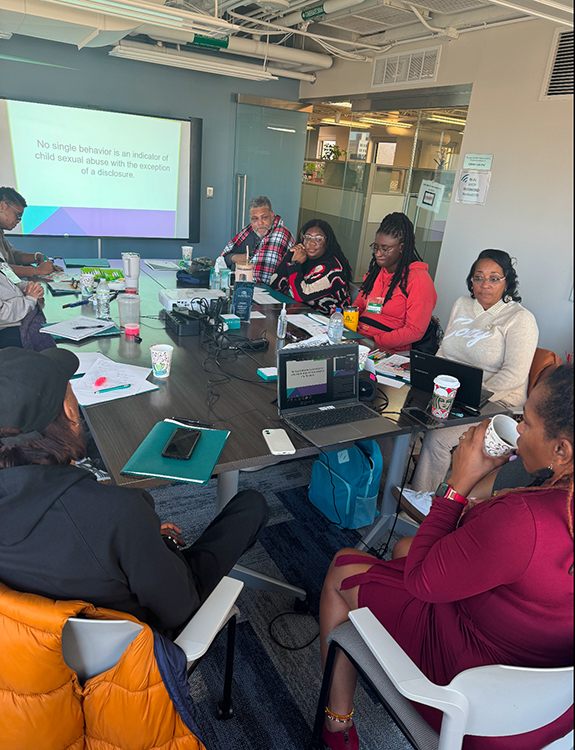
Beyond curating a healing atmosphere for Black women, the SASHA Center plans to use the training to develop tools and skills for both the experiencer of domestic and sexual abuse and those who want to support experiencers.
“Black women need connection and community. They need to hear and see themselves in their own language, their own music, their own food, and culture. Mainstream programs don’t have access to that.”
“They tell Black people their pain will go away, but it never goes away. And telling Black women this leads to bad decision-making like self-medicating with alcohol and drugs,” Johson says. “We help them recover so they don’t have to stay on the same trajectory without healing because they never had a place to take their pain to.”
Johnson uses the term experiencer instead of survivor because she feels the word ‘survivor’ puts people in a box. “If I call you a survivor, then I have a whole other set of expectations about how you’re supposed to act, what you’re supposed to say, or what you’re supposed to ask for,” Johnson says. “It also makes it seem like it’s an end-time to your healing. As if you survived it, but actually, people ebb and flow. It’s more nuanced than that.”
The cultural training will also take a deep dive into the history of violence against Black women, dating back to slavery. Johnson feels it’s important for experiencers to understand the pain Black women have had to carry throughout their entire existence in America. “All of the laws that were on the books impacted Black women day one, from when we got here. Every child that came from a Black woman was the property of the slave owner,” says Johnson.
Johnson has also extended her invitation to licensed social workers who have an MSW (Master of Social Work) or BSW (Master of Social Work). They will be able to get a CEU (Continuing Education Unit) for attending. Overall, Johnson sees the Cultural Training as one of many programs that will raise awareness of domestic violence and sexual violence.
“It’s about how we can become better advocates; this training will help give you the basic tools you need to respond, what resources to gather, how to make that person feel heard, understood, and believed,” says Johnson.
The SASHA Center Cultural Training happens on Saturday, Oct 25, at Avalon Healing Centre, 601 Bagley Street in Detroit. To register for the event, visit Eventbrite. To learn more about the SASHA Center, visit sashacenter.org.
Author

Related Articles
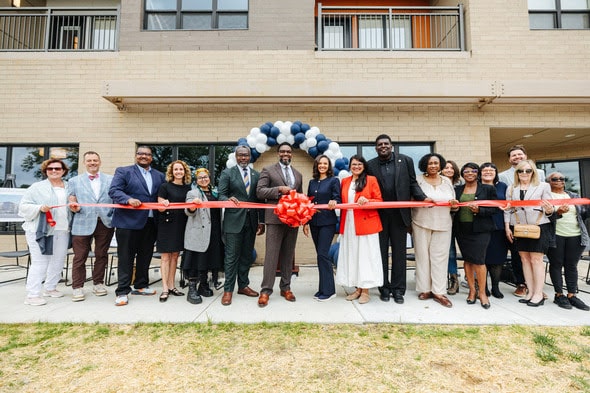
Minock Park Place provides new affordable senior housing for Grandmont Rosedale neighborhood’s older residents
In the heart of Detroit’s Grandmont Rosedale neighborhood, a 42-unit, mixed-use development has given senior citizens brand-new affordable housing. Minock Park Place was seven years in the making, and marks the first affordable senior housing community in the neighborhood, located at 19505 Grand River Ave. — a vital commercial and cultural artery.
Partner Partner Content From Blueprint to Breakthrough: Tackling Affordable Housing in Detroit
Cass Corridor Neighborhood Development Corporation and Cove Investments and JPMorganChase help neighborhoods—and residents—thrive.
Small Business Social Hours foster success through face-to-face connection
Why face-to-face networking opportunities are even more important for small businesses and entrepreneurs.