Pulse collaboration with MiLeap seeks to transform child care access in Michigan
The Pulse initiative is transforming early childhood in Michigan by bridging the gap between research and practice.

The Pulse initiative team at the W.E. Upjohn Institute for Employment Research is transforming Michigan’s early childhood landscape by equipping communities with data-driven solutions and actionable “roadmaps.” Bridging the gap between research and practice, separate roadmaps for employers, municipalities, and development help each sector innovate early childhood solutions that support families, businesses, and communities economically and beyond.
Early Education Matters spoke with Pulse co-executive directors Kathy Szenda Wilson and Maria Ortiz Borden about how the initiative is helping shape more accessible options for young families seeking care for their children.
This interview has been condensed for length and clarity.

Q. How do the Pulse Roadmaps guide both employers, municipalities, and developers?
Szenda Wilson: When we started this work, a big hurdle was getting folks to see what role they played in actually trying to solve some of these really wicked problems around child care. So, as system builders, we went back to the table and said, “What does this tell us? It tells us that they probably need tools to actually implement in order to make the change.” They see the importance and understand they should do something about it, but they don’t know what they should do. We created the tools that help them understand an entry point, that give them enough information so that they can appreciate where they get in and where they fit in. Our next phase is providing the technical assistance around those roadmaps. We’ve gotten a lot of folks, especially in the municipal and the employer space, utilizing those roadmaps and making serious changes.
Ortiz Borden: The roadmaps are also great for the state of Michigan’s 10 regional coalitions, which are led by advocates very similar to Kathy and myself. Multiple folks filling the Pulse role around child care throughout are utilizing those roadmaps as part of their coaching and support of businesses within their own communities. The roadmaps are a tool that those advocates can use. Kathy and I can’t be in every spot, but we can definitely arm those other advocates with these tools, and then they can implement them in their local community. We’ve had folks all across the country call us and ask, “We want to use this. Can we?” And we say, “Yes, use it.”
Q. Pulse recently published a case study that discussed win-win strategies for businesses who want to help their employees access quality child care. What were the key takeaways?
Szenda Wilson: The key takeaway is that there’s a lot of innovation and interest by employers to tackle this issue, and that one size doesn’t fit all. These employers are figuring out how to customize what folks need, being really intentional about the use of data to inform their decisions. A lot of it speaks to this really supporting retention of employees.
Ortiz Borden: The case study helped to confirm that it’s vital for employers to survey their employee base and hear from their employees what will work for them. They surveyed their employee base, found out what type of child care supports were needed, and then built their program around that. “You build it, they will come” doesn’t work out all the time. We really encourage employers to use survey data from their employees as to what type of benefit would support them.
Q. How will your contract with the Michigan Department of Lifelong Education, Advancement, and Potential (MiLEAP) expand the number of Michigan employers actively supporting child care or early education opportunities for their employees?
Szenda Wilson: There are two different relationships we have with the state-level work. The first one is providing technical assistance and support to the regional coalitions that are falling under Michigan’s Early Childhood Investment Corporation, helping them refine their employer engagement strategies and supporting them with the tools they need with the Employer Roadmap.
Our preschool development grant contract is helping us systemically figure out where within the infrastructure of the state we can leverage and amplify this employer engagement. It’s allowing us deeper access to some of the state agencies, like the Michigan Economic Development Corporation, to understand how to use small business hubs to gain access to and utilize the tools that we have to support their understanding of child care as small businesses. I think that’s going to expand the number of employers that engage.
Ortiz Borden: We hope to encourage more employers to take advantage of MI Tri-Share, a statewide cost-sharing model for employers, employees, and the state. We know that there is opportunity for more employers to engage in this opportunity. We want to make sure that we’re getting the word out.

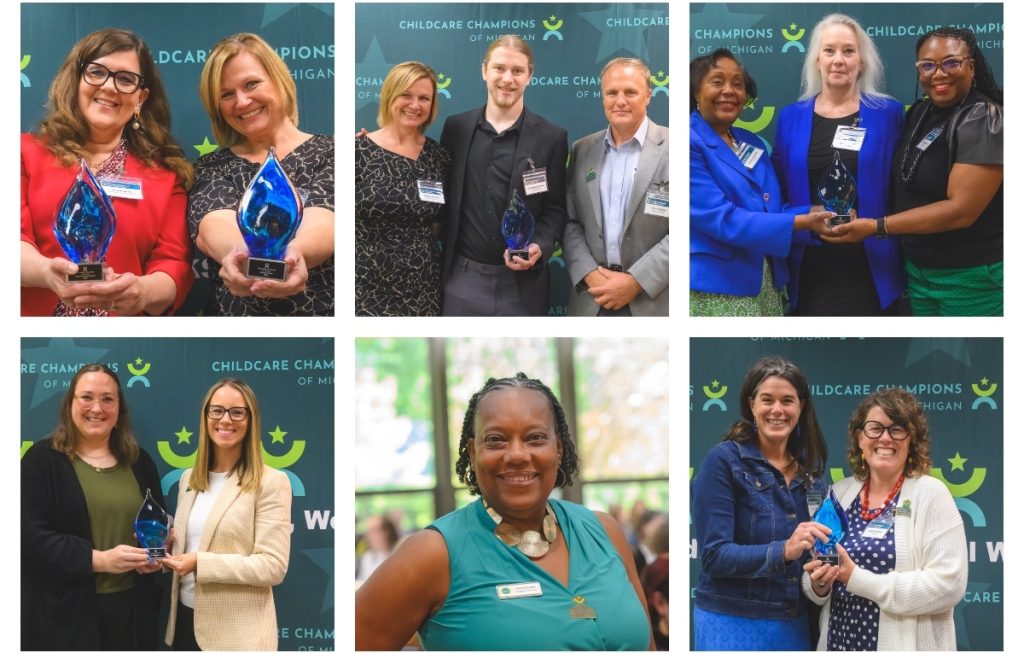
Q. In partnership with MiLEAP and the Early Childhood investment Corporation, Pulse hosted the Child Care Champions event on September 17 in Lansing. Employers recognized as child care champions included Alcona Community Schools, Bronson Hospital, Commongrounds, Genesee County, Hemlock Semiconductor, Kalsec, MSU Federal Credit Union, Wolverine Coil Spring, and Vantage Plastics. Why is it important to lift up child care champions?
Ortiz-Borden: Recognizing child care champions is so important. We hear that employers need to see examples of how companies and organizations are addressing the child care crisis. Lifting up innovation that’s happening is only going to help build momentum and help other businesses to see what’s possible. The event creates a space where they can hear from each other, peer to peer, how they can make it real. Our child care champions have all agreed to do advocacy work with our legislators to help them understand how vital this is for economic development. And when we have additional advocates out there, we can support more public investment in child care.
Photos by Doug Coombe.
Related Articles

Detroit Student Takes Flight: How DPSCD’s Davis Aerospace Is Turning Dreams Into Careers
This year, Herbert Anderson became Davis Aerospace Technical High School’s first student to complete a solo flight since 2015.

Detroit schools are making real gains in reading and math: 4 strategies that are working
The city’s schools are making progress faster than peer districts, but that progress could be fragile.

Planet Smilez program gives students hands-on dental career experience
Indiana University hosted the one-day Planet Smilez Discovering Dentistry Symposium. The mobile program next heads to Michigan universities, expanding students’ exposure to dental careers through hands-on experiences.