Mexicantown Moving Guide
When State Rep. Steve Tobocman and his wife were moving to Detroit
from Ann Arbor five years ago, they had their pick of any neighborhood
(or suburb) in the area. Enticed by the strong community and diverse
culture of Mexicantown, they bought a duplex fixer-upper in the
historical Hubbard Farms neighborhood. “We wanted to be a part of
that,” says Tobocman. “We like the fact that it’s an established area.
It’s not all new. Our neighbor had lived there for 50 years.”
Rehabbing called for a new kitchen, heating and cooling system, the
floors, the exterior, and lots of general maintenance — but their hard
work was worth it. In fact, they’re so happy with their neighborhood,
Tobocman says he’s recruited at least five other people to buy houses
nearby — a few even on the same street.
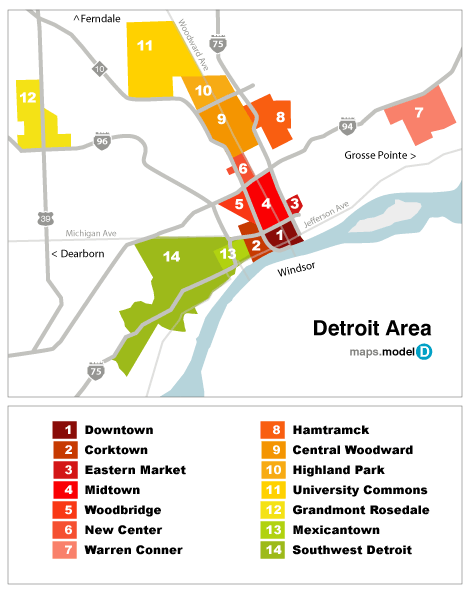
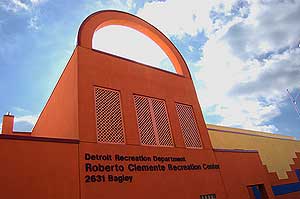 Mexicantown
is a bustling ethnic enclave in Southwest Detroit. It’s a neighborhood
filled with residents who’ve been there for generations, as well as an
influx of new immigrants and area residents like Tobocman who are
attracted to its homes ripe to be rehabbed and strong senses of culture
and community.
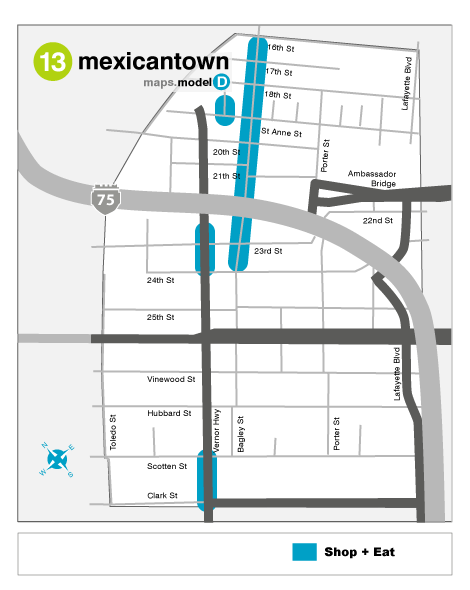
The freeways come together here — Interstates 75 and 96, with easy
access to I-94 and the Lodge. There’s proximity to Downtown offices,
not to mention the convenience that comes with living in one of the
only truly walkable neighborhoods in the city. Block after block along
Bagley and Vernor are lined with markets, bakeries, restaurants,
pizza-combo-taquerias, video stores, bars and ice cream shops.
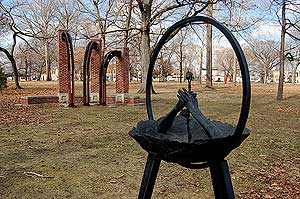 Kids
Kids
play and residents walk their dogs in Clark Park — a sprawling urban
green space that most residents count among their favorite neighborhood
perks. There’s a brand-new ice rink with bleachers, lights and
ice-makers, and the park recently received a $1 million grant for
improvements from Wayne County. Its improvements represent the kind of
growth bringing new residents to Mexicantown.
Restaurants, bakeries and supermercados thrive, housing continues to
go up, and the influx of people continues to climb. It’s a part of
Southwest Detroit — one of the only neighborhoods in the city where
population is growing. As business prospers, the neighborhood is
retaining its strong sense of community and Latino culture — an homage
to the very reason it’s booming in the first place.
Culture and diversity
“You don’t have to be Mexican to live in Mexicantown,” says Vince Murray, the Executive Director of Bagley Housing Association.
The ethnic breakdown of Mexicantown’s population is, in fact,
incredibly diverse. According to the Mexicantown CDC, the numbers go
something like this: 50 percent Hispanic, 33 percent black, and 37
percent white. One local landlord describes the renter’s demographic as
one that ranges from young hipsters, students and artists to working
folks and families. (A Google search on Mexicantown repeatedly turns up
the tidbit that Jack White of the White Stripes grew up there.)
Tobocman, who was drawn to the diversity, he says there’s also strong
base of people in the neighborhood who are working professionals with a
passion for social justice — teachers, non-profit and government
workers.
 Critics
wonder whether the hype and commercialization of gringo-suburban
tourism has watered down the neighborhood’s cultural legacy. Actively
involved residents Vito Valdez and Mary Herbeck couldn’t disagree more.
“It’s a good thing that people want to come here, “ Herbeck
says, seemingly stumped by the alternative. “It’s good for the
community and good for the small businesses, and the culture is still
very much here. You go into the businesses, and sometimes the people
don’t even speak English. It really is like a little Mexican town.”
Attend one of the neighborhood’s annual cultural festivals — Cinco
de Mayo, Day of the Dead, or Unity in the Community — and you’ll have
no doubt the rich cultural heritage is very much alive and thriving in
Mexicantown.
Cost of living and housing
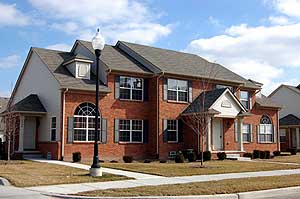 A
A
drive through residential Mexicantown reveals a wide variety of
housing. Beautiful, hulking structures, ripe for renovation along Grand
Avenue and streets like Vinewood, are getting the tender, loving care
they deserve from folks like Tobocman. Brand-new, market-rate Ste. Anne
condos, designed to look like peaked-roof row houses, are the latest
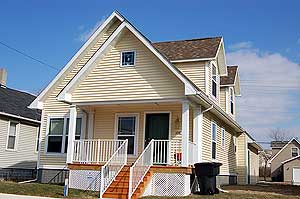
addition to Bagley Housing Association’s revitalization plan. Over on 16th, 17th and 18th —
more of the many residential blocks pioneered by the BHA — new A-frame
houses with manicured lawns and a spruced-up collection of older ones
are quietly creating a quaint neighborhood, lit up by the night-time
glow of the Ambassador Bridge.
Margaret Garry, who works at the Mexicantown CDC
and lives in the neighborhood says reasonably priced housing and the
low cost of local goods and services are one of neighborhood’s biggest
draws. “There’s a low, low, low cost-of-living here,” she says.
Tobocman agrees, “My wife was in grad school and I had school loans to
repay, and it was in our price point. We were able to find what we
wanted at the price we could afford.”
 Murray
rattles off a list of neighborhood price points — $80,000 for an old
home that needs work and new market-rate condos for $160,000 — most of
which are made more attractive by tax abatements and subsidies.
Local artists Valdez and Herbeck bought their 105-year-old home on
18th Street through the BHA, who rehabbed it and helped them through
the subsidy process. “It’s great. Working artists can actually buy a
place without having to beg, borrow and steal the money,” says Herbeck.
Anyone can walk into the BHA looking for home-buying guidance.
They’ll set you up with information packages, lending institutions,
income guidance charts and offer home-buying counseling. Since so many
of the houses go by word of mouth, they can offer advice on where to
find market-rate houses.
Community and pride
Tobocman is enthusiastic about Mexicantown, but not with the kind of
blind boosterism that makes you think he’s an overly idealistic
politician. “It’s not a suburban picket fence environment — the type of
place where you don’t see anyone who’s homeless. So, if that’s what you
want, then it’s not for you,” he says. “But you do see a lot of people
out jogging and walking their dogs. And there’s steady and constant
change. The non-profit development community has done a lot of hard
work,” he says. Community is strong there, he says, talking of CB-watch
patrols and neighborhood get-togethers.
Garry says that neighborhoods in Mexicantown can go head-to-head
with the downtown area in terms of safety. Hubbard Farms, for instance,
regularly comes in second as the area in the city with the least crime.
The Joshua Project shows crime in Mexicantown has gone down 35 percent.
 Herbeck
and Valdez had a strong sense of belonging before they even moved into
the neighborhood last June. They were both actively involved in the
community and the art scene in Mexicantown, particularly Valdez, who
teaches at the DIA and whose murals (Cornfields at Bagley and Ste. Anne
streets) and sculptures (fish sculpture on Vernor, just west of the
Train Station) can be spotted all over Mexicantown.
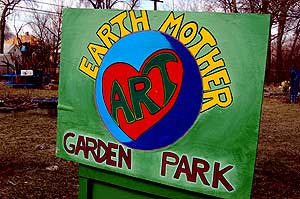
Once they moved in, they noticed a park off Vernor alongside I-75 —
it was an empty, littered lot with homeless people drinking out of
paper bags and basketball courts that nobody ever played on. They
decided to start a community garden, now called Earth Mother Art Garden
Park. They cleaned it up, planted a garden, created found-object
sculptures, and painted the hoop’s backboards and poles. Valdez created
a mural, incorporating his artwork into the existing tags, so there was
a more positive message. Now, it’s a neighborhood hangout again, where
kids actually use the basketball courts. As for the homeless, “We
didn’t do this to displace anyone,” ensures Herbeck. “They’re part of
our community, and they’ve taken ownership of the park — they’re still
there, but they keep it clean.”
As Murray says, “The people who have property in Mexicantown are active — they really care about this community, and it shows.”
For more information about Mexicantown visit the Model D
– Visiting Guide
– Investing Guide
Directions to Mexicantown
From the East:
Take I-94 West and merge onto I-96
East/Jefferies Fwy via exit 213B toward Canada. Then take the I-75
South/I-96 South exit toward Toledo and continue to exit 47B toward
Bridge to Canada/Porter St. Stay straight to go onto West Fisher Fwy,
then turn right onto 23rd St and continue to either Bagely St or W Vernor Hwy.
From the North:
Take I-75 South and merge onto I-94 West
via exit 53B toward Chicago, then merge onto I-96 East/Jefferies Fwy
via exit 213B toward Canada. Then take the I-75 South/I-96 South exit
toward Toledo and continue to exit 47B toward Bridge to Canada/Porter
St. Stay straight to go onto West Fisher Fwy, then turn right onto 23rd St and continue to either Bagely St or W Vernor Hwy.
From the West:
Take I-96 East to the I-75 South/I-96 South
exit toward Toledo. Take exit 47B toward Bridge to Canada/Porter St.
Stay straight to go onto West Fisher Fwy, then turn right onto 23rd St and continue to either Bagely St or W Vernor Hwy.
From the South:
Take I-94 East toward Detroit and merge
onto exit 213B for I-96 East/ Jefferies Fwy toward Canada. Take exit
47B toward Bridge to Canada/Porter St. Stay straight to go onto West
Fisher Fwy, then turn right onto 23rd St and continue to either Bagely St or W Vernor Hwy.
Take I-75 North toward Detroit and continue to exit 47A toward
M-3/Clark Ave. Stay straight to go onto West Fisher Fwy, then turn left
onto Clark St and turn right to W Vernor Hwy. Either stay straight on W
Vernor or turn right onto Hubbard then left onto Bagely.
Photos:
Vito Valdez’s fish sculpture
Roberto Clemente Recreation Center on Bagley
Clark Park Sculpture Project
Fiesta Mexicana at Fort Wayne
Ste. Anne Townhouses
New homes on 17th Street
Earth Mother Art Park on Vernor
All Photographs Copyright Dave Krieger
Related Articles

Statewide effort tackles postpartum depression and perinatal mood disorders
One of every five* new mothers experiences perinatal mood disorders, but only a small number receive the help they need. The Michigan Health and Hospital Association is working to change that.

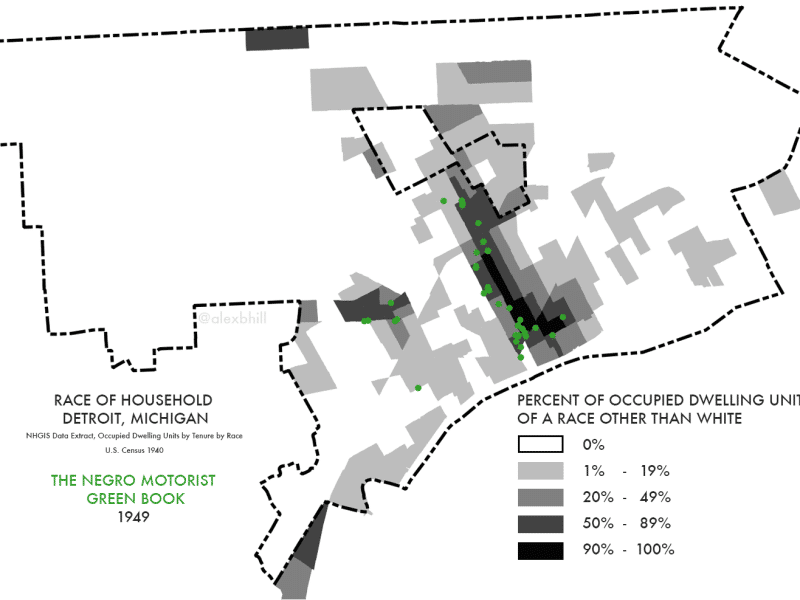
Mapping Detroit: Green Book Locations
Green Books mirrored the state of discrimination, racism, and African American rights in the nation each year. Detroit’s listings started in 1938.