Mexicantown Investing Guide
When Maria-Elena Rodriguez, the president of the Mexicantown Community Development Corp.,
returned from Los Angeles — her latest scouting trip to research and
explore emergent Mexican-focused neighborhoods across the country — she
was enthusiastic about Detroit’s progress. “I went out there expecting
to be impressed, but we are way ahead of them already.”
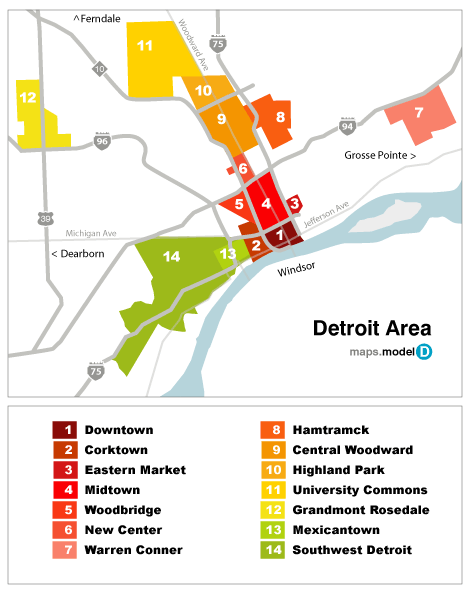
Mexicantown is part of Southwest Detroit, one of the only
neighborhoods in the city to see population growing, in a large part
because of an influx of immigrants to the area. It’s also seeing a boom
in businesses — from established businesses expanding, to new rehabbed
housing and a huge Mercado project. It’s a cultural and tourist
destination, as well as an emerging neighborhood and close-knit
community.
It may seem like the growth of Mexicantown is organic — and much of
it is — but the Mexicantown CDC has strategically been planning,
organizing and cheerleading the business decisions that make the most
sense for the community for more than a decade and a half.
The first thing that the MCDC did was start marketing the district, and tourism increased by 65 percent immediately.
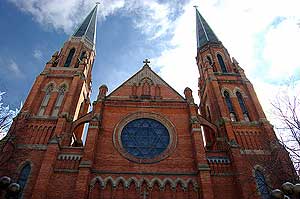 The
The
people who live in the neighborhood have everything at stake, points
out Margaret Garry, the MCDC’s vice president and development and real
estate manager. That’s been the motivation historically, too, from
Father Gabriel Richard to Father Robert Dugan of Ste. Anne’s Church,
who realized their church didn’t have a future if the neighborhood
didn’t. Both have been major impetuses to rebuilding the community,
because they understood the direct correlation. People who live in
Mexicantown know that their businesses will do better if the
neighborhood is successful. Residents are active and involved.
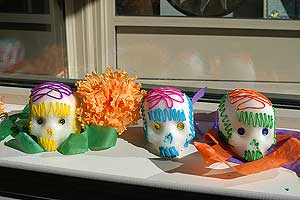
Restaurants and the big cultural events, like el Dia de los Muertos and Cinco de Mayo,
attract growing legions of visitors — people who are interested in
experiencing the food and rich culture of the neighborhood. “Then, the
local entrepreneurs say, ‘Look at all these potential customers, we can
open a business here.’ It’s a highly interrelated process.
 “We’re
a destination spot, and it’s a marketing opportunity that smart
business owners will figure out how to provide for all those people who
want to come here anyway.”
“We know our residents are underserved — on the low end and the high
end. They’re spending money on quality stuff,” Garry says. That’s just
one reason why people are so eagerly looking forward to the opening of
Mexicantown’s International Welcome Center and Mercado.
Here comes the Mercado
The Mexicantown International Welcome Center and Mercado is going up
in the heart of Mexicantown, at the base of the Ambassador Bridge.
Scheduled to open later this year, $14 million Welcome Center and
Mercado, which Garry calls a micro-business incubator, will add more
than 80 new businesses and about 195 jobs in Mexicantown. They’re not
just accepting any random business though. The idea is to promote the
same diverse and independent spirit of the existing neighborhood.
“Our niche is being ourselves — not inviting Starbucks in to open a
coffee shop, but finding a local person who wants to do organic
American or South American coffees,” she says.
There are still openings for the retail spaces—which range in size
from 355 square feet to 711 square feet. There are even a handful of
kiosks available for smaller enterprises. The MCDC has generated a
strategic list of good business concepts — ideas they think would be
successful, based on their research (like Rodriguez’s scouting trips)
and analysis of demographics.
So if you’re of the entrepreneurial ilk, you might want to consider
shops specializing in textiles and home accessories, high-end tequila,
silver jewelry, artisan chocolates, Mexican herbs, imported cosmetics,
flower and garden supplies, soccer goods, apparel, shoes and western
wear — just for starters. Their food service suggestions range from
tortas to tamales — and everything in between.
All the businesses will be subsidized, making ownership a reality
for people who might not otherwise be able to afford to start a new
business.
Other investment opps
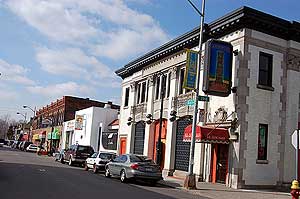 The
The
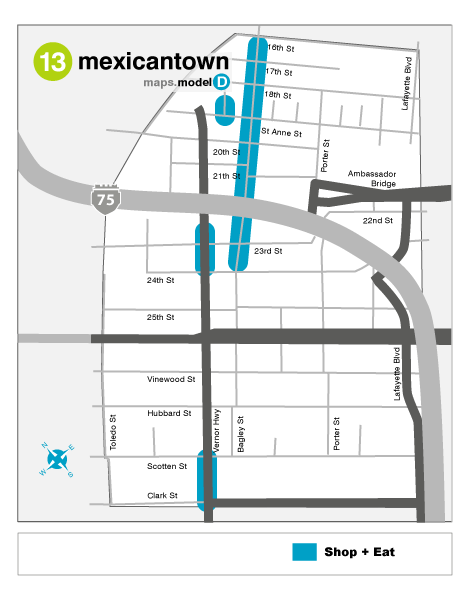
Mercado isn’t the only place to invest in Mexicantown. The Bagley and
Vernor corridors especially are prime spots for retail. The Mercado
project includes the Bagley Pedestrian Bridge, which will connect the
two sections of Bagley sliced by I-75. Located adjacent to the Mercado,
there’s no doubt it will help bring even more visitors into Mexicantown
— an additional 1.2 million, estimated by the MCDC.
Existing businesses are booming even without the pedestrian bridge and the fancy new welcome center. El Comal recently expanded, adding a performance area, Honeybee La Colmena
grocer, a favorite among locals for its meat counter and fresh veggies,
is expanding by four times the square footage — an impressive 15,000
square feet. Owner Ken Koehler, whose wife’s family has owned the
business for 50 years, has been around the see the neighborhood change.
“This area was at a standstill for a long time, so we’re [business
owners in the area] all excited, because we’re finally starting to see
movement in the area. There are people moving into this area, and it’s
a great thing. I see it continuing to grow.”
 Lauren Bruyninga, a young real estate agent at O’Connor Real Estate and Development
in Corktown (a stone’s throw from the border of Mexicantown) and
six-year resident of Southwest Detroit, is staunch believer in
investing in Mexicantown real estate. “I’m more interested and excited
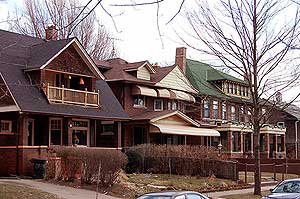
about Hubbard Farms than my own neighborhood,” she says. “I’m going to
live on Vinewood if it kills me. It’s my absolute favorite street in
Detroit.”
Last year, she bought a two-story, six-unit 1920s brick building on
West Grand Boulevard — at what she calls a steal. Four units were
rent-ready and two needed to be gutted. In the last four years of
selling real estate, Bruyninga has sold more homes in Mexicantown than
any other neighborhood. “The homes there have maintained their
architectural integrity … and haven’t been ‘ruined’ by cheesy Home
Depot-y updates,” she says. Because of the price points and quality of
existing homes, she calls the area a wise buy for single women who want
to invest in property.
“The neighborhood,” she says, “is a hidden gem.” But, with all the
investment and population growth, it may not be hidden for long.
For more information about Mexicantown visit the Model D
– Visiting Guide
– Moving Guide
Directions to Mexicantown
From the East:
Take I-94 West and merge onto I-96
East/Jefferies Fwy via exit 213B toward Canada. Then take the I-75
South/I-96 South exit toward Toledo and continue to exit 47B toward
Bridge to Canada/Porter St. Stay straight to go onto West Fisher Fwy,
then turn right onto 23rd St and continue to either Bagely St or W Vernor Hwy.
From the North:
Take I-75 South and merge onto I-94 West
via exit 53B toward Chicago, then merge onto I-96 East/Jefferies Fwy
via exit 213B toward Canada. Then take the I-75 South/I-96 South exit
toward Toledo and continue to exit 47B toward Bridge to Canada/Porter
St. Stay straight to go onto West Fisher Fwy, then turn right onto 23rd St and continue to either Bagely St or W Vernor Hwy.
From the West:
Take I-96 East to the I-75 South/I-96 South
exit toward Toledo. Take exit 47B toward Bridge to Canada/Porter St.
Stay straight to go onto West Fisher Fwy, then turn right onto 23rd St and continue to either Bagely St or W Vernor Hwy.
From the South:
Take I-94 East toward Detroit and merge
onto exit 213B for I-96 East/ Jefferies Fwy toward Canada. Take exit
47B toward Bridge to Canada/Porter St. Stay straight to go onto West
Fisher Fwy, then turn right onto 23rd St and continue to either Bagely St or W Vernor Hwy.
Take I-75 North toward Detroit and continue to exit 47A toward
M-3/Clark Ave. Stay straight to go onto West Fisher Fwy, then turn left
onto Clark St and turn right to W Vernor Hwy. Either stay straight on W
Vernor or turn right onto Hubbard then left onto Bagely.
Photos:
Ste. Anne’s Townhouses
Ste. Anne’s Catholic Church
El Dia de los Muertos sugar Skulls
Bagley, Mexicantown’s Main Street
Homes on Vinewood
All Photographs Copyright Dave Krieger
Related Articles

Juneteenth: Freedom’s promise is still denied to thousands of blacks unable to make bail
Just as with so many other criminal justice policies, pretrial detention disproportionately affects African-American men and women, destabilizing black families in the process.

Michigan Adventurer to Bike 1,000 Miles Across State to Spotlight Hidden Form of Domestic Abuse
A Michigan adventurer is biking over 1,000 miles across both peninsulas this summer to raise awareness about economic abuse: a hidden form of domestic violence that affects countless survivors across Michigan.

Detroit schools are making real gains in reading and math: 4 strategies that are working
The city’s schools are making progress faster than peer districts, but that progress could be fragile.