London’s Calling
London’s 2,000 years of city building hold valuable lessons for Detroit.
The evolution of a city is slow and messy, and London prospers despite
its past invasions, depressions and epidemics.
London has a powerful sense of history. Around each corner lies
something special, sometimes ancient and sometimes modern. London
is an architectural palimpsest for all to enjoy (go ahead, look it
up). People have been there for over 2,000 years, working hard to
build a city. Despite invasions, fires, epidemics and
depressions, it now prospers. It is a dynamic and vital
place. This is its first lesson: It takes a long time and
constant effort to build a great city.
Cities evolve and
devolve. They are up and then they struggle. Great cities
are not built instantly. Americans are an impatient lot. We
have difficulty accepting life’s roller coaster. We want it all
to be good, and we want it now. But even in America, wealthy and
dynamic as it is, the evolution of a city is slow and messy.
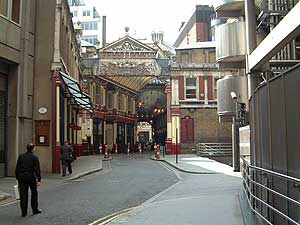
London’s second lesson: a city does not get better if it destroys
its great buildings. Keep and preserve great architecture.
There are buildings from the second century in London, beautiful
ancient works. They may not perfectly suit our modern needs, but they
provide an enriching spiritual connection with the past. They are
critical to the character and life of the city. They tell us
about human history. It’s because of this history that millions
of people visit London each year. Great old buildings are assets,
just as great new buildings are assets. The past is the
counterpoint to the future and historical buildings form the base for
modern architecture. Every time we lose a significant work of
historical architecture we lose a piece of our memory. Our
foundation becomes shaky. We lose a piece of our cultural
soul. Cities are history, recorded in stone and steel. Great
cities are best made by accretion; that is, they should evolve,
building by building, a little at a time. This process creates
visual diversity and a human scale never found in overly
master-planned, large-scale urban development.
The counterpoint to lesson No. 2 is lesson No. 3: Even though
private enterprise should be free to build on private land, public
space, both green and hard, streets, parks and squares should be
carefully and beautifully planned.
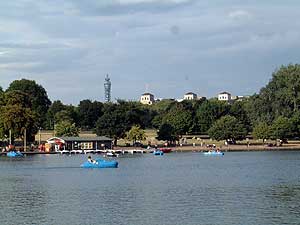
Kensington, Hyde, James and
Regents Parks are calm islands in an often frantic city. They are
beautifully landscaped with fountains, monuments and lakes. Piccadilly
Circus is a vibrant collector, filled with people and
traffic. Detroit’s new piazza, Campus Martius is like
Piccadilly. It is a great addition. Grand Circus Park is a
bit different, quieter yet still a wonderful place. Belle Isle is
also a great park, but because it’s an island, it is not as accessible
as the city parks of London. The proposed Detroit RiverWalk
system will be an accessible park. It should be beautiful if it
is designed as a park, continuous and green, wide enough to remain a
park and not interrupted by private intrusions to the waterfront. It
should be planned as a great park with private development built
around it, not the other way around. More can be done. With
all of the vacant land in Detroit, there can be many more parks. There
is a great opportunity to rethink Detroit’s basic grid.
Consider parks every six blocks, like historic Savannah, Georgia.
 London’s fourth lesson is very obvious and very important: London
would not be the city it is without its concentration of wealth and
power.
Many businesses are headquartered there and many wealthy
people live there. The Prime Minister governs from there and the
Queen rules over the Royal Court there. When the early Romans
invaded the British Isles they discovered London was ideally located to
be a center for commerce and government. This status has
continued unabated for 2,000 years. Commerce, creativity, wealth
and political power underlie the vitality of all great cities.
We
know this lesson in Detroit. Detroit has a near history of
economic and creative greatness. With the Model T and the
assembly line, Detroit had a profound impact on the world. This
gave Detroit great wealth. But at this point, it’s common
knowledge that the global economy is forcing reductions in Detroit’s
historically high pay for low skill jobs. U.S. auto companies are
more than challenged from abroad. It is clear that our auto
expertise needs to be reinvigorated and possibly redirected. But
we also need something else, and this leads to the next point.
London’s fifth lesson: a city will be more stable and vital with
a diverse economic, socio/cultural and built environment. We know this all too well in Detroit. Our culture and economy
have relied on the auto industry and we have suffered the ups and downs
of this reliance.
London does not rely on just one
industry. It is economically diverse. It is also ethnically
diverse. One in three residents of the its 6.7 million belong to
an ethnic minority group. (Click here
for more information). This means London is an amalgam. It
is not white or black or yellow or brown. It is a colorful mix. Its use patterns are diverse and mixed as well. Residents live
close to services. Restaurants and shops share streets with town homes
and car parks, churches nestle up to pubs, and office buildings abut
parks and palaces. Diversity creates energy, interest and
ultimately a more livable city.
London’s sixth lesson explains how all of the diverse interests can
live together: Some issues affect the entire region and the
region should determine how to handle those issues. If you have
visited London you probably saw Big Ben, the Tower, Westminster Abbey,
all that, but the city of London is actually an amalgam of 33 separate
boroughs in an area that stretches over 1,200 square miles. Many
boroughs are small, what we might call suburbs here in the
States. Each of these boroughs was at one time a politically
independent “town”. Londoners recognize that some issues are too
large for a small city to handle. Over the years there have been
various efforts to coordinate the area on a regional level. The
most recent effort came in 2000 when the London Assembly, comprising 25
members, and a single Mayor were elected to oversee regional issues
such as land development, economic development, transportation, fire
and police services, air quality, biodiversity, energy, noise, waste
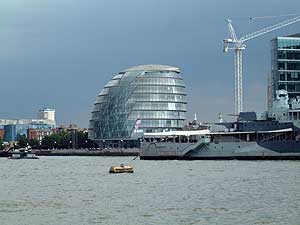
and culture. To herald and house this new governing structure,
London built a new government center with a spectacular city hall,
shaped like a glass egg, on the banks of the Thames.
In Detroit our recent scrapes over the zoo and the water supply are
only a few regional concerns that need to be addressed. The
survival of these important assets and our over-all economic and
cultural vitality are regional interests and should be influenced by a
body that has representation from each city. A regional
government could help us reconcile the tension between Detroit and
surrounding cities. A regional government could help integrate
our economy and bring more diverse and better jobs to every city. A regional government could oversee a new regional public
transportation plan. A regional government could help relieve the
economic pressure on Detroit’s depleted tax base. A regional
government could pool assets to improve roads, improve refuse disposal
and many other services now done piecemeal by the many small cities in
the region. To get a better sense of how this can work, visit the
London City Government web site. It
is truly amazing. See how they are working, as a region, to
create a better life for all.
These lessons present a serious challenge to each of us, a challenge to
learn from history and to learn from others. Detroit has a
history of economic success and creative cultural energy. Detroit
has a history of good people making good decisions. It also, like
all places, has the opposite. It has a history of division and
currently Detroit, the city and the region, have economic
troubles.
The lessons from London can illuminate our own flaws,
reinforce our good efforts and move us in the right direction.
But the lessons are only useful if they are learned and used. Closed
minds ignore the teacher. It’s time to put power struggles
aside in order to bring creative and diverse people, new jobs and
economic wealth to our region. Let’s learn to make public land
beautiful and plentiful, bring enlightened development to private land
and save our great historic buildings.
Finally, I shouldn’t leave you with the impression that all is perfect
in London town. There is serious racial tension in some areas, and
there are great income inequities. Forty-three percent of London’s children live below the poverty line. These sobering facts take us to where we started, back to
the first lesson. Even a city as old as London has work to
do. You see, London, like Detroit, is still a city in progress,
building and learning, yearning to be better.
Francis X. Arvan is a native
metro Detroiter and a graduate of Lawrence Technological University and
Columbia’s Graduate School of Architecture. He’s practiced architecture
in New York City and Westchester County, and taught architecture at New
Jersey Institute of Technology in Newark. Arvan moved back to Michigan
in 1997, and established his own firm, Royal Oak-based FX Architecture, in 2000. He is also the chair of the Royal Oak Main Street Design Committee.
Photos:
Albert Hall
Hyde Park Lake
City Hall
Gallery near Llyod’s
All Photographs Copyright Francis X. Arvan
Related Articles
Detroit was once home to 18 Black-led hospitals – here’s how to understand their rise and fall
Detroit had approximately 18 Black-owned or Black-operated hospitals during the 1940s and ’1950s. Their decline followed structural and policy shifts. Hospital desegregation after World War II opened previously white-only hospitals to Black physicians and patients.

Rx Kids officially launches in Detroit, marking largest expansion yet
Applications for Detroit families who want to enroll is Rx Kids are now open at RxKids.org and are also accessible through the City of Detroit’s website.

Composting project empowers Detroiters to reduce food waste, protect the environment
Food waste makes up one-quarter of landfill waste and contributes to more methane emissions than other landfill materials. The Detroit Community Composting Collective Project is out to curb food waste by training backyard composters.