Detroit artist creates new art installation for St. Clair Metropark, highlighting lake sturgeon and recycling
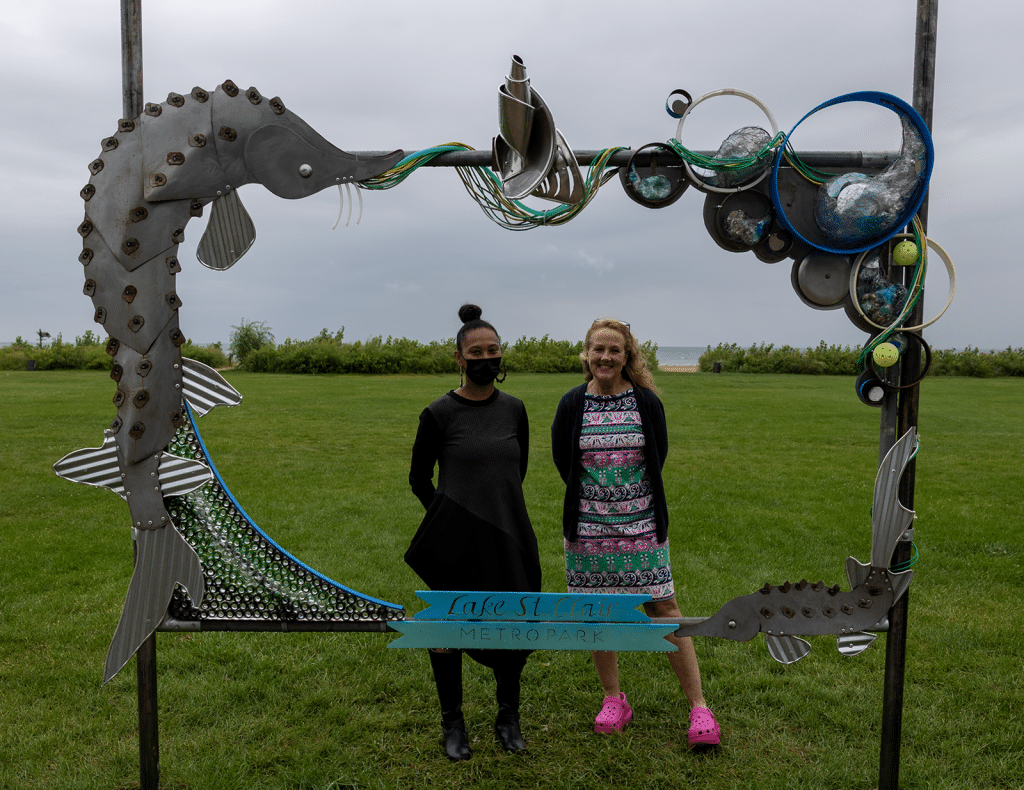
A new art installation at Lake St. Clair Metropark is designed not only to provide a fun photo opportunity for park visitors, but also to promote recycling and highlight the importance of lake sturgeon.
This story is part of a series exploring how parks serve as engines of exploration, education, play, and equity. It is made possible with support from Huron-Clinton Metroparks and the City of Detroit.
A new art installation at Lake St. Clair Metropark is designed not only to provide a fun photo opportunity for park visitors, but also to promote recycling and highlight the importance of lake sturgeon.
The installation at the Harrison Township park is a large outdoor photo frame featuring a representation of a lake sturgeon. It’s constructed mostly out of repurposed would-be waste found in the park and elsewhere in Metro Detroit. The project is the result of a collaboration between the Huron-Clinton Metroparks and Detroit-based artist Halima Afi Cassells. Installation of the piece was completed earlier this month, and it was officially unveiled in an Aug. 19 event.
“We are excited to be able to unveil this art installation, which is a beautiful reflection of the Metroparks’ values of stewardship and education,” Metroparks CEO Amy McMillan said in a press release on the installation. “By using recycled materials and spotlighting the often-overlooked lake sturgeon, this installation not only invites visitors to engage with the park in a new way but also reminds us all of our shared responsibility to care for our waterways and environment. It’s a powerful example of how art can inspire stewardship.”
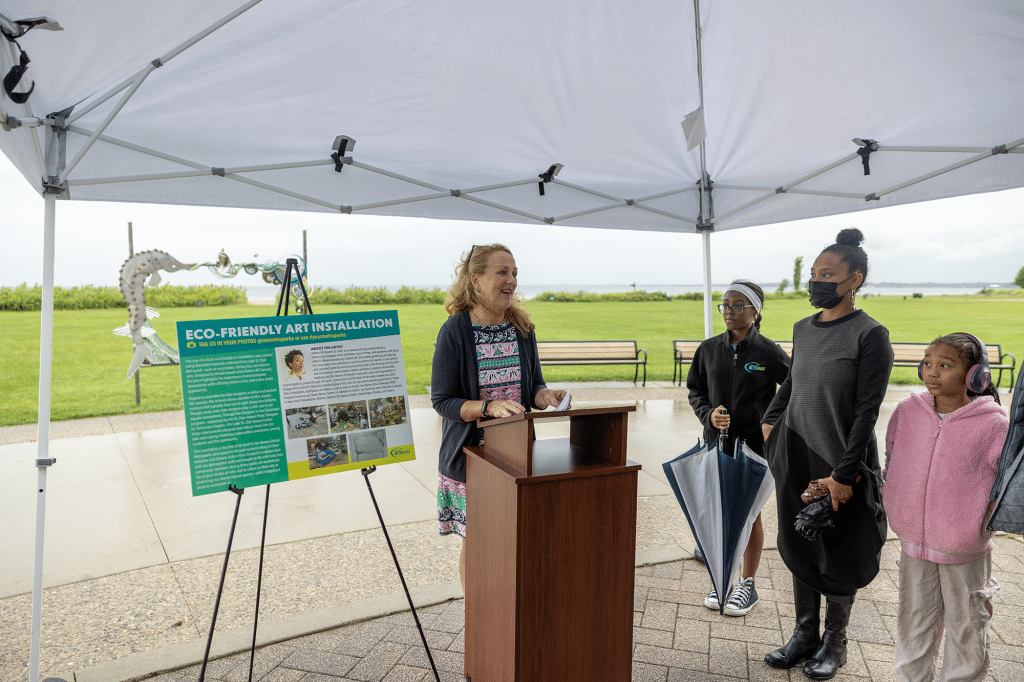
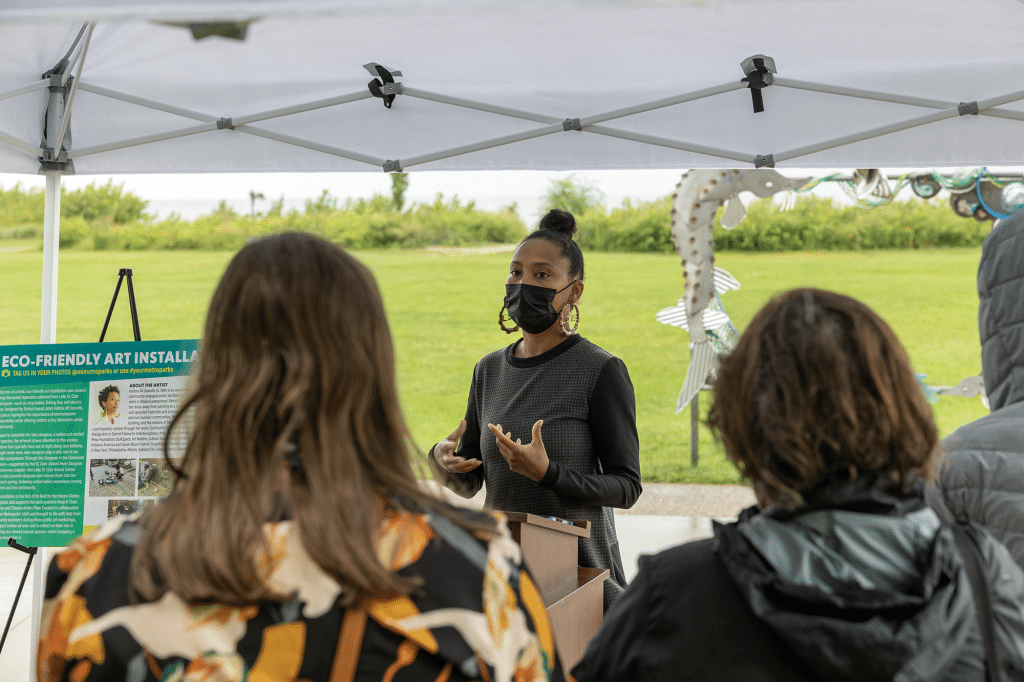
Metroparks staff met Cassells at a presentation she gave, and were excited by her past work as an Eco-Artist-in-Residence at Detroit’s Eliza Howell Park.
“We wanted an installation, a photo opportunity, in the parks that visitors could engage with that would ultimately drive social media and user-generated content, and serve as a piece of placemaking,” says Danielle Mauter, the Metroparks’ chief of marketing and communications. “But we also wanted it to have a message.”
Metroparks staff suggested theming the installation around the lake sturgeon, an ancient species that often goes unseen but plays an important part in local ecosystems. Lake St. Clair Metropark advocates for the species’ importance through a program called Sturgeon in the Classroom, in which students help raise sturgeon and release them into Lake St. Clair. Cassells says she was “intrigued” by sturgeon since she learned that the species dated back to the time of the dinosaurs. She says she was fascinated to consider “how ancient our habitat and everything that we see around us might possibly be.”
“That’s what kind of blew my mind,” she says.
Metroparks staff also proposed making the piece out of reused materials to support recycling goals in the parks system’s Climate Action Plan and similar messaging in the parks’ Keep it Clean campaign. Cassells collected plastic waste from the park to use in the piece, and also incorporated found metal and glass from elsewhere in the Detroit area.
“[Metroparks staff] wanted something that would live outdoors that could speak to [sturgeon conservation], as well as be a reminder for folks to be conscious of their materials and pick up after themselves and just know that all of our choices have an impact,” Cassells says.
Cassells and Metroparks staff also engaged members of the public in creating the new installation. They held three workshops where the public was invited to help craft elements of the piece, such as using plastic bottles to create representations of water bubbles seen in the frame.
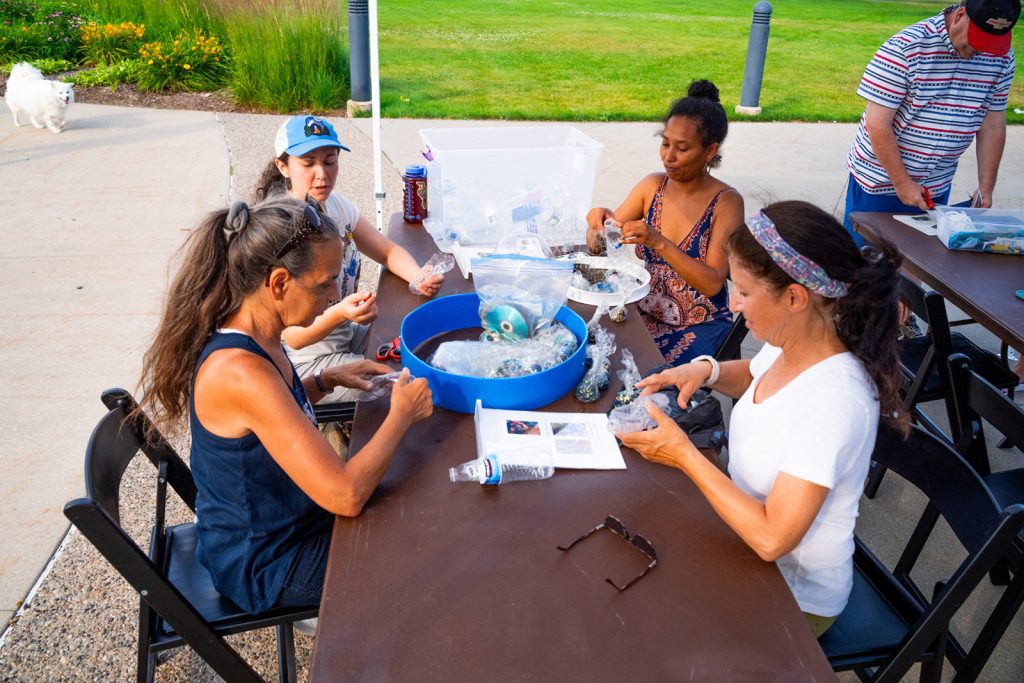
“I like to work that way,” Cassells says. “I feel like when a lot of people’s ideas are incorporated, as well as their hands, then a piece is stronger.”
Cassells describes the creative process for the installation as “a really beautiful experience.” She was particularly happy to see “young people come over with their very honest questions” while she was installing the piece.
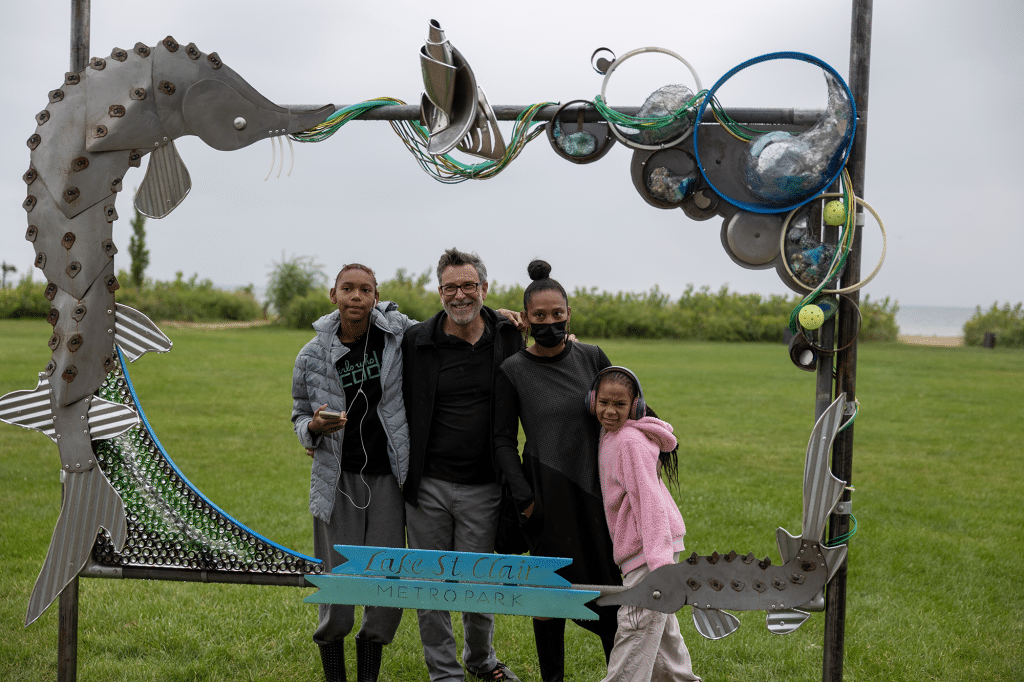
“Some kids passed by and they were like, ‘Mommy, what are they doing over there?'” she says. “That’s, to me, already accomplishing one of the goals: to spark conversation. … I hope people do feel inspired to find out more about our habitat and what we’re a part of and how ancient and how miraculous it is that we’re all here together.”
Related Articles
3+13 Ways to Celebrate 313 Day in Detroit
March 13th — known locally as 313 Day — is Detroit’s unofficial holiday celebrating the city’s area code, culture, and community pride.

Travel + Leisure Names Detroit, “Most Underrated City” in Midwest. Here are 5 Gems We Think Were Missed
Detroit’s renaissance is happening in every corner of the city, often in places that fly just a little under the radar. At Model D, we’ve had the chance to cover many of those emerging spaces, projects, and entrepreneurs shaping Detroit’s future. Here are five Detroit gems we think deserve a spot on any “underrated Detroit” list.
Detroit was once home to 18 Black-led hospitals – here’s how to understand their rise and fall
Detroit had approximately 18 Black-owned or Black-operated hospitals during the 1940s and ’1950s. Their decline followed structural and policy shifts. Hospital desegregation after World War II opened previously white-only hospitals to Black physicians and patients.