Hemp 4 Humanity builds foundation for sustainable homes using all-natural, energy-efficient material
Cody Ley, a past CEDAM real estate development boot camp participant, is passionate about creating affordable, sustainable housing using hempcrete — a resilient, energy-efficient material. Through his nonprofit, Hemp 4 Humanity, he hopes to empower and connect communities to promote a circular economy.
Block by Block is a solutions journalism series that is supported by IFF, CEDAM and Invest Detroit, and is focused on community development leaders and initiatives in Michigan, Ohio and Indiana.
It’s impossible to find a single community that has not felt the impact of the statewide housing shortage. Providing a solution to workforce development housing shortage using all-natural materials — now that’s much harder to find. For Cody Ley, founder of Hemp 4 Humanity, he’s working on changing that. He credits his start and success to the Community Economic Development Association (CEDAM)’s Real Estate Boot Camp Development program.
The CEDAM Boot Camp program addresses community needs by providing developers, stakeholders and community residents with training and tools. The program helps deliver an understanding of how passion-driven work can transform affordable housing and community-centered projects, often prompting systemic change.
Emily Reyst is the director of external affairs at CEDAM. In her role, she’s responsible for overseeing the housing and communications team, and focused on collaborating with partners and stakeholders.
Reyst recalls meeting Ley at Crystal Mountain two years ago for the CEDAM rural real estate boot camp.
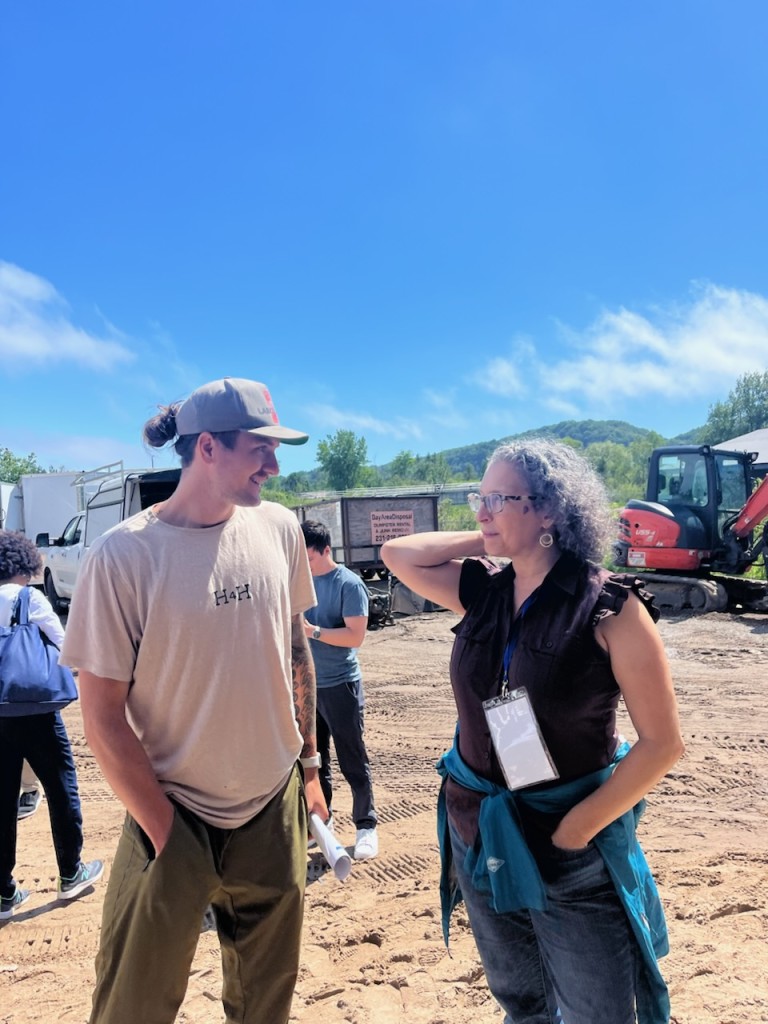
“Cody is trying to develop a new way to build affordable housing with materials that are non-toxic, safe for folks who have chronic illnesses and are really sensitive to different chemicals and materials,” Reyst says. “There aren’t a lot of people who are trying to develop the way he is trying to develop when it comes to affordable housing. It’s exciting to have somebody in this space who is trying to create a circular, sustainable economy around how he does it.”
As a senior in college in 2020, Ley was studying biochemistry and environmental science. During his senior thesis research, he learned about bioplastics, and about hemp as a biopolymer or as a biocomposite.
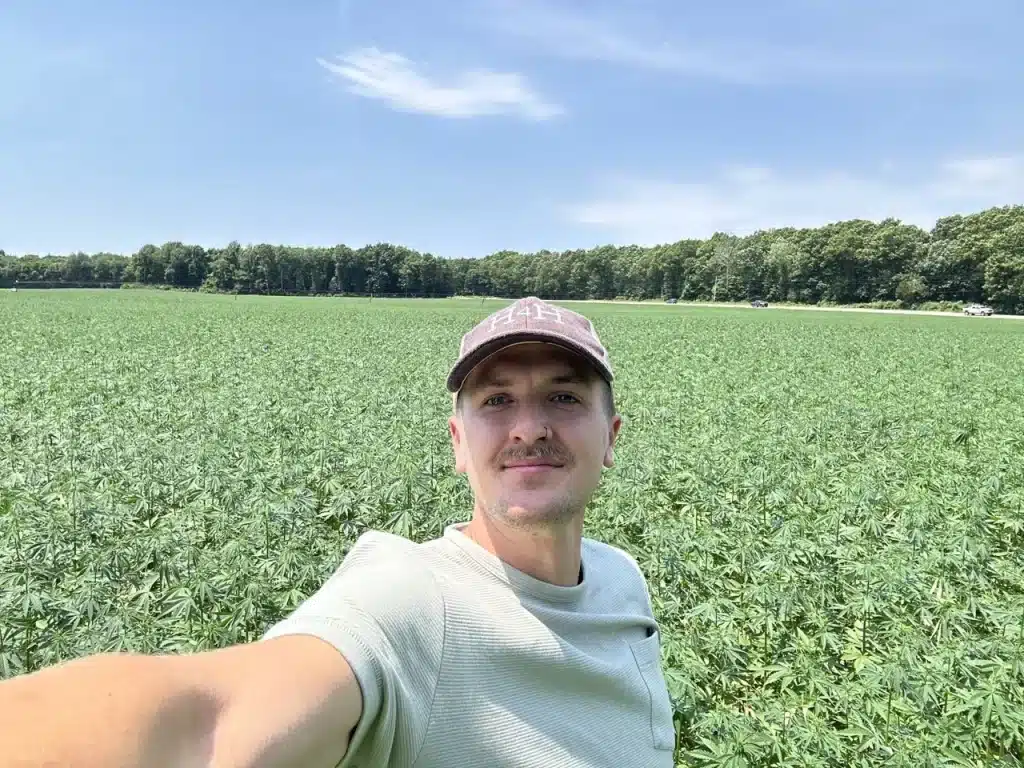
“I became really fascinated about it and learned more about how it can impact the built environment as well,” Ley says. “When I graduated, I wanted to build with this material but no one was really growing it. I got a job in a laboratory and started leasing some land, doing some variety trials, learning how to farm it — which was a great adventure. I met a lot of amazing farmers that helped me learn how to farm. I was a first-generation farmer, so that was not something I was familiar with in my wheelhouse.”
After learning about how hemp works in the soil, and the benefits, Ley started traveling, getting on job sites, taking workshops and learning from experienced builders in the natural building space.
In 2024, he got a contract to scale the farm up.
“We started farming 40-50 acres for paper that year,” he says. “At that time, I left my day job and started doing some hemp insulation projects. In 2025, I built a dining hall start-to-finish, and a couple more jobs for some clients. In that same year, we started doing some research on meditation, to clean up soil with this plan.”
Passionate about sustainability and community health, Ley’s latest desire is to share that passion, knowledge and experience with everyone in the community — of all incomes and classes.
Just last year, he started the Hemp Community Foundation nonprofit.
“The whole goal of the nonprofit is to develop affordable housing from farm to frame, and to empower underserved communities along the way with the skills to produce food, shelter and fuel all for themselves in any setting — urban, rural or tribal land,” he says.
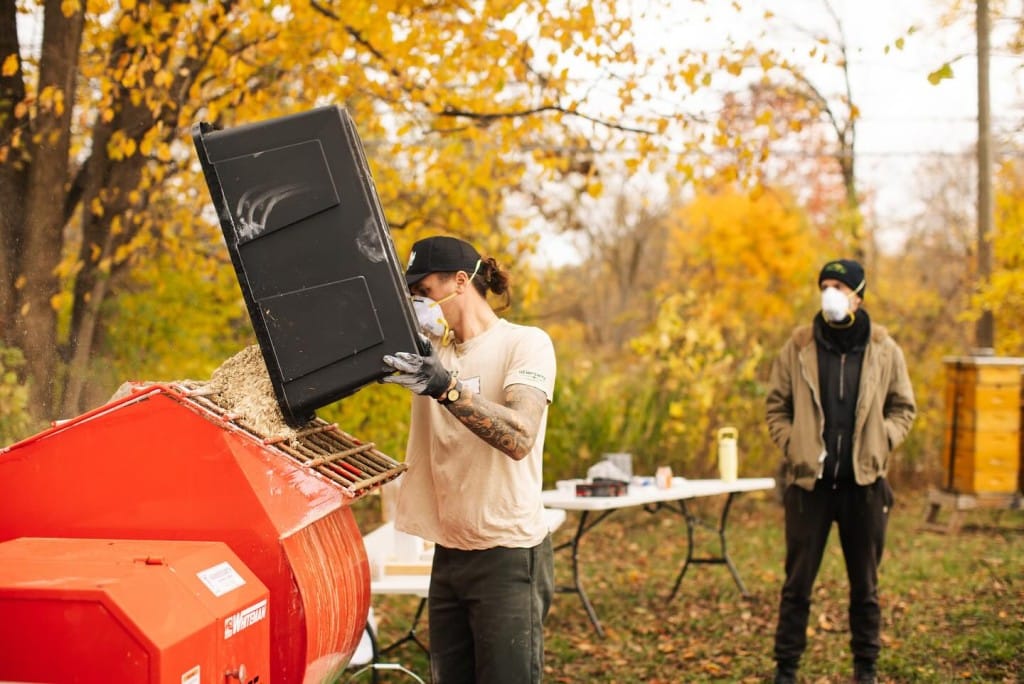
The Farm to Frame initiative is the flagship program. Ley is currently putting together the curriculum for the workforce development aspect, prepping sites for development, and hopes to begin building and farming this summer in Detroit.
While the supply chain is not fully developed yet, Ley is proud to be one of the few people and developers trying to tackle the affordable housing shortage with an all-natural solution in hempcrete.
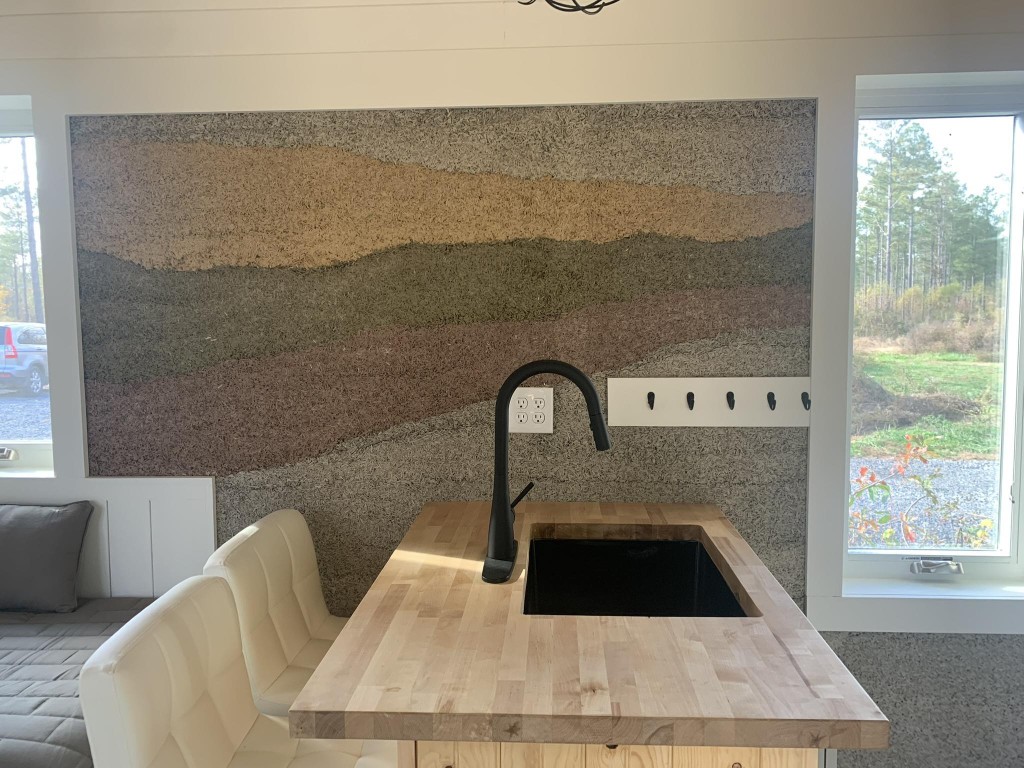
“Hemp building in general is on a very big rise right now. It’s definitely becoming a lot more popular across the country,” he says. “There are other organizations in Louisiana and Washington, so we’re not the only ones — but it’s still not very mainstream or common.”
Although not mainstream, the benefits are evident and wide-ranging, including socioeconomically and environmentally, promoting a circular economy, says Ley.
“Our material supply chains are very spread out and that can cause super-inflated prices, which we’ve seen over the past few years,” he says. “The building industry accounts for over 40% of our greenhouse gas emissions, over half of our landfill waste streams comes from construction and demolition. One huge benefit of hemp is that we can localize our supply chains on the front end. We can bring the means of production back to our small communities.”
Especially in lower income areas, builders use less-expensive materials with a higher carbon footprint usually create indoor air environments with harmful VOCs and mold, creating health issues for residents.
Ley hopes to create a local, regenerative, sustainable agricultural economy that can feed a healthy and sustainable construction industry. Using hemp as a building material is earth-friendly that doesn’t use chemical-intense practices with pesticides and herbicides.
Hempcrete as a non-structural infill insulation provides supply chain benefits also.
“The full life cycle of the material is beneficial too,” Ley says. “It’s an all-natural material so it can be spread into a field at the end of its life and used as a soil amendment or reconstituted into another biocomposite. It’s much more sustainable, and higher-performing — it’s very energy-efficient. You can see reductions in your energy bill anywhere from 40 to 70%. It regulates temperature and humidity passively, and is very resistant to mold, fire, and pests.”
That positive environmental impact is the main reason Ley got into this industry. He desired to connect people in the community to each other and the environment, to empower communities to make a difference.
“We use housing as a tool and we use hemp as the engine to power that change,” he says. “I hope to inspire a greater environmental impact across the board.”
Becoming a catalyst for change might be a process, but it’s a worthwhile one for Ley and fellow community stakeholders, supporters, and partners. Urban farming in Detroit has grown over the past decade, and Ley hopes to see it continue to grow sustainably.
“There’s a big learning curve, especially dealing with an urban environment in a city like Detroit, but so far, we’ve had a lot of community engagement events,” he says. “We have a lot of support, and people interested in learning about this, and wanting to utilize lots they or their families have owned. On the farming end, we have a lot of people who want to start utilizing their land to grow materials that could eventually turn into a house.”
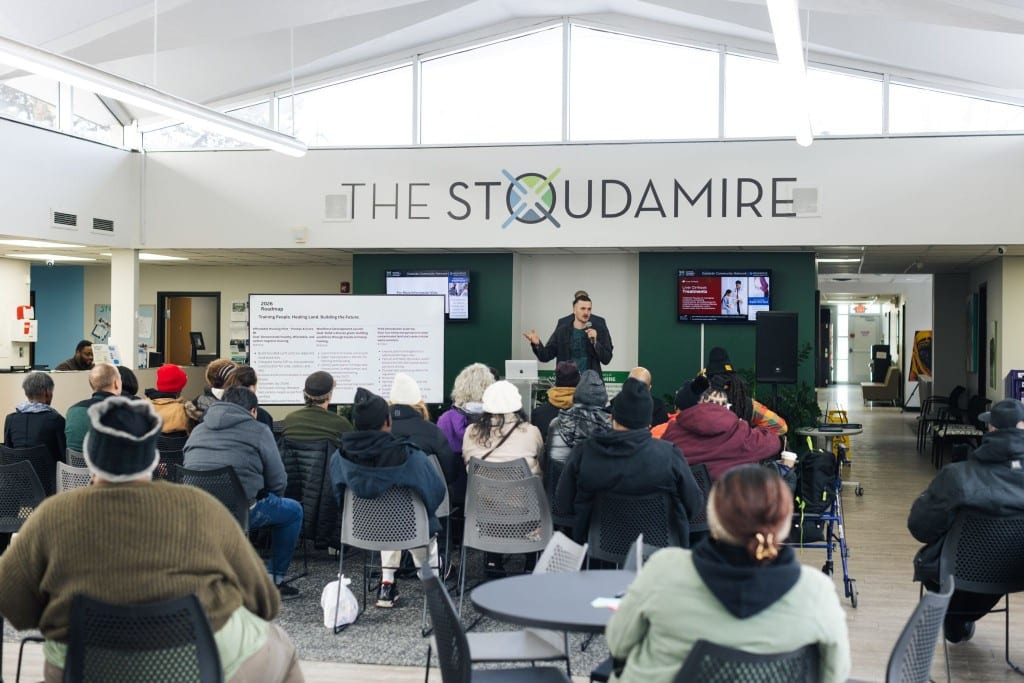
Much like the public’s viewpoint of the hemp plant has changed over the years, so too, has Detroit’s reputation. Ley considers Detroit and the industrial hemp plant’s stories and unfair tarnished reputations to be parallel. Put the two together, and they might just be unstoppable.
“Hemp was a main staple crop as we settled in America, we grew it all over the world. Then it kind of got thrown out with the prohibition act, marijuana became a big deal, the utility of the plant got thrown out, all from a misunderstanding,” he says. “Now it’s coming back, it’s legal since 2018. Detroit’s also on a comeback where we’re rebuilding, and there’s so much positive energy in the spirit, soul and grit of the city is on display. Combining the two is something that can make some magic happen.”
Making the magic happen long term, enabling communities to take charge of their land and resources requires a lot of hard work in the meantime. Ley attributes his success thus far to attending the CEDAM boot camp.
“I’m learning all of this for the first time — farming, building, and developing,” he says. “Attending the boot camp was foundational to my knowledge and career as an emerging developer. It was quintessential — not just the information I learned, but also the network. Emily at CEDAM has been an amazing part of my network and connects so many different parts and people I’m so grateful for. I can honestly say that I wouldn’t be anywhere near as close as I am to putting up our first development had I not attended the CEDAM program.”
He hopes to continually scale-up the nonprofit, put up three developments this year, and continue remediation and PFAs research, sharing that knowledge with neighborhoods across the city.
“Our main project is putting up an affordable housing pilot on the east side of Detroit, which would be a completely carbon-neutral, non-toxic, affordable housing duplex. We want to have that breaking ground in the spring with our pre-fabricated panel system and utilize our workforce development project,” Ley says.
He hopes to create a model for brownfield remediation and redevelopment using all-natural materials in Detroit. The goal is also to train 20+ people in regenerative industrial hemp farming in an urban setting and construction in 2026.
Reyst recently had a chance to catch up with Ley to talk about his project’s next steps.
“I went to one of his events in Detroit where he was partnering with Sanctuary Farm, an organization that I love,” she says. “It’s been really cool to see him integrate into the Detroit community which is where I live, so I have a personal connection to the work he’s trying to do in the community where I live.”
Reyst is proud of boot camp participants who take their innovative ideas and get connected with existing systems all while pushing for change and building new systems from the ground-up.
“There’s a traditional way we do things which serves a really important purpose, but it doesn’t always translate to innovation or addressing an issue in the way that’s most effective,” she says. “It’s exciting when we can merge those two things — what is the development process that’s always been and what are these new ideas that can impact people. When those two things can marry, it’s really exciting because that’s how more people can do innovative things. It shows that doing things differently is possible, and it can start slowly changing where systems don’t always create radical change, it can help move the needle in some capacity.”
The next 2026 CEDAM core boot camp is in Muskegon from April 21 to May 1. The next 2026 rural boot camp is in Gaylord from Sept. 14-18.
Related Articles
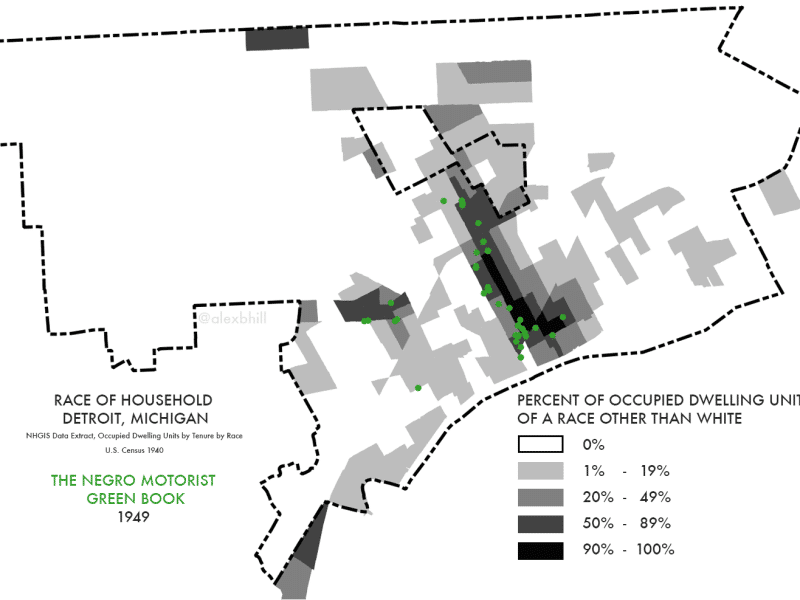
Mapping Detroit: Green Book Locations
Green Books mirrored the state of discrimination, racism, and African American rights in the nation each year. Detroit’s listings started in 1938.

3+13 Ways to Celebrate 313 Day in Detroit
March 13th — known locally as 313 Day — is Detroit’s unofficial holiday celebrating the city’s area code, culture, and community pride.
Travel + Leisure Names Detroit, “Most Underrated City” in Midwest. Here are 5 Gems We Think Were Missed
Detroit’s renaissance is happening in every corner of the city, often in places that fly just a little under the radar. At Model D, we’ve had the chance to cover many of those emerging spaces, projects, and entrepreneurs shaping Detroit’s future. Here are five Detroit gems we think deserve a spot on any “underrated Detroit” list.