Spruce up in Southwest Detroit
Infrastructure is powering southwest Detroit’s small business resilience with help from Southwest Detroit Business Association.

On a stretch of West Vernor Highway, the changes are easy to see if you know where to look: wider sidewalks, new lighting, cleaner storefronts, and pockets of greenery throughout the built environment. But beneath those visible upgrades lies something less obvious and far more foundational: a long-term investment in infrastructure that is quietly shaping the future of Southwest Detroit’s small business ecosystem.
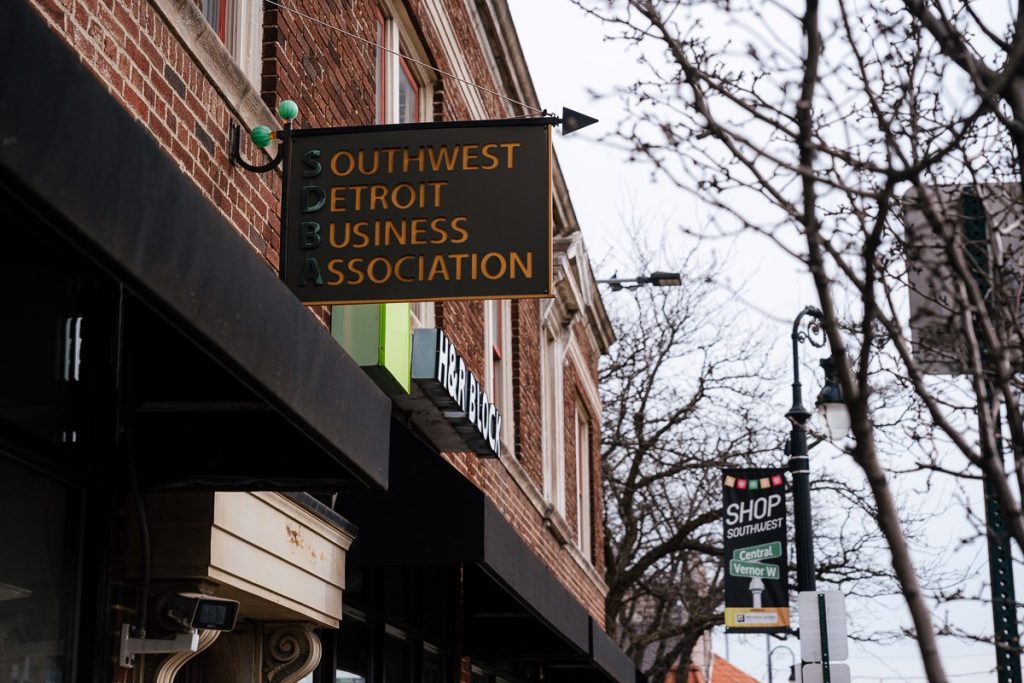
For more than a decade, the Southwest Detroit Business Association (SDBA) has taken on a role that extends well beyond traditional business support. Through its streetscape and infrastructure work, the organization has helped reimagine what it means for a commercial corridor to function not only as a place to shop, but as a place to live, gather, and grow.
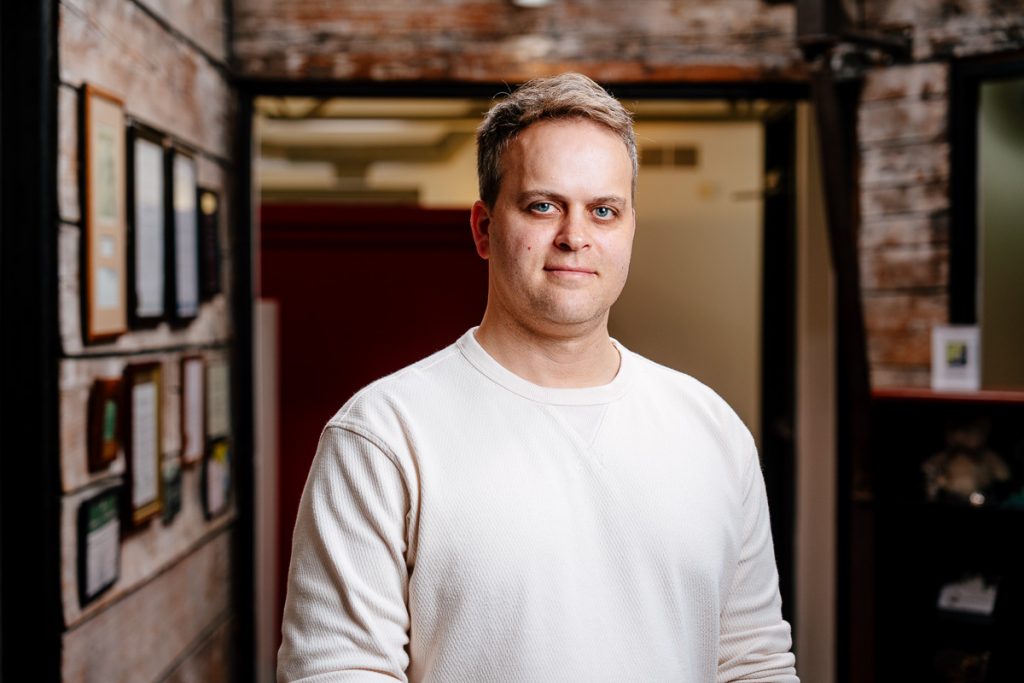
Greg Mangan, SDBA’s real estate advocate, has seen that evolution firsthand.
“My role in the past originally was more around small business technical assistance and helping with property owners — trying to be a matchmaker for property owners and businesses looking for space,” Mangan says. “And then it kind of transitioned into working on infrastructure issues like green stormwater infrastructure and streetscape projects.”
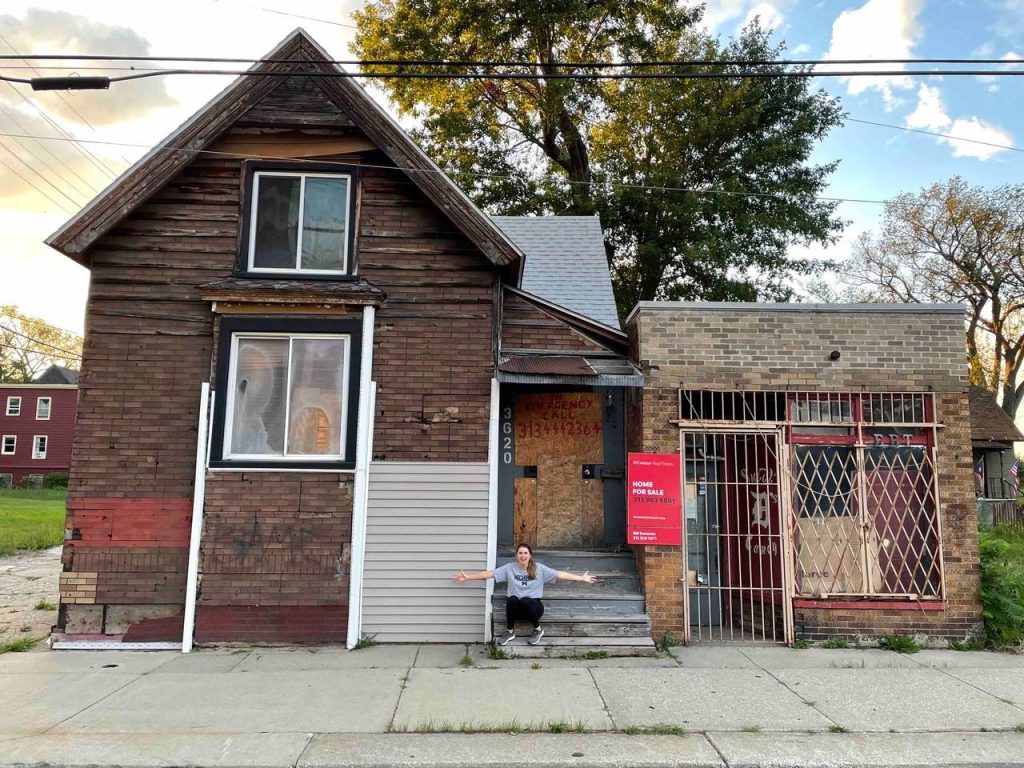
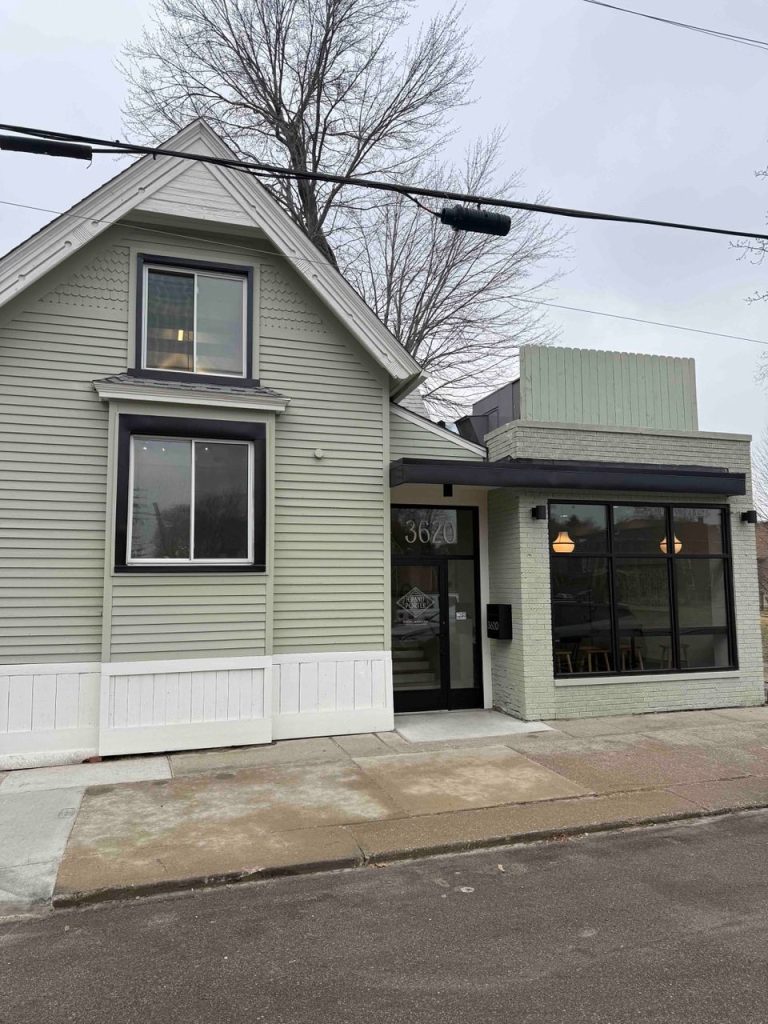
That foundation has taken many forms. In 2015, a nearly $6 million streetscape project transformed over two miles of West Vernor, replacing sidewalks, installing historic lighting, and adding landscaping elements like planter beds and trees. The project was a collaboration between SDBA, the City of Detroit, DTE, and local stakeholders—and it marked a turning point in how infrastructure was approached in the neighborhood.
The improvements weren’t just aesthetic. For small business owners, they removed significant financial burdens.
“Let’s say every sidewalk slab is $800 and you have 10 of those in front of your property. That’s $8,000 you may have to repair,” Mangan says. “When we replace all the sidewalks, that’s a cost that doesn’t have to be borne by the property owner.”
That kind of relief is critical in a neighborhood where many businesses operate on thin margins and lack access to large amounts of capital. Infrastructure — whether it’s sidewalks, lighting, or drainage systems — is expensive, and often out of reach without coordinated public or philanthropic support.
That’s where SDBA acts as a bridge.
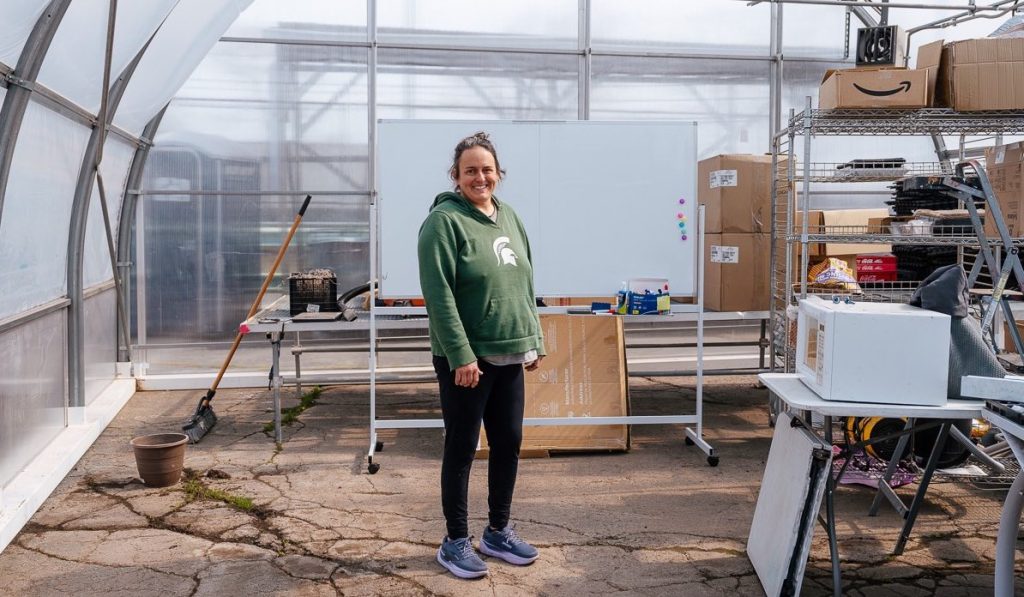
“I think it gives avenues for businesses to reach and receive funding opportunities—like grants or loans — that they might not otherwise have known to look for,” Sarah Clark, co-founder and executive co-director of Cadillac Urban Gardens, says. “SDBA provides that bridge to finding those different funding mechanisms. They’re a trusted source.”
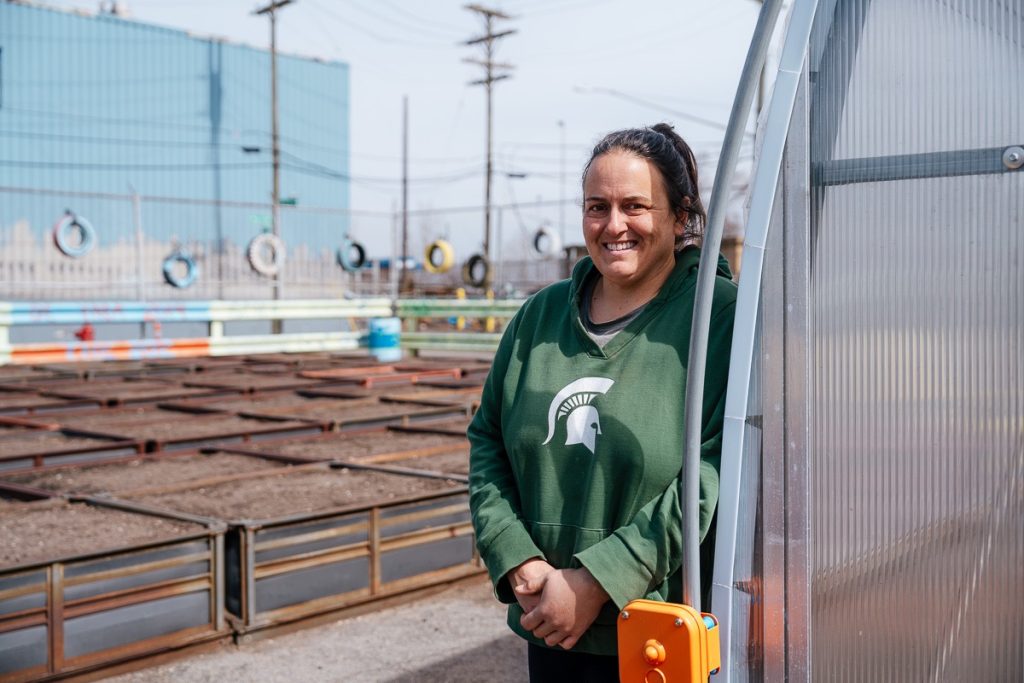
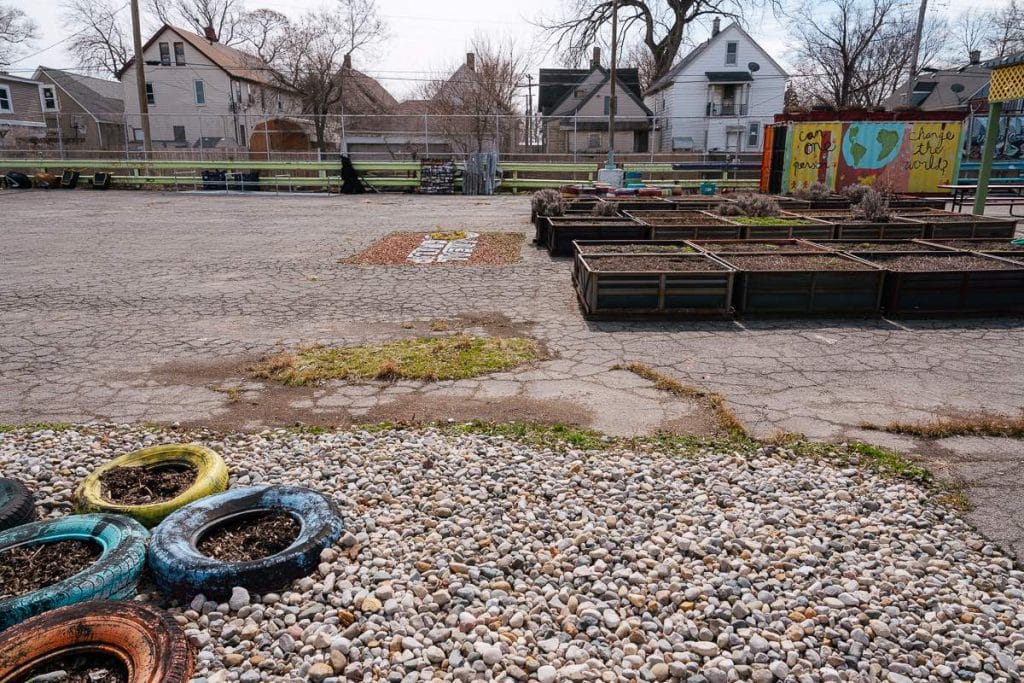
Clark has worked alongside SDBA for over a decade, particularly on green infrastructure projects like rain gardens, which are landscaped areas designed to absorb and filter stormwater runoff.
“I’ve been working with Greg for over 10 years,” she says. “He’s consistent, always there, and really cares. He makes a wonderful difference in the neighborhood and establishes great relationships with business owners.”
These projects have become increasingly important in a city grappling with aging infrastructure and frequent flooding. Southwest Detroit has a high concentration of impervious surfaces — roads, sidewalks, and rooftops that prevent water from being absorbed into the ground — putting pressure on drainage systems.
To address this, SDBA and its partners have implemented green stormwater infrastructure across the neighborhood.
“We have so much impervious surface through the roads, sidewalks, and roofs,” Mangan says. “So we’ve undertaken green stormwater infrastructure projects — like rain gardens and underground systems — to capture that water.”
Behind SDBA’s office, a rain garden captures runoff that would otherwise strain the sewer system. At La Joya Gardens, an affordable housing development completed last year, an underground system collects the first inch of rainfall from surrounding surfaces.
“These kinds of projects are very expensive, and they usually can’t be borne alone by a property owner or business,” Mangan says.
La Joya Gardens also revealed another layer of infrastructure challenges: energy capacity. To support the development’s 53 apartments, the project required 13 new utility poles, five transformers, and extensive new wiring.
“Something that would normally cost $25,000 for a new utility pole and transformer ended up costing over $600,000 for the development,” Mangan says.
But that investment doesn’t just benefit one project.
“The next business or development in that area may now have upgraded power and won’t have to bear that cost,” he says.
Funding for these efforts comes from a mix of sources, including foundations, financial institutions, and public agencies.
“Some of the funding has come from foundations like Kresge, the Community Foundation for Southeast Michigan, and different banking institutions,” Mangan says. “That helps fund staff and support work around business and property owner resiliency.”
Still, funding landscapes are always shifting, adding uncertainty to long-term planning.
That uncertainty extends beyond funding. In a neighborhood with a large immigrant population, broader political dynamics can also shape how business owners feel about investing.
“There’s definitely more concern in the neighborhood,” Clark says. “But people are looking out for one another.”
That sense of care and connection is part of what makes infrastructure improvements so impactful.
“I think it shows that businesses care, and the community cares about investing in their local businesses,” Clark says. “It makes more people want to come to the neighborhood, frequent those businesses, and keep money within the community.”
At its core, streetscape programming isn’t just about physical upgrades. It’s about creating spaces where people feel safe, connected, and welcomed.
“One thing that’s underrated is how infrastructure creates safer places for people—whether they’re walking, biking, or using a wheelchair,” Mangan says. “If you create infrastructure that accommodates more than just vehicles, you create a more equitable neighborhood.”
Future plans reflect that approach. A proposed project along the Joe Louis Greenway would widen sidewalks and introduce green infrastructure elements like bioswales to capture stormwater while improving pedestrian safety.
For Clark, the long-term vision is rooted in consistency and care.
“SDBA has always been there when I needed a resource — whether it’s a grant, a partnership, or a connection,” she says. “I think they’ll continue to improve the quality of businesses and help people who are already here.”
While new developments often draw attention, it’s the underlying systems that determine whether businesses can thrive. In Southwest Detroit, those systems are being rebuilt not just to function, but to support a community that continues to invest in itself.
Resilient Neighborhoods is a reporting and engagement series examining how Detroit residents and community development organizations work together to strengthen local neighborhoods. It’s made possible with funding from The Kresge Foundation.
Related Articles
The School at Marygrove Increases Access and Engagement with Middle School Expansion
From kindergarten through college readiness, The School at Marygrove is helping Detroit students discover their voice, achieve academic success, and prepare for bright futures.
CDFIs investments in childcare allows daycares like Detroit’s Lil Love Bugs to further invest in children’s futures
Childcare is not a family issue, but a workforce issue. Members of the MI CDFI Coalition showcase how investing in quality, affordable childcare and early childhood education positively impacts the entire community.

One Detroit Credit Union brings two new CDFI branches to serve the underserved, unbanked communities
In an effort to serve the underserved, One Detroit Credit Union is expanding its reach with two new branches, both in shuttered former financial institutions. In doubling-down on their commitment to provide more than banking to Metro Detroiters — these branches offer the community products, services and resources for financial health and wealth building.