Hot Houses Revisited
AIA
Detroit’s Urban Priorities Committee explores some of the
organization’s favorite Detroit neighborhoods for architecture — from
the stately homes of Indian Village to workers cottages in Corktown.
The architects and Detroit enthusiasts of AIA-Detroit’s
Urban Priorities Committee comes back with their list of Detroit’s 10
most significant neighborhoods for architecture — given in no specific
order.
The group, whose members include prominent architects,
planners, educators, designers, construction managers, and journalists,
is a forum to review, critique and generate urban ideas and projects
for metro Detroit. Past lists for Model have included their favorite interiors, downtown buildings, and public spaces.
Here’s
their list of favorite neighborhoods around the city, with their own
comments and using their “AIA Guide to Detroit Architecture” as a
reference.
Sherwood Forest
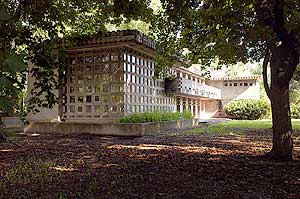 Established between 1916 and 1926, Sherwood Forest
was originally marketed as an “exclusive residential park”, close to
the esteemed Palmer Woods subdivision, Detroit Golf Club and Palmer
Park. This neighborhood attracted many of Detroit’s most prominent
citizens, including physicians, attorneys, judges and corporate
executives. Common to many subdivisions, residents were expected to
adhere to strict building restrictions and conditions. For example,
flat roofs were banned, and exteriors required brick, stone or concrete
over tile or metal lath. Today Sherwood Forest is a thriving and
increasingly affluent neighborhood. Residents enjoy winding oak-lined
streets with large handsome houses, sitting on expansive landscaped
lots.
Morningside
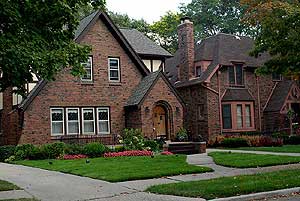 Possibly the most stable and intact East Side
middle-class neighborhood, Morningside is a neighborhood of
approximately 4,900 homes that contains an eclectic collection of
housing styles that range from Tudors, colonials, and ranches to
duplexes and small apartment buildings. The area is bounded by the Ford
Freeway to the north, Mack Ave. to the south, Alter Road to the east
and E. Outer Drive to the west. Most of the structures on the
northeastern are more moderate masonry structures while the majority of
the homes on the southern side are more modest frame structures.
Lafayette Park
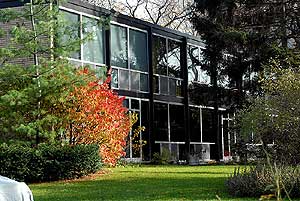 Lafayette Park,
one of Detroit’s most significant architectural neighborhoods, sits
immediately east of the central business district in the area formerly
known as “Black Bottom.” Encompassing 46 acres, the self-contained
residential complex – master-planned, designed, and landscaped by the
team of Ludwig Hilberseimer, Mies van der Rohe, and Alfred Caldwell –
marks one of the few examples of 1960s-era urban renewal that actually
succeeded in creating a sustainable community. More than 1,000
residents call Lafayette Park home, many of them living in the uniquely
Western European townhouses lining the edges of a 19-acre landscaped
park. Above these townhouses rise five apartment towers, including the
twin “Lafayette Towers” that embody the clean proportions, simple
lines, tinted-glass and aluminum cladding of van der Rohe’s
International Style. The community’s architectural menu is rounded out
by a retail pavilion and an elementary school, both of which serve
residents of the surrounding neighborhoods. 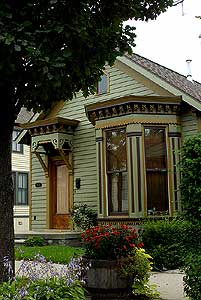 Although the complex is
decidedly modernist in character, van der Rohe softened his buildings’
corners and edges just enough to create an effect more sublime than
stark, blending in with the surrounding neighborhoods while still
catching the eye. In addition to its enduring residential appeal –
denoted by a racially and economically diverse resident base with
remarkably low turnover – Lafayette Park continues to draw
architectural students and devotees from around the globe to marvel at
the largest single-site collection of van der Rohe buildings in the
world.
Corktown
Corktown
is Detroit’s oldest neighborhood, established in 1834. An influx of
Irish immigrants, prompted by the Potato Famine in Ireland in the
mid-1840s, moved into the near West Side. Since many of these came from
County Cork, their neighborhood came to be known as “Corktown.”
Corktown offers a full spectrum of housing and commercial structures
representing the second half of the nineteenth century. The
neighborhood is listed on the National Register of Historic Places and
is designated as a City of Detroit Historic District.
Hubbard Farms
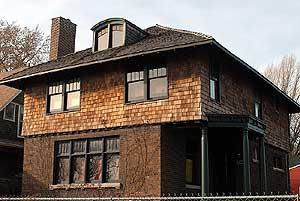 Hubbard Farms is great example of a flourishing urban mixed-use community located in Southwest Detroit.
The neighborhood is nestled between West Grand Boulevard and Clark Park
with Vernor Highway representing as its main street. The neighborhood
has a variety of architectural styles with some significant residential
structures spanning from 1870 to 1930. The neighborhood was designated
a local historic district in 1993.
Rosedale Park
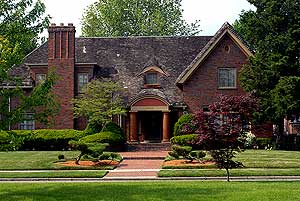 The Rosedale Park
neighborhood was first platted in 1916 by the Rosedale Park Development
Company and currently has over 1,500 homes. Houses were designed in
diverse architectural styles such as Tudor Revival, Craftsman Bungalow,
Colonial Revival, Prairie Style, Moderne and Modern International
Style. This neighborhood was one of the first to have a side driveway
and a rear garage accommodating the automobile. Continued construction
of homes in Rosedale Park lasted after World War II until the late
1940’s. A few scattered lots have been filled with the last residence
being built in 1955.
Brush Park
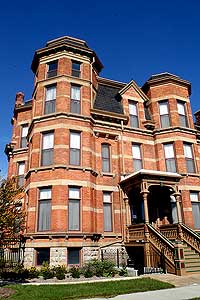 The Brush Park neighborhood — located between Midtown‘s
cultural center and downtown —was established in the 1870s with homes,
or mansions, built for Detroit’s elite. The lumber industry was
predominant in the late 1800s, and many significant lumber Barons built
lavish homes in Detroit’s first real platted subdivision. The area was
predominantly made from the ribbon farm of Elijah Brush, and therefore
named the streets after his wife Adelaide, and children Alfred, Eliot,
Erskine, Edmund, and Watson. With Detroit’s burst of population in the
early part of the 20th century, many of the homes, side yards, and
other front yard spaces, were turned into apartment houses and small
commercial storefronts. By the late 1930s and into the 1940s Brush Park
began to decline. Urban renewal was proposed in the late 1960s and the
I-75 freeway was cut through the neighborhood, dividing the area from
downtown. The next 30 years saw mainly decline and demolition of the
once grand homes. Today, new condominium townhouses, and loft
condominiums have transformed the Carola, Carlton and Lamar Buildings.
Many of theremaining homes have been saved and are now being turned
into multiple condominiums, bed and breakfasts or specialty offices.
The entire area is planned with either single, townhouse, or apartment
buildings, with commercial uses on many corners. The City of Detroit is
redoing all infrastructure elements in the neighborhood.
Indian Village
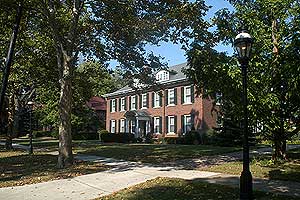 Indian Village
is a small community that is comprised of three street; Seminole,
Iroquois and Burns, and is located three miles east of downtown Detroit
between Jefferson and Mack. This unique neighborhood was placed on the
national register of historic places in 1972 because of its rich
history and exquisite architecture. Indian Village has 350 homes and,
as a whole, 17 different types of architecture can be identified,
including Arts and Crafts, Colonial Revival, English Tudor, Georgian,
Mediterranean, Romanesque, and Victorian. Most of these homes were
built between 1895 and the late 1920s and consequently the fine
craftsmanship of the era is apparent in its own distinctive style. The
homes have elaborate carved wood moldings, Pewabic tile, onyx
fireplaces, vaulted ceilings, elevators, third-floor ballrooms,
servants’ quarters and carriage houses. Many homes were designed by
Detroit’s most renowned architects of the time, including Albert Kahn,
Louis Kamper and William Stratton.
New Center
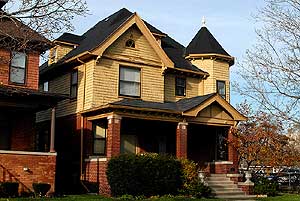 New Center
is considered a well-balanced community, composed of both a
high-density living sector, along with a variety of retail
establishments. Located west of Woodward, this community also includes
a well-developed business district, clustered around the Fisher
Building, which is considered an Art Deco masterpiece. The name “New
Center” first came from the New Center News, which was an
automotive-focused free newspaper, started in 1933. In 1978 General
Motors helped maintain or in some cases bring back the rich historic
feel of this neighborhood by renovating what is now known as New Center
Commons by re-routing streets, creating pedestrian malls, and
rehabilitating buildings.
Boston Edison
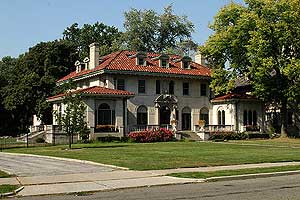 Composed of over 900 single-family homes built between 1903 and 1940, Boston Edison
is the largest residential historic district in the country and is
listed on the City, State and National Registers of Historic Places. It
is located along the four streets of West Boston Boulevard, Chicago
Boulevard, Longfellow, and Edison, between Woodward and Linwood. The
Historic Boston Edison Association, founded in 1921, is dedicated to
the protection and preservation of its family oriented residential
neighborhoods. Early residents of the neighborhood included Henry Ford,
four of the seven Fisher brothers, S.S. Kresge, B. Siegel, Horace
Rackham, Ira Grinnell, James Couzens, Rabbi Leo Franklin, Clarence
Burton, and Maestro Ossip Gabrilowitsch.
Photos:
Henry Ford Home in Boston Edison
Frank Lloyd Wright House in Sherwood Forest
Audobon Street in Morningside
Mies Van De Roe Townhomes in Lafayette Park
a Worker’s Cottage Corktown
Hubbard Farms
Rosedale Park
The Inn on Winder, Brush Park
Indian Village
New Center
Boston Edison
All Photographs Copyright Dave Krieger
Related Articles
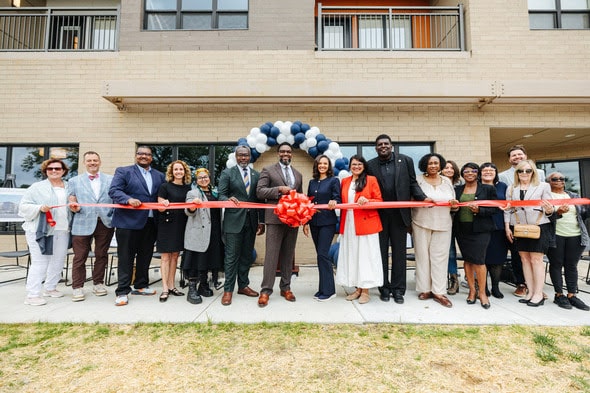
Minock Park Place provides new affordable senior housing for Grandmont Rosedale neighborhood’s older residents
In the heart of Detroit’s Grandmont Rosedale neighborhood, a 42-unit, mixed-use development has given senior citizens brand-new affordable housing. Minock Park Place was seven years in the making, and marks the first affordable senior housing community in the neighborhood, located at 19505 Grand River Ave. — a vital commercial and cultural artery.
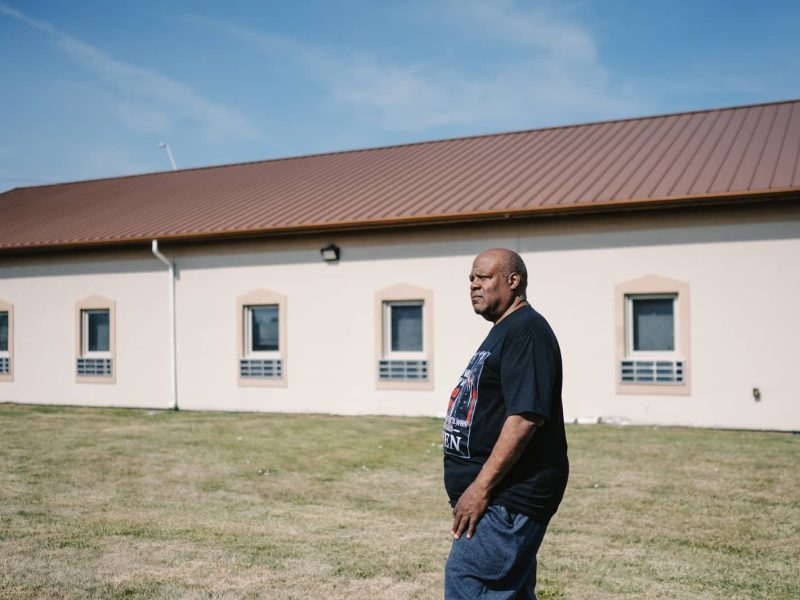
Returning citizens face extra hurdles in Detroit’s already challenging housing market
Formerly incarcerated people face numerous challenges in finding housing, often leading them to become homeless or recidivate.
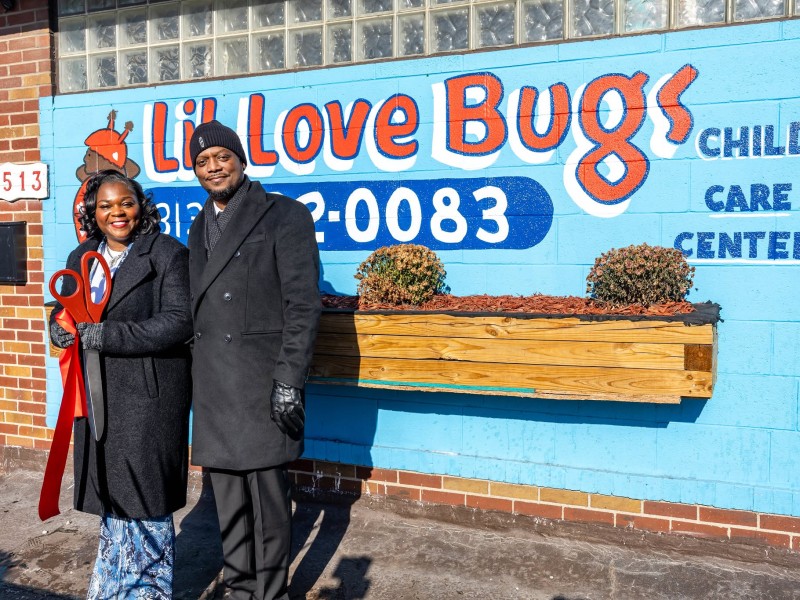
CDFIs investments in childcare allows daycares like Detroit’s Lil Love Bugs to further invest in children’s futures
Childcare is not a family issue, but a workforce issue. Members of the MI CDFI Coalition showcase how investing in quality, affordable childcare and early childhood education positively impacts the entire community.