When the Elevator Doesn’t Work: Detroit teens talk disability and access in schools
Detroit teens at Teen HYPE talk about what it means to make classrooms more inclusive for students with disabilities.
Teen HYPE: Voices of Detroit’s Youth takes an honest look at what young people in Detroit are facing — from school and safety to opportunity and belonging. Produced by Model D in partnership with Teen HYPE, the series invites readers to listen, learn, and reflect.
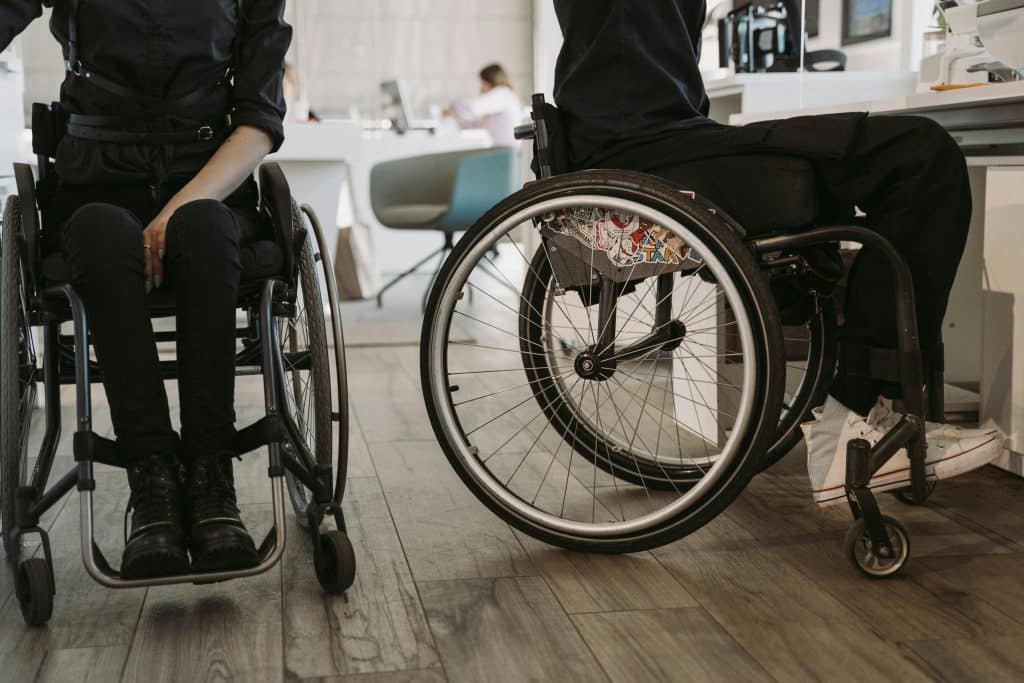
From time to time in his public high school, Emery helps one of his friends who uses a wheelchair get from classroom to classroom if the switch between classes is on two different floors of the school. They use the elevator to go between floors — when the elevator is in working order.
“There was almost no way to get to the other levels of the school, because the elevator at our school only worked like half the time,” he said.
If the elevator didn’t work, Emery said he and another teacher, if he could flag one down to assist, would help carry the student in the wheelchair up or down flights of stairs. The teacher would carry the student while Emery carried the chair. “It would be a struggle,” he said.
“I feel like it’s bad enough to be in a wheelchair in the first place, [but] I can only imagine, like, the embarrassment of just having to be carried out of the stairs in front of a bunch of other people,” Emery added.
Emery and other teens at Teen HYPE, a Detroit after-school organization, discussed with Model D some challenges they’re seeing in their schools when it comes to students with disabilities, both physical and mental, as well as neurodivergence. Students in public schools, regardless of district, say there often isn’t enough funding to cover specific needs.
Chloe, another student, went to a middle school that emphasized the arts and incorporated much of it into its curriculum. “And it did cost money,” the now high-schooler says.
When she was in sixth grade at the school, however, Chloe was diagnosed with dyslexia and dysgraphia. Dyslexia is perhaps the more well-known of the two; it is a learning disorder in which individuals experience difficulty in reading and writing. Dysgraphia, an increasingly diagnosed disorder, is often paired with dyslexia, in which individuals have difficulty with handwriting words.
While Chloe got help with her challenges at the school, she knew friends at other public schools who also experienced learning disorders and either didn’t get help or who frequently had to transfer to other schools to find adequate resources.
There’s one friend with emotional challenges and outbursts she has who had to transfer “three or four times, which was very unfortunate.
She describes a story that now makes her something of an advocate for students with disabilities. “One day, we were at recess. We were just running around, the boys were playing football….And he got mad, and he found a board with nails [sticking out] and started whacking somebody with it. And I was like, ‘Oh, my God.’ And the teacher did not do what was needed and said, ‘You just needed to go sit down.’”
Unsatisfied with that response, Chloe now keeps a closer eye on how educators work with her classmates facing challenges. “We could work on social justice for disabilities,” she says.
For Emery and Chloe, these moments aren’t just stories — they’re lessons in what it means to show up for one another. When systems fail, students find their own ways to fill the gaps. It shouldn’t be that way, but their willingness to act says a lot about this generation’s sense of justice. They’re not waiting on adults to fix things; they’re already building the kind of schools they want to see.
Related Articles
Detroit has community buy-in for Solar Neighborhoods Initiative
With 139 square miles of land – some blighted or unused and ripe for repurposing – Detroit is well-positioned to develop solar farms to help power city buildings.

Composting project empowers Detroiters to reduce food waste, protect the environment
Food waste makes up one-quarter of landfill waste and contributes to more methane emissions than other landfill materials. The Detroit Community Composting Collective Project is out to curb food waste by training backyard composters.
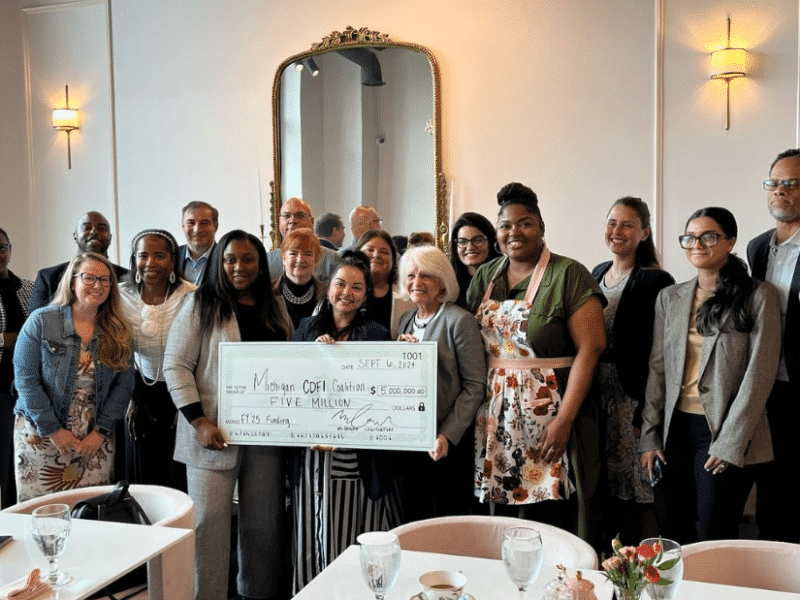
Detroit CDFI Coalition celebrates impact, advocates for funds to further propel growth, prosperity in communities
Detroit CDFI Coalition members continue to collaborate together, and advocate collectively for consistent Michigan CDFI funding to further propel their impactful mission-driven work in communities.