What’s at stake for young families: Early childhood policy after the 2026 election
Anne Kuhnen, MLPP Kids Count policy director weighs in on early childhood education after the ’26 gubernatorial election.
Michigan’s 2026 gubernatorial election will have major consequences for a host of issues, and early childhood education is no exception. The state’s many current gubernatorial candidates have advocated for varying approaches to early childhood education in the state.
Current Secretary of State and Democratic gubernatorial candidate Jocelyn Benson has emphasized stabilizing the child care workforce by ending “poverty wages.” U.S. Rep. and Republican gubernatorial candidate John James co-sponsored bipartisan legislation to establish a federal Tri-Share pilot program splitting child care costs between caregivers, their employers, and the state and federal governments. Former Detroit Mayor and independent gubernatorial candidate Mike Duggan has proposed a “Marshall Plan” for early reading. And those are just three examples of early childhood care platforms among a crowded field of candidates.
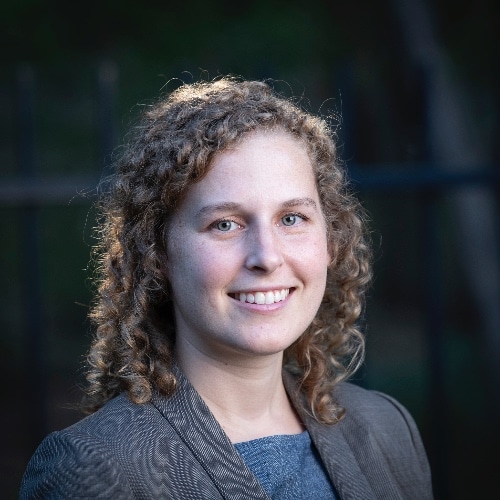
For an expert perspective on the gubernatorial election’s implications for child care in Michigan, Early Education Matters checked in with Anne Kuhnen, the Kids Count policy director at the Michigan League for Public Policy. Kuhnen, a former high school teacher, now focuses on researching and advocating for issues including early childhood, family economic security, and youth voice. We talked about what’s at stake for early childhood education in the election, how Michigan’s next governor could support the state’s early childhood education workforce, and the future of several state-funded programs supporting early childhood education.
This interview has been edited for length and clarity.
Q: What are the stakes for early childhood education in this election? What do we stand to lose or gain in this area depending on who our next governor is?
A: First of all, child care is part of our essential infrastructure. We’ve seen a lot of focus on things in the state like roads, bridges, public schools, and libraries. Child care is just as important, but it’s really not funded like other infrastructure. We really rely right now on parents and care providers to shoulder the costs of what is really a public good. As a result for most families, child care is just unaffordable, and it’s hard to find.
This is especially true for working class families who are facing rising costs in a lot of areas, not just child care, but also housing, groceries, car insurance, and other essentials. We see that right now our current child care system simply does not meet the need. And with the combined or added challenges being presented by the federal level and some of the risks to funding there, it’s especially important that we be thinking about how we as a state are investing in child care at this time.
Q: What are you hoping our next governor will do as far as advocating for funding of early childhood education?
A: One of the things that we know is a big need right now is to invest in a strong early childhood care and education workforce. We see right now, for instance, that about 12% of early educators in Michigan live in poverty. A lot of early educator households participate in public safety net programs, things like SNAP and Medicaid, because the pay is so low. These are individuals who are responsible for our youngest children who we want to be safe and well cared for. That’s not possible if those workers don’t have a fair wage for the essential work that they do. Certainly I’ll be excited to see what some of the ideas are to invest in that workforce.
Q: What do you hope the next governor will do to support the early childhood education workforce in Michigan?
A: There are a lot of strategies out there to better compensate early educators. A lot of states are exploring ways to use public funding in order to improve compensation, to provide stipends or bonuses for early educators. But it certainly has a cost associated with it. A lot of them have some dedicated funding for that.
Also looking at the reimbursement rates for the Child Development Care Program, [which offers child care scholarships for low-income families,] that’s a big reason why those wages for these workers tend to be so low. We rely on market rate surveys to set reimbursement rates. Reimbursement rates are set on what families are paying at the time of the survey, and providers are basically forced to set prices lower than the actual cost of services, which makes it really hard for them to recruit and retain talented early childhood workers. Looking at ways to improve the reimbursement rate in order to better support our early educators is going to be really important.
Q: I want to ask you about a few programs that the state has supported in recent years, like the Small Business Association of Michigan (SBAM) Nurture Benefits Funding and Child Care Back Office, these programs that aim to support and reduce operating costs for child care and early education businesses. Do you hope our next governor will continue support for those programs?
A: We definitely need to see how those programs roll out. Nurture Benefits is brand new. We really don’t know what the outcomes are going to look like. There’s a lot of hope around what the outcomes will be. But I want to see the data and know that those things are being really successful. Part of the reason for that is when we look at some of the programs that have been really touted, they’re just not reaching as many people as we would hope. Things like Tri-Share have really tried to look at how we could be improving access to child care for working families, but it just doesn’t reach as many families as truly needed. So as we’re looking at some of these other programs and whether or not we want to continue them, we really need to be thinking about how broadly they’re able to reach families and making sure that that’s happening in an equitable way.
Q: There are a lot of concerns among child care providers about the amount of administrative work they have to go through with the state. What are you hoping our next governor might do as far as addressing those concerns?
A: I know that’s something that the Michigan Department of Lifelong Education, Advancement, and Potential (MiLEAP) certainly has done some work on and is trying to improve. The federal administration announced the rollback of some regulations that were recently implemented to the [Child Care and Development Fund, a federal program providing child care subsidies for low-income families]. That includes things like a 7% cap on family co-payments or providing pay to child care providers prospectively, basing payments on enrollment versus attendance. A lot of these things were originally introduced or recommended because providers and families are saying that this is really important, that these were barriers to accessing child care scholarships. And the state of Michigan has already made some of those changes. But if we aren’t able to implement some of these recommended changes because it’s no longer required, potentially, then it’s going to be very hard for families and for providers.
Q: What are you hoping to see from our next governor as far as continued state support for the Rx Kids program, which offers cash assistance to new moms and babies?
A: We’re huge supporters of Rx Kids. We’ve seen some of the data coming out of the first community where it was rolled out in Flint. It has had really positive impacts on young families to ensure that kids are not being born into deep poverty. Hopefully the future governor will see the value of that program and continue to support it.
Q: As you alluded to at the beginning of the conversation, a lot of families are experiencing challenges just meeting their basic needs right now. And, of course, basic needs do include child care. What steps are you hoping that our next governor might take to make it easier for folks to meet their basic needs?
A: Child care shows up as one of the biggest monthly expenses for many families, essentially across most counties in Michigan. We also see that housing and food are up there in the top three. I think that this is coming at an interesting time because we have seen some of the biggest cuts at the federal level on things like health care, which we know is a major cost for many families, as well as food benefits through SNAP. So, certainly, it’s going to be really important as those things are rolling out at the federal level, and as families are potentially losing access to supports that they traditionally had, that the next governor is thinking about ways to mitigate that and making sure that the policies that we have in our state really help families access the resources that they need.
Photos by Doug Coombe.
Photo of Anne Kuhnen courtesy MLPP.
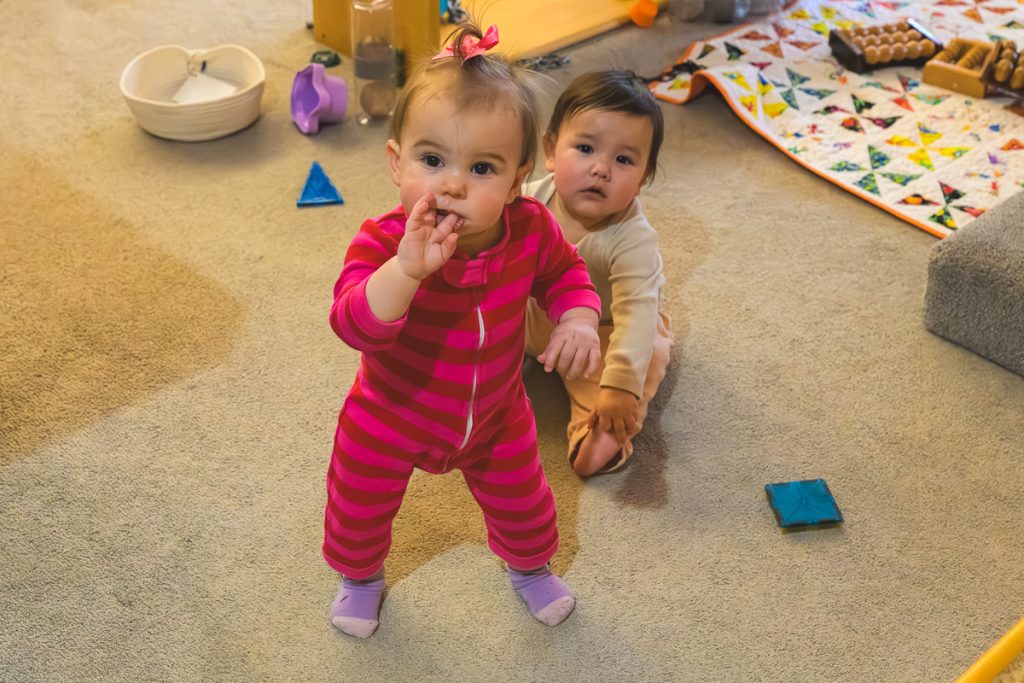
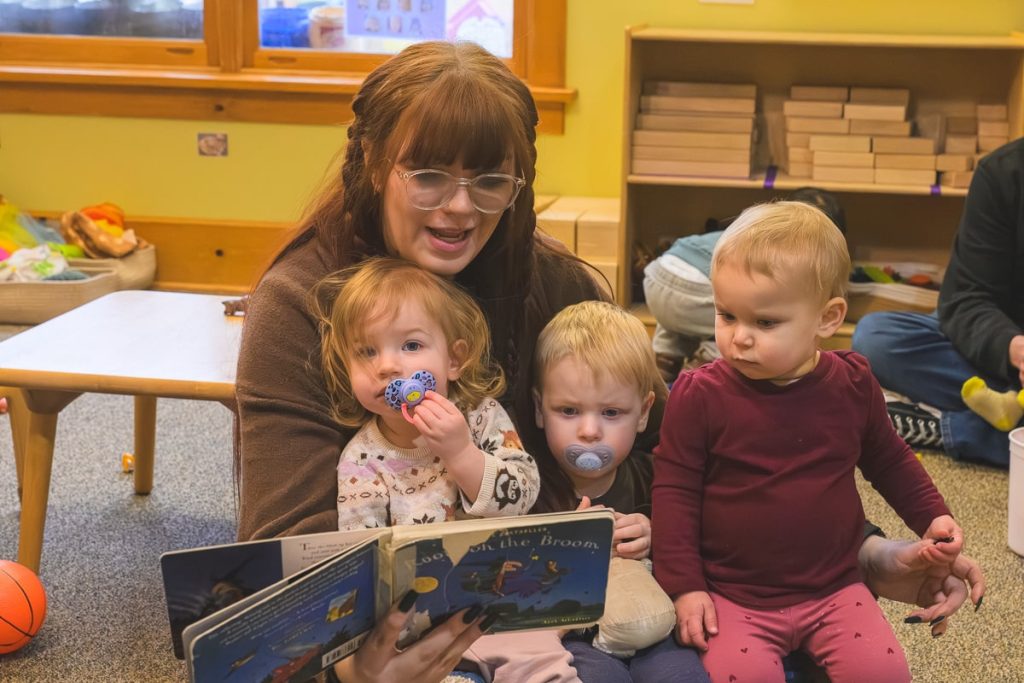
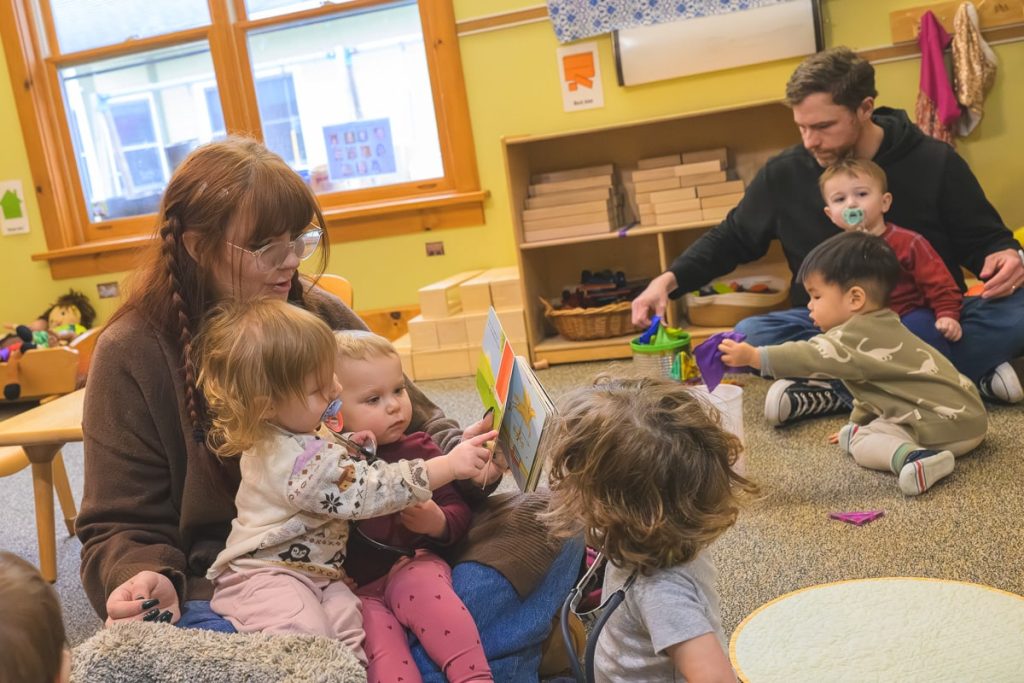
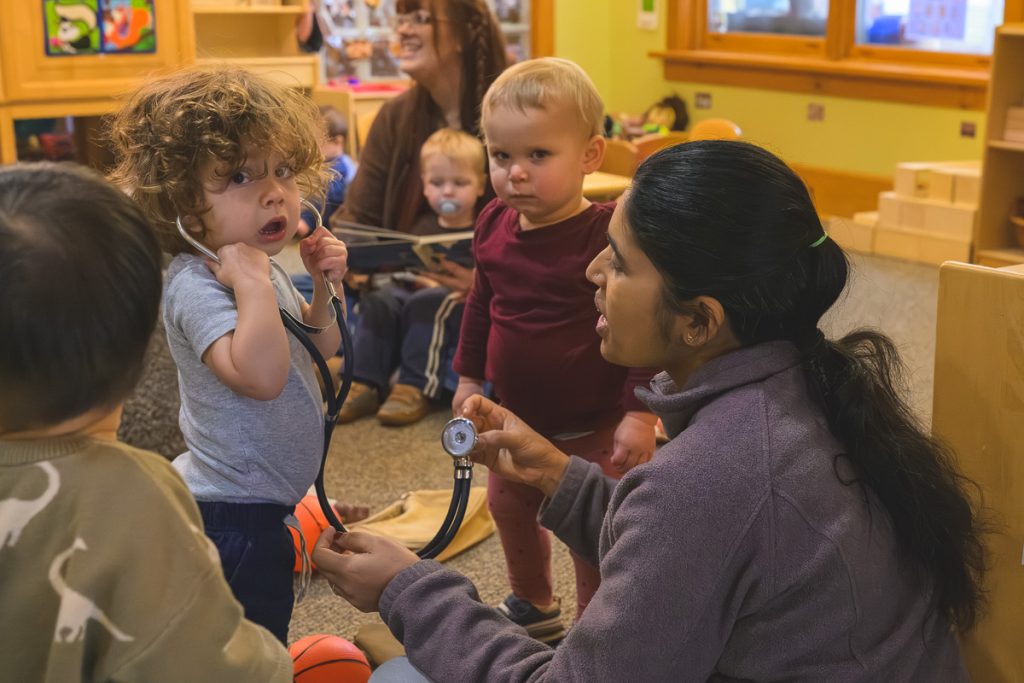
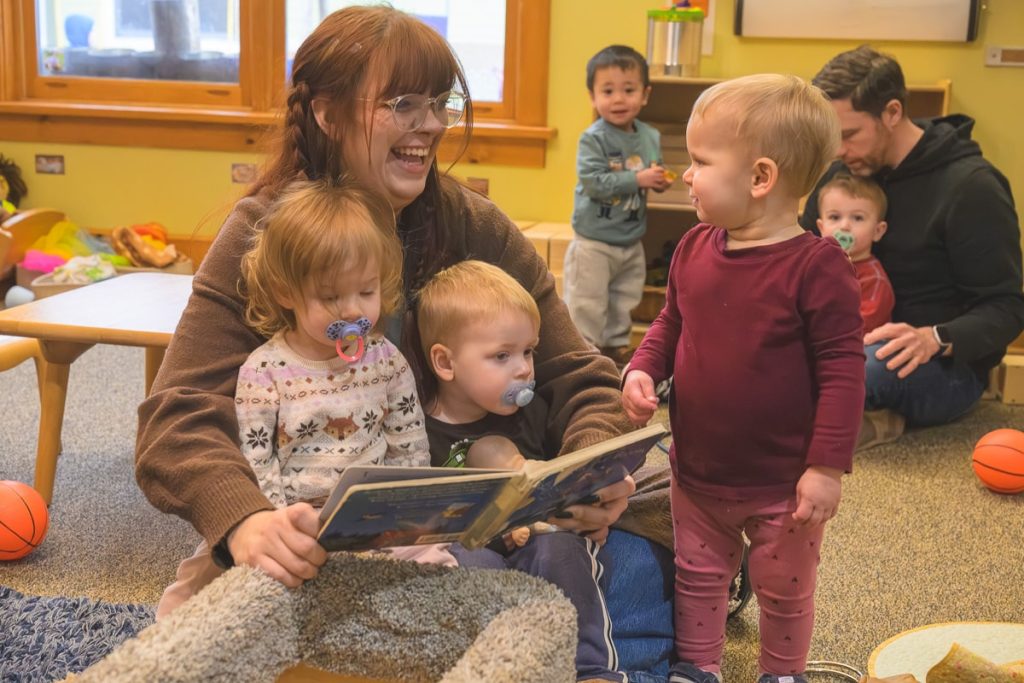
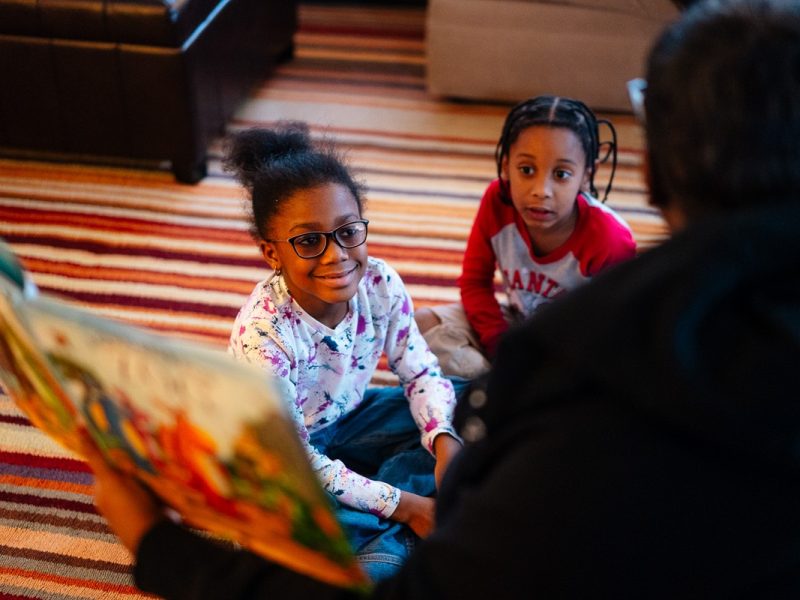
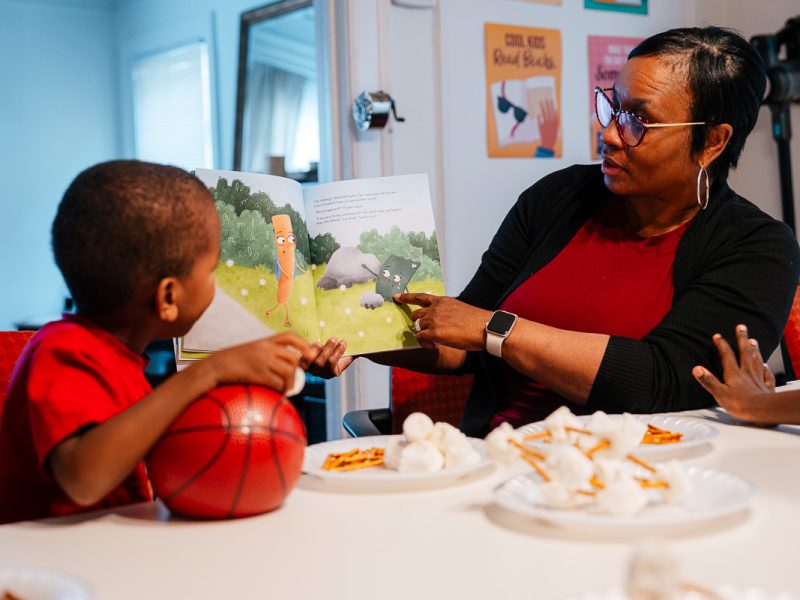
Special thanks to Gretchen’s House Dhu Varren in Ann Arbor for allowing Early Education Matters to photograph its teachers and children. Teachers pictured, from top of story, are Sam Nota, Ryan Hainsworth, and Shilpa Anekonda.
Early Education Matters shares how Michigan parents, child care providers, and early childhood educators are working together to create more early education opportunities for all little Michiganders. It is made possible with funding from the W.K. Kellogg Foundation.
Related Articles
Hope Starts Here stabilizing early childhood services in wake of policy changes
Long-term perspective keeps Hope Starts Here imperatives relevant despite policy changes.
El modelo de Hope Starts Here promueve la resiliencia ante los desafíos
Recientes cambios en políticas federales y estatales vinculados a la Ley One Big Beautiful Bill Act han generado nueva incertidumbre para los sistemas de primera infancia en todo el país.
The early childhood models in other states inspiring Michigan policy advocates
Michigan is making meaningful strides to advance early childhood education but could make even more by looking to other states’ models.