Shade Salons grow Detroit’s tree canopy with community connections
Shade Salons is a collaboration between the City of Detroit and the Greening of Detroit that blends tree planting with community celebration.
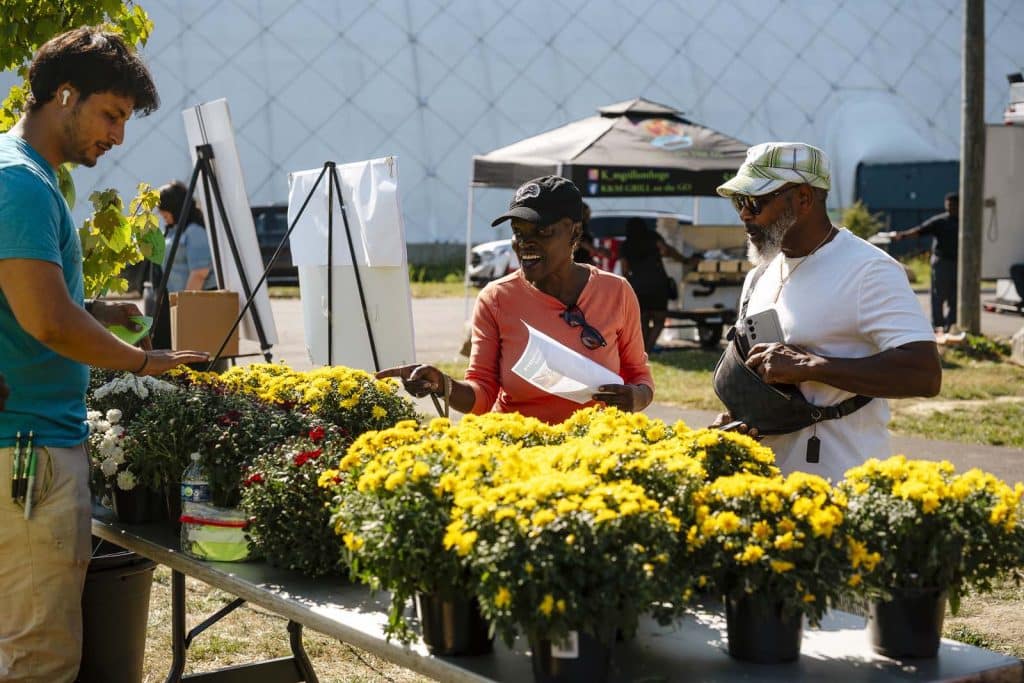
In Detroit, a celebration of nature and community is blossoming. Known as Shade Salons, the free, family-friendly events are part of a collaboration between the City of Detroit and The Greening of Detroit to highlight the importance of trees and green spaces.
With tree giveaways, food trucks, live music, face painting, and interactive booths, the gatherings draw neighbors together to experience their local parks and recreation centers in new ways.
The Greening of Detroit has been reforesting neighborhoods for more than three decades, planting over 166,000 trees since its founding in 1989. What began as a tree-planting nonprofit has evolved into a citywide leader in green infrastructure and community-based forestry.
“The Greening of Detroit is really dedicated to enhancing the quality of life for Detroiters by planting trees, educating youth and engaging communities in the city’s overall environmental renewal,” Monica Tabares, the organization’s vice president, says.
In 2022, the nonprofit partnered with the city and DTE to launch the Detroit Tree Equity Partnership, an initiative to boost the city’s canopy cover while drawing more residents into conversations about the role trees play in their neighborhoods.
The Shade Salons emerged from this work as a way to blend education with celebration.
“Our partnership with the city of Detroit and our partnerships with residents and block clubs and schools and nonprofits, it’s really an opportunity to encourage individuals to not only understand and have a love for trees, but also an opportunity to explore their green spaces,” Tabares says.
More than beautification
At their core, the Shade Salons are about showing people that trees are not simply decorative—they are vital to the city’s health and resilience.
“Trees do more than just beautify. They really cool our streets, clean our air, and connect our neighborhoods, and so the Shade Salons are a celebration of that power and the real chance to build community in the shade of Detroit’s growing canopy.”
Monica Tabares, Greening of Detroit
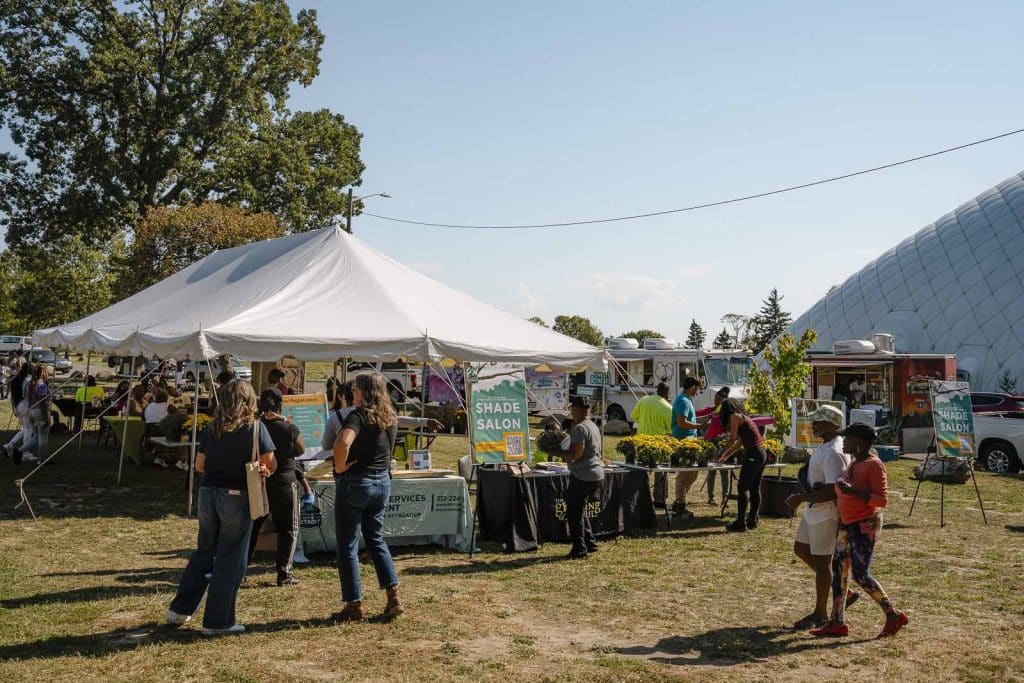
Events have been hosted across Detroit districts over the past year and a half, drawing more than 1,000 participants. Each one showcases the recreational amenities in the neighborhood while creating a space for neighbors to relax outdoors, away from screens, and enjoy the benefits of nature.
“From a health perspective, it allows all of us as individuals to be outdoors and explore nature and get away from being behind screens, and it allows this calmness,” Tabares adds. “It’s for a health benefit, as much as beautifying our city.”
Collaboration at the root
The City of Detroit’s General Services Department, which oversees the forestry division, plays a central role in planning the Shade Salons.
“It first came about as a concept by one of my colleagues, which turned into a collaborative grant that was funded by the Gilbert Family Foundation,” Savion Stevens, forestry program manager for the city, says. “We know that historically, when people think about Detroit, they think about music, they think about the auto industry, and they often forget about the beautiful natural spaces like hiking trails and wildlife.”
For Stevens, the Shade Salons are about reminding residents of the value of those resources—and ensuring trees are part of every conversation about neighborhood revitalization.
The events often take place near parks or recreation centers where new tree planting is already happening, reinforcing the idea that these locations are long-term community investments.
“What makes Shade Salons so special is we challenge people and encourage the community to think about the value that they have right in their own backyard,” Stevens says.
The final Shade Salon event — at least for now — took place on Friday, Sept. 12 at Chandler Park; community turnout and feedback was strong.
“The event was super successful. We had about 180 participants, kids and adults alike,” Stevens says. “So much so that there’s already a conversation with our funder and with the city of Detroit about potentially doing another series where we could touch every city council district.”

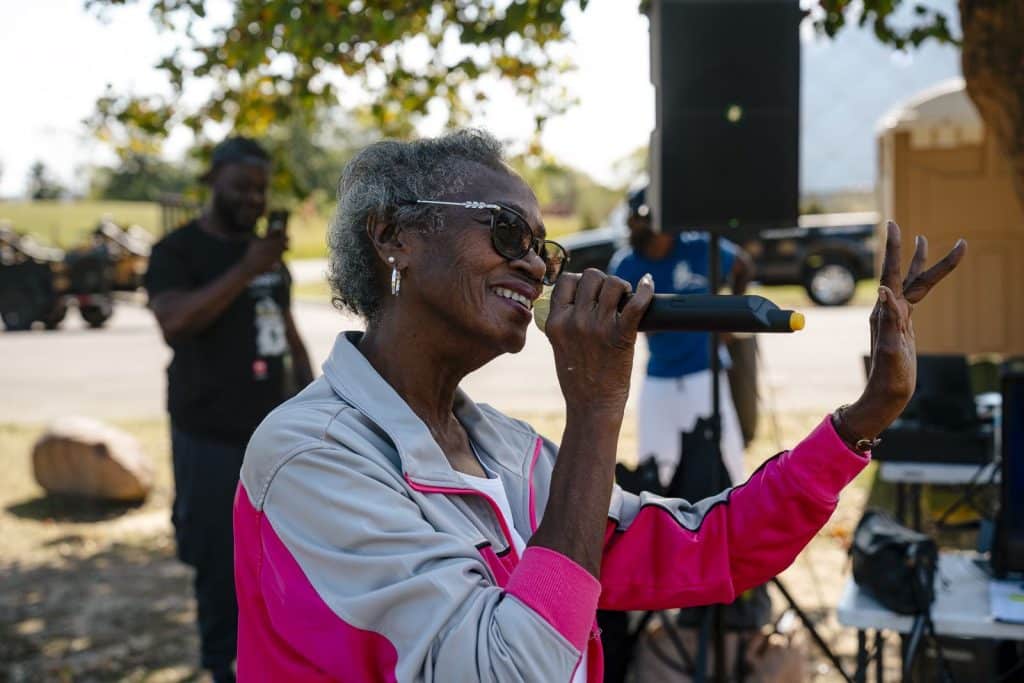
Photo by Nick Hagen.
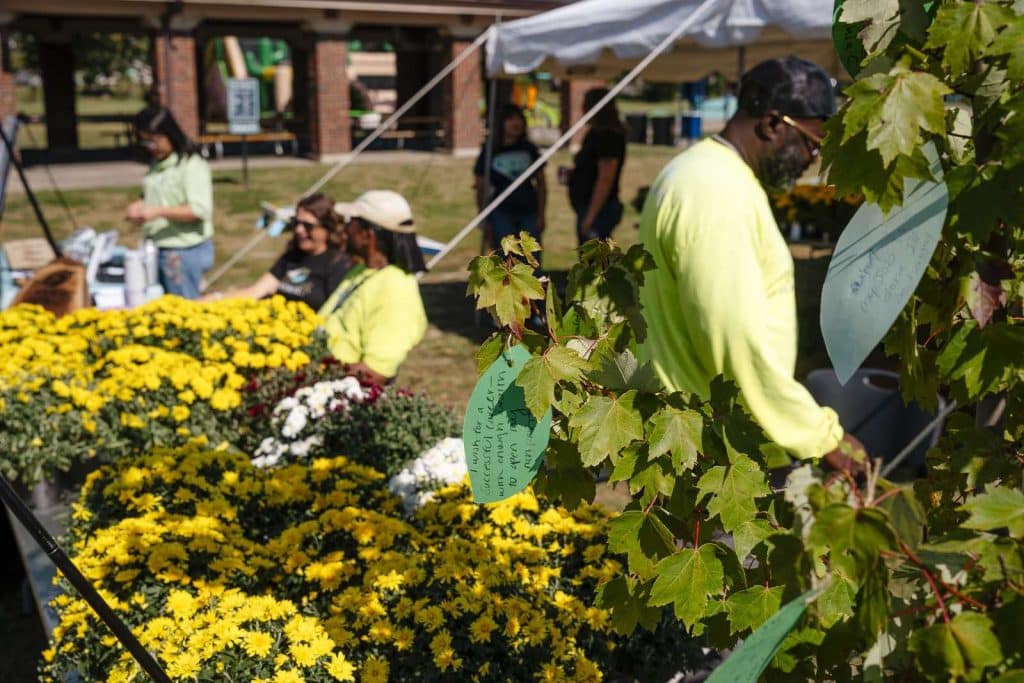
Participants were encouraged to write-out wishes for the wishing tree.
Photo by Nick Hagen.
The community response has also been overwhelmingly positive. During the Shade Salons, residents have discovered amenities, asked about tree planting for their blocks, and requested greener schoolyards for students.
“The feedback has been ‘thank you for bringing us out. We really didn’t know this park existed in this way, or these amenities existed in this way,’ all the way to ‘we want more trees in our community,’” Tabares says.
While education is central, fun is a big part of what makes Shade Salons work. Stevens notes that the free, family-oriented activities help create a welcoming space.
“We have free guided nature walks, free art vendors, free DJs and karaoke setups, and we even do free giveaways,” says Stevens “We’ve given away seeds, mums and trees.”
Planting for the future
Both the city and The Greening of Detroit see Shade Salons as a stepping stone toward bigger goals. The immediate focus is expanding Detroit’s tree canopy, but the larger vision is building long-term relationships between residents and their local green spaces.
A Shade Salon is a template for engaging the community in green space. Tabares says: “These are spaces, whether they’re parks or recreation centers or trails, to come out and explore, and we wanted to encourage that and give them [community members] an outlet to do that, but also to continue beyond the Shade Salons.”
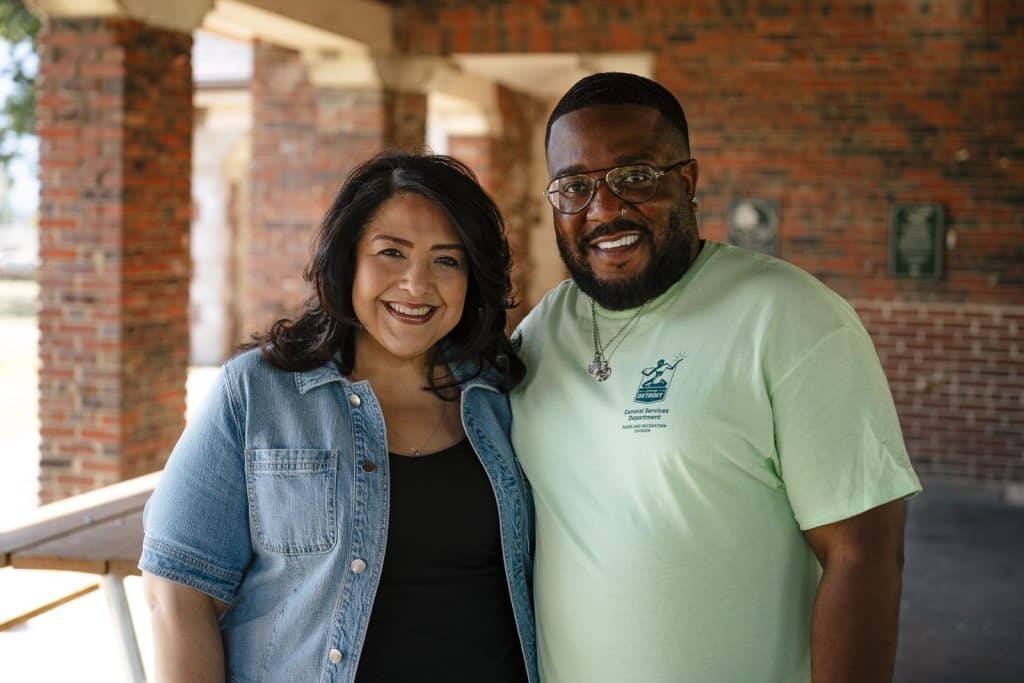
Stevens echoed the long-term ambition: “My future goal would be for this programming, again, to touch every city council district, every rec center, and potentially every city park. If we could get this programming city wide, in all of those locations, then we will really be doing our job and really be tying it to the goal of growing Detroit’s urban tree canopy.”
Resilient Neighborhoods is a reporting and engagement series examining how Detroit residents and community development organizations work together to strengthen local neighborhoods. It’s made possible with funding from The Kresge Foundation.
Related Articles
A vision for mushrooms as part of Detroiters’ everyday wellness routine
A Detroit mushroom farm and cafe owner bet on his city, and the response is sprouting business growth and expansion.
Detroit has community buy-in for Solar Neighborhoods Initiative
With 139 square miles of land – some blighted or unused and ripe for repurposing – Detroit is well-positioned to develop solar farms to help power city buildings.

Composting project empowers Detroiters to reduce food waste, protect the environment
Food waste makes up one-quarter of landfill waste and contributes to more methane emissions than other landfill materials. The Detroit Community Composting Collective Project is out to curb food waste by training backyard composters.