Samaritas opens House of Innovation to reimagine social work through tech and collaboration
The new Detroit-based House of Innovation brings tech startups and social service leaders together to reshape how care is delivered.
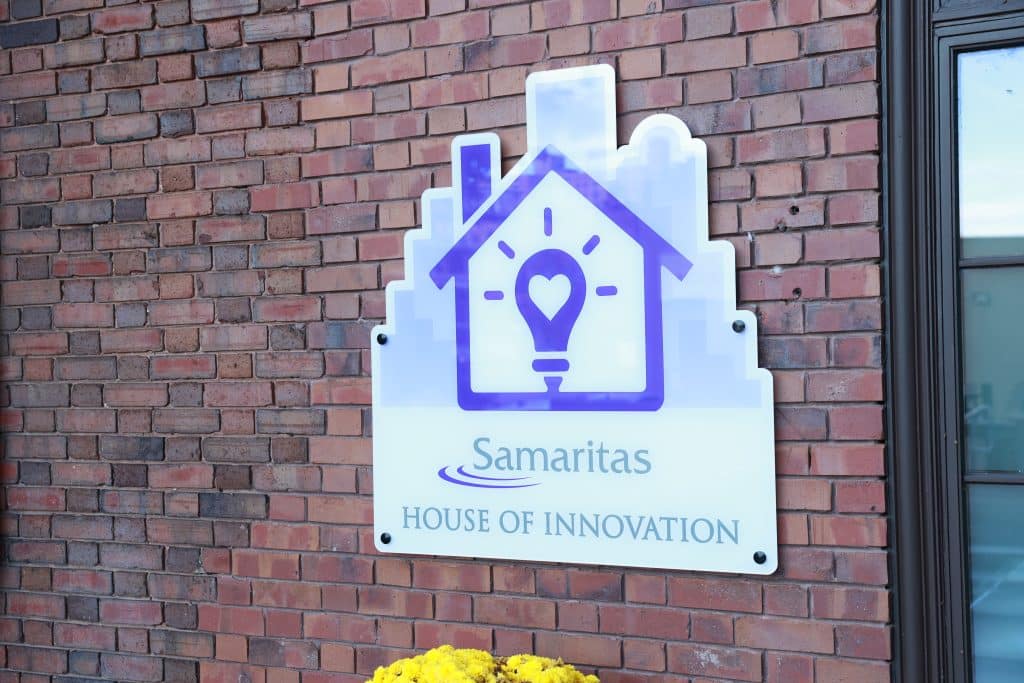
Samaritas has opened the House of Innovation to connect entrepreneurs, technologists, and social service leaders, sparking bold solutions and transforming how care is delivered.
The 95-year-old organization has long delivered social service programs that help refugees, foster children, and senior citizens, and is very aware of the hurdles it faces in delivering the best care. It plans to use the House of Innovation to update and revolutionize the world of social work.
“Demand for the social safety net is rising while government funding has peaked and the nonprofit workforce is stretched thin,” says Samaritas CEO Dave Morin. “As the complexity of issues our communities ask us to handle increases, the path to survival for nonprofits requires intense innovation.”
“We want to be the hub of that intersection between social service and innovative approaches and tech,” he says.

Morin comes from the tech world. He co-founded several software companies, including Cielo MedSolutions, a software and IT services company for primary care health providers. Using that experience, he noticed some of the systems in place at Samaritas were counterproductive.
One of the big issues was the excessive amount of paperwork, which is not only burdensome but can also slow down the number of clients helped in a day, week, or month.
According to Kelli Dobner, chief growth and strategy officer for Samaritas, it can also frustrate social workers and cause them to leave that career over time, resulting in even less time to help those in need.
To deal with the issues, Samaritas will have two initial start-up partners inside the House of Innovation.
Pype, a compliance platform, uses AI to reduce paperwork for social workers. Samaritas estimates that 50 percent of the time of front-line social services workers is spent on “paperwork.”
MindsEmerge has developed a new early childhood program that features screen-free play for brain development, embedding artificial intelligence into an alphabet set crafted from maple wood, teaching early language and literacy skills. Once that new technology is used, it must be implemented in a way that is most beneficial for the company.
Tech consulting firm, The Understanding Group (TUG), will sit down with Samaritas and start-ups like Pype and MindsEmerge to discuss what tools they need and how to set everything up.
Bob Royce, president of The Understanding Group (TUG), is quick to point out that AI is a tool, not a magic wand, and that it has very real limitations. It is not here to eliminate jobs.
“AI is an intern with 10,000 jobs and no common sense,” he says.
“I don’t want to be a part of the problem,” says Royce. “I don’t want to be responsible for someone losing their job.”
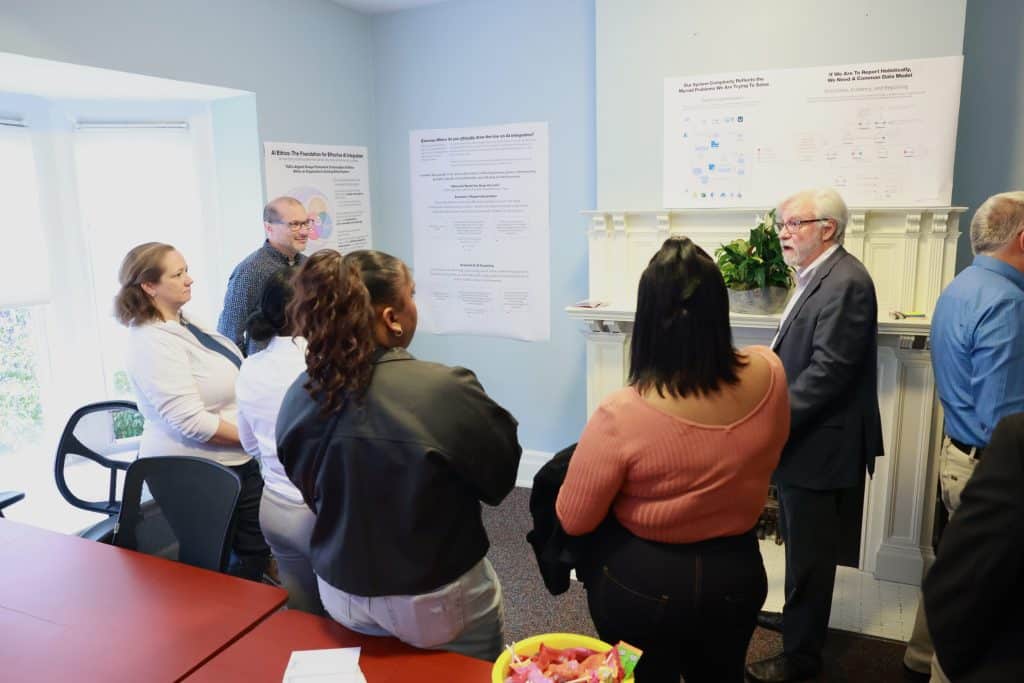
Dobner also points out that keeping client information private is essential. She says Samaritas is taking every precaution to keep the safeguards up and the information classified.
Royce agrees. One of the things he is most proud of is his system of ethics. It works step-by-step with companies and only gives them specifically what they need, ensuring no data ever leaves Samaritas’s hands unless it is specifically handed over.
While the focus is on paperwork, it is only the beginning. Innovation House plans to tackle all varieties of problems and hurdles in social work.
It will also work to pull families out of poverty while keeping families intact, instead of removing children from the home, which is too often the practice.
This is one of the non-tech problems Dobner cited as a product of an outdated system.
This new way of looking at social work may be taking off faster than expected. At a meeting of CEOs from across the country, recently hosted by Samaritas, this new program impressed the visiting executives.
They all went home talking about how they needed to implement similar systems. Located at the organization’s headquarters at 8131 East Jefferson Ave. in Detroit, the House of Innovation hopes to represent the future of social work.
Related Articles

Partner Partner Content AI Revolution: Disruption today, growth tomorrow for Detroit’s workforce
Recent analysis from Jacob Manoukian, J.P. Morgan Private Bank’s U.S. Head of Investment Strategy, argues that while AI will displace certain tasks, the broader pattern will likely mirror past technological shifts.

OPINION: Here is one solution for the problem of social media and political violence
The intensity of America’s political culture that factored into the assassination of conservative influencer Charlie Kirk has intensified the scrutiny of the role of social media.

Bluewater Technologies pairs retro gaming and latest AV innovations for 2025 Tech Expo
Bluewater’s free 2025 Tech Expo at CCS in Detroit features AV innovation with exhibits, panels, and immersive experiences, Oct. 1–2.