Lasalle Bank commits start-up funds to DEGC to help eliminate “food desert”
Lasalle Bank has committed $15,000 to help the Detroit Economic Development Corporation establish a fund that would target areas of Detroit in need of fresher food options.
Detroit has long espoused the idea that its urban core could be designed in such a way as to allow the integration of affluent, working class, and low income people within a few blocks of each other. Immediately east of Lafayette Park reside people whose household incomes are lower than Lafayette Park, but the 1960s modern feel of the area offers a seamless flow to the historic Villages. Here, Martin Luther King, Jr., Elmwood, and other residential communities offer quality urban living with the same proximity to Eastern Market, downtown, and the riverfront as those in Lafayette Park. Mini-street malls support the needs of residents, from video rentals and fast food outlets to Walgreen’s and CVS drug stores. Close to East Jefferson’s retail strip, yet a few streets removed from the hustle bustle. Looking beyond this corner of the Near Eastside, north to 1-94 and east to McClellan, you have an area that is being redefined and redeveloped by grassroots organization trying to preserve what hasn’t been lost and build a new community in its place. To understand the Near Eastside, however, one needs to examine its local assets: schools, churches, neighborhoods, and parks.
Lasalle Bank has committed $15,000 to help the Detroit Economic Development Corporation establish a fund that would target areas of Detroit in need of fresher food options.
Pictures of Detroit people and places are Model D photographer Dave Krieger's specialty. See 100 of his best in this special edition slideshow.
Model D TV premiered last October and brought the energy of Detroit to life with video.
As we hit our 100th issue, we look back at the stories we're finding and telling about the city.
With gas prices inching toward $4 a gallon, Detroiters may begin seeking alternate ways to get around town. Take the United Way's Regional Transit Survey and tell us what you think.
Join CEOs For Cities President Carol Coletta and Lou Glazer, president of Michigan Future Inc, at Model D's next speaker series event.
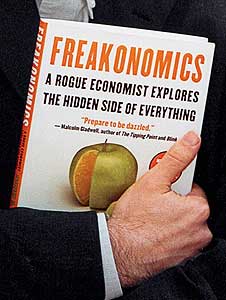
He's a bestselling author and a scholar who turns logic on its head. Meet "Freak-economist" Steve Levitt, who thrilled hundreds with his theories at a recent talk at WSU, then sat down for a Q&A session with reporters.
Details of Detroit Renaissance's "Road to Renaissance" plan have been unveiled. The three-year plan is expected to cost $75-80 million, $50 million of which will go towards business accelerators -- including TechTown and NextEnergy.
While Metro Detroit has been identified as one of the most racially segregated regions in the nation, our growing diversity is one of our greatest strengths. Metromode, United Way, and New Detroit are interested in your thoughts on race relations in this community.
Wouldn’t it be great if there was just one phone number to call to connectto everything you needed to start, grow or move your business into Detroit,into Wayne County, into Southeastern Michigan? Here’s how.
Our Partners