NVI: Powerful tool for community-driven change
The NVI turns resident voices into data-driven action, letting Detroiters steer investment in schools, parks, safety, and neighborhood priorities.
Residents of Detroit neighborhoods know their community better than anyone—the places to shop and eat, the places to stroll and catch a bus. And they know how safe they feel walking down a sidewalk. Data Driven Detroit (D3) recognized the value of this knowledge—and has drawn on it to create a first-of-its-kind informational tool, the Neighborhood Vitality Index (NVI), to improve the city and track its progress.
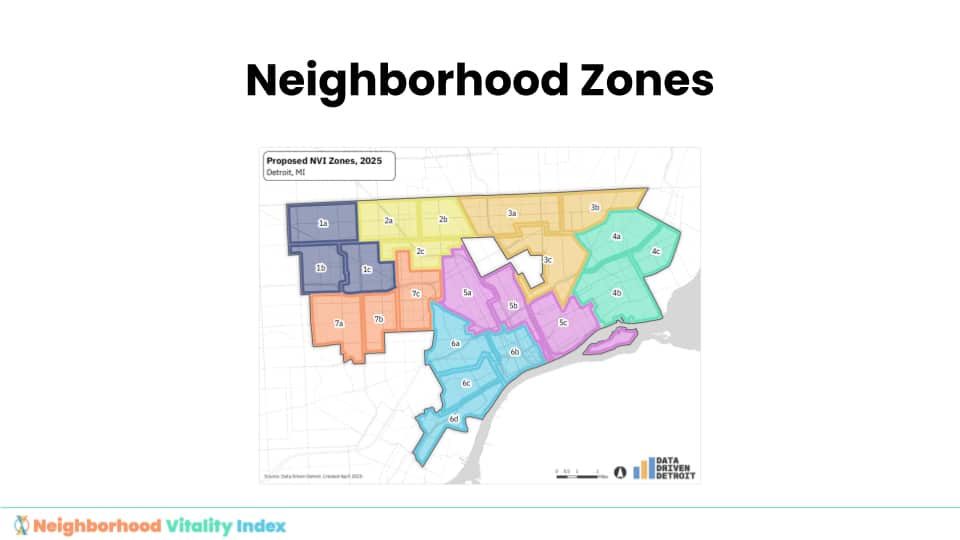
The NVI is a 60-indicator survey created and implemented by Detroiters to measure both quantitative data, such as demographics, and qualitative, like residents’ perceptions of their quality of life and personal safety. Launched in 2024 by D3 and JFM Consulting Group, the NVI annually surveys Detroiters through a questionnaire accessed electronically, through the phone or on paper. Residents who complete the 15-minute survey receive a $25 gift card. The NVI is used by city stakeholders to guide investment in Detroit neighborhoods in response to resident needs.
- Take it online here.
- Request a paper survey by emailing jfmcg@jfmconsulting.net or by calling (313) 290-0992.
- Take the survey over the phone by calling (313) 290-0992.
The 2025 survey was released in June. Residents are being asked to complete the NVI survey through the end of August and to tell their friends and family members. There are three ways to take the survey:
The survey’s blend of quantitative and qualitative data in one instrument is unusual, Jane Fran Morgan, the CEO of JFM, points out. Stakeholders from city government to nonprofits and community development organizations use the data to become more effective in serving Detroiters, she says: “It’s not typical for a survey of this magnitude to come from residents. You also don’t usually find a survey like this that contains both primary and secondary data.”
Jeff Jones, the executive director of Hope Village Revitalization, which has a mission to improve quality of life for the community’s residents and mitigate income and educational disparities, loves the steady stream of data his community development organization receives from the NVI.
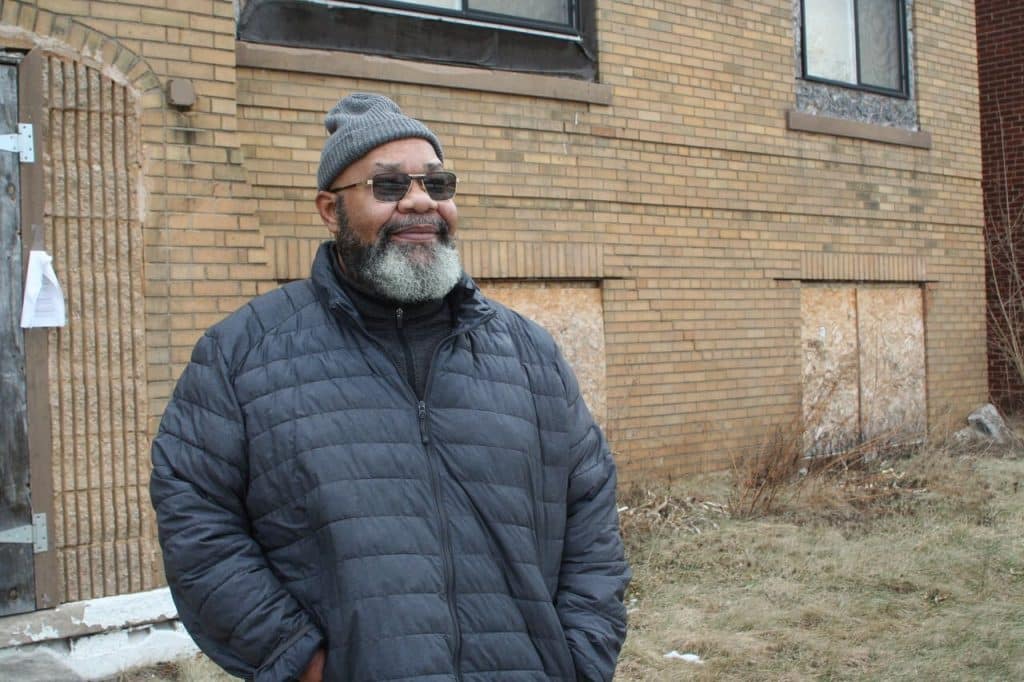
“I’ve been in this business a long time now, and in the old days, you gathered numbers at the end of a year or end of a quarter,” Jones says. “We didn’t see this constant feedback loop that you have now because of the availability of data, the easy access to it. We [can now] say, ‘OK, this is what we did last week. Let’s shoot for something better next week.’”
Morgan says the idea of a data tool created and implemented by residents to measure change in Detroit neighborhoods has “been around a while.” Though the survey was launched in 2024, it began in 2016 when Community Development Advocates of Detroit first convened city stakeholders in “Kitchen Cabinets” to develop the idea into a working model. Over the last several years, Data Driven Detroit and JFM refined the survey questions through feedback from residents. When the survey was launched, D3 and JFM generated awareness through local media spots and with the help of canvassers who passed out flyers at community events.
Jones says Hope Village is already using the data to reevaluate its communication efforts. “[The NVI] doesn’t change the fact that we’ll still do a weekly newsletter, but we need to be thinking about new and different ways of reaching out to people,” he says. “Data informs our day-to-day operations.”
NVI data also strengthens grant proposals, Jones says, helping Hope Village’s grant writers to argue more compelling cases for funding. “Data is power, and data can be monetized,” Jones says. “In the nonprofit community, we’re only beginning to scratch the surface of that.”
Jones says he is noticing demographic changes in Hope Village with an influx of Latino families. He is curious to see if the 2025 NVI will reflect his observations. “But I don’t want to wait until [the] 2030 [Census] to get the data,” he says. The NVI, he explains, will provide demographic data in a way that will enable Hope Village to respond to a changing community faster.
He’s also curious what the 2025 NVI will show about Hope Village property values, especially with the greenway coming to the community. When his team visited Atlanta, it observed that values of property adjacent to its belt line skyrocketed in recent years.
“[There] we got some of the most dramatic and even some of the most heartbreaking stories about residential displacement,” he says. “So that data related to the escalation in property value and data related to people losing their homes to tax foreclosure are other key points that I’m going to be tracking.”
However, rising property values might also be generating increased generational wealth among long-term Hope Village residents, many of whose families have lived in the community for 70 or 80 years. But he needs data to back this up.
D3 and JFM continue to refine the NVI survey, each annual effort generating new feedback used to improve the survey. For instance, they noted that residents answer very differently on the same topic depending on how a question is worded. Men and young people are currently underrepresented among those who complete it, too, according to Morgan. D3 and JFM are working hard to bring those numbers up through greater community outreach and a strong public relations campaign.
They are also seeking to leverage influencers to target groups beyond the reach of a typical awareness campaign. “We want to hear from everyone, not just people who are already involved in community work,” Morgan says. D3 is recruiting residents to spread the word. These ambassadors can pass out flyers or post them in local venues to encourage participation in the 2025 NVI survey.
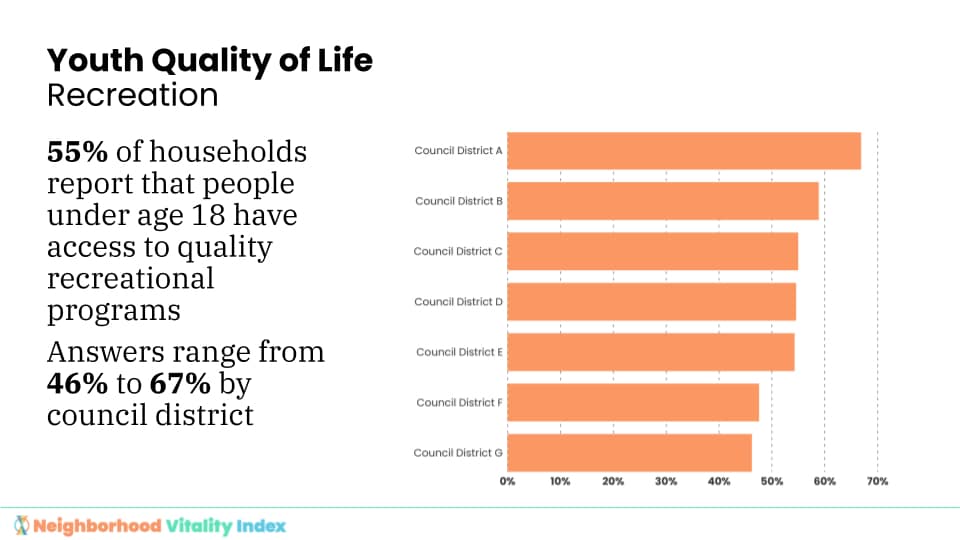
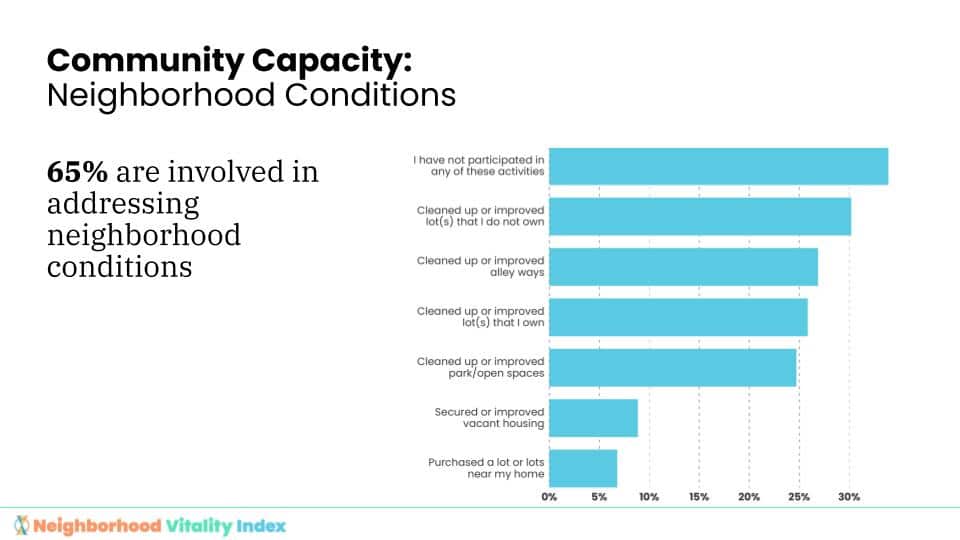
Long term, the NVI will be used to drive investment decisions, both Morgan and Jones say. “If we find out there are concerns around safety or access to and availability of parks, stakeholders can decide what is the best use of investment dollars to address that,” Morgan says.
The data will also drive cooperation: “The plan is for stakeholders to collaborate on using data, so they aren’t using the data in isolation,” she says. For example, investment is now pouring into Hope Village, Jones comments. Community leaders might gain more leverage if they review information together guide them on decisions.
More than just a data tool, the NVI is a reflection of Detroiters’ experiences and an expression of their commitment to shaping the city’s future. Residents aren’t just answering questions—they’re helping steer investment and inform policy in ways that improve their neighborhoods.
Resilient Neighborhoods is a reporting and engagement series examining how Detroit residents and community development organizations work together to strengthen local neighborhoods. It’s made possible with funding from The Kresge Foundation.
Related Articles
A vision for mushrooms as part of Detroiters’ everyday wellness routine
A Detroit mushroom farm and cafe owner bet on his city, and the response is sprouting business growth and expansion.
Detroit has community buy-in for Solar Neighborhoods Initiative
With 139 square miles of land – some blighted or unused and ripe for repurposing – Detroit is well-positioned to develop solar farms to help power city buildings.

Composting project empowers Detroiters to reduce food waste, protect the environment
Food waste makes up one-quarter of landfill waste and contributes to more methane emissions than other landfill materials. The Detroit Community Composting Collective Project is out to curb food waste by training backyard composters.