Metro Detroit parks’ economic benefits boost businesses, tourism, property values, and more
Parks have demonstrable positive impacts on local businesses, property values, tourism, environmental management costs, and even medical bills.
This story is part of a series exploring how parks serve as engines of exploration, education, play, and equity. It is made possible with support from Huron-Clinton Metroparks and the City of Detroit.
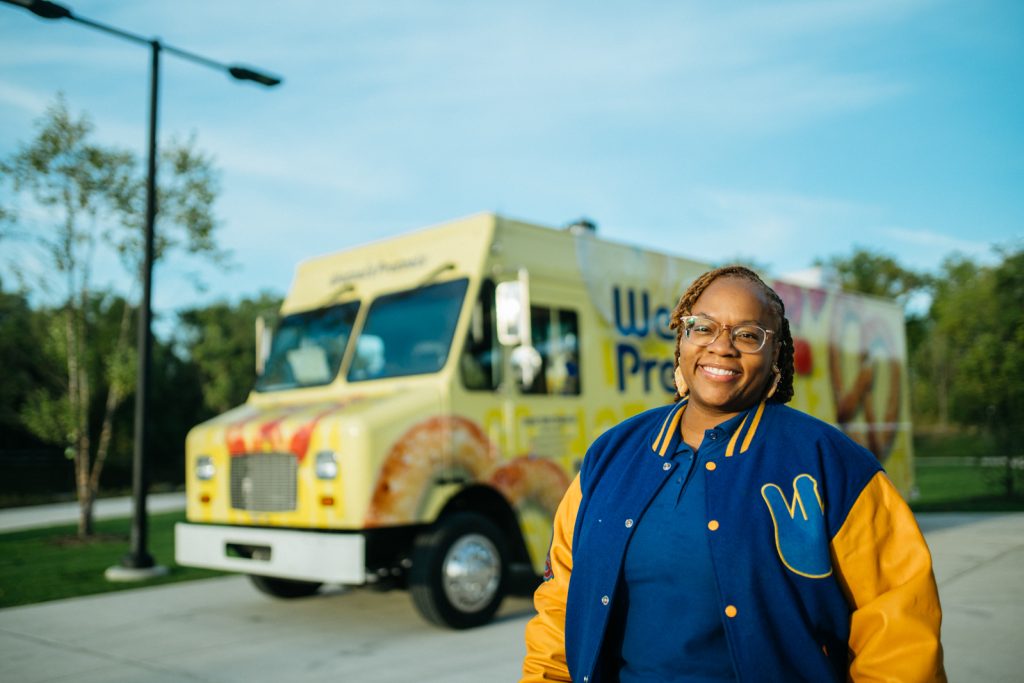
Alicia Powell says she gets “choked up” every time she brings her food truck, Wetzel’s Pretzels, to vend at an event in one of Detroit’s newer parks. Powell, who often vends along the Joe Louis Greenway and at Spirit Plaza, says she doesn’t recall having “these beautiful greenspaces” when she was growing up in the city. Now, she says, she not only appreciates the new parks’ impact on her own business, but she feels like she’s “participating in this beautiful transformation” for the city overall.
“You have to have these greenspaces and recreational space for people,” she says. “… It makes these neighborhoods more attractive. And hopefully it brings value to the area, and then other people start investing more. But it starts with the city providing these spaces.”
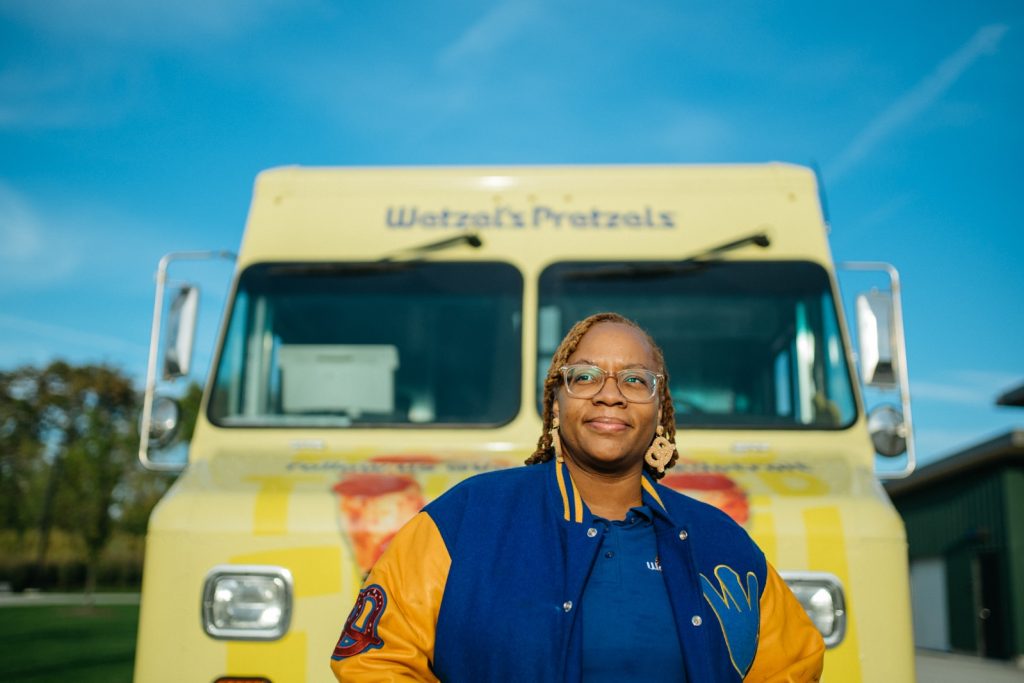
Powell both exemplifies and summarizes several of the myriad economic benefits parks and greenspaces contribute to the communities surrounding them. Beyond simply providing a place for people to unwind in nature, parks also have demonstrable positive impacts on local businesses, property values, tourism, environmental management costs, and even medical bills.
“Parks offer an opportunity for maximizing investment in neighborhoods, so building or investing in a park really draws additional resources to that area, and we see that with the Joe Louis Greenway,” says Leona Medley, executive director of the Joe Louis Greenway Partnership. “It allows us to think about programming, … building on transportation networks, thinking about commercial corridor redevelopment, really focusing on neighborhood stabilization strategies, and preserving existing residents while also attracting new ones. And so we continue to see parks, as an economic development catalyst, produce good results around the city.”
Alexa Bush, the city of Detroit’s planning director, says parks “only add value to any of the other types of more traditional economic development activity.”
“I think having this opportunity to be in a really high-quality public space, a park, a natural area, adds to that value, and I think people recognize it even if they don’t name it as such,” she says. “… It only adds to the excitement, the density, the value of the vertical development that goes along with it.”
Attracting residents and visitors
One of the primary economic impacts of parks is their ability to attract both residents and visitors to the areas surrounding them. Amy McMillan, CEO of the Huron-Clinton Metroparks, says parks are “inseparable” from economic development – particularly in Michigan, where she says “quality of life” should be the “primary driver” of efforts to market the state as “an incredible place to live.”
“There have been studies for decades that demonstrate the influence that being next to well-maintained parkland and open space has on property values,” she says. “And so I think they’re inextricably linked, and that is not often enough realized when talking about economic development.”
Data back up McMillan’s assertions. A 2020 Journal of Leisure Research review of 33 studies found an average property value increase of 8-10% for properties adjacent to parks. And a 2020 study produced for the Metroparks by the Trust for Public Land found an additional $68 million in residential property value for properties within 500 feet of Metropark locations.
Similarly, parks are a boon to visitor attraction and visitor spending. The Metroparks study found that the parks system generates $92 million annually in visitor spending. Studies commissioned by the Detroit Riverfront Conservancy have found $82 million in annual visitor spending along the Detroit Riverfront, which has seen considerable revitalization over the past decade-plus.
Bush credits parks and greenspaces such as the Detroit Riverwalk and Campus Martius as major drivers of the revitalization of downtown Detroit.
“I think we’ve had that synergy between creating these really wonderful public places that work for big events [and] work for tourists, but they also support residential life downtown,” she says. “Those have all really, I think, served to reinforce one another.”
Business benefits
Parks also have significant positive implications for local business. For example, the Metroparks study found that the recreation economy in the Metroparks’ five-county service area supports 272 sporting goods stores generating $678 million in annual sales.
“People are buying bikes. They’re getting their bikes fixed. They’re buying golf clubs,” McMillan says.
Beyond the direct impact of park visitors buying supplies to support their recreational activities, parks can also be a catalyst for small, locally-owned businesses like Powell’s.
“It’s great for us – money in our pocket – and then it’s great for the residents,” Powell says.
Sandra Epps, owner of the Detroit-based face-and body-painting business Sandy’s Land, agrees. She says Joe Louis Greenway events have helped increase her business, with Tuesday yoga sessions on the greenway providing a particularly “huge boost.”
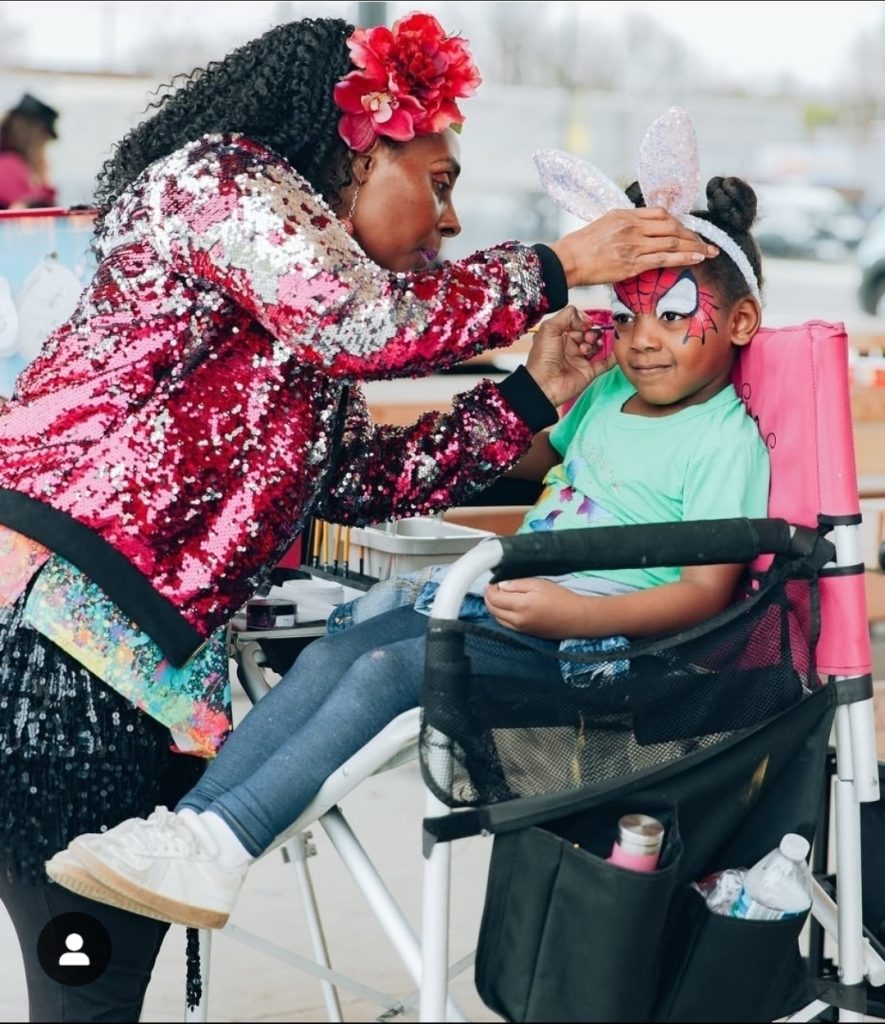
Epps says she was “excited” to learn that a section of the Joe Louis Greenway will be built near seven lots she’s acquired at the intersection of Fenkell Avenue and Log Cabin Street to build a butterfly garden and doll museum.
“New parks and greenspaces are creating a new resurgence in communities throughout Michigan, but especially in the city of Detroit,” she says. “And this is exciting to see and be a part of this new expansion and positive transition in the city of Detroit.”
Parks can draw new commercial activity to a neighborhood, which can require careful strategy to ensure that existing residents benefit from their new greenspace instead of being pushed out by it. Bush says the city of Detroit has been “highly intentional” about engaging Detroit business owners and community members in shaping the way new park investments affect their communities. One example of this is the 2025 Joe Louis Greenway Neighborhood Planning Study, which takes a highly granular neighborhood-level approach to planning investments in the communities surrounding the greenway.
The study was heavily shaped by community feedback. Medley says some neighborhood residents wanted to prioritize commercial corridor development around the greenway, while others did not. She and city staff have worked to be responsive to those needs.
“I think one of the most powerful strategies that we’re employing is … to ensure that we are understanding the current makeup of the neighborhoods, while also engaging with the residents to ask questions about what are some of the impacts that they want to see from a project like this, and then working … to really develop that strategy,” she says.
Unexpected benefits
While increased housing values, visitor spending, and business activity may be fairly obvious economic benefits of parks, the Metroparks study also quantified some more unexpected and less tangible impacts.
One of these is reduced health care bills. Based on the Centers for Disease Control and Prevention’s guidelines for physical activity, The Trust for Public Land conducted a telephone survey to determine how many adults were using Metroparks “at a frequency and intensity that would result in health care cost savings.” The study found 9,030 adults ages 18-64, and 7,600 adults 65 and older, using the parks in this manner. Based on previous research into the health care savings associated with regular intense exercise, the Trust for Public Land assigned an average annual health care savings of $1,250 to the younger group and $2,500 to the elder, estimating the parks system’s total annual health benefit to users at $30.3 million.
“The opportunity to improve the health of our workforce, the impact that that has on the bottom line for companies, is not too often discussed,” McMillan says. “I think that is one of those opportunities that is hugely missed because we so often take it for granted.”
The Metroparks study also quantified the economic impact of the parks system’s environmental benefits. The many acres of pervious (i.e. non-paved) surfaces in each park hold significant benefit for absorbing stormwater, slowing its runoff, and filtering out pollutants. Calculating the total amount of stormwater runoff mitigated by the parks and multiplying it by the cost ($0.11 per cubic foot) of managing that water otherwise, the study found the Metroparks generate a $30.3 million annual savings in stormwater management alone. Similarly, the study found that the Metroparks remove 793,000 pounds of pollutants from the air annually, saving $2.25 million primarily in health care costs.
McMillan notes that, while the study was focused on the Metroparks, similar benefits will result from any park.
“They’re great for outdoor recreation when the weather’s good, and then they manage storm water when the weather is bad,” she says. “That presents a huge savings to local communities as a whole, and individual property owners that struggle with flooding.”
Given the many ways parks can positively impact the economies surrounding them, McMillan says it’s important not to become “complacent” about the natural resources around us. She notes that developing new parks and managing existing ones are “super intentional things” that “don’t happen by themselves.”
“It’s a virtuous cycle when you invest in public parks because it pays so many benefits to people individually, to the businesses, and we’re all the better for that,” she says.
Related Articles
Mapping Detroit: Green Book Locations
Green Books mirrored the state of discrimination, racism, and African American rights in the nation each year. Detroit’s listings started in 1938.
3+13 Ways to Celebrate 313 Day in Detroit
March 13th — known locally as 313 Day — is Detroit’s unofficial holiday celebrating the city’s area code, culture, and community pride.
Travel + Leisure Names Detroit, “Most Underrated City” in Midwest. Here are 5 Gems We Think Were Missed
Detroit’s renaissance is happening in every corner of the city, often in places that fly just a little under the radar. At Model D, we’ve had the chance to cover many of those emerging spaces, projects, and entrepreneurs shaping Detroit’s future. Here are five Detroit gems we think deserve a spot on any “underrated Detroit” list.