Midtown Investing Guide
This is the “Midtown moment.” The district has matured and is poised
to be a “cool city” within Detroit. Its gritty urban charm, diversity
and cultural identity make it an interesting place to live, work and
visit. Bounded on all sides by four of the major freeways in Southeast
Michigan, Midtown is an amalgamation of the major cultural, medical and
educational institutions in Detroit, along with many restaurants and
art galleries and growing pockets of residential areas. As its name
implies, it is a connector and transitional district between downtown
and the New Center.
In recent years, there has been considerable residential
development, from adaptive reuse of older buildings into lofts to
totally new condominiums. With the exception of some large projects in
the south end, Midtown is a place tailored for smaller projects –
infill housing, apartment building conversions into condos.
Overall, there has been a “groundswell of interest” in Midtown, says Sue Mosey, president of the University Cultural Center Association
(UCCA). The UCCA is the “go-to” source for development advice,
identifying available space/buildings, refining a development concept,
identifying financing options such as façade programs and low interest
loans, navigating the city planning and development process, and
generally getting the business going.
The association originally fostered development of and collaboration
between the educational, cultural and medical institutions that
comprise its membership. In recent years, it has been an active force
in securing and supporting economic development in the area once known
as the Cass Corridor.
UCCA projects there will be an estimated $1.47 billion in Midtown
investment — $413.8 million in residential and $57.9 million in
commercial – by 2010.
Diversity of activity
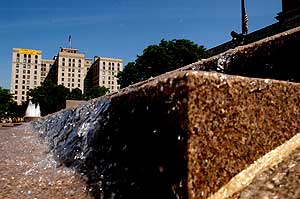 Midtown strives to create a mix of development from high-end, large-scale projects like the Park Shelton
condominiums in the north and Crosswinds Communities in the south, to
affordable apartments for people with lower incomes. “I totally believe
in layers – layers of activity, different kinds of people…a diversity
of activity is a healthy sign,” says Mosey. “Mixed use is the only way
to rebuild the neighborhood.”
While housing developments – including on campus Wayne State
dormitories – have grown tremendously, Mosey would like to see
developments like a fruit/vegetable market, day spa, wine shops and
various service businesses. She says Midtown needs more “gathering
spots” like Avalon International Breads,
which has distinguished itself nationally as a purveyor of fine bread
and baked goods, but also as a small community café. Soon to open is
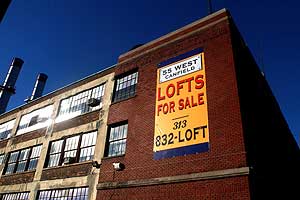
the Midtown Café on John R. and Canfield, inside the Mid-Med loft development near the medical center.
Commercial space in Midtown sells for $18 to $25 per square foot for
improved properties, and $12 to $15 a foot for “as is” properties,
according to Mosey. Property values have increased enough to convince
landowners to sell their property to developers. “We’re seeing an
upswing in smaller projects … another sign of health,” says Mosey.
Infill projects, whether residential or commercial, are critical to
creating and preserving density, she says.
 Investment opportunities follow the creative, intellectual energy of Midtown, says George N’Namdi, owner of G.R. N’Namdi Gallery.
Detroit has a unique opportunity to establish a gallery district in
close proximity to major art museums, he says. He sees a connection
between the African American museum, Detroit Institute of Arts
and the galleries. “It’s the cultural center. In Detroit, we have an
opportunity to add galleries to a cultural district. In Chicago, New
York, you can’t get close to the museums. The cost is prohibitive.”
N’Namdi owns galleries in both Chicago and New York, and has an
international clientele looking to him to present high quality art
ranging in price from $2,500 to $45,000.
But will they come? They already are coming. It’s a natural question
that you would expect of an investor, but N’Namdi is bullish on the
potential of Midtown, particularly because of its urban edge.
Commenting on the recent closure of a couple suburban galleries he
says, “I kept telling them that they should be in Detroit. They would
say, ‘My clientele won’t come to Detroit.’ Well, you think it’s logical
staying where your clientele is, but you have to ask, ‘What am I
selling? Am I selling clothes? Am I selling furniture?’ I’m selling
art. If you go around the world, where are most galleries located? In
urban, funky areas, unless you go to the real commercial galleries.”
 Rent has something to do with it, he says, but it is more the
“mystique” of a gritty urban environment. In New York, the gallery
scene is in Chelsea, “a very funky area. It used to be SoHo, which used
to be funky but isn’t funky now. So the galleries moved. … Galleries
are typically in urban areas that have a little grit to them. Rarely do
you have them in a suburban location.”
Midtown has been “the creative pulse” of Detroit for a long time,
says Colin Hubbell, a local residential developer. “The worry for some
of us is that Midtown, as a neighborhood and as a destination, does not
lose its authenticity and become too mainstream,” he says.
‘Stars are aligned’
With new housing developments, and Wayne State augmenting its
commuter school identity by adding 1,634 dormitory beds to its campus,
the area is primed for continued growth.
 “Midtown is a sound investment. Today, unlike five to seven years
ago, the residential market is proven. Project after successful project
continues to validate the growing strength of he market,” says Hubbell.
“The Midtown ‘moment’ is just beginning. We’re still at a stage well
before any ‘tipping point.’”
The “stars are aligned” in Midtown, says John Lopez, who revived Twingo’s Euro Café
last year. With the university’s increased enrollment and residential
development, along with the cultural business, Lopez says times have
changed for the better.
When it comes to restaurant management in Midtown, John Lopez has
been around the block more than once, literally. The one-time manager
of Union Street and Majestic Cafe, and co-founder of Agave and Atlas Global Bistro,
Lopez says the restaurants in Midtown have an intangible “Detroit”
quality that differentiates them from suburban restaurant districts. He
describes it as “a kind of rough and tumble street-kid mentality.
Everybody here has fought their way to the top. It’s always been that
Detroit edge – whether it’s in the music, the art, the writing, there’s
a certain Detroit edge that separates us from places like Royal Oak,
even Ferndale. Detroit’s restaurants, like the music scene, have been
unique.”
There’s room for smaller businesses and creative types, too.
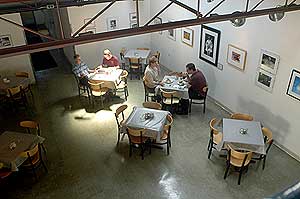 “Midtown fosters an entrepreneurial spirit,” says Claire Nelson, who
operates a graphic design studio from her loft. “I think Midtown is a
great place for a young designer, or a young business owner to test out
what they’re doing, without the higher rent that people are asking for,
even downtown in the business district.
Plus, she says, “I know here there is a real desire to support local businesses.”
There’s plenty of room for boutique enterprises like Canine to Five,
which opened last year in the Cass Park area of Midtown. Determined to
provide commuting workers and Detroiters a dog day care service in the
city, Liz Blondy looked at various sites in Detroit and settled on
Midtown. Located near virtually every freeway, she felt confident that
university, medical center and downtown office workers would use her
service. They do, but what surprises Blondy is that she has a healthy
local clientele as well.
“I originally thought my clientele was going to be suburban
commuters. I was wrong. I would say that 60-70 percent of my customers
live in Detroit,” she says. Of her 120 customers, 70 live in Detroit,
and a third of those live in Midtown. She has found the university and
medical center helpful in linking her service with their employees.
Her five-year goal is to expand to adjacent empty lots and build
additional space. She also is in the process of acquiring the Birdtown
pet store, which has a pet grooming service that, she believes, will
add value to her dog care business.
 Much of Midtown has been built and rebuilt by people who have spent
much of their lives there, which adds value through the long-term
commitment of the developers, says Blondy. “Small businesses like mine
or small developers like Bob Slattery and Colin Hubbell … do more to
help each other rather than big developers like Crosswinds.”
Upscale development is also on the rise in Midtown. A $15 million
conversion of the Park Shelton hotel is under way. Developer Walter
Cohen, who has developed elsewhere in Midtown, is restoring the
historic fashionable residential hotel into an elegant residence once
again, complete with 24-hour door attendant and rooftop solarium.
Down the Woodward Avenue, across from Orchestral Hall, workers are finishing the Ellington
loft condominium project, which will feature a Starbucks and FedEx
Kinko’s at street level. About 60 percent of the Ellington’s units are
sold. Midtown is also home to the historic Inn on Ferry Street bed and
breakfast, which established a precedent for two other B&Bs in
Midtown.
As the residential population grows, people will need more than
restaurants – basic services like car repair shops. It may not be as
sexy as a fine art gallery or wine bar, but business is great for
Campus Collision, which will be relocating from its longtime current
location on Forest to another site in Midtown. Owner Mike Kane has been
working at the shop since 1972 and wants to stay close to his main
clients – Red Cross, Detroit Medical Center and Wayne State University.
Many local residents use the collision shop as well.
Kane says that Midtown is developing a reputation for being “safe
and central,” which will eventually draw a critical mass of people.
UCCA is hoping to help attract that critical mass, and foster the
business growth in the area. The organization has begun an aggressive,
five-year, $10.3 million economic development initiative to enhance the
Woodward Avenue streetscape, create a Greenway pedestrian loop, improve
existing parks and neighborhoods, administer façade improvement grants
and construction loans, and build a residential/retail building on
Woodward and Willis. It’s estimated that this investment will generate
over $29 million in the community, according to UCCA.
From museums and medical facilities to cafes and galleries, Midtown
continues to search for “interesting, off-beat stuff (for the)
interesting, off-beat people who live here,” says Mosey.
Directions to Midtown
From the East:
Take I-94 West and continue to
Exit 215C toward M-1/Woodward Ave/Brush St. Stay straight to go onto
Edsel Ford Fwy East and turn left onto Woodward Ave. Arrive in Midtown.
From the North:
Take I-75 South to Exit 53A
toward Warren Ave. Stay straight to go onto Chrysler Dr, and then turn
right onto Warren Ave. East. Arrive in Midtown and stay straight to
either Woodward or Cass Ave.
From the West:
Take I-96 East and take Exit 190A
to merge onto I-94 East toward Port Huron. Take the M-1/Woodward Ave
Exit 215C toward John R St. and stay straight to go onto Edsel Ford Fwy
East. Turn right onto John R St., and then turn right again onto
Hendrie ST to Woodward. Arrive in Midtown.
From the South:
Take I-94 East toward Detroit.
Take the M-1/Woodward Ave Exit 215C toward John R St. and stay straight
to go onto Edsel Ford Fwy East. Turn right onto John R St., and then
turn right again onto Hendrie ST to Woodward. Arrive in Midtown.
Take I-75 North toward Detroit and continue to Exit 50 toward Grand
River Ave. Stay straight to go onto Fisher Fwy West and turn left onto
Woodward. Arrive in Midtown.
The Detroit Public Library
The Park Shelton
George N’Namdi Gallery
55 Canfield Loft Project
Art Center Townhomes
Cass Cafe
Canfield Lofts
All Photographs Copyright Dave Krieger
Related Articles

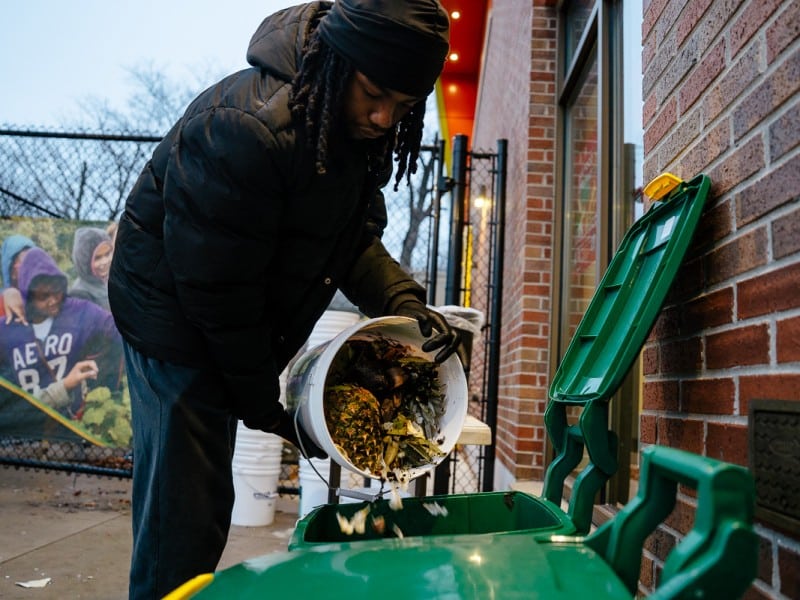
Composting project empowers Detroiters to reduce food waste, protect the environment
Food waste makes up one-quarter of landfill waste and contributes to more methane emissions than other landfill materials. The Detroit Community Composting Collective Project is out to curb food waste by training backyard composters.
Partner Partner Content Reduce Food Waste in Detroit by Composting
More than 6000 pounds of food waste have been composted. Between the overwhelming response to the call for participants and the comments from participants and even passerby at the co-op, the project has demonstrated a distinct enthusiasm for composting among city residents.

Detroit Warms Up in Time for Valentine’s Day Weekend: 10 Things to Do
Whether you’re planning a romantic evening, a friends’ night out, or simply looking to experience something new, this Valentine’s Day weekend offers something for every mood.