Lead education program equips Michiganders to protect and advocate for their communities
The Lead Impacted Families Together (LIFT MI) program presents training in lead safety and advocacy for residents across Michigan.
This article is part of State of Health, a series about how Michigan communities are rising to address health challenges. It is made possible with funding from the Michigan Health Endowment Fund.
Many Southwest Detroit residents were shocked and concerned last year when they received letters from the city’s water department, warning that they may have lead in their water lines.
“It stirred a lot of confusion, but also fear, without giving us any sort of agency to know for sure,” says Rachel Marquez, coordinator of community organizing and advocacy for the Detroit Hispanic Development Corporation (DHDC), which serves Southwest Detroit.
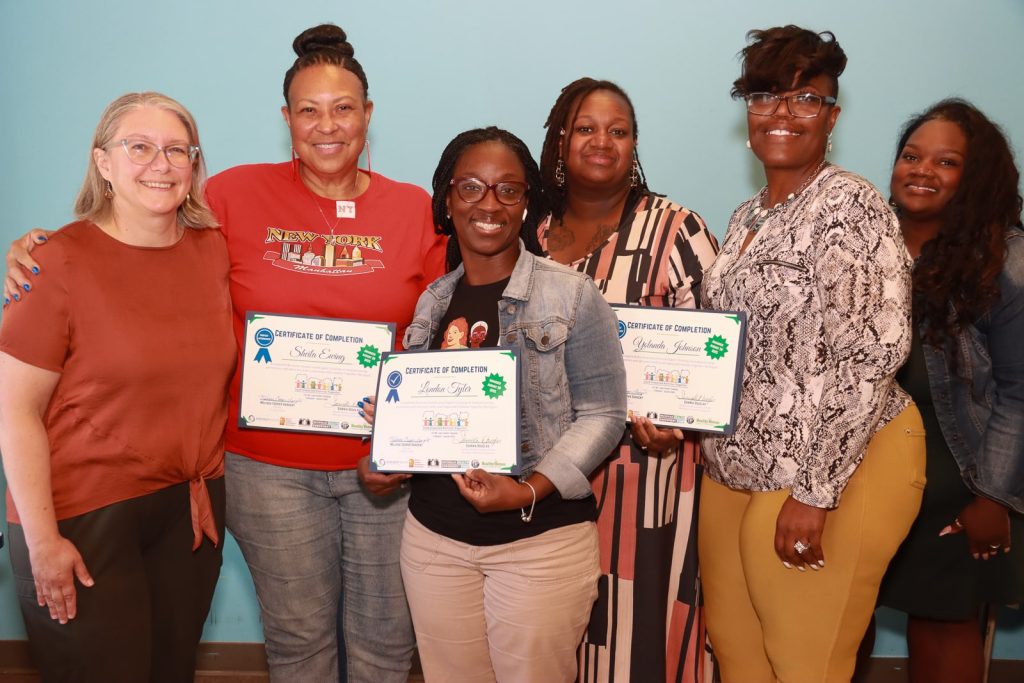
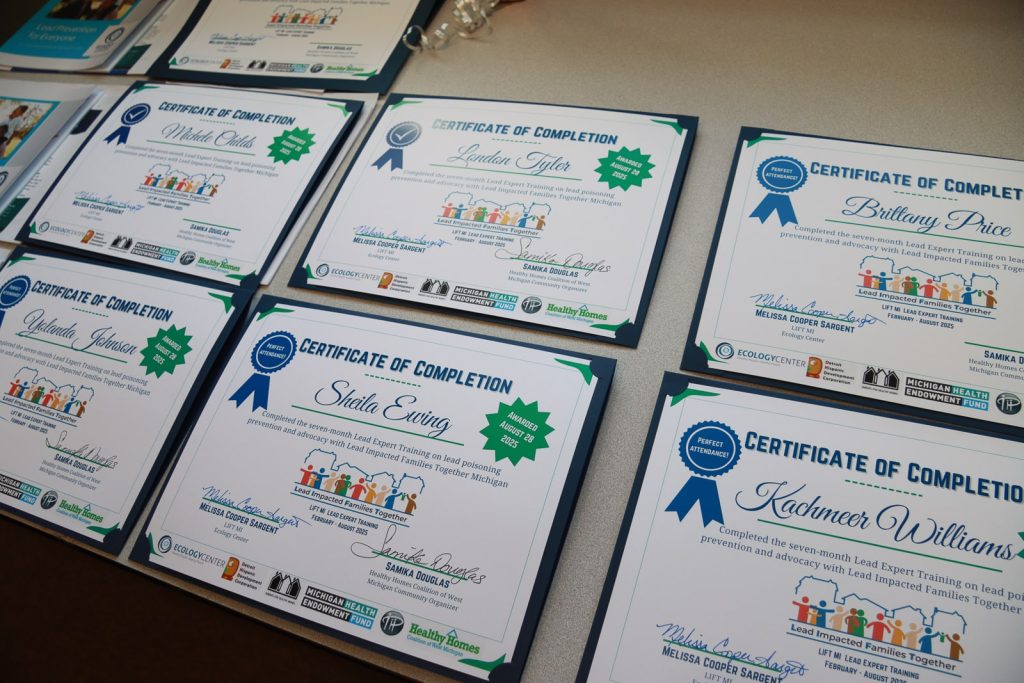
However, Marquez says a lead education program organized by the Ann Arbor- and Detroit-based Ecology Center “really came at the perfect time” for residents to better understand and respond to the unsettling news. Early this year, the Lead Impacted Families Together (LIFT MI) program presented a seven-month bilingual virtual training for residents convened by DHDC and three other Michigan organizations. Supported by a $150,000 grant from the Michigan Health Endowment Fund, the program trained 30 participants on lead poisoning and how to advocate for lead safety in their communities. Another 30 people will be trained in a second cohort next year.
Sheila Ewing, one of several Grand Rapids-based LIFT MI trainees convened by the Healthy Homes Coalition of West Michigan (HHCWM), says she and her fellow program graduates are now working to share what they’ve learned with their neighbors.
“We try to help the community and just to get them involved and want to learn,” she says. “And the biggest thing with me is I did want to learn. And so the more we can get the information out there, the better it is for all of us.”
Lead safety education
The first iteration of LIFT MI took place in 2020 and 2021. Melissa Sargent, environmental health advocate at the Ecology Center, says partners in that version of the program asked the Ecology Center to bring it back, leading Ecology Center staff to “reinvigorate” the initiative. The program relaunch was also bolstered by a new Michigan law requiring all children to be tested for lead at 12 and 24 months old.
To identify potential program participants, the Ecology Center partnered with four organizations across Michigan: DHDC, HHCWM, Parents for Healthy Homes in Grand Rapids, and Public Health, Delta and Menominee Counties in the Upper Peninsula. They sought residents who live in homes older than 1980 and care for a child under 6 years old.
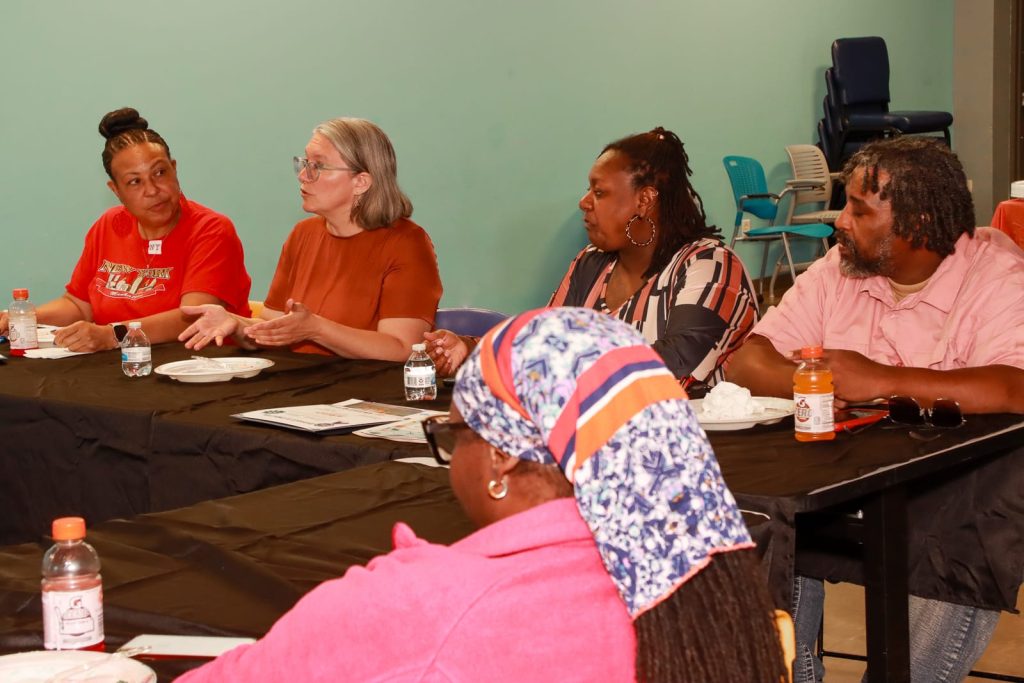
Participants received small stipends to attend monthly trainings, with topics including how to find lead hazards in the home, how to test water for lead, how nutrition can help reduce the body’s lead uptake, and the importance of lead testing for children.
Sargent says the program’s intent is to equip participants to “prevent lead poisoning in their homes, and also to then take what they’ve learned and share it with others.”
“Maybe that’s their own extended family or their community or school or church, or maybe it’s their lawmaker, where they can go and talk to a decision-maker,” she says. “We want to be able to educate people about what they can do in their daily lives to try to prevent lead poisoning, and then also help protect their broader communities.”

Ewing says she joined the program because she wanted to learn how to protect her two grandsons, who are 8 months and 3 years old. She says the youngest “still gets into everything,” while the oldest is “curious” and likes to play around windows.
“You don’t know what house he can do that at, which may have that poison,” she says. “So that was another reason that I wanted to learn more about [lead], as far as cleaning, what to do, what to use, how to use it, and things like that.”
Yolanda Johnson, another Grand Rapids-based LIFT MI participant, says her own children have gotten older, but as a child care provider, she wanted to be able to share lead safety information with the parents in her life.
“Just staying up to date on resources and information and the things that are changing to benefit our kids and keep everyone healthy is why I’m still here,” she says.

Samika Douglas, community organizer at HHCWM, says she was pleased to see that all but one of the participants her organization brought to LIFT MI completed the program. The one who dropped out did so due to illness, rather than lack of interest.
“That speaks volumes on the cohort and what they were learning, that they were all so intrigued and wanted to know more,” she says.
Spreading awareness “like a wildfire”
The LIFT MI program culminates with a focus on advocacy. Marquez says this portion of the training “tied everything into a nice, neat little ribbon” for DHDC’s trainees, most of whom came from a group called Promotoras de la Tierra (“Promoters of the Earth” in English). That group has since changed its name to Promotoras de la Agua (“Promoters of the Water” in English) as its members use what they learned from LIFT MI to test water in their neighborhood for lead, following up on the letters residents received from the city last year.
Participants also learned how to talk to their neighbors, the media, and lawmakers about lead, and they were asked to create lead action projects. Sargent says participants’ projects have included sharing what they’ve learned with others in person and on social media, as well as creating an educational game about lead safety. Ecology Center staff are also encouraging all LIFT MI graduates to participate in Lead Education Day next year in Lansing, where they’ll have the opportunity to share their stories and what they’ve learned with state lawmakers.
“Now they’re able to go out and organize,” Marquez says. “… We don’t need to just know how to live in our environment, but we can actually contribute to making the environment a better place.”
Marquez and Douglas both say they hope to see the program continue beyond next year’s planned cohort, and Douglas already has a waiting list of people who are interested in future LIFT MI sessions. Sargent says the Ecology Center is seeking funding to continue expanding the program, especially in light of the Michigan Department of Health and Human Services having designated 82 Michigan communities as high-risk for lead exposure.
“We would be happy to extend this to anywhere in the state,” she says. “… There’s a lot of communities in the state that could use this sort of education.”
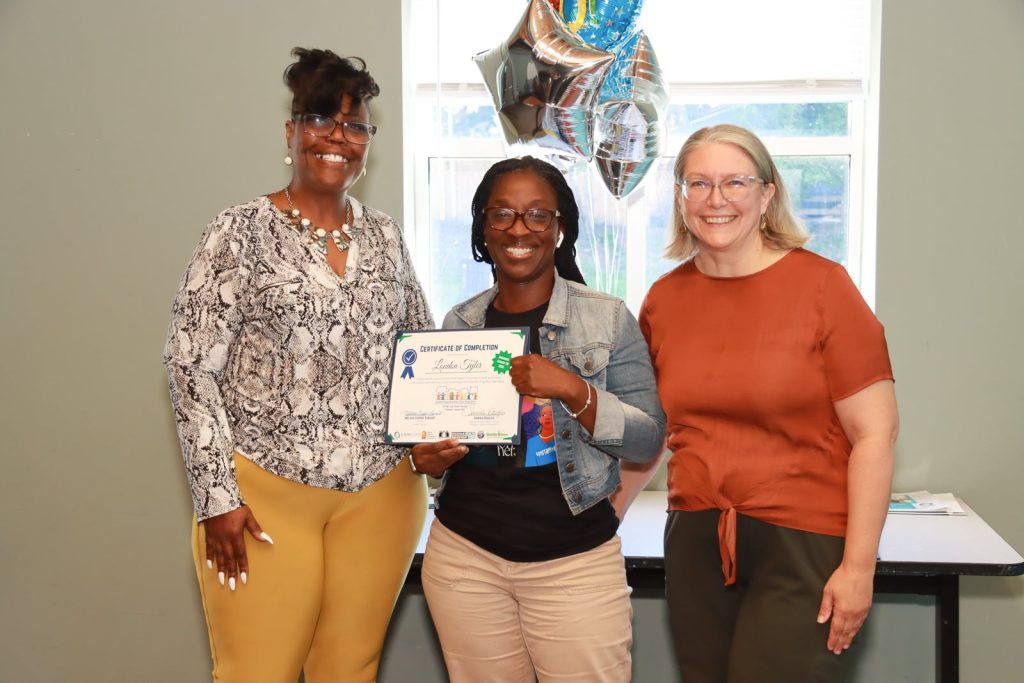
Douglas says she hopes lead safety education will “spread like a wildfire” as a result of LIFT MI.
“Education is something no one can take from you, so once you learn it, you can’t unlearn it,” she says. “They could cut grants. They could cut funding. But once you learn something, it’s there now, and you have that the rest of your life where you could now go out and educate other individuals as well.”
Related Articles

Policies, programs, and research shaping maternal mental health care
How the Center for Health and Research Transformation is working to improve mental health for pregnant and parenting individuals.

Detroit students bring food to seniors’ doorsteps
Older people are especially vulnerable to food insecurity for a variety of reasons. Detroit Catholic Pastoral Alliance fights that with food boxes – and has assembled a multigenerational team to make the deliveries happen.
SDOH Hubs improve mental and physical health while reducing disparities
The goal is to improve health outcomes, achieve health equity, and remove barriers to opportunity.