Welcome, Arianna Huffington: Q&A with HuffPost president and editor-in-chief
Expect both deep dives and the lighter side of "politics and art and books and food and sex," says co-founder of arguably the most successful web-based media project ever. Walter Wasacz tracks down the busy Arianna Huffington and asks how the virtual road led to Detroit.
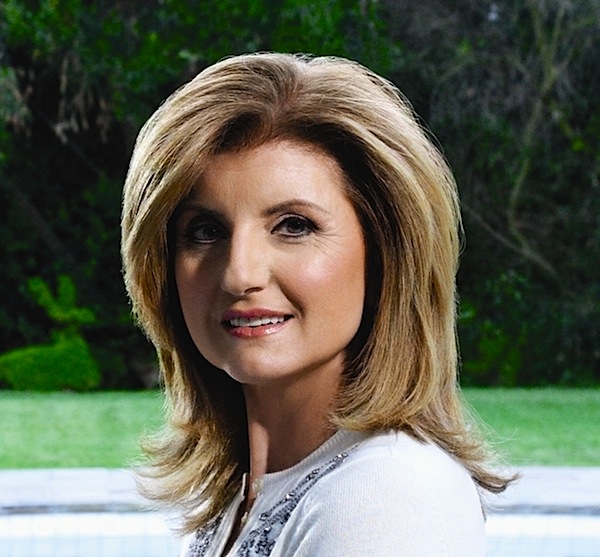
She is Cambridge-educated, an author, journalist and blogger named by Forbes as one of the most dozen influential women in media (that was in 2009; her ranking likely is even higher today), a go-to pundit on the national political stage, a radio host and co-founder, president and editor-and-chief of the The Huffington Post,.
Arianna Huffington is a trailblazer leaving a trail of success wherever she goes. Earlier this year, AOL announced it had acquired The Huffington Post for $315 million and made Huffington president and editor in chief of The Huffington Post Media Group, which includes The Huffington Post and already existing AOL properties Engadget, AOL Music, Patch Media.
Last month, the group launched HuffPost Detroit. We walked around Corktown near the pub’s local offices and talked with Detroit born and bred editor Simone Landon Simone Landon. Now, after a two week (or was it three?) chase across the interwebs, we got a chance to talk to Arianna. It was worth the pursuit.
Huffington Post launched in 2005. That seems an eternity in new media time and space. How has media changed in six years?
Since 2005, the Internet has come out of its adolescent stage and is growing up into a place where our online and our offline lives are merging. A place where the qualities we care most about offline — connection, engagement, authenticity — are increasingly reflected in our experience online. We are seeing new media grow into a uniquely powerful tool enabling unprecedented engagement and community, from Tahrir Square to the streets of Europe to the growing network of Occupy protests across the US.
Of course, there’s still a lot more maturing to be done. See: Balloon Boy.
The whole idea of The Huffington Post from the start was to take the sort of conversations found at water coolers and around dinner tables — about politics and art and books and food and sex — and open them up and bring them online, so everybody could participate. In that way, I hope we’ve been a part of bringing the offline world to the online platform. The news is much more of a two-way street now — it’s not a passive activity, it’s active, and we’ve tried to amplify and deepen that transition. And one of the things I most love about The Huffington Post is our policy of covering a story as long as we think it’s important. The online media can take a worthy-but-passed-over story and, by refusing to let it go, push it back into the national conversation.
We are both a journalistic enterprise — with more than 1,300 professional journalists on the payroll — and a blogging platform that, together with our parent company AOL, receives more than 250 million unique views around the world. Since our merger with AOL in February, we’ve launched more than 20 sections, including two international editions. And I’ve always said that even if I had an unlimited budget to produce unlimited original content, I would still aggregate, because there is great content being produced around the world, and our goal at HuffPost is to guide our readers to the best content anywhere.
Unfortunately, the outside world is likely to view Detroit through the prism of the national media’s knee-jerk narrative about the city, largely because that’s all most outsiders have been offered. We’ve seen it over and over again: a reporter helicopters in, reconfirms the conventional wisdom, and then heads out of town. That limited, unimaginative approach was a major driving force behind the launch of HuffPost Detroit in November. We hope the section will be of interest not just to those who live in and around Detroit, but to anyone interested in this great American city.
Walter Wasacz is managing editor of Model D. He is always in pursuit of good stories.
Related Articles
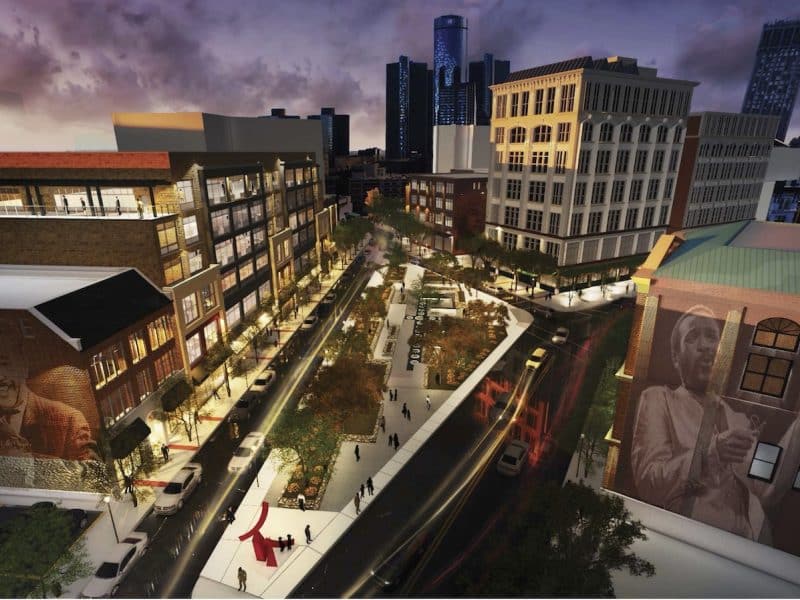
With a $20 million partnership, orsa Music Hall is set to continue leadership in Detroit’s creative future
Beyond naming the expansion orsa Music Hall, the partnership will support programming, education, and community engagement.

Dancing in the new year
Hubbard Street Dance Chicago will have two performances presented by Dance @ Detroit Opera on Jan. 24 and 25.
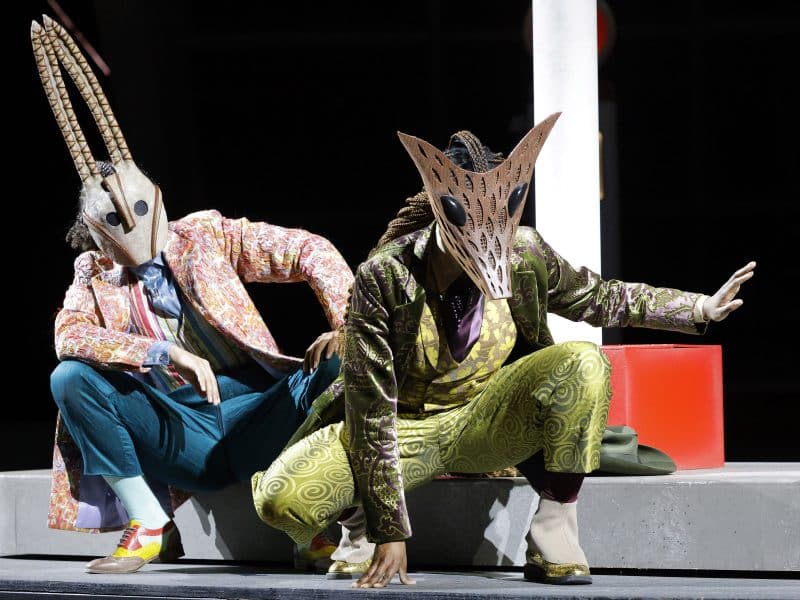
Double bill: Detroit Opera to present William Grant Still’s ‘Highway 1, USA’ and Kurt Weill’s ‘Down in the Valley’
The double bill features an all Black cast and several returning artists. Director Kaneza Schaal — winner of a 2025 Doris Duke Artist Award — returns to direct both operas.