How two entrepreneurs are bringing health innovation to the Midwest
Two entrepreneurs from Mexico with a history of building successful operations are preparing to move their company, VITIA, to Michigan.
What started with a football game in Ann Arbor is now evolving into a cross-border business expansion that could reshape how chronic conditions are managed in the U.S.
Fernando Silva and Alejandro (Alex) Sanchez, two entrepreneurs from Mexico with a history of building successful operations, are preparing to move their company, VITIA, to Michigan. They’re doing so with support from Global Detroit, a nonprofit that helps immigrant entrepreneurs grow their businesses while boosting the regional economy.
Their company’s mission is ambitious but straightforward: help patients with chronic conditions manage their health through AI-driven coaching, streamlined access to medications, and loyalty programs that reward treatment adherence. The model carries significant potential for Michigan, from job creation to lower healthcare costs.
Silva has spent more than 20 years in healthcare, starting out in pharmaceuticals.
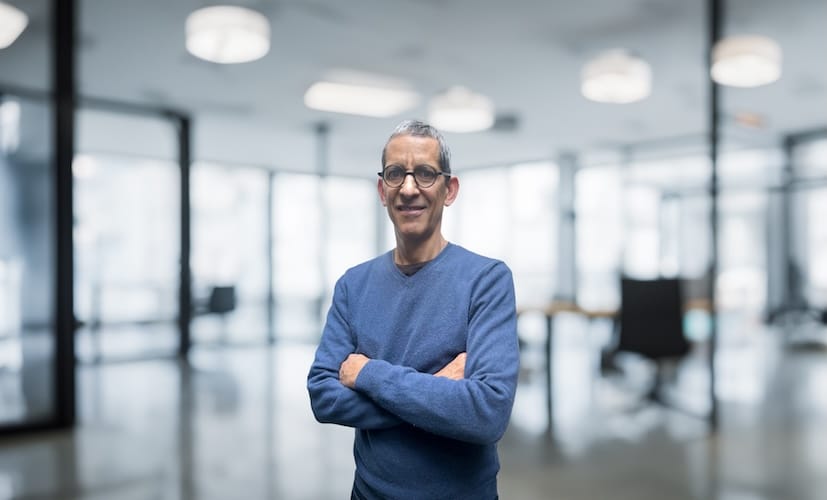
“After working closely with doctors and patients, I saw the need to create something that could help people with chronic conditions,” he explains. That realization pushed him into startups, where he began developing health solutions outside the traditional “big pharma” model.
Sanchez, on the other hand, comes from a background in product development, loyalty programs, and data analytics. He applied his skills across banking, universities, airlines, and online travel agencies, always focused on building systems that kept customers engaged. His expertise became central to the venture when he adapted those concepts to improve patient engagement with healthcare.
The two met during the pandemic through mutual friends. Silva pitched the idea, Sanchez saw the potential, and soon Sanchez was shaping the loyalty strategy and leading the technology side of the company.

Their Michigan connection happened almost by chance. In 2023, while attending the Techstars AI program in Chicago, Silva — a University of Michigan alum — pushed for a trip to Ann Arbor to catch a game at the Big House. A friend introduced them to Global Detroit, and they quickly realized the program could offer more than immigration support.
“We were already working on our visas, but this was more than just immigration help,” Silva says. “It was about building a network — connections to universities, chambers of commerce, and relocation resources.”
With Global Detroit’s guidance, they linked up with the University of Detroit Mercy for research partnerships and tapped into organizations like the Grand Rapids Chamber to establish business ties. From there, relocation plans accelerated.

Their approach to chronic condition management blends three strategies: personalized AI coaching, a virtual pharmacy for nationwide prescription delivery, and loyalty programs that reward patients for sticking to treatment plans, check-ups, and health goals. By strengthening adherence, they aim to prevent costly complications — saving money for both patients and health systems.
“A tool like this is useful for everyone,” Silva says, “but it can especially help underserved populations in rural or remote areas — something very relevant to Michigan.”
Both founders see Michigan as the right place to launch their U.S. expansion.
“The Midwest is approachable,” Sanchez says. “It’s less crowded than the coasts and full of innovative people eager to try new things.”
Silva points to the state’s geography and university ecosystem as key advantages. “Detroit is transforming,” he says. “Being here gives us access to major cities, healthcare systems, and a talent pipeline through the universities. It’s an ideal place to prove our model and expand nationally.”
In the short term, the team is working toward securing revenue by the fourth quarter and completing pharmacy integration to serve patients nationwide. Long-term, they want to collaborate with U.S. institutions on research, build evidence for their model, and eventually expand into other markets.
Their broader vision goes beyond healthcare delivery — it’s about giving patients more control, improving quality of life, and fueling innovation in Michigan’s economy.
“It’s about loving the problem, not just the solution,” Sanchez says. “We’ve iterated our product multiple times, but our commitment to helping patients take control of their health hasn’t changed. Programs like Global Detroit make it possible to turn that commitment into real impact.”
Now, as the duo is finalizing their move, what began with a game may soon translate into big wins for patients, healthcare systems, and Michigan’s growing innovation economy.
“Working with Fernando Silva and Alex Sanchez Vega through the Global EIR program has been a true joy. As seasoned entrepreneurs from Mexico, they bring not only deep expertise but also a rare mix of levity, humor, and warmth. Their presence reminds us that building impactful ventures can be both purposeful and convivial, infusing every interaction with optimism and laughter.”
Ernestine Lyons
Global Entrepreneur In Residence Program Manager
Global Detroit
This story is part of a series underwritten by Global Detroit, a regional economic and community development organization. With a focus on immigrants and global talent, Global Detroit develops and implements inclusive strategies to drive the growth, revitalization, and broadly shared prosperity of Detroit and across Michigan. Global Detroit works to make Michigan a national leader in attracting, retaining and placing international graduates and other foreign-born professionals.
Related Articles

Partner Partner Content Rising optimism among small and middle market business leaders suggests growth for Michigan
Both small and midsize business leaders are feeling more confident to pursue growth opportunities, embrace emerging technologies and, in some cases, forge new strategic partnerships.

Black women’s unemployment has skyrocketed. Here’s what happened.
By December 2025, Black women were spending an average of 29.7 weeks, or more than seven months, unemployed — the highest rate among every group of women and among all men except for Black men, who had a slightly higher average.

With a $20 million partnership, orsa Music Hall is set to continue leadership in Detroit’s creative future
Beyond naming the expansion orsa Music Hall, the partnership will support programming, education, and community engagement.