How these two Detroit physicians are saving the bedtime story
Dennis and Archer, both Black doctors and authors in their own right, have used the trajectories of their careers to serve as representation for the generations coming after them.
As a child, Dr. Lyndsay Archer’s parents nurtured her love for reading and writing; she often sought solace from the challenges of adolescence in the pages of a book. In medical school, she again turned to the written word for comfort by writing a children’s book.
But Archer’s favorite childhood pastime is in peril as fewer parents read to their children.
The great reading decline, by the numbers
In a 2025 nationally representative survey by HarperCollins UK, about 41% of U.K. parents surveyed said they frequently read to their children aged 0 – 4, down from 64% in 2012. Only 36% of 5 – 7 year-olds and 22% of 8 – 10 year-olds were regularly read to at home in 2025.
Only 32% of 5 – 10-year-olds reported reading for enjoyment, down from 55% in 2012, according to the study.
In the U.S., the National Assessment of Educational Progress (NAEP) reported that only 14% of 13-year-olds read for fun almost every day in 2023, down from 27% in 2012. Students who reported reading for fun almost every day scored higher on standardized testing than students who did not.
Why are parents reading to their children less?
Busy, working parents have less time to spend with their children, so naturally, reading time gets squeezed out, said Dr. Charletta Dennis, the medical director of behavioral health at Priority Health.

Easy access to screens and technology also pushes out reading time, said Dennis. Today’s parents are of the generation that came of age when technology was becoming more accessible, so they might also have read or read less themselves.
In 2022, approximately 48% of adults reported having read at least one book in the last year, down from 55% in 2012, according to the National Endowment for the Arts’ Survey of Public Participation in the Arts.
How can parents and adults encourage kids to read?
“Parents can reverse this trend by making reading a priority,” said Dennis. Parents can schedule dedicated reading time with their children, and for themselves at least a few times a week, showing that reading is fun and enjoyable.
“Scheduling times for reading and to have those types of interactions are so important, as is making the environment reader-friendly,” Dennis said. “Make it a fun activity and make it an activity that the parent and the child can look forward to.”
Encouraging reading – according to Dennis – isn’t just a parent’s job. Teachers, schools, family friends, and relatives can foster a love of reading by scheduling educational trips to libraries and places like museums and zoos, where children learn about the world by reading exhibition labels.
“Kids should also be given a variety of options to choose from so they can learn more about what interests them,” said Dennis.
Why is reading important?
Reading has many social, emotional, and educational benefits for children.
“Literacy serves as the foundation for a child’s education,” said Archer, a first-year pediatric resident at Children’s Hospital of Michigan in Detroit. “Children who read or are read to often have greater cognitive development than children who do not, which usually predicts a child’s academic achievement.”

Reading also serves as an outlet for self-expression and creativity, which influences children’s behavioral development, she said.
“When a [child] is able to have reading and comprehension in their back pocket, they’re better able to express themselves, which is really important, because as [they grow], they’re going through different seasons,” said Archer.
Dennis agreed, stating that reading exposes children to social norms, important life lessons, and world cultures; and regular reading time also serves as bonding time for parents and their children, promoting a sense of safety and security for the child.
“When there’s bonding, this opens the door for resilience. It opens the door for a safe space. It opens the door for children to understand that there is someone in their corner, or that they have someone that they can reach out to when they are struggling,” said Dennis.
How Dennis and Archer encourage childhood literacy
“Representation within children’s books is important so that children of all races, abilities, ethnicities, and cultures can connect with healthy role models,” said Archer.
Dennis and Archer, both Black doctors and authors in their own right, have used the trajectories of their careers to serve as representation for the generations coming after them.
Dennis wrote Frida’s Fireworks, a story about a Black, neurodivergent little girl named Frida who learns to regulate her emotions with the help of her therapy dog, Scout; and Archer wrote Fly, Doctor, Fly!, inspired by her father’s journey to becoming a psychiatrist.

Archer wrote Fly, Doctor, Fly! to encourage other children of color to follow their dreams. She also wanted to portray diverse representation in medicine, where Black and Hispanic doctors remain underrepresented in proportion to their share of the population.
“The inspiration for the book came from my pre-med classes. There weren’t many students who looked like me, and I was sitting in a classroom of 300,” Archer said. “For me, it was the best way to express how I was feeling [at] that time: that feeling of loneliness.” This experience as an undergraduate student reiterated to Archer that children in her community have little experience with doctors who look like them.
Archer also founded a nonprofit, Roots Strong, to distribute books to and encourage reading among Detroit youth, with a focus on representing Black and Brown children in literature. The nonprofit has also built two libraries and a computer lab in her mother’s native village in Jamaica.
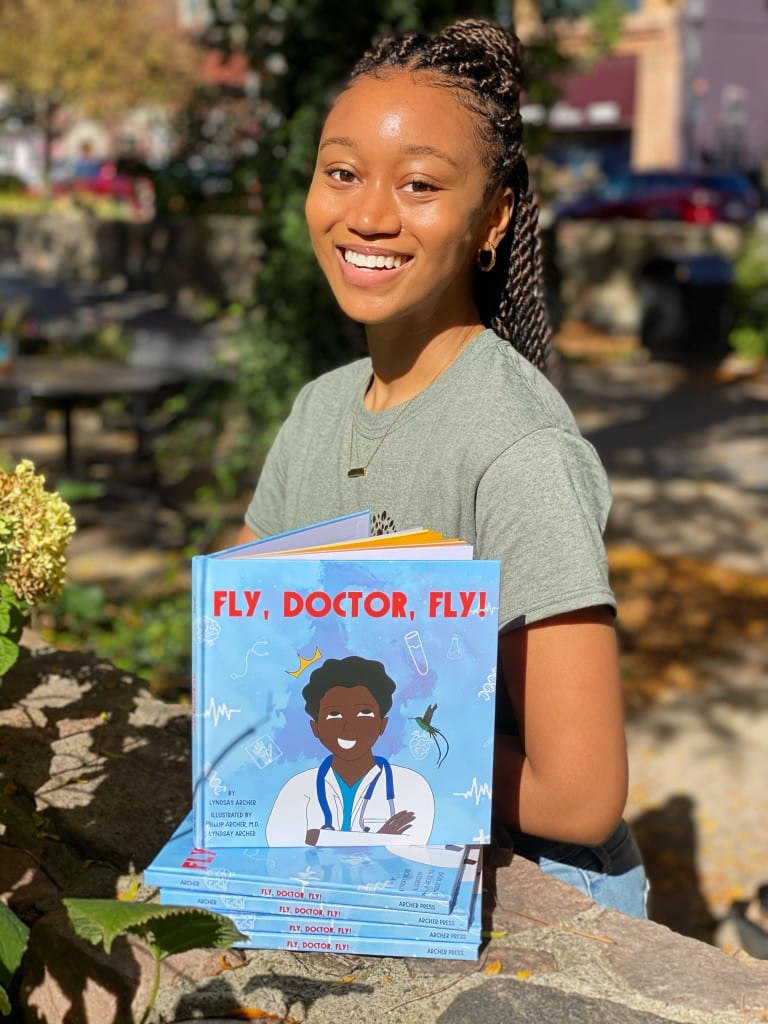
“The hope is to continue building more libraries and to collect as many diverse books as possible so that kids both here and in Jamaica have access to books that give them the space to explore new worlds,” she said.
Archer’s practice at Children’s Hospital is a part of Reach Out and Read, an initiative that encourages childhood literacy by distributing free books to families and doctors’ offices.
Literacy resources
Want to get your child reading? Here are some free literacy resources:
- Family Engagement for Literacy initiative provides tools to families in helping their children strengthen essential reading and writing skills
- The Michigan Alliance for Families compiled resources for parents to learn the foundations for their children’s literacy
- The Michigan Reading Association compiled a list of resources and reading lists for parents and kids online
Visit the Detroit Public Library’s kidzone for reading challenges, events, and of course, thousands of free books
Related Articles

116 portraits will transform vacant Corktown building into year-round cancer tribute
The concept grew out of Detroit Month of Design collaborations, when organizers began exploring how creative placemaking could address real community experience, as cancer is something nearly every family can relate to.

100,000th Coat Delivered: Empowerment Plan Celebrates Major Milestone in Detroit
Coat number 100,000 made its journey across Detroit this morning: departing from The Empowerment Plan’s east side headquarters to COTS Peggy’s Place.

3+13 Ways to Celebrate 313 Day in Detroit
March 13th — known locally as 313 Day — is Detroit’s unofficial holiday celebrating the city’s area code, culture, and community pride.