Head Start Parent Conference in Detroit equips Michigan families for advocacy
One-day convening prepared families to advocate for the early childhood programs they depend on.
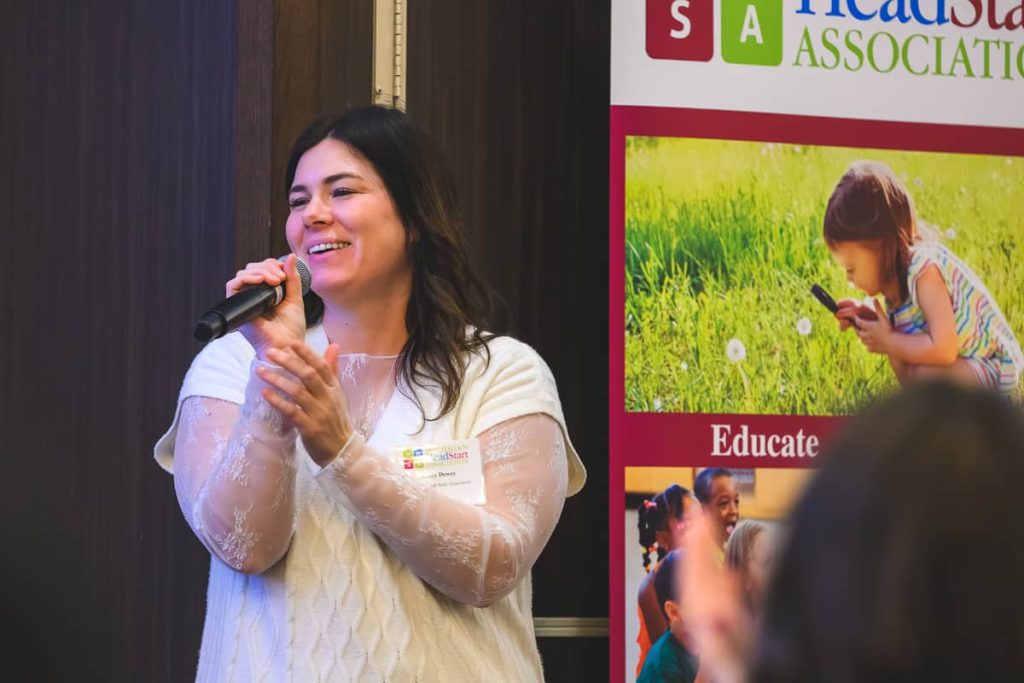
When parents from across Michigan traveled to Detroit on Jan. 14 for the Michigan Head Start Association (MHSA) Parent Engagement Conference, the goal was not simply to attend workshops or connect with other caregivers. The one-day convening helped families prepare to advocate for the early childhood programs they depend on — a goal organizers say remains especially important as federal and state leaders continue to debate changes to safety-net programs.
While the conference has since concluded, its focus on strengthening parent leadership comes at a time when proposed changes to programs such as Medicaid and the Supplemental Nutrition Assistance Program (SNAP) could affect access to health care and food assistance for low-income families.
Speaking about the purpose of the Detroit convening, Robin Bozek, MHSA executive director, says the organization’s work begins with a simple belief.
“The heart of all of our work is the belief that all children deserve an opportunity to succeed both in school and in life, regardless of the circumstances of their birth,” she says.
The MHSA serves as a statewide advocacy and leadership organization linking Head Start programs, families, and community partners. Head Start programs across Michigan directly serve nearly 30,000 children, providing early learning services along with developmental screenings, medical and dental referrals, and nutrition support for families. Parents play a particularly important role in sustaining those services.
“We’ve learned that when we go on the Hill [Capitol Hill] in Washington, D.C., or meet with legislators here in Michigan, the most persuasive messengers are the most authentic, and that’s parents speaking directly about the impact on their children,” Bozek says.
Preparing parents to advocate
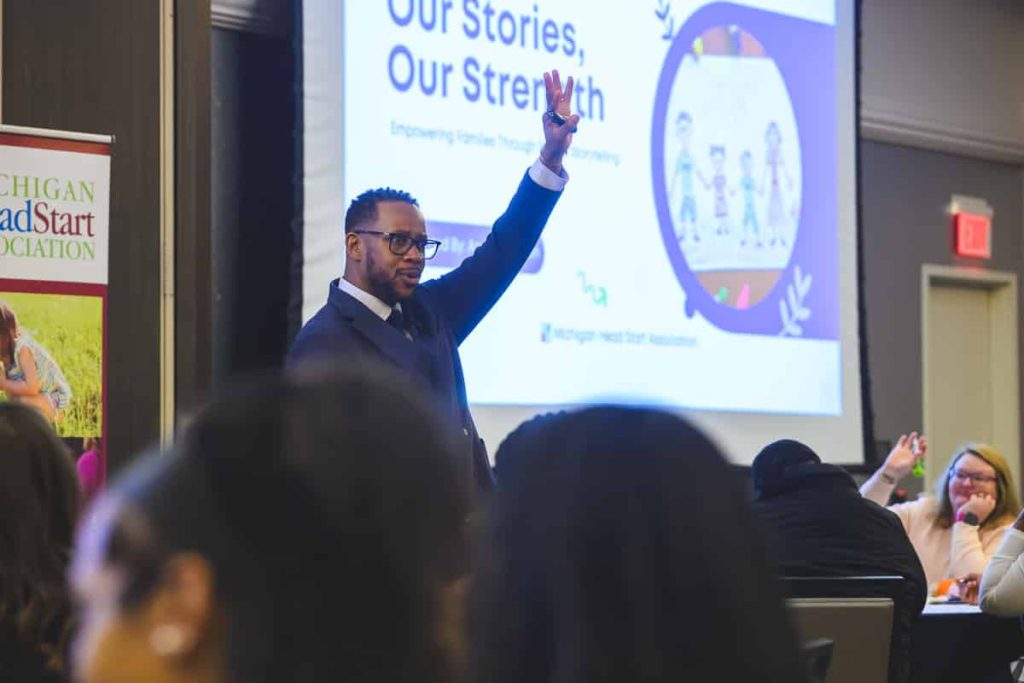
The conference centered on interactive workshops designed to build parents’ confidence in sharing their experiences with policymakers and community leaders. One session focused on storytelling as an advocacy tool, encouraging participants to reflect on how Head Start services have affected their children’s development and their family’s ability to work.
Parents often draw on those personal stories when meeting with legislators to explain the real-world impact of early childhood investments.
Bozek says that preparation is especially important as funding for safety net programs faces continued scrutiny.
“The impacts from those changes would mean that a lot of young children and babies in low-income families could be left without health care and food,” she says. “Parents are really important advocates because they’re the ones working with the specific, evidence-based benefits in Head Start.”
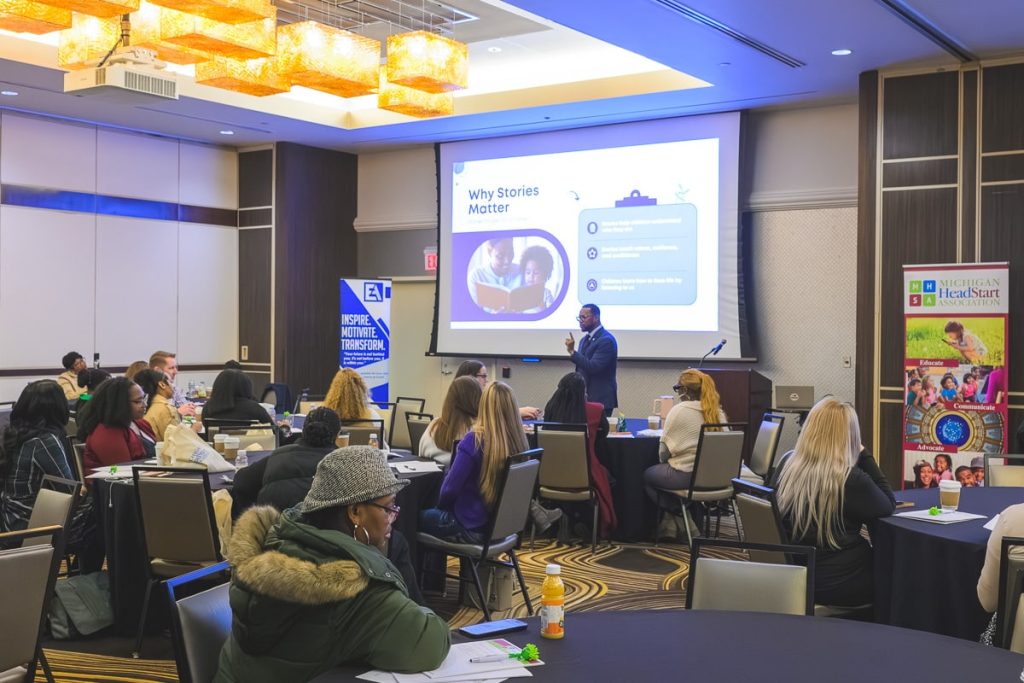
In addition to advocacy training, conference participants engaged in Parent Cafés where small groups discussed shared challenges and opportunities related to raising young children, accessing services, and navigating early education systems. Those discussions helped families identify common concerns that can inform improvements at the local program level.
Several sessions were facilitated by parents who serve on the Michigan Head Start Association’s board, reflecting the governance structure of many Head Start agencies. Parents participating in policy councils or advisory boards provide direct input on program operations, helping to shape decisions about services and supports offered to families.
Bozek says participation in statewide training events often has ripple effects beyond those who attend.
“It’s not just one impact. It’s a continuum,” she says. “Parents take that information back to their communities, share it with other caregivers, and provide feedback that helps programs better respond to what families are experiencing in their day-to-day lives.”
That feedback can influence everything from classroom supports to health service referrals, ultimately shaping outcomes for children enrolled in Head Start programs.

Beyond the conference
Some conference participants go on to participate in advocacy meetings with state and federal leaders. In April, Michigan parents are expected to join families from across the country in Washington, D.C. to discuss the importance of continued federal investment in Head Start. According to Bozek, those conversations often extend beyond child development outcomes to include economic impacts.
“Head Start allows parents to go to work because their children have a safe place to stay where they can learn and be cared for,” she says. “When funding is paused or programs are disrupted, it affects families’ ability to work, the local community and the economy.”
Resources shared during the Jan. 14 conference will be distributed to Head Start agencies across the state, ensuring that families who were unable to attend can still benefit from the training. Looking ahead, MHSA plans to build on the momentum from the Detroit conference by hosting a second parent engagement event later this spring with a focus on increasing accessibility for families in northern Michigan and the Upper Peninsula.
As policymakers continue to debate funding priorities for early childhood programs and related safety net services, empowering parents to share their stories remains a key strategy for protecting investments that support Michigan’s youngest learners.
Photos by Doug Coombe.
Early Education Matters shares how Michigan parents, child care providers, and early childhood educators are working together to create more early education opportunities for all little Michiganders. It is made possible with funding from the W.K. Kellogg Foundation.
Author

Related Articles

Where is She: Teen HYPE Creates Play to Raise Awareness on Missing Black Girls and Women
The play “Unseen” focuses on the realities of trafficking, the importance of child safety, the power of collective action and systemic accountability. The two-part play focuses on the societal symptoms that cause teenage girls to go missing.

What’s at stake for young families: Early childhood policy after the 2026 election
Anne Kuhnen, MLPP Kids Count policy director weighs in on early childhood education after the ’26 gubernatorial election.

Hope Starts Here stabilizing early childhood services in wake of policy changes
Long-term perspective keeps Hope Starts Here imperatives relevant despite policy changes.