Forestry funding helps bring Woodbridge affordable housing, horse barn, and ‘filter forest’ to life
Three Detroit grantees have ambitious plans for grant funds plans awarded for efforts to expand tree canopy and strengthen local green infrastructure.
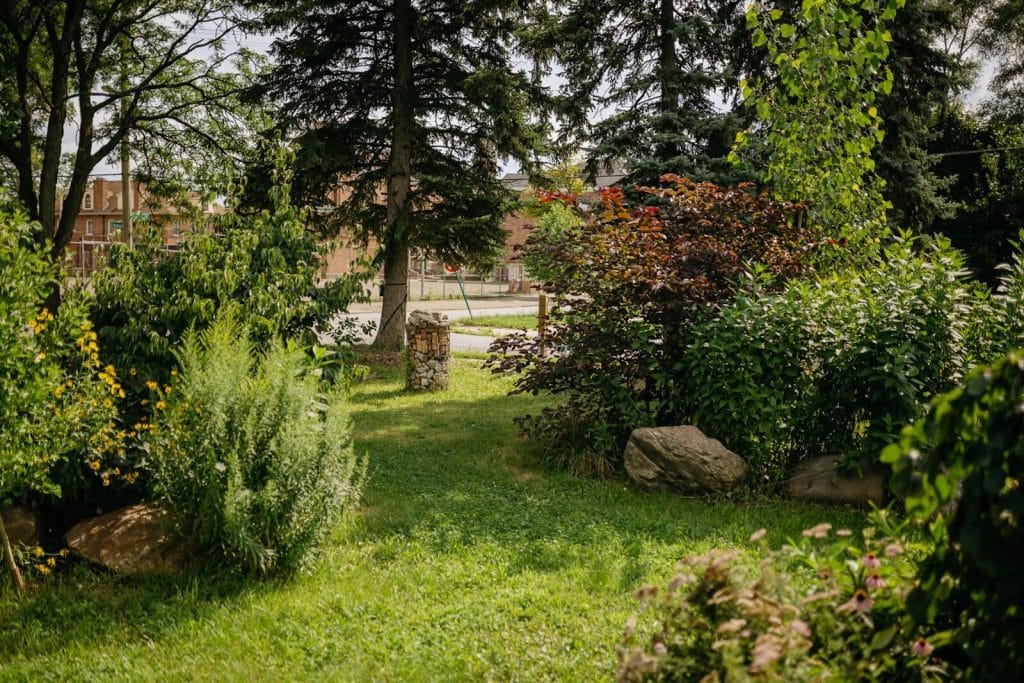
Whether connecting a new affordable development to a historic neighborhood, beautifying a nonprofit equestrian facility, or protecting residents from air and noise pollution, trees are the linchpin to three new Detroit projects funded under a state grant program.
Three Detroit organizations will receive funding for forestry projects under a grant program administered annually by the Michigan Department of Natural Resources, DTE Energy Foundation, and ReLeaf Michigan. The organizations – Arboretum Detroit, Detroit Horse Power, and the Woodbridge Neighborhood Development Corporation (WND) – are among 25 Michigan grantees that will each receive a share of $100,000 from the program, which supports efforts to expand tree canopy and strengthen local green infrastructure.
The Detroit grantees’ plans for their awards are ambitious. Arboretum Detroit plans to build a “filter forest” to protect against air and noise pollution. Detroit Horse Power is working on creating a more natural environment for a new nonprofit youth equestrian education facility. And the WND is seeking to strengthen connections between a new affordable housing development and the historic Woodbridge neighborhood. We checked in with representatives of each recipient organization about how they’ll be using their grant funds.
Welcoming new residents to Woodbridge
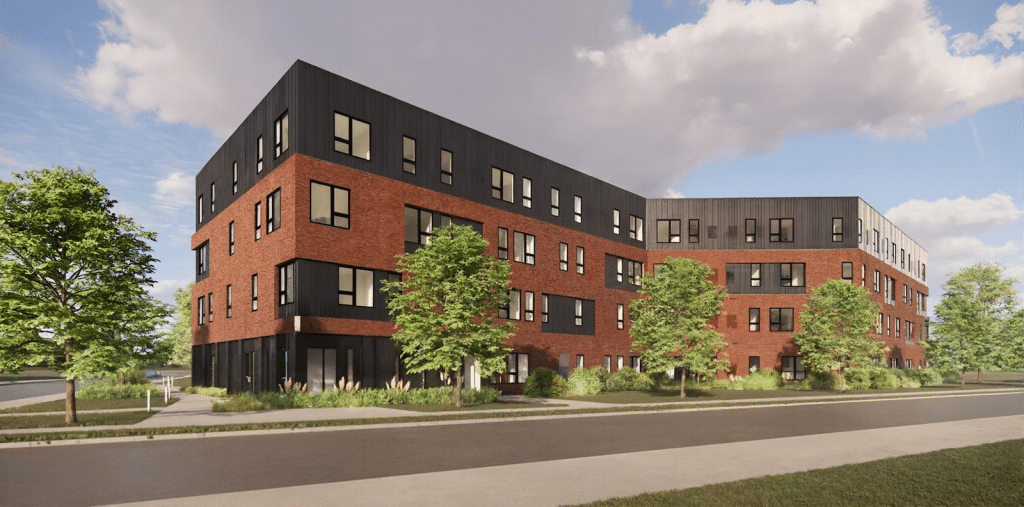
The Woodbridge neighborhood will add 60 new affordable housing units next year when developer Cinnaire opens a complex at 4401 Rosa Parks Blvd. in partnership with WND. The development will offer 40 one-bedroom and 20 two-bedroom apartments for tenants making 30-80% of the area median income. Christine Holmes, WND’s property development and policy director, says affordable housing is sorely needed in Woodbridge, but she notes that the new development lies on the opposite side of Rosa Parks from the “more intact, historic, close-knit” portion of the neighborhood. Holmes says she and her colleagues have been discussing how to ensure a sense of connectivity and unity between the new development and the rest of Woodbridge from square one.
“Obviously (the new development) is not going to look like a Victorian home, but … what are other things that can help tie it into the Woodbridge landscape?” she says.
Holmes says trees are one of the answers to that question. She notes that tree-lined streets are one of Woodbridge’s hallmarks, and the land at 4401 Rosa Parks was comparatively bare. While plans for the new development already included plenty of evergreen trees, WND’s $2,200 grant from the DNR, DTE, and ReLeaf will allow it to plant five additional trees: four crimson spire oaks and one Arnold tulip tree.
Holmes says the trees will provide an important symbolic sense of connection between the existing neighborhood and the new construction.
“The whole idea of connecting the neighborhood is important, not just for the existing neighbors,” she says. “You don’t want to just cross the street and all of a sudden be like, ‘Where am I?’ But for the people that live (at 4401 Rosa Parks), they’re going to be in Woodbridge. They are going to be our neighbors. And we want them to feel like they’re part of the neighborhood.”
Rooting an urban equestrian facility in the natural world
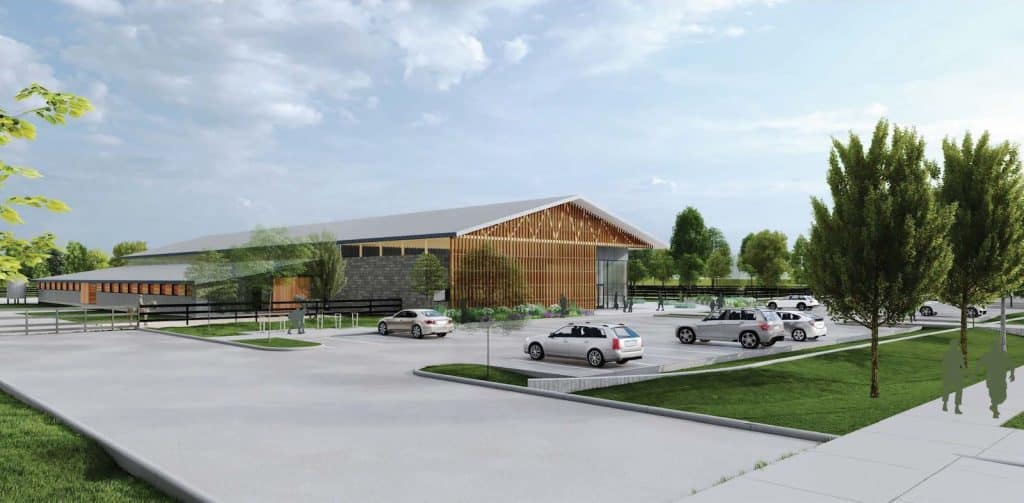
Since 2015, the nonprofit Detroit Horse Power has been providing free youth equestrian summer camps and after-school programs at partner barns outside the city of Detroit. But this fall the organization began construction on its own facility on the former site of the Paul Robeson/Malcolm X Academy at Linwood Street and Fenkell Avenue in Detroit. The new facility will accommodate up to 17 horses, indoor and outdoor riding space, and 10,000 square feet of classroom, office, and community space. Detroit Horse Power Executive Director David Silver says a “big theme” of the project is “creating vibrant communities that are rooted in the natural world.”
“We incorporated a tree planting plan into our project scope, but never had dedicated resources to support … adding to the tree canopy in our neighborhood,” he says.
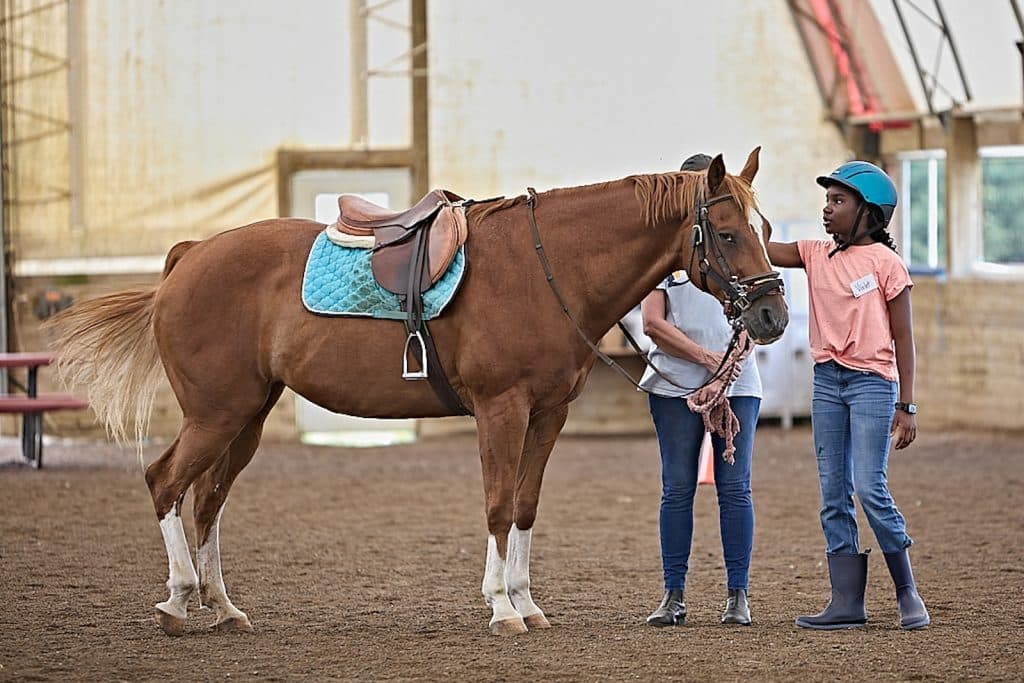
So Silver was excited to discover the DNR/DTE/ReLeaf grant program, which has awarded $4,000 to help Detroit Horse Power plant 70 trees on its 14-acre property. In addition to providing an important shady canopy for both horses and students, he anticipates the trees will “mature into beloved parts of our neighborhood’s fabric.” Silver notes that Detroit Horse Power’s property is adjacent to a park, Salsinger Playfield, which is adjacent to the Joe Louis Greenway.
“We think it’s really important to think cohesively about the kinds of recreational amenities available at this intersection and what an exciting gathering point this is going to be for people getting on and off the Joe Louis Greenway or enjoying a city park or coming to see what will become the largest urban equestrian center in the whole country,” he says.
Silver says that “obviously, horses in the middle of the city is an out-of-the-box project.”
“We’re grateful to DTE and the DNR for making this investment in our unique addition to our community, and that these resources are available to support holistic well-being of neighborhoods,” he says.
A “vegetative buffer” for Poletown East
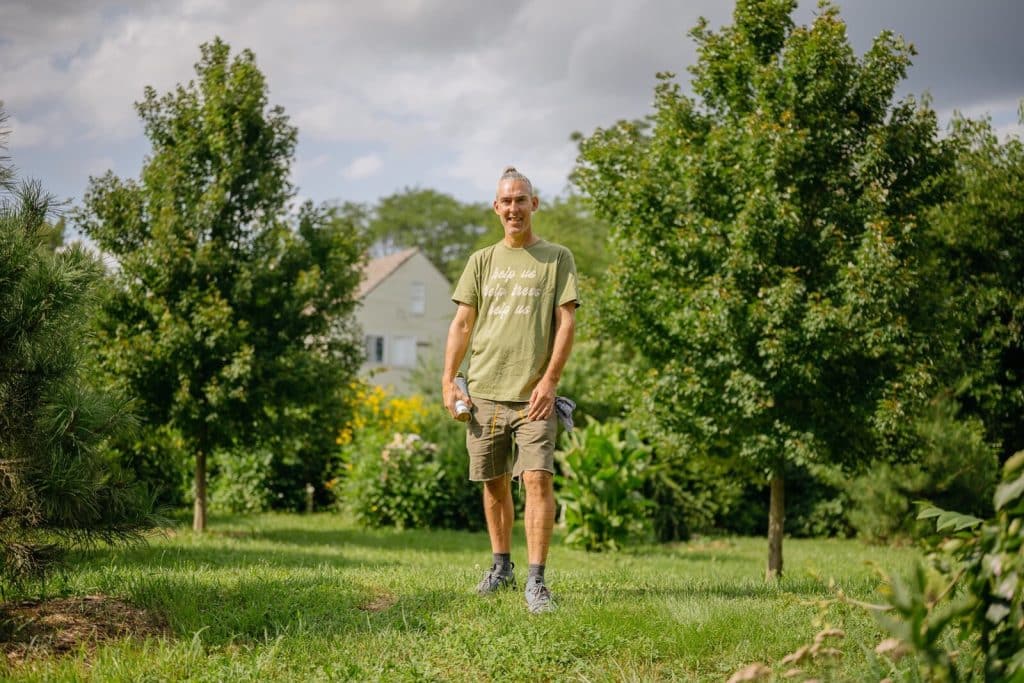
Andrew “Birch” Kemp has spent the past 20 years buying vacant lots in Detroit’s Poletown East neighborhood and filling them with trees, creating a sprawling network of parks open to all. Arboretum Detroit, the nonprofit he co-directs with Kinga Osz-Kemp, is the recipient of a $4,000 DNR/DTE/ReLeaf grant supporting the transformation of seven vacant lots into what Kemp describes as a “filter forest.” Kemp says the lots along East Warren Avenue between Moran and Elmwood streets will help to form a “vegetative buffer” between Poletown East and traffic on Warren. He says the forest will reduce noise and air pollution from Warren, while also creating a “visual barrier” where there was once “a bald-headed bunch of lots.”
“This is going to be … a pretty big park down there now that’s really close to a lot of our homes, and it’d be nice to just kind of forget about Warren as much as possible down there,” he says.
Work was already underway on the forest before DNR/DTE/ReLeaf grant funds were awarded. Kemp says the lots have “some of the worst soil we’ve seen,” due to rubble from home demolitions and garbage dumping. The nonprofit brought in 20 yards of compost and 50 yards of mulch to help remediate the soil before planting a variety of trees and shrubs.
Arboretum Detroit’s grant funds will go primarily toward buying evergreen trees to plant on the property. Kemp says some of those trees will be used to create a “little room” in the forest, 20 feet in diameter and surrounded by “a 30-foot-thick wall of evergreens.” He envisions it as “a really clean, safe space for poor air quality days.”
“It’s kind of an experiment, but we’ll see if inside of this room, the air quality can be better than outside of this room,” he says.
This year’s DNR/DTE/ReLeaf grant is actually Arboretum Detroit’s third. The nonprofit’s two previous awards supported plantings in Arboretum’s Oxygen Alley park and a park connecting the nonprofit’s Circle Forest project to East Grand Boulevard. Kemp says he and Osz-Kemp “so appreciate” the grant opportunity.
“We just need more trees faster, so if they can find the people to plant them, that’s great,” he says. “They’re really generous with it and they don’t ask a lot of questions. It’s just like, ‘If you’re putting the right tree in the right place, we’re happy.'”
Related Articles
Detroit has community buy-in for Solar Neighborhoods Initiative
With 139 square miles of land – some blighted or unused and ripe for repurposing – Detroit is well-positioned to develop solar farms to help power city buildings.

Detroiters lead grassroots efforts to fight food insecurity
In Detroit, neighbors and organizations are turning vacant lots, leftovers, and community fridges into lifelines in the fight against food insecurity.
Detroit youth feel the impacts of climate change, and they’re talking about it
Detroit is one of the most impacted cities by rising temperatures. Youth are speaking up about the impacts they face when it comes to climate change, and Green Living Science is helping kids pave the way to a more sustainable future.