Dwelling in Detroit
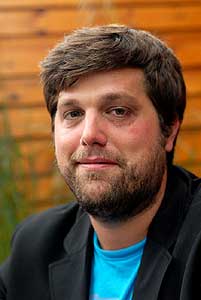
Sam
Grawe, executive editor of Dwell, the pre-eminent magazine celebrating
Modern architecture, talks cities, urbanism and style with Model D
during a recent Motor City stop.
Dwell executive editor Sam Grawe and I were wheeling into downtown
Birmingham a couple weeks ago. I was dropping him back off at the swank
Townsend Hotel where the Troy-based Michigan Design Center had put him
up before his afternoon engagement.
Grawe had just gotten the
nickel Model D tour of the Motor City. He’d hopped a red-eye from San
Francisco to Detroit for the appearance, but he spared a couple hours
to lunch with Model D and to get his first glimpse of Detroit city.
As
we drove into the shining O.C. city, he pointed out a typical
Birmingham high-end shop and made a snarky “you know you’ve arrived
when you’ve got one of those” comment.
That’s not exactly what
you’d expect from one of the driving voices behind a magazine that
celebrates good taste in the form of Modern design and architecture.
But it’s obvious Grawe is enamored with cities and with urban living.
Then
he confirms it. Pointing to the Birmingham streets he says, “You know,
it’s interesting because people outside think that this is what people
from Dwell are interested in. Actually, what’s more interesting to me
are the crumbling factories and the city landscape. That’s far more
interesting to me.”
The nickel tour
After just a quick tour, Grawe got Detroit.
 We’d
We’d
driven the length of the Woodward corridor from Maple Road to Campus
Martius, out of the bustling Royal Oak and Birmingham areas, past the
lush green landscape of Palmer Park and into the landscape of crumbling
factories in Highland Park and 1920s mansions in Boston-Edison. We’d
noted the bustling and redeveloping Midtown and the ongoing reinvention
of Brush Park. We then sidetracked along Cass to avoid Tigers gameday
traffic and talked about the work yet to be done. And finally we landed
in the revived city center of Campus Martius, noting the newness of the
Compuware Building and the Ernst Young building and the old beauties
like the Guardian Building and the Gotham City-like splendor of the
Penobscot.
If we had more than a couple hours, we’d have added
the Mies van der Rohe town homes of Lafayette Park, Tyree Guyton’s
Heidelberg Project and coffee inside the Guardian Building.
With
only lunch on the agenda, we instead took the bumpy ride down pothole
central (i.e. Michigan Avenue), past the shell of Tiger Stadium and the
gutted storefronts Phil Cooley and his crews have been hollowing out
down the street from their Modern oasis – Slow’s Bar-BQ.
The
story is well-told by now, but Cooley and his Los Pistoleros
design/build crew have taken a rotted out abandoned storefront and
created a virtual hotspot. The new patio is s a Modern oasis, with
poured concrete tables and bright blue chairs and angular woodwork, and
could easily fit into a trendier urban environment like Grawe’s
hometown of San Francisco.
Yet, peek through one of the
peepholes in the fence and you know this is Detroit. The ominous vacant
train station looms over vacant lots. But then you see work underway at
John Lopez’ Mercury Bar, and Los Pistoleros’ cool façade at Chris
Koltay’s recording studio.
If you want a snapshot of Detroit — its future, its past, its failings and its successes — this would be it.
At lunch in the Modern world
Over
lunch we talked about urban living, what Dwell and Detroit have to do
with each other, and Modernism’s place in a Rustbelt city.
Dwell
is a great resource for things like banana-fiber rugs and uber-cool cat
litter boxes, and to learn about lounge chairs that can change your
life. All the sleek hipness may seem out of place inside the city
limits, but the national magazine also explores issues that hit home in
a city like Detroit — things like sustainable building, urban living
and how architecture impacts cities.
 Over pulled pork
sandwiches and Arnold Palmers (half lemonade, half iced tea — the
teatotallers’ drink of choice at Slow’s), we sat down with a couple
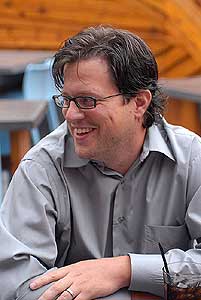
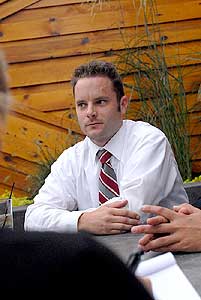
Detroit enthusiasts. Joining us were Francis Grunow —Model D
contributor and executive director of Preservation Wayne — and David
Knapp — architect and head of AIA-Detroit’s urban priorities committee.
We talked about the renaissance of loft living, and what’s attracting young people back to cities.
Grawe
has been with Dwell for almost all of its six years. At the beginning
he said, “the loft thing and urban redevelopment happening in places
like San Diego and San Francisco, but it wasn’t a trend yet.” Because
the magazine is dedicated to showing that good design and good
architecture exist beyond New York and L.A., finding subjects wasn’t
always easy. As urban living has caught on, it’s become much easier.
We’ve seen it here in Detroit. Find an abandoned structure in Midtown, and I’ll find you a loft project under construction.
Valuing diversity, we all agreed, has been key to rebuilding cities.
“People
seem to be a lot more accepting of other races. I think that mentality
probably does correspond to a younger age group. There has to be an
openness and willingness to accept different cultures,” Grawe said.
“That’s the amazing thing about San Francisco. It’s so, so diverse.
Rich people, poor people, Asian people, black people, Hispanics. It’s
all there.”
 “Detroit is very diverse, too,” Knapp adds. “But
it’s very much segregated, isolated. It’s there, but it’s all spread
out. But the people who are starting to move downtown, they understand
the importance of the diversity.”
“There still are big hurdles,”
Grunow adds. “I just think valuing the city and the concept that it can
be a valuable place — that’s a huge hurdle still. But there’s an
undercurrent of people that care about it that are out here and living
here.”
Grunow and Knapp talked about what makes Detroit
attractive to creative people, and how you can open a place like Slow’s
in another big city and get lost in the shuffle, but here you’ve made
your mark. And they discussed the possibility and beauty inherent in
abandoned places like the train depot behind us.
Then we talked
about Modernism, about the potential for prefab housing to catch on in
places like Detroit. And we talked about the impact big, new projects
can have on a city.
“A new building in a Modern style, something
of the moment, shows more care. It’s not just taking something from
somewhere else and trying to apply it to here. It also shows that you
are looking toward the future and not just patching together the past,”
Grawe says.
For example, he points out that “so much was made
of the Art Museum of Milwaukee, and all of a sudden Milwaukee is
cutting edge.”
Near the end of the conversation, Grawe talked
about how people should feel connected to architecture, even though the
topic can seem too academic or inaccessible for nonarchitects.
“Architecture
is too often just a conversation between architects. In Dwell we try to
talk about architecture in a way that’s important to everyone.
Architects could sit and talk all day to each other about civic
revitalization plans and urban planning. Everyone should feel
comfortable talking about it. People should have an opinion on it.”
Grawe
was in and out of Detroit in just a few hours, but his observations
ring true. As this city shapes what it will look like in the future,
people should be engaged in discussions of what it should look like and
how we’ll get there.
Photos:
Sam
Grawe, David Knapp, Francis Grunow and Clare Pfeiffer Ramsey at Slow’s patio
Sam
Grawe
Francis Grunow
David Knapp
All Photographs Copyright Dave Krieger
Related Articles
Leading with Care; Model D’s Newest Managing Editor, Kyla L. Wright, on legacy, community, and stewarding Detroit’s stories forward
In a city where Black culture and innovation shape every layer of life, representation in media leadership is not only symbolic: it is essential. I am honored to steward this publication forward with that responsibility in mind.
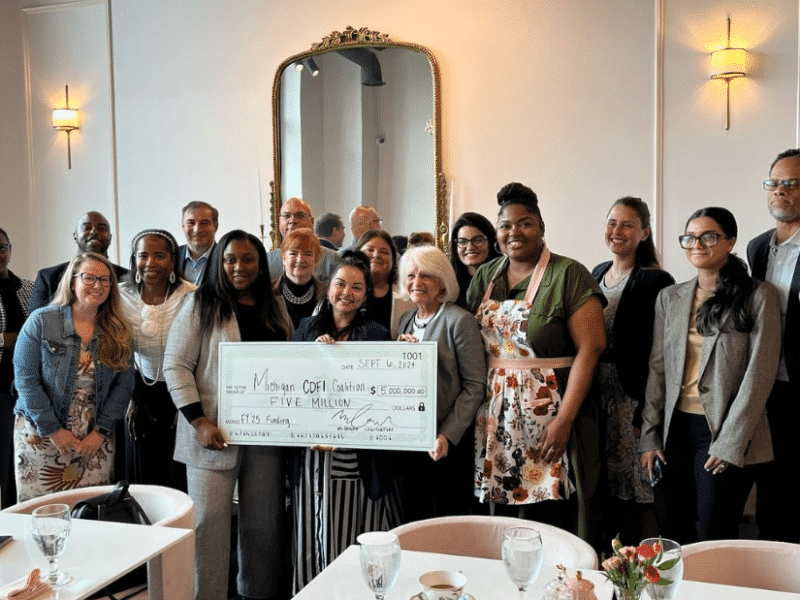
Detroit CDFI Coalition celebrates impact, advocates for funds to further propel growth, prosperity in communities
Detroit CDFI Coalition members continue to collaborate together, and advocate collectively for consistent Michigan CDFI funding to further propel their impactful mission-driven work in communities.
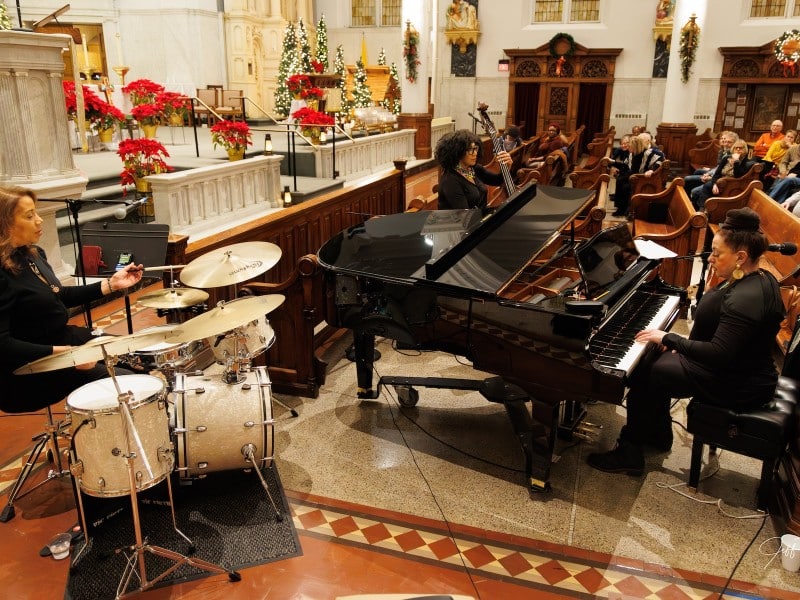
Concerts for Caring: Musical series raises funds to help Detroit’s homeless
Around 8,500 Detroiters are going through a stage of homelessness each year. A concert series from the Detroit’s Composer Laureate is offering help and hope.