Detroit students bring food to seniors’ doorsteps
Older people are especially vulnerable to food insecurity for a variety of reasons. Detroit Catholic Pastoral Alliance fights that with food boxes – and has assembled a multigenerational team to make the deliveries happen.
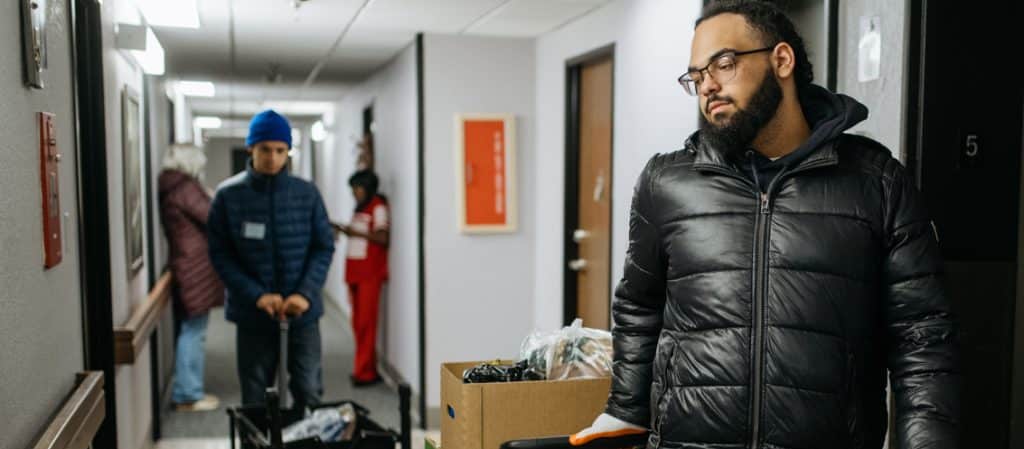
Hunger, like so many of society’s ills, falls most harshly on the most vulnerable. Lack of access to transportation and to nearby stores, fixed incomes, health conditions that affect nutritional needs, and limited mobility all affect seniors in particular.
However, food banks and local organizations have stepped up to create programs that deliver food to low-income seniors, providing them with monthly deliveries of fresh food boxes.
One such program is organized by the Detroit Catholic Pastoral Alliance, which distributes food boxes at two senior housing complexes in the Gratiot Woods neighborhood. The seniors in these buildings are all low-income, and are finding their food budgets increasingly squeezed, between cuts to SNAP (formerly known as food stamps) and rising grocery prices.
“When we first started to do this, maybe people wouldn’t be home, and we would have to call them,” says Joyce Francois, community and parish outreach director for Detroit Catholic Pastoral Alliance (DCPA). “Now everybody is home — they don’t want to miss that box. There’s always a need.”
Seniors often lack access to a car or have given up driving, which makes simply going to the grocery store a difficult or impossible task. Francois notes that the neighborhood where they work, Gratiot Woods, doesn’t have many grocery stores and the ones they do have require seniors to cross six lanes of traffic on Gratiot Avenue. DCPA receives some funding to charter a bus once a month to Walmart, where seniors can buy food and other household items. “When we initiated this program, they all wanted to get to the grocery store instead of something fun,” Francois says.
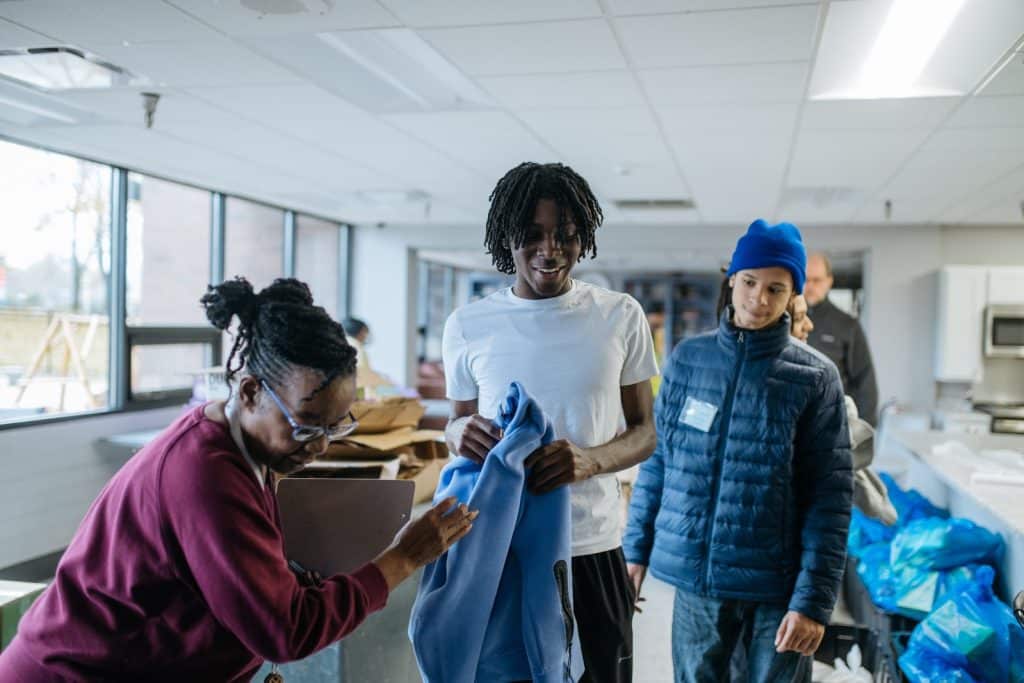
For the food box deliveries at the senior housing sites, packing and processing hundreds of boxes, as well as getting them into seniors’ apartments, requires a lot of person power. DCPA teamed up with Covenant High School East nearby to hire a crew of students to help on distribution days. Covenant Schools provides at-risk youth and students who have previously dropped out of high school with opportunities to earn a high school diploma.
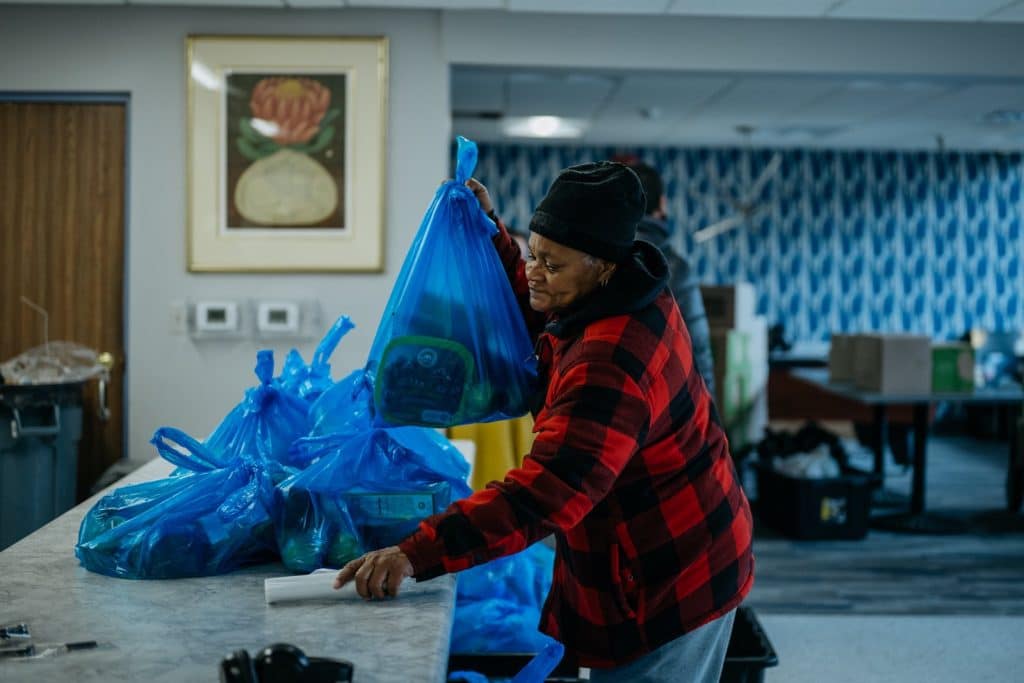
Every month, a crew of about a dozen students joins DCPA staff and senior volunteers from the building to pack bags of food and load them, along with food boxes provided by Gleaners or Forgotten Harvest, onto wagons to deliver them directly to seniors. That includes carrying the heavy boxes into apartments and placing them where they can be easily unpacked, so that seniors who might struggle with bending or lifting a heavy box don’t need to endanger themselves.
Ilijah Kacovski, a student at Covenant Schools, began helping out with deliveries about six months ago, at the encouragement of Covenant House principal Nehemiah Thomas. “I just fell in love with it,” he says. “I fell in love with the people, fell in love with the work.” He says he serves the community regularly, and hopes someday, when he himself is old, there’s someone there to help him.
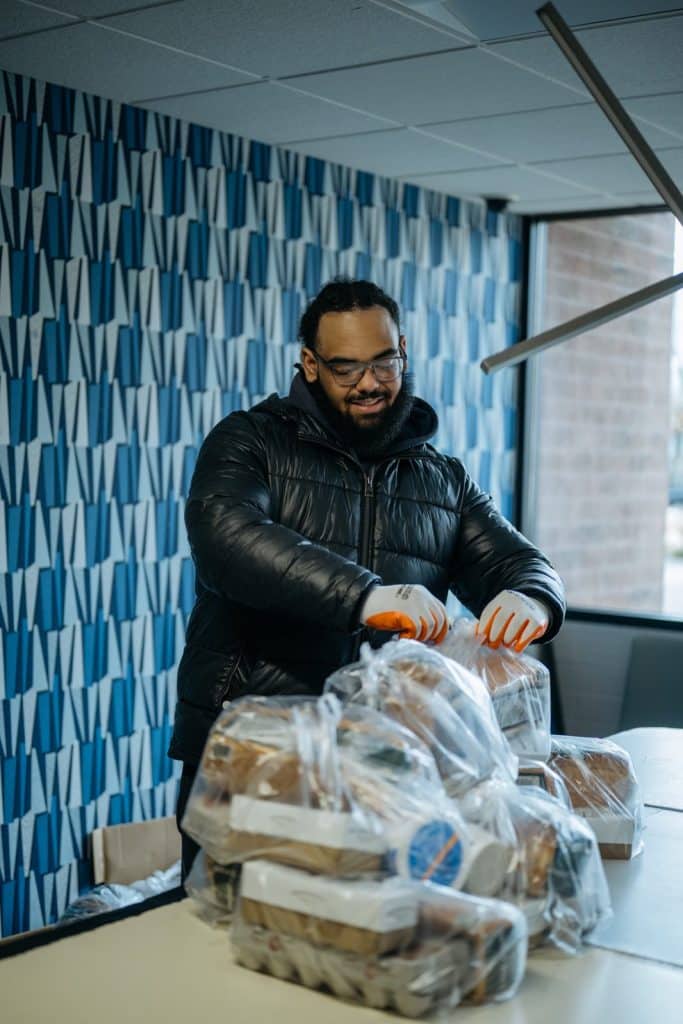
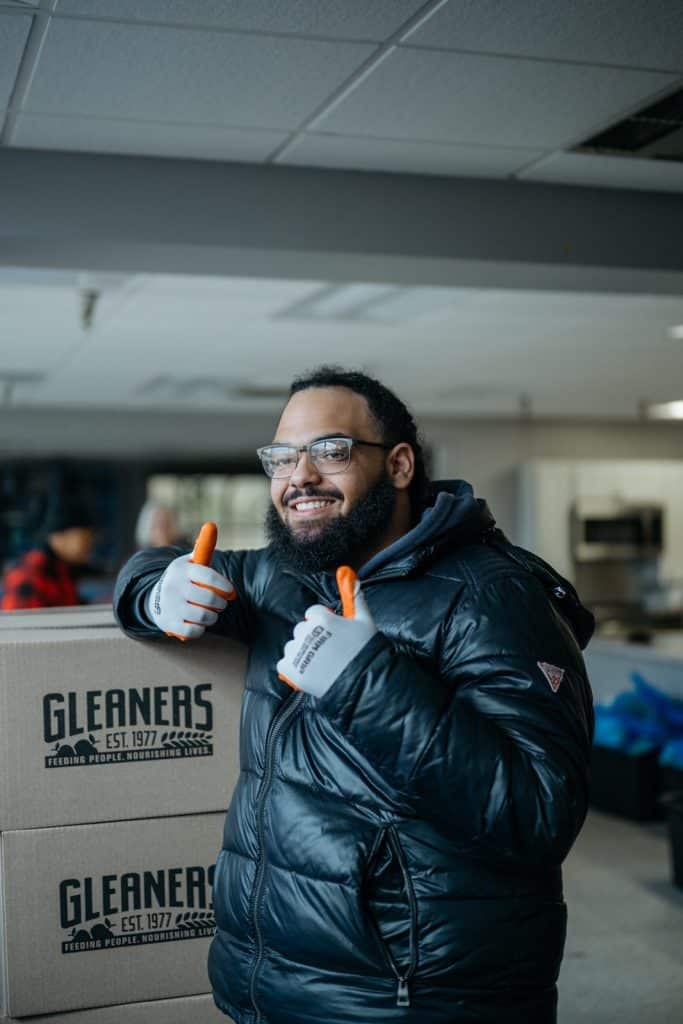
He and his classmates take a lot of pride in making sure deliveries go well for the residents. “We make stuff easy for them, make them feel comfortable,” says Kacovski. “That’s what I think the most important part of our job is.”
Isaiah Fowler was at Van Dyke Place for the first time on a recent morning. He said he wanted to join the delivery crew because he values helping people. “I chose to do this because I think it’s the right thing to do to help people,” he says. “I’m not going to stop until everybody gets helped.”
Recently, DCPA began working with a program that allows people to order a produce box and have it delivered by Door Dash drivers to people who don’t live in one of their senior buildings. Door Dash pays the drivers for the deliveries, which are helpful for seniors without transportation or who have mobility issues.
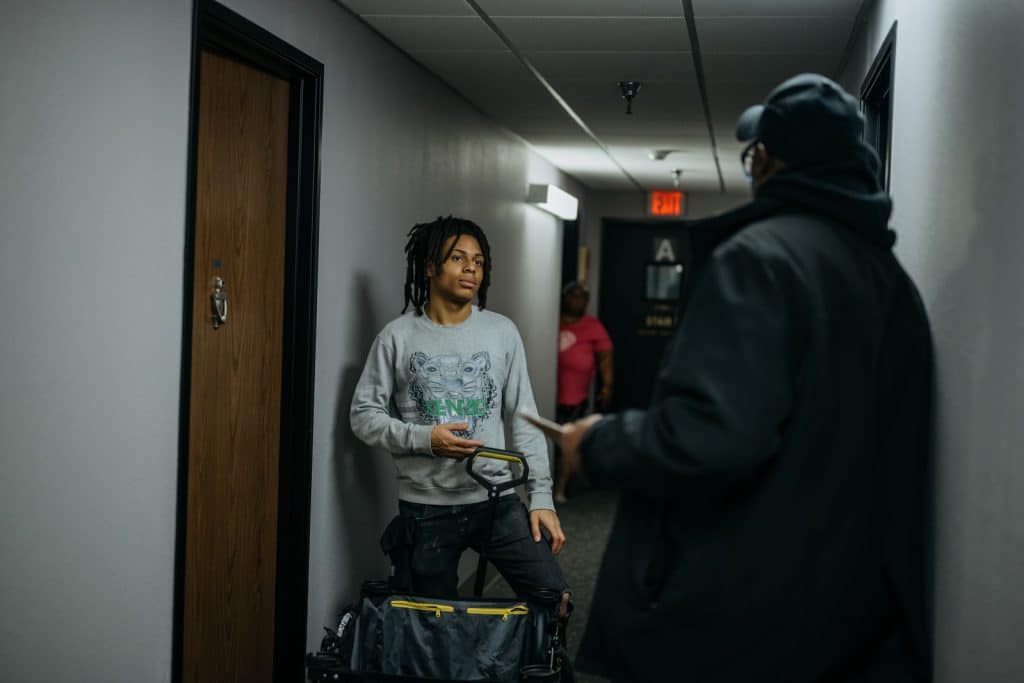
Photo: Steve Koss
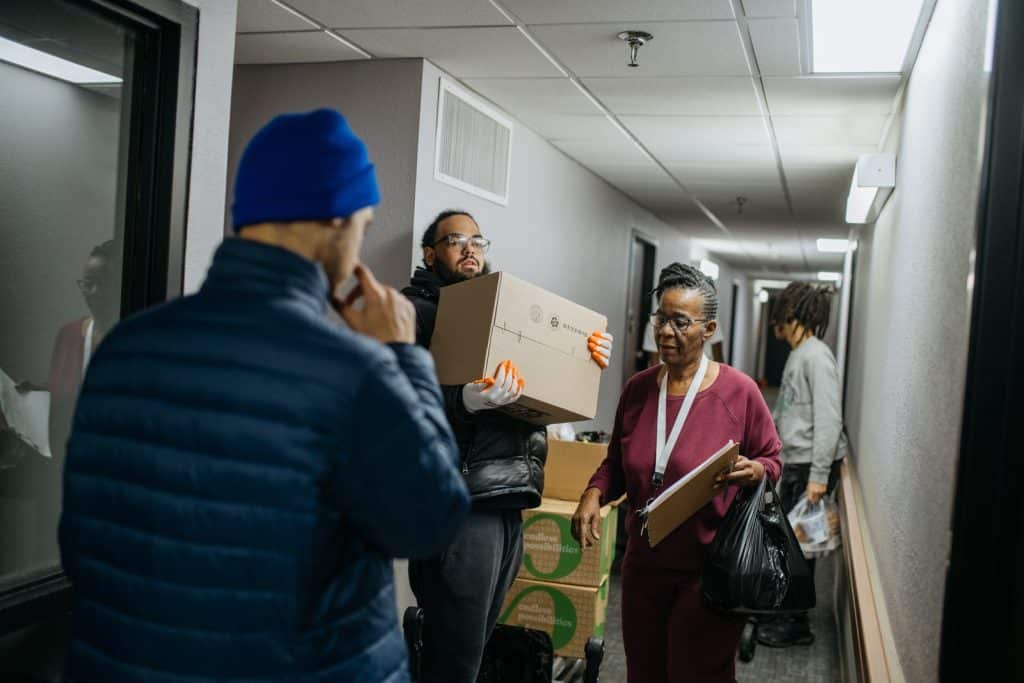
More than 20 people have signed up to receive the deliveries in just the first few weeks. Carmen Hall, a resident at Van Dyke Place, one of the buildings served, helped connect seniors who live nearby with the program. “I came from that neighborhood and know there are a lot of struggles down there, and I know a lot of people would appreciate it because it’s hard times out here,” she says.
Those hard times are exacerbated by the government’s recent cuts to SNAP and aid to food banks, leaving organizations that help people meet their food needs more stretched than ever. (This story was reported during the government shutdown that led the administration to cut off SNAP benefits entirely).
Francois has so far been able to find funding to continue these programs, along with another program called Cooking Matters that helps SNAP recipients prepare the food they’re given through cooking classes. Cooking Matters’ federal funding was cut, but Francois found private funding to continue it this year.
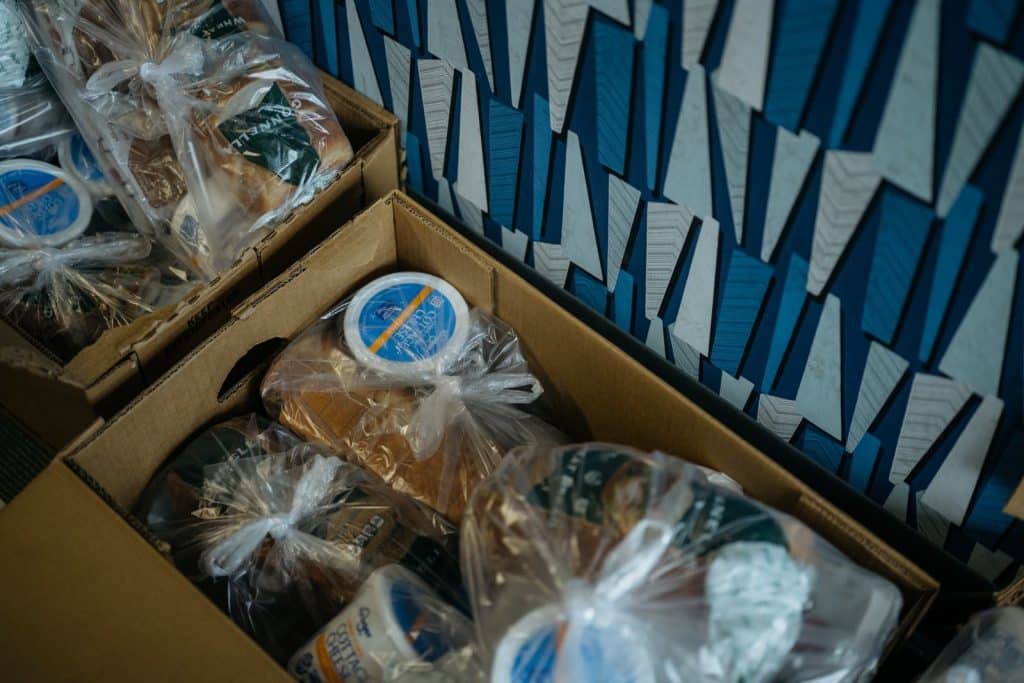
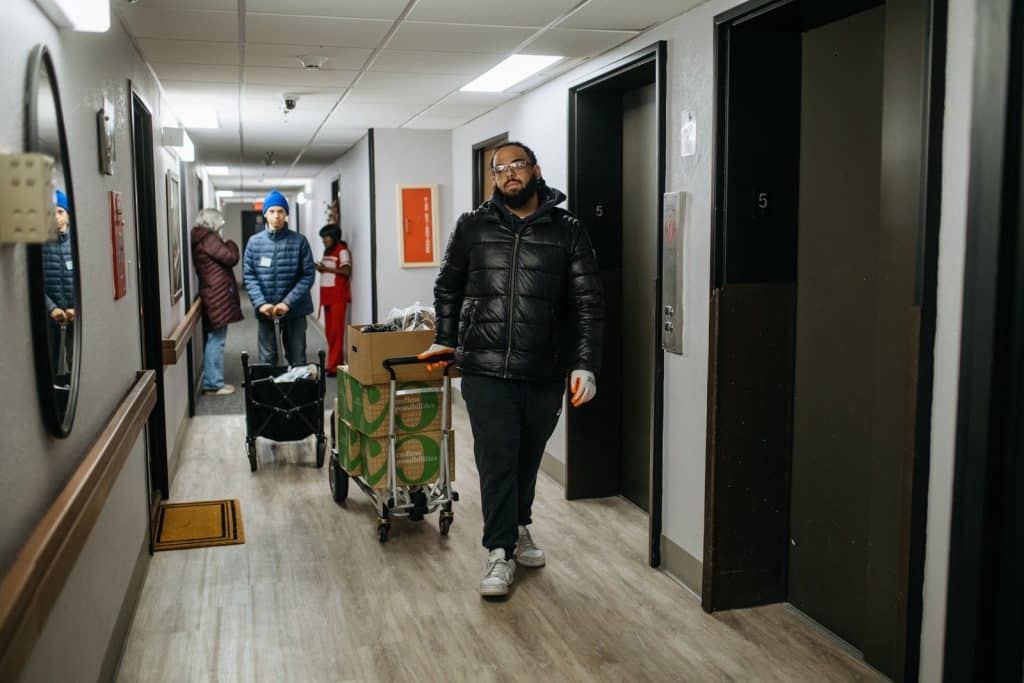
Photo: Steve Koss
Despite the grim outlook for food assistance programs, Francois says she remains hopeful that DCPA will continue to find ways to help vulnerable people be fed. Donations help to keep the organization going, as well as foundation support. “God says ‘trust me’ every time I pray,” she says. “We’re figuring it out, and we’re going to keep moving.”
Resilient Neighborhoods is a reporting and engagement series examining how Detroit residents and community development organizations work together to strengthen local neighborhoods. It’s made possible with funding from The Kresge Foundation.
Related Articles
Detroit has community buy-in for Solar Neighborhoods Initiative
With 139 square miles of land – some blighted or unused and ripe for repurposing – Detroit is well-positioned to develop solar farms to help power city buildings.

Composting project empowers Detroiters to reduce food waste, protect the environment
Food waste makes up one-quarter of landfill waste and contributes to more methane emissions than other landfill materials. The Detroit Community Composting Collective Project is out to curb food waste by training backyard composters.
Detroit CDFI Coalition celebrates impact, advocates for funds to further propel growth, prosperity in communities
Detroit CDFI Coalition members continue to collaborate together, and advocate collectively for consistent Michigan CDFI funding to further propel their impactful mission-driven work in communities.