Curfew and Closed Doors: Detroit teens speak on the lack of youth spaces
Detroit teens share how curfews, safety fears, and limited hangouts are reshaping what it means to grow up — and have fun — in the city.

Teen HYPE: Voices of Detroit’s Youth takes an honest look at what young people in Detroit are facing — from school and safety to opportunity and belonging. Produced by Model D in partnership with Teen HYPE, the series invites readers to listen, learn, and reflect.
“The Scene,” the beloved local dance show produced by Detroit’s own WGPR, will always live on, although it, and its successor, “The New Dance Show,” haven’t had an on-air dance party in years.
Reruns of the two shows first found new life on local public access channels, then as clips or full-on episodes on YouTube. Now, spend any time in Detroit, and chances are your TikTok algorithm will feed you clips from the show from curators of history, and they’ll definitely reach viewers outside the area on the youth-skewing app.
But those clips are also a reminder of just how good Detroit youth had it back in the day. Most of the dancers were in their teens and early 20s, and if you were a kid in Detroit in the ’80s or ’90s, you could go dance in front of WGPR’s cameras, or off-camera at the many teen social clubs that were in the neighborhoods. You could go to Belle Isle unchecked and without paying a fee, or you could save up and take a ferry to Boblo Island and ride every attraction in the park. You could go to Hart Plaza to go shopping along one of many business corridors, and you could get to those places with buses that went all over the city, or an affordable used car bought with cash from an after-school job.
So, what does it look like to be a teenager in Detroit today? Well, no dance shows, that’s for sure. But also, public places like Hart Plaza now have curfews, taking the bus seems like a chore, and even if you did have a used car – which now averages at $25,000 just to get it off the lot – the number of teen-friendly hangouts like roller rinks and bowling alleys have dwindled to the point where they’re few and far between across the city.
Having things to do as a teenager has been on the minds of Teen HYPE’s youth for a minute now, as it was one of many themes explored in the annual play that the youth spent most of the previous year writing and staging. This summer, some teens in the program said that even as temperatures rose just as high as all the new buildings downtown, they spent a lot of time indoors.
“It’s unfortunate, because it’s like, a teenager thinks that they have to find their place and feel like they have to be invited to the party, and that shouldn’t be the case,” Lesya, one of the teens, says in a discussion.
In other words, teen placemaking was evident, and parties were all-accessible. But now, it seems like adults are the only ones having fun. When’s the last time your child had a chance to put on formal wear to see their favorite Atlanta rapper?
“There used to be skating parties and like, going to arcades more conveniently, going to more amusement parks,” Lesya says. “People don’t even do that. And especially the curfew, I feel like that has affected a lot of people as well.”
In response to an uptick of youth-related violence, the City of Detroit mandated that minors 15 and under cannot go unaccompanied without an adult from 10 p.m. to 6 a.m. Curfew violations carry fines up to $500 and possible jail time for an offender’s parents.
On one hand, some teens say they agree that there should be some effort to curb violence and other crimes. On the other hand, if you wanted to, say, see a movie in Detroit proper, you’d have to go to one of two theaters in the city and make sure that the showtime is well before 10 p.m. if you’re planning on taking the bus home after.
It’s those conundrums that leave teens searching for opportunities wherever they may be, but even businesses and organizations can be restrictive.
“There’s organizations that only accept certain people, like, ‘oh, you have to be like this person, or have this type of thing,’” says Jessie, another student.
She and another student point to a noteworthy Black social club that shares its name with an age-old nursery rhyme and a Ray Parker Jr. song. Though chapters may differ by location, the leadership organization Jack and Jill, which has a Detroit chapter, has been known in some corners of Black America as being restrictive. It is designed for families, but was once only for well-to-do ones. And “families” tended to exclude single-parent households, for example.
“There’s a lot of different requirements, and not everyone has the same opportunities all the time,” she adds.
The teen conversations about equity and access come at a time when Detroit mayoral candidates are campaigning on those talking points and a larger statewide conversation about entertaining – and retaining – its younger residents. But the grown-ups are often talking to themselves.
Lesya lives in Westland and commutes to the youth organization’s location in Detroit’s Rivertown neighborhood. As a resident of the suburbs, she says things like the teen curfew only add to negative perceptions and stereotypes about Detroit – an age-old city vs. suburb debate that predates this young woman’s parents.
“With the curfew being put out, it only leaves the places that I don’t want to go, and not like the riverfront. The riverfront is the most common place that there is to me. It’s easy access. And so when I can’t go to it during a certain time, I feel like I should just be able to,” she says. “It’s like, ‘dang, well, I might as well just stay at home.’’
“It’s too limiting,” Lesya adds about youth options in Detroit, “and sometimes, all people really want to do is just have fun, but we can’t have fun, we’re not allowed to.”
For many of Detroit’s teens, having fun isn’t a frivolous want — it’s part of feeling connected to their city.
Related Articles
Spruce up in Southwest Detroit
Infrastructure is powering southwest Detroit’s small business resilience with help from Southwest Detroit Business Association.

How these two Detroit physicians are saving the bedtime story
Dennis and Archer, both Black doctors and authors in their own right, have used the trajectories of their careers to serve as representation for the generations coming after them.
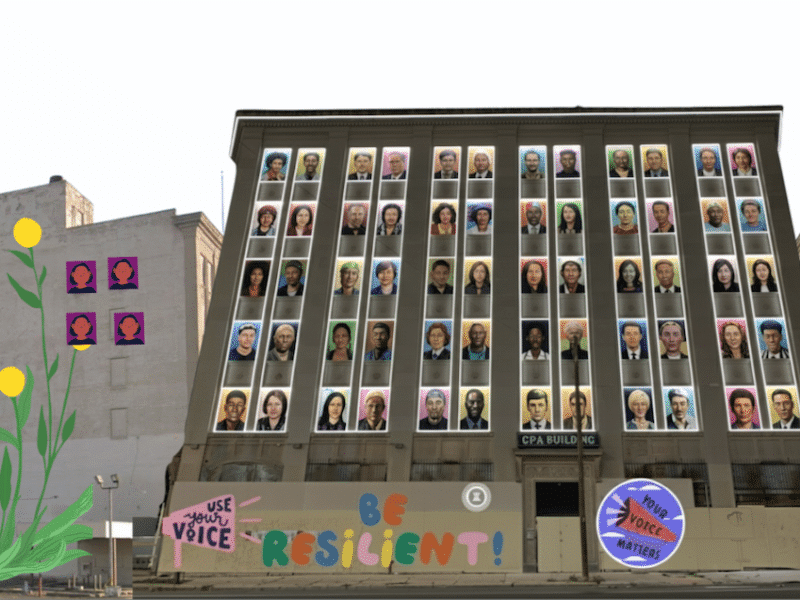
116 portraits will transform vacant Corktown building into year-round cancer tribute
The concept grew out of Detroit Month of Design collaborations, when organizers began exploring how creative placemaking could address real community experience, as cancer is something nearly every family can relate to.