‘Close Friends’ and Real-Life Risks: How Detroit Teens Watch Out for Each Other Online
Today’s teen see potential threats unfold right on their phones. And when they see something, they say something.
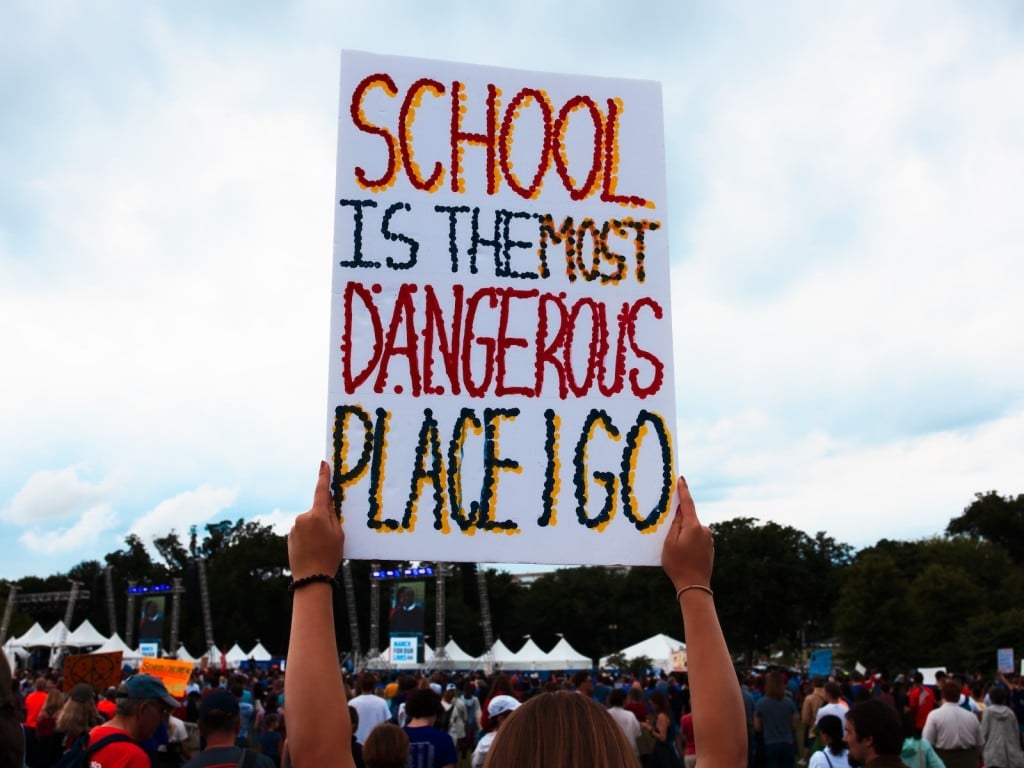
Teen HYPE: Voices of Detroit’s Youth takes an honest look at what young people in Detroit are facing — from school and safety to opportunity and belonging. Produced by Model D in partnership with Teen HYPE, the series invites readers to listen, learn, and reflect.
An Instagram user’s invitation to a fellow user’s Close Friends circle is usually taken as an informal nondisclosure agreement, where all parties keep what’s behind the green ring discreet. But for many Detroit teenagers, discretion can take a back seat — especially when exposure might help save lives.
During a series of conversations with Teen HYPE participants this summer, students shared how they spot dangers online and navigate the rapidly evolving etiquette around what to report and what to ignore.
For older generations, school safety threats came mostly in the form of notes or prank phone calls. I told the teens the Columbine High School shooting happened when I was a freshman in high school — a moment that forced schools to rethink how they monitored threats, long before smartphones existed.
We learned to be aware if a fellow student suddenly had a shift in mood and would make verbal threats of violence. We made mistakes, too. We relied on stereotypes about who seemed “dangerous” and often missed more complex warning signs. It wasn’t a perfect system — not even close.
Today’s teens, however, see potential threats unfold right on their phones. And when they see something, they say something.
“They’ll create secret accounts where only certain people follow them,” says Miles, one of the Teen HYPE students. “And then they would write things and choose the people to check their stories.”
Unlike the “no snitching” era many millennials grew up in, teens today say they take no chances.
“It prevented a school shooting. It prevented arson. It’s just preventing a lot of stuff,” Miles says. “They just make sure people, like, don’t post anything bad on their private stories. And if they do, they get found out.”
It’s a chilling reality that school shootings have become an ongoing concern for kids, sometimes as young as kindergarteners.
“I was looking into a story about the MSU shooting two years ago,” says Jessie, another Teen HYPE student. “One of the survivors of that was a Sandy Hook survivor. A person should never in their lifetime have to experience something like that twice. So even if it’s posted as a joke or something, there are real people out here who have survived things like that — who have PTSD from that.
“Even if it’s just a joke, like, it’s never something that should be taken lightly.”
Students shared several real examples:
- A written threat in someone’s Close Friends story. A classmate told their parents. The school intervened.
- Anonymous tip lines or apps allow students to alert adults quickly when something feels off.
- Screenshots are everything. A student flashing a gun online was sent to juvenile detention — even without a direct threat.
- In another case, photos of a student pointing a gun into his mouth led Child Protective Services to step in when the school treated it as a “personal issue.”
But outcomes vary — responses can differ based on school policy, who is involved, and what’s interpreted as a threat.
Digital safety beyond school walls
“My friend went to Cass. She graduated from there. But she went missing for about five days,” Jessie says.
She explains the layers involved: race, geography, and who has the power — or proximity — to help.
“In the org that we’re in, there’s a lot of white people, and there’s only like five Black girls. So when she went missing, not only were the other four of us the only ones close to her in, like, everything — we were the only ones close to her in proximity,” she says. “A lot of the other students came from Grosse Pointe North and Grosse Pointe South.”
These dynamics — and disparities — are constant for her.
“There’s a lot of unreported cases of Black women getting trafficked, kidnapped, and murdered, especially in Detroit. And people outside of Detroit don’t know that. Like, there are people who will go missing, but they won’t get reported missing.”
Her friend was eventually found because teens mobilized on social media — posting photos, sharing updates, spreading the word fast.
“But that one person was like, ‘Oh, well, you know, we don’t know. Maybe they’re just a runaway,’” Jessie says. “And I’m like: that’s cool and all, but that’s not a risk you want to take when it comes to someone’s life — especially since she’s Black.”
Because sometimes the instinct to speak up can be the thing that saves someone.
Related Articles

Hope Starts Here stabilizing early childhood services in wake of policy changes
Long-term perspective keeps Hope Starts Here imperatives relevant despite policy changes.
Martin Luther King Jr.’s legacy celebrated by Southfield task force through peace walk and youth service awards
The Southfield Martin Luther King, Jr. Task Force honored King’s legacy of social justice, nonviolence, and equality for all Americans through a peace walk on MLK Day 2026.