Bobby’s Kids: Documentary Celebrates Legendary Detroit High School Band Director
While other high school bands were into the traditional, military-style of marching, Brown’s band incorporated high-steeping and theatrical movements, similar to HBCU bands. The Mackenzie band would play radio hits with an electric flair, focusing on performance just as much as whole notes and treble clefs.
Brandi Mitchell first fell in love with music as a fourth grader at Detroit’s Carver Elementary school in the early 1980s. She joined the band, grew into a natural at playing the clarinet, and continued to play at Drew Middle School. As high school neared, she had her eyes set on becoming a Cass Technician.
“I was put on the waiting list. I had a cousin that went to Bishop Borgess [High School], so I was like, ‘okay, I’ll go there’,” said Mitchell.
Her freshman year at Bishop Borgess proved to be a bad combination of culture contrasts and frivolous friendships, so by the end of the school year she figured she would take another shot at getting accepted into Cass, but the ‘swagger,’ that the Mackenzie High School band possessed, had her leaning in another direction.
Mitchell would see her friends, who were in the band, walking down the street, wearing capes. “They looked like superheroes,” she said.
Drawn to Mackenzie
Mackenzie’s band director was Bobby L. Brown; a graduate of Southern University, a Historically Black College and University (HBCU) in Louisiana, and he brought the HBCU-esque flair to Mackenzie, drawing students like Mitchell to the band.
“I went to [Brown] and asked him, ‘can you talk to my parents?’ I was like, ‘I need you to talk them into letting me come [to Mackenzie],’ because I just felt called. I felt a pull to that school,” she said.
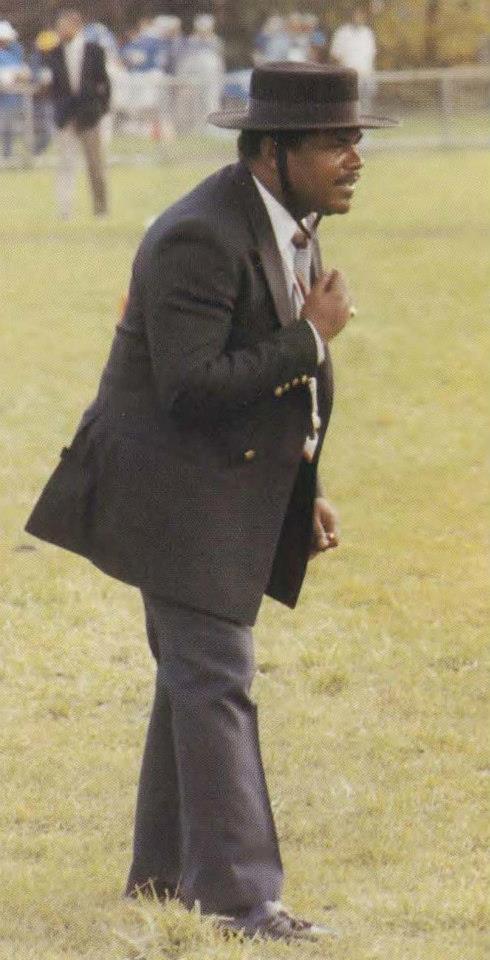
While other high school bands were into the traditional, military-style of marching, Brown’s band incorporated high-steeping and theatrical movements, similar to HBCU bands. The Mackenzie band would play radio hits with an electric flair, focusing on performance just as much as whole notes and treble clefs. Being accustomed to this style of performance landed many of his band members scholarships to HBCUs: 22 in 1987, alone.
“Those guys that would go off to college, we knew they had the same economic situation we had. We knew they had the same academics. And when they went [to college], made the band and would come back to Mackenzie with that paraphernalia on…we saw, ‘oh, this is possible’,” said Mitchell.
From the Ground Up
The mid-1980s were transformative years for Detroit as its public schools faced constant budget issues. In 1982 and 1984, Detroit teachers went on strike over contract concessions and pay cuts; but Brown fought through it all. To overcome lack of resources, Brown got creative; he recorded the band’s performances and used them for marketing and to show proof of concept; he charged fees for their performances outside of school to fund uniforms and instruments; he even reached out to Detroit’s Mayor, Coleman A. Young, for support.
“He built that band from the ground up. He made sure that the band was seen everywhere. And that’s how he was getting his money for us,” said Mitchell.
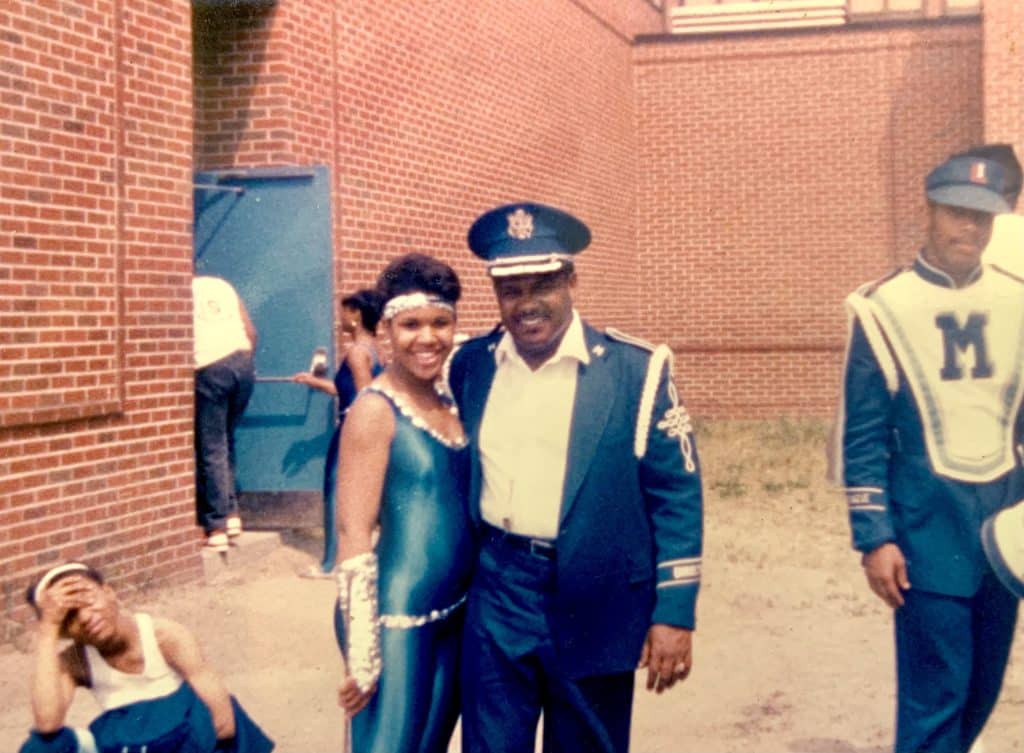
On top of his musical prowess, Brown possessed a one-of-a-kind southern charm, and firm kindness. He was big on implementing accountability and even bigger on encouragement, explained Mitchell.
“He may cuss you out, or throw chairs at you across the room, [but he would also] take you to the Dairy Queen, get you a coffee…it was the perfect balance of that tough love,” said Mitchell, who went on to attend Florida A&M University (FAMU), an HBCU, to play in their infamous “Marching 100” band and major in business. Inspired by the ground she laid, Mitchell’s son, Kory, also played the clarinet and attended FAMU, where he played in the band during his freshman year; he then finished his education at Florida Memorial University in 2024 where he was the band’s drum major and graduated with his degree in business administration.
Leaving a Legacy
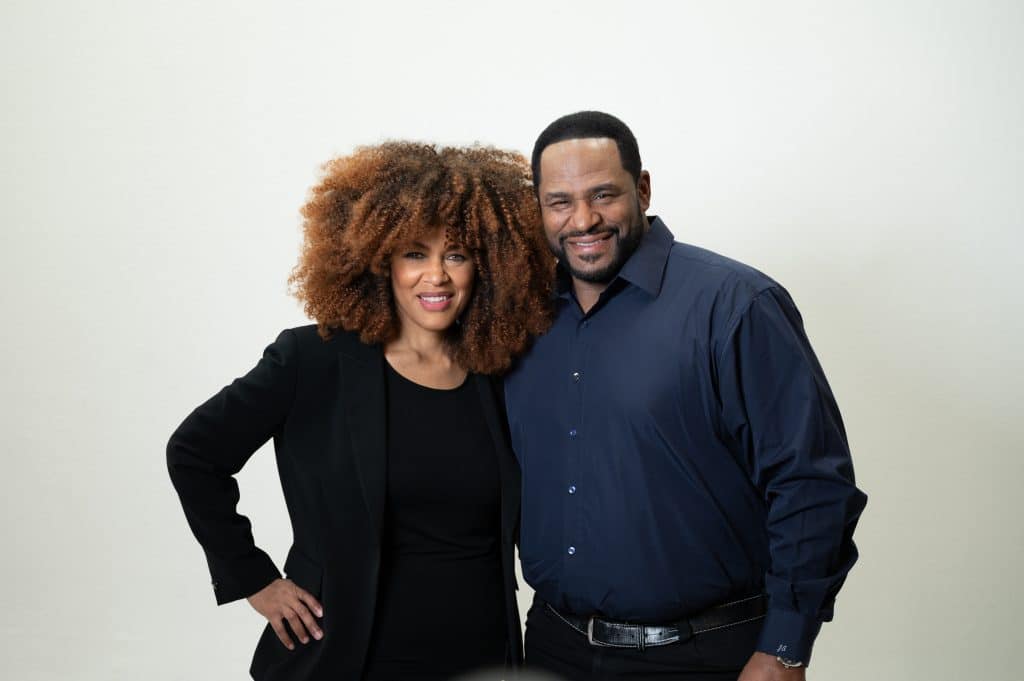
In the early 2000s, Mitchell decided Brown’s legacy was worthy of documentation, and with her company KORIS Media, she decided to make this a reality nearly a decade after his passing in 2005.
The documentary, affectionately titled, “Bobby’s Kids,” features footage from over a dozen of Brown’s band performances. NFL legend Jerome Bettis, who was a student at Mackenzie during Brown’s tenure, spoke about Brown’s legacy in the film. “You learn about the selflessness of an individual, of a man who wanted to make a difference and believing that he had an opportunity to make a difference,” said Bettis.
The documentary also features interviews with Southern University band director, Dr. Kedrick Taylor, and Florida Memorial University band director, Dr. Richard Beckford, who passed away on December 24, 2025. Dr. Beckford is not only a subject in “Bobby’s Kids,” but was known to be a modern day parallel of Brown. Mitchell worked closely with Dr. Beckford for over five years, helping him document his journey and build the band program at Florida Memorial University from the ground up. His belief in using music as a tool to change lives mirrors the very spirit of this film, a legacy that will forever live at the heart of Bobby’s Kids.
Mitchell says she continues to see Brown’s influence within Detroit’s high school bands.
“I think it’s the boldness we have…he was originally from Louisiana. If you ever watched him, there’s an aggressiveness, this bite, and a confidence that comes with it,” said Mitchell. “…If you’re the underdog: that’s what we all have.”
Mitchell has been premiering the film in different cities with one coming to Detroit, this spring. This fall. “Bobby’s Kids” will debut on AspireTV, a network launched by Magic Johnson.
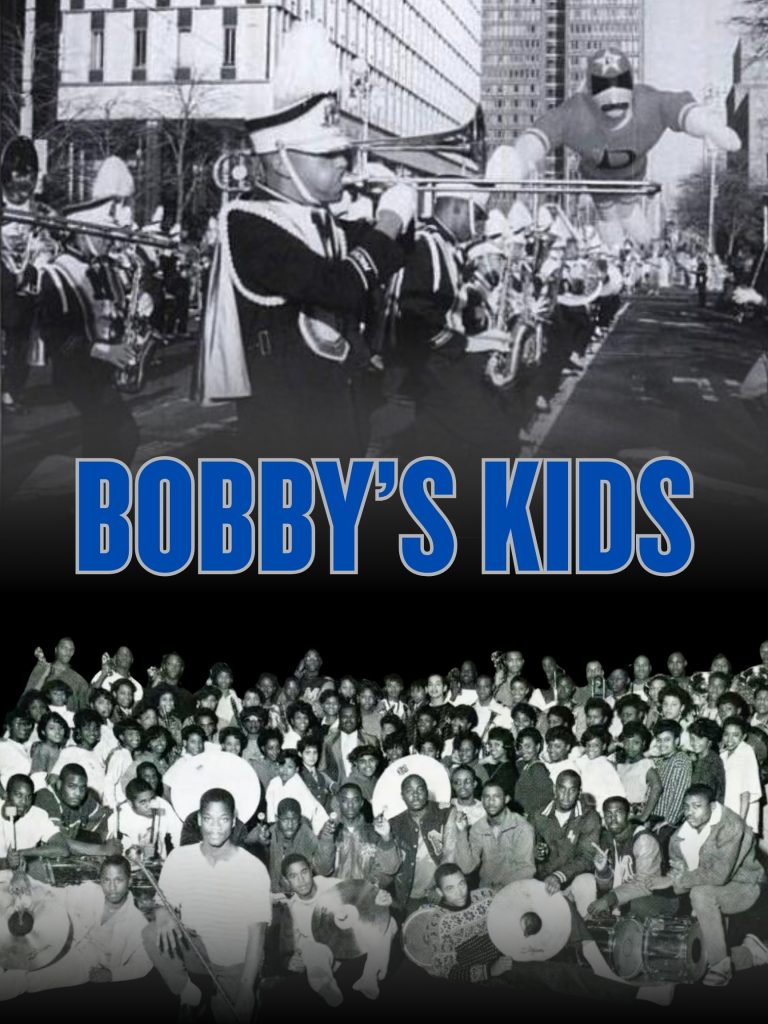
As a mom whose child followed the path that changed the trajectory of her life, Mitchell wants viewers to recognize the legacy of Bobby L. Brown and how life-changing joining a high school band can be. “…Parents see the value in putting [their] kids in the band,” said Mitchell. “[Band is] one of the only things that you can get a full scholarship. It’s the easiest pathway to college.” And she attributes this knowledge, understanding and pride, to being one of Bobby’s Kids.
Related Articles

Where is She: Teen HYPE Creates Play to Raise Awareness on Missing Black Girls and Women
The play “Unseen” focuses on the realities of trafficking, the importance of child safety, the power of collective action and systemic accountability. The two-part play focuses on the societal symptoms that cause teenage girls to go missing.