Where is She: Teen HYPE Creates Play to Raise Awareness on Missing Black Girls and Women
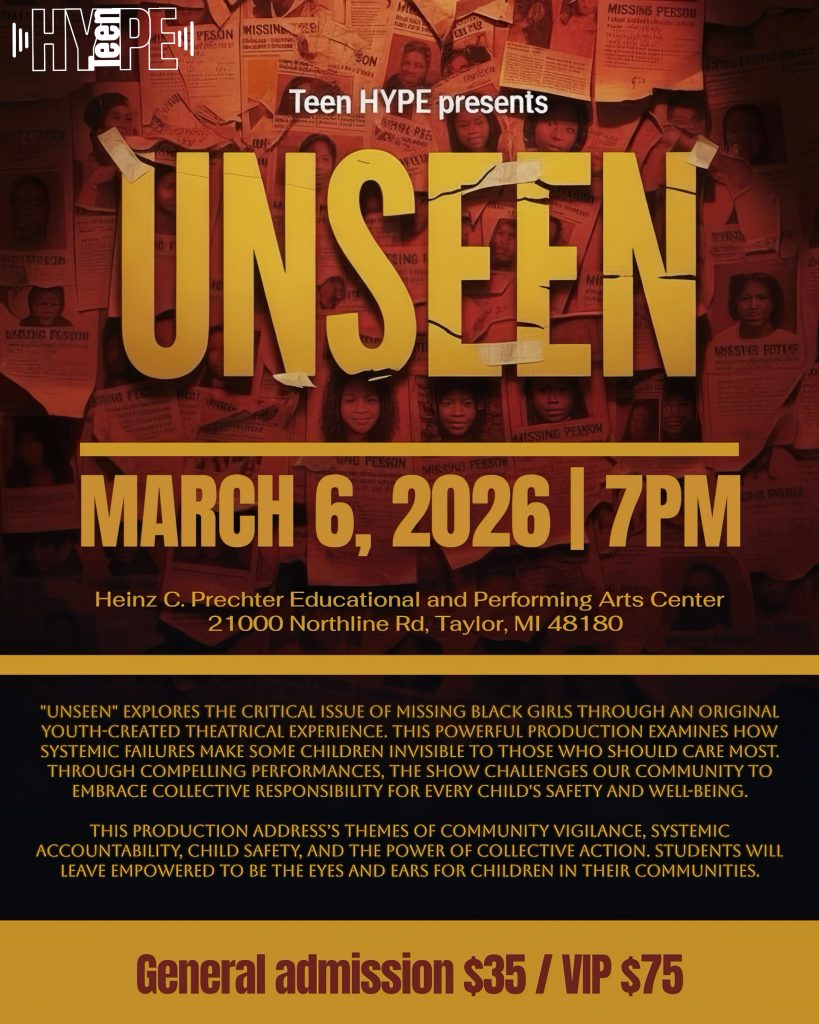
The play “Unseen” focuses on the realities of trafficking, the importance of child safety, the power of collective action and systemic accountability. The two-part play focuses on the societal symptoms that cause teenage girls to go missing.
“Where is she?” This question is asked nationwide, repeatedly. Maybe the reference is to someone’s best friend, student, niece, or even daughter.
To ask this question is a nightmare for anyone who lives it, and some are more likely to ask it in contrast to others.
Every year, members of TeenHYPE, a Detroit-based youth organization, put on a play about a social issue they feel needs to be addressed. This year they have chosen missing children, specifically the disproportionate rate of which it happens to Black girls in America.
According to the National Crime Information Center, 36 percent of missing girls and women are Black, despite only being 14 percent of the female population in the US.
Raising Awareness
Due to alarming statistics like these, these teens are raising awareness. The play “Unseen” focuses on the realities of trafficking, the importance of child safety, the power of collective action and systemic accountability. The two-part play focuses on the societal symptoms that cause teenage girls to go missing.
The first part is about a girl who goes missing and an exploration of the societal and social issues that can lead to this problem. It concentrates on parts of her home and school life, and most notably, neglect, which led to her going missing. The second part focuses on a friend of the missing girl, and her search to find her.
In preparation for the play, the youth did research and invited speakers and experts to give them additional information, and used what they learned to decide what would be in the play. The play, written by TeenHYPE alumna Mallory Childs, was inspired to do so based on her participation with the plays when she was part of the group.
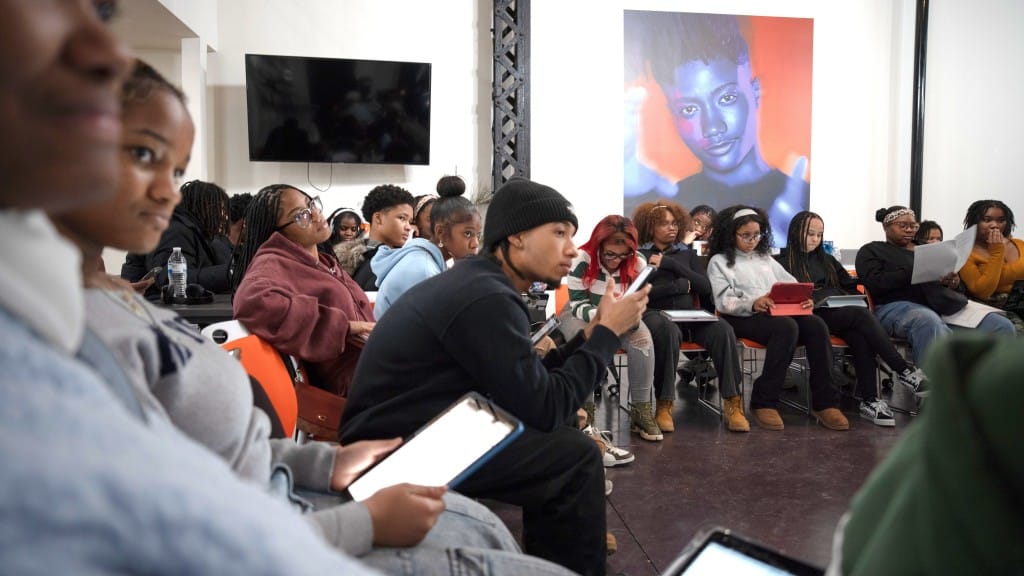
“I think it is important to hear from young people on the issues that affect them,” said Childs.
Now, a college sophomore, her research took her to ourblackgirls.com, a website that raises awareness and helps find missing Black girls and women across America. While lacking media coverage of Black women and girls disappearances is a major problem, Childs noticed something else concerning, about the website: it did not seem to have many visitors.
“Visiting this website and seeing the lack of engagement and attention to the database is incredibly disheartening, and speaks to the amount of importance people see in the topic as a whole,” said Childs. “The lack of engagement on the website is a direct reflection of the lack of engagement in the real world, people aren’t visiting topics that don’t seem relevant to them, lacking empathy and understanding in the fact that this is a collective issue.”
The play emphasizes how a lack of attention to young [Black] people can lead to them going missing, and how friends can be left to figure out what has happened.
Community Support
“The play gets it absolutely right,” said Nina Innsted, president of Missing in Michigan, a non-profit that raises awareness about missing children across the state. She emphasized that friends are an incredibly important resource in addition to the adults in the missing child’s life, like teachers, mentors, and extended family.
Missing Michigan posts online when children go missing and helps get them on the National Missing and Unidentified Persons System (NaMUS), a free-to-access registry of missing persons in the United States.
New Era Detroit, a local grassroots organization dedicated to strengthening Black and underserved communities through direct outreach and hands-on engagement, is one of the groups that helped Teen HYPE with their research.
Like Missing in Michigan, New Era also takes to the digital landscape to spread the news. However, they also canvass, talking to members of the community; speaking to schools and local businesses. “Because of our reputation, people trust us,” said Nilsah Alonzo, executive assistant for New Era Detroit.
The organization works with Detroit Police by handing out physical flyers at local businesses. Although some think it’s anachronistic in the modern era, they say it is effective. Every time someone walks into a store, they will either subconsciously or consciously walk by a poster or flyer – but either way – they’re looking.
According to Alonzo, in cases that New Era has assisted in, about 30 percent have ended with a child being found.
Focusing on Prevention
The play focuses on the issues that can lead to children going missing, so they can be prevented. For example, neglect makes young women potential targets. Childs believes having places for kids to go, such as after school programs, could make a big difference, as well as mentoring and other ways to increase the number of trusted adults.
While schools offer similar programs, there are other challenges: schools with large class sizes can have missing kids fall through the cracks.
Additionally, some schools send automated calls or texts to parents when a child misses class, however, this is a district-to-district policy and Innsted suggests a push to make these automations formal state, or even national policies.
Alonzo believes in spreading as much information to children as possible to make them aware of potential dangers, and New Era Detroit, Missing in Michigan and Teen HYPE representatives agree that it is on the community to continue building strong bonds and having important conversations with the children in their lives.
“We want to focus on how the surrounding community – and lack of attention to young people – can make their absence go overlooked,” said Childs. “Curiosity and wanting to be involved in a young person’s life can go a [long] way.”
When Innsted reached out to Michigan State Police on Feb. 25, she was told that there were approximately 600 open missing children cases in the state of Michigan; and Black girls and young women are disproportionately affected – and this Women’s History Month, Teen HYPE is calling for reflection and change.
“Unseen” will be at Heinz C. Prechter Educational and Performing Arts Center, 1000 Northline Road, Taylor, MI 48180.
Student and educator showings are on Thursday, March 5 & Friday, March 6 at 10:00 a.m., and tickets are $25.
The public performance will be Friday, March 6, at 7:00 p.m., general admission will be $35 and VIP tickets are $75.
Tickets are available, via Eventbrite.
Related Articles

Bobby’s Kids: Documentary Celebrates Legendary Detroit High School Band Director
While other high school bands were into the traditional, military-style of marching, Brown’s band incorporated high-steeping and theatrical movements, similar to HBCU bands. The Mackenzie band would play radio hits with an electric flair, focusing on performance just as much as whole notes and treble clefs.