Detroit has community buy-in for Solar Neighborhoods Initiative
With 139 square miles of land – some blighted or unused and ripe for repurposing – Detroit is well-positioned to develop solar farms to help power city buildings.
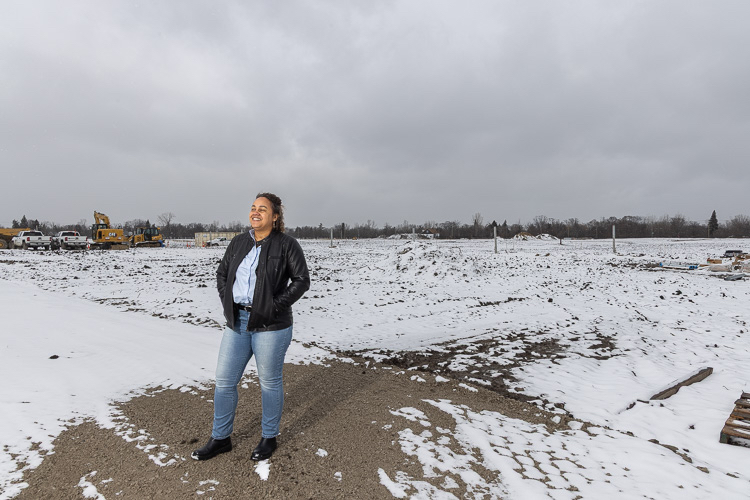
For about 50 years, Haley Henley has lived in the same home off Van Dyke Ave. in Detroit. As the electrical wires in her 100-year-old home malfunctioned, rendering her kitchen appliances unusable, Henley cooked on a hot plate and feared tripping on extension cords on the floor.
Then, in 2025, Henley received free home energy efficiency upgrades as a result of Detroit’s Solar Neighborhoods Initiative. The project provides direct energy-efficiency supports for residents like Henley and will generate clean energy for 127 municipal buildings through five utility-scale solar arrays scattered throughout the city.
While the energy generated from the solar farms will not lower residents’ electricity bills directly, homeowners within each neighborhood’s footprint received or will receive up to $15,000 or $25,000 in free home energy upgrades, depending on the size of the project.
Updates such as insulation, appliances, windows, roofs, and more will result in homeowners reducing their energy bills through greater energy efficiency, says Tepfirah Rushdan, director of sustainability for the City of Detroit.
In an effort to build trust and community buy-in for a project that generates energy credits for city buildings, rather than residents, the city portrays the project as an investment in neighborhoods and homeowners like Henley.
Henley received a new fridge, freezer, dryer, furnace, and water heater. Contractors remodeled and improved her home’s insulation and fixed the electrical wiring so she could use her kitchen appliances again.
The improvements lowered her energy bills, she says. Without the money to pay for home repairs, Henley says she probably would have been forced to move out of a home that was already paid off.
“It was a big help for me,” she says. “I’m really grateful.”
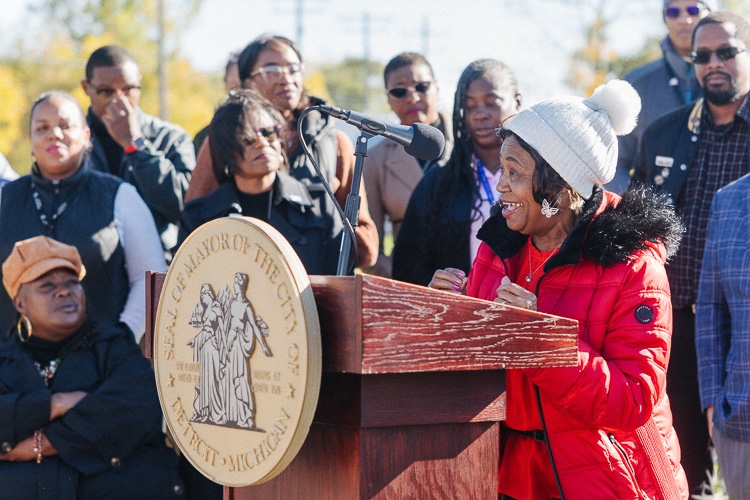
While she’s mostly homebound, Henley says she hasn’t been bothered by construction at the nearby Van Dyke/Lynch solar array, and she doesn’t have concerns about the project’s influence on the character of her neighborhood.
“Anything that is gonna help lower the bills, I’m all for it,” she says.
More details on eastside solar projects
Developers broke ground on one of the five solar farms, the 43-acre Van Dyke/Lynch solar farm, in October 2025, and it’s is expected to come online this summer.
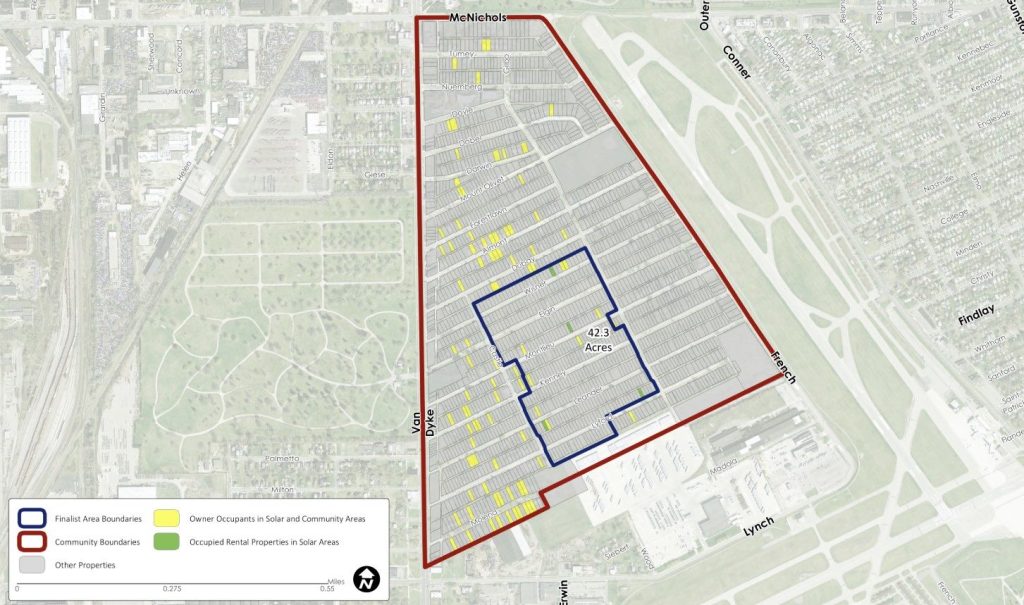
While the city identified the land as mostly vacant, eight homeowners within the farm’s footprint voluntarily relocated, Rushdan says.
Homeowners who moved received compensation for their homes equal to double the market value – a minimum of $90,000 – including moving expenses and relocation services. Renters who moved received 18 months’ worth of rent, as well as moving and relocation services, according to the city.
Another solar farm, the nearly 19-acre array at Houston Whittier and Hayes, is scheduled for construction this fall, with an expected completion date of summer 2027. Two homeowners relocated for this project, and 70 homeowners received upgrades of up to $15,000, according to the city’s website.
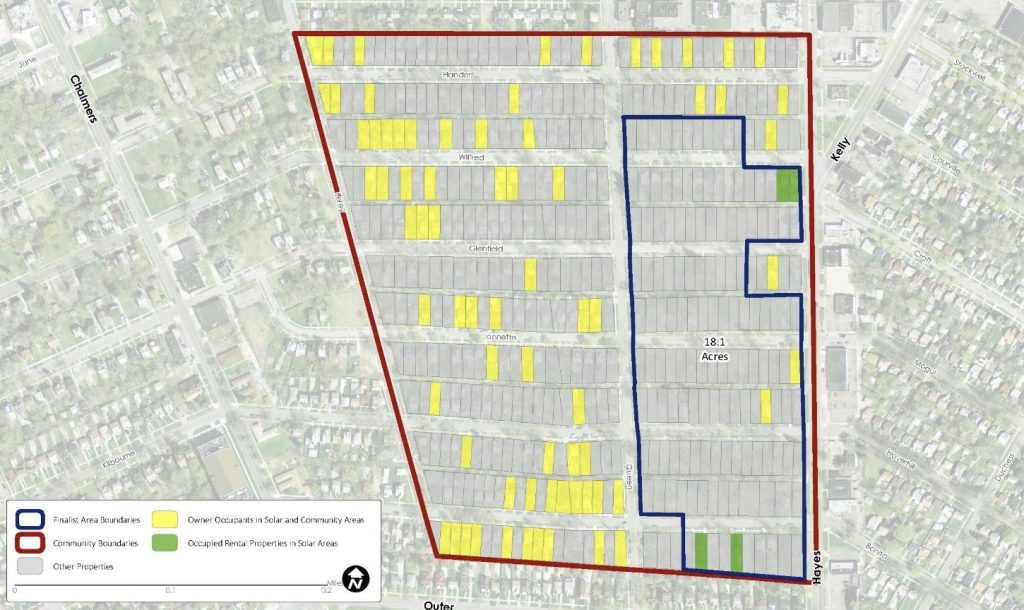
As a result of both the Van Dyke and Houston Whittier projects, five total renters relocated, Rushdan says.
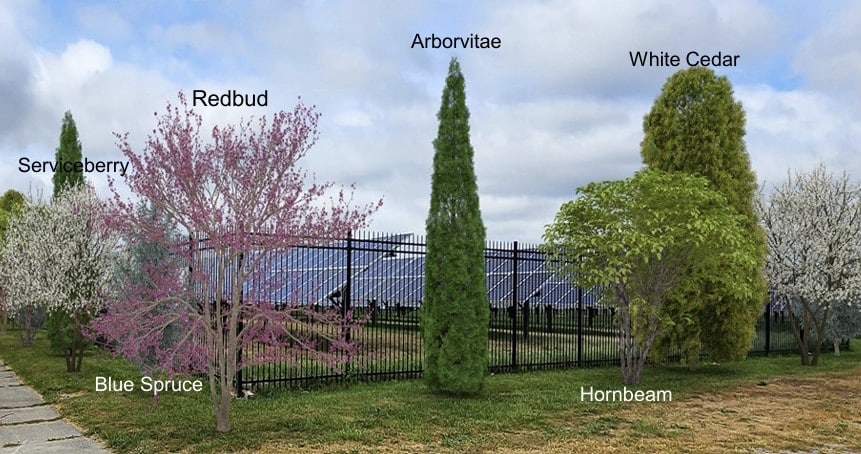
The solar panels will be fenced in using black fencing chosen by residents. Residents also chose ornamental trees to line the fence, perennial gardens, raised garden beds on street corners, and native pollinator meadows for underneath the panels, Rushdan says.
Projects driven by community input, city says
To build trust and gauge interest with residents, the city worked with more than a dozen community partners to inform residents about the projects and gauge community interest.
“Maybe one of the biggest concerns that came up (from residents) was, ‘can I trust the city?’ Because there have been times in the past where residents had negative experiences with the city,” says Diane Cheklich, owner of community partner D2 Solar.
But that was not the case with this project: “The neighborhoods that are getting solar expressed a desire to get the solar,” says Cheklich. “It wasn’t the city pushing it on them.”

In summer 2023, Mayor Mike Duggan issued a call to neighborhoods to gauge community interest in the proposed projects. More than 40 neighborhoods expressed interest, Rushdan says.
After assessments for feasibility and community support, neighborhood meetings, and signed resident letters of support, the city whittled the finalist list down to the five sites.
“City staff and partners held more than 75 neighborhood meetings and conducted door-to-door outreach to ensure residents were informed and involved. While there were concerns and questions along the way, particularly around relocation and construction impacts, participation was voluntary and rooted in demonstrated neighborhood interest,” Rushdan says.
Environmental benefits of solar
The solar neighborhood projects are part of the Detroit Climate Strategy, which set a goal to power 100% of city buildings with clean energy by 2034. The city also set a three-year target to work with utility providers and private property owners to source 50% of Detroit’s electricity from clean energy.
Once operational, solar energy produces zero carbon emissions. Solar and other clean energy contribute to cleaner air and aid in the fight against climate change by reducing dependence on fossil fuels, which generate harmful greenhouse gases and other pollutants, say Cheklich and Rushdan.
“We’re in the middle of a climate crisis right now, and so to deploy solar as much as we can is one of the top responses to climate change,” Cheklich says.
The farms are anticipated to improve safety and neighborhood character by repurposing blighted land, Rushdan says. The farms will also save the city an estimated $3.7 million in land maintenance expenses.
“Converting underutilized vacant land into solar fields helps address long-standing environmental conditions in these neighborhoods by reducing illegal dumping, unmanaged overgrowth, and heat-trapping surfaces,” Rushdan says. “This improves neighborhood conditions while supporting citywide climate and public health goals.”
With an ample supply of open land, Detroit is uniquely positioned for large-scale solar. Solar energy – especially from large farms – is the cheapest form of energy available globally, and new technologies are bringing the cost to implement even lower, Cheklich says.
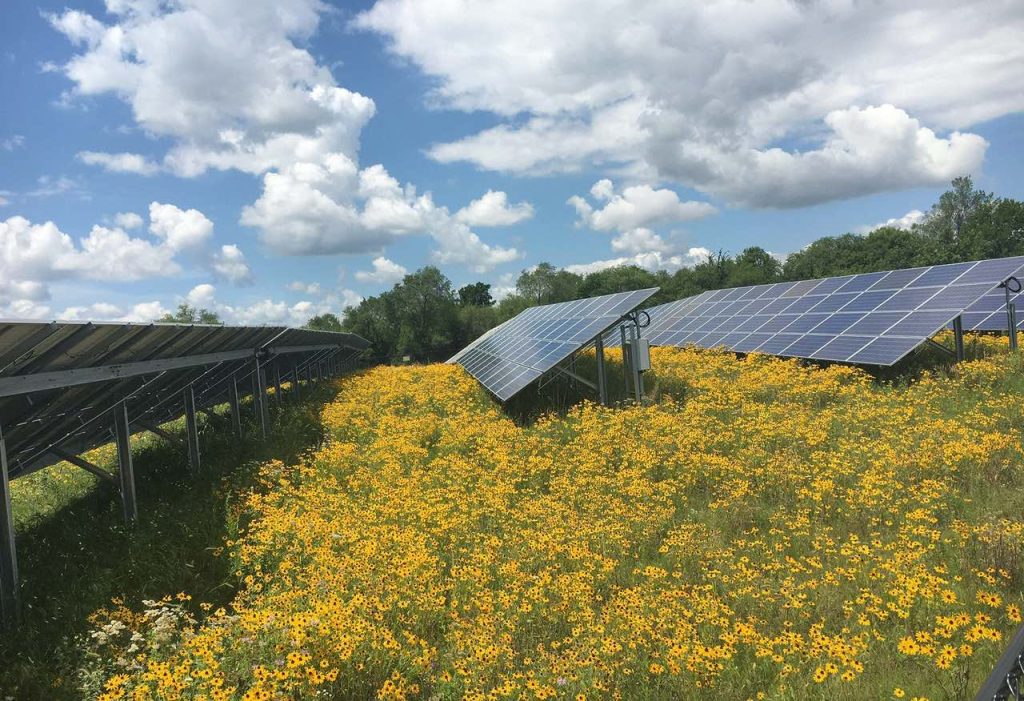
Community buy-in
When speaking to residents, Cheklich says she didn’t hear concerns about the solar projects’ impact on nearby property values or neighborhood character.
“This represents an investment in the neighborhood,” she says. “It doesn’t cause any pollution. It doesn’t smell, like some of the other concerns about industry in the city. This does not have those detrimental effects.”
Jose Goncalves, Manager of Renewable Energy Solutions at DTE Energy, says large-scale solar farms are far more cost-effective than smaller rooftop arrays comprised of one or a few panels.
The initiative fits into DTE’s larger investment in renewable wind and solar energy in an effort to significantly reduce emissions. Since 2009, DTE has invested $5 billion in renewable energy infrastructure, and currently operates 20 wind and 33 solar parks in Michigan, according to DTE’s website.
“Ultimately, our goal is to provide consumers energy that’s cleaner, reliable, and affordable,” Goncalves says.
Resilient Neighborhoods is a reporting and engagement series examining how Detroit residents and community development organizations work together to strengthen local neighborhoods. It’s made possible with funding from The Kresge Foundation.
Related Articles
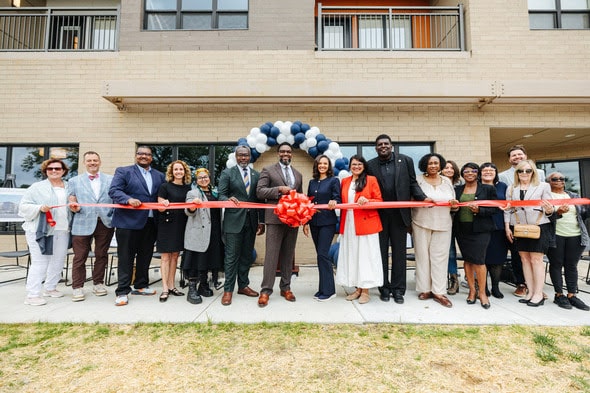
Minock Park Place provides new affordable senior housing for Grandmont Rosedale neighborhood’s older residents
In the heart of Detroit’s Grandmont Rosedale neighborhood, a 42-unit, mixed-use development has given senior citizens brand-new affordable housing. Minock Park Place was seven years in the making, and marks the first affordable senior housing community in the neighborhood, located at 19505 Grand River Ave. — a vital commercial and cultural artery.
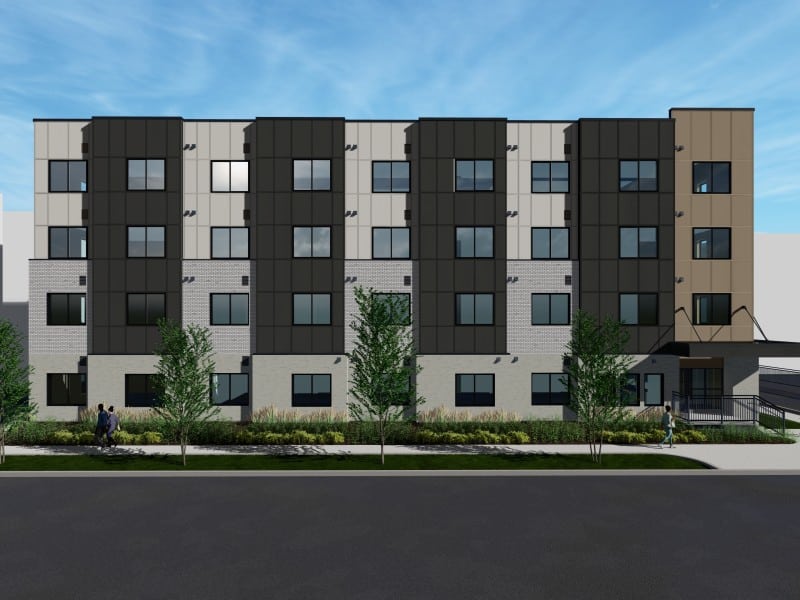
Partner Partner Content From Blueprint to Breakthrough: Tackling Affordable Housing in Detroit
Cass Corridor Neighborhood Development Corporation and Cove Investments and JPMorganChase help neighborhoods—and residents—thrive.

Small Business Social Hours foster success through face-to-face connection
Why face-to-face networking opportunities are even more important for small businesses and entrepreneurs.