When facing eviction, Detroit tenants don’t have to stand alone
Before Detroit’s Right to Counsel ordinance, roughly 83 percent of landlords arrived in eviction court with attorneys, while only about 4 percent of tenants did.
On a weekday morning at Detroit’s 36th District Court, eviction cases move quickly. Tenants—many already juggling work, childcare, or financial stress—log into virtual hearings or sit in crowded hallways trying to understand a legal process that often feels designed without them in mind. Many don’t show up at all, unaware they have an appointment or scared of what might come from it.
For years, this imbalance was stark. Before Detroit’s Right to Counsel ordinance, roughly 83 percent of landlords arrived in eviction court with attorneys, while only about 4 percent of tenants did, according to Diamond Conley, executive director of Detroit’s Right to Counsel program.
The result was predictable: cases moved fast, evictions piled up, and thousands of Detroiters lost housing without fully understanding their rights.
That landscape began to shift in 2023 with the launch of the City of Detroit’s Office of Eviction Defense, housed within the Law Department. Its core mission is simple but critical: ensure that eligible Detroit renters facing eviction have access to an attorney—because in Detroit, for qualifying tenants, legal representation in eviction court is not a privilege. It’s a right.
A right most tenants don’t know they have
Despite that guarantee, many renters still reach the courtroom unaware the program exists.
“I do want the community to know that we exist,” Conley says. “I want people to know that they have a right, especially if they’re low income, to attorneys.”
Conley leads the Right to Counsel Program, which is housed under the city’s Office of Eviction Defense. Her work ensures attorneys are funded, outcomes are tracked, and residents are connected to representation.
The Right to Counsel ordinance passed in 2022, with the Office of Eviction Defense officially opening in March 2023. Conley joined shortly after as deputy director and stepped into the executive director role that October.
Since its launch, the office has served approximately 13,000 households through September 2025, Conley says. More than half—about 53 percent—have been able to remain in their homes. For tenants with housing vouchers or subsidies, the results are even stronger: roughly 86% are able to keep their housing or their voucher, Conley says.
Those numbers matter in a city where eviction has long been a destabilizing force. Prior to the pandemic, Detroit saw about 30,000 eviction filings per year, according to figures shared by Conley. Since the implementation of Right to Counsel, filings have dropped closer to 20,000 annually, with indications the number may continue to fall.
“We like to take some credit for that,” Conley says. “Our attorneys are in court slowing down the process, and many landlords are thinking twice about filing.”

Slowing a system built to rush people out
Most eviction cases in Detroit—more than 60 percent—are filed for nonpayment of rent, according to the Office of Eviction Defense. Others involve termination of tenancy, where a landlord simply wants possession of a property back. Without representation, tenants can easily lose by default if they miss a hearing or misunderstand paperwork.
“If a tenant does not show up to court, they will likely receive what’s called a default against them,” Conley explains. “The judge gives them a move-out date without them even knowing.”
That speed can be devastating. By law, a judge may only have to give a tenant 10 days to move. With legal advocacy, tenants often receive 30 days or more—time that can mean the difference between a managed transition and a traumatic displacement.
Without counsel, evictions can escalate quickly. Conley describes scenarios where sheriff deputies arrive with little warning, belongings are placed on the street, and families are forced to move under extreme stress.
“There’s a lot that’s wrapped into an eviction,” she says. “Your job can be impacted. Your children’s school can be impacted. It’s hard to lose your home, and it’s hard to lose it so quickly.”
Detroit renters tell their stories
Myya Hartfield didn’t know about Detroit’s Office of Eviction Defense until she was already facing the loss of her housing.
“I got in [to] the program through legal aid for a case with my eviction,” Hartfield says.
Her landlord wanted possession of the unit back. Hartfield, who was recently dealing with financial hardship, was unfamiliar with housing court or legal language. Through the legal aid system, she was connected to an attorney who represented her through the case.
While she still had to move, she was given the maximum time allowed to vacate. “They were able to help with the case and just get me a consent of dismissal,” she says. “It really helped, because I’m not used to dealing with this process. They were really thorough with their information and going through all the steps.”
Without that help, she believes the outcome would have been far worse.
“I probably wouldn’t have got the results I did,” she says. “I wouldn’t have known how to talk to the judge.”
Beyond the legal outcome, Hartfield says the support eased her stress and helped her focus on next steps, including relocation. “It took the edge off my anxiety,” she says. “It gave me enough time to figure out some things.”
Like Hartfield, Diane Hunt entered the process without knowing what to expect—or that help was available. With legal representation, Hunt’s case was ultimately dismissed without prejudice, meaning no eviction would appear on her rental record.
“I probably would have been evicted,” she says, without hesitation. “Actually evicted, with the eviction on my name.”
Instead, she walked away without the long-term barrier an eviction record can create.
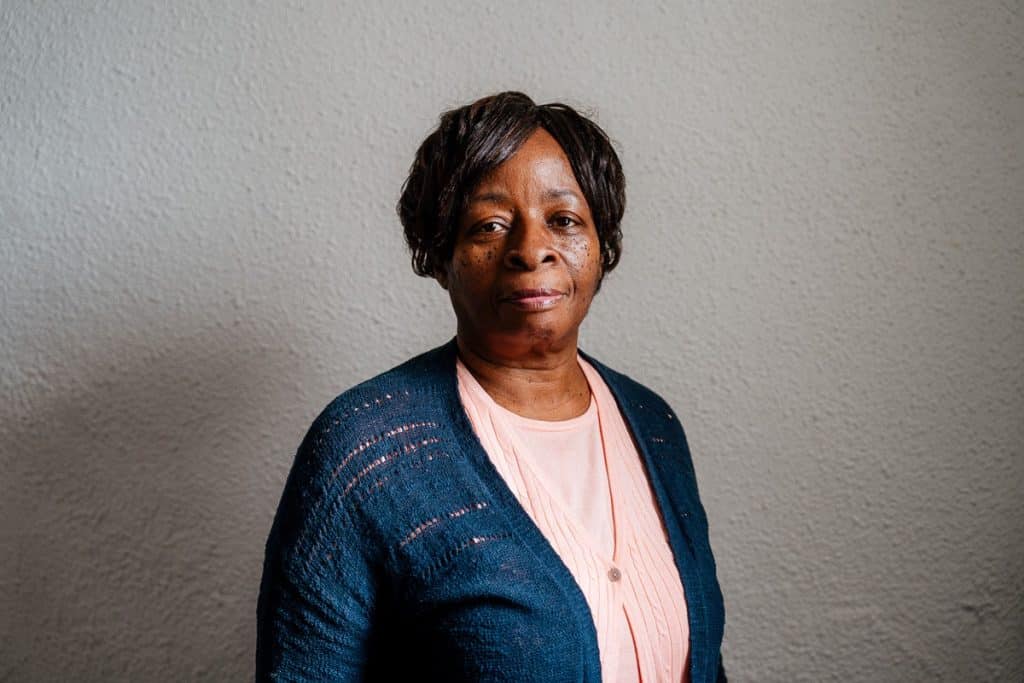
“It was an awesome experience since I had the team behind me,” Hunt says. “I didn’t have to do it alone.”
Her advice to other renters is straightforward: show up in court. “You never know what the outcome may be,” she says.
Why right to counsel matters for neighborhoods
Eviction defense isn’t just about individual cases—it’s about neighborhood stability. In Detroit, eviction disproportionately affects low-income residents, particularly Black women with children.
“When we look at who’s most impacted, it’s African American women,” Conley says. “Over half of their households have children.”
Right to Counsel helps balance a system where advocacy has historically been tied to money. “Not making advocacy tied to the ability to afford an attorney…that’s really the reason why this program is super important,” Conley says.
The office also acts as a connector, linking tenants to Detroit’s Housing and Revitalization Department for relocation funds or additional resources when staying put isn’t possible.
Looking ahead: access, awareness, and funding
One of the biggest barriers remains awareness. Currently, tenants typically only access Right to Counsel once they show up to court.
“That’s not ideal,” Conley says.
She’s working to launch a hotline and online intake system so tenants can connect with attorneys earlier—before their first court date, when stress is high and preparation time is limited.
Funding is another looming concern. The program is primarily supported by federal ARPA dollars, set to expire in mid-2026, alongside state funding. Conley estimates current funding could last into early 2027, but long-term sustainability will require continued public investment.
“We don’t ever want to go back to a system where only 4 percent of tenants have attorneys,” she says.
For tenants like Hartfield and Hunt, the difference legal representation makes is clear. Both entered eviction court unaware they had a right to counsel—and both left with outcomes that preserved stability, dignity, and time.
In a city still grappling with housing inequities, Detroit’s Office of Eviction Defense is quietly reshaping what justice looks like one case, one household at a time.
Resilient Neighborhoods is a reporting and engagement series examining how Detroit residents and community development organizations work together to strengthen local neighborhoods. It’s made possible with funding from The Kresge Foundation.
Related Articles
Modular building, 3D construction paves way for innovative solutions to the housing crisis
As Michigan’s affordable housing shortage continues, developers are exploring modular construction and 3D printing as innovative ways to reduce building time and address labor shortages.

Little Liberia builds home, culture and community in Detroit’s East English Village
Through a decade of persistence, Ameneh Marhaba has grown her 2016 pop-up to a full brick-and-mortar.

Detroit’s Next Chapter isn’t just Development: DPSCD Students Secure $279 Million in Scholarships
Detroit Public Schools Community District students are proving that talent, hard work, and determination open doors. Together, the Class of 2026 has near 300 million in scholarship dollars, creating pathways to colleges and universities across the country.